MBW’s World’s Greatest Songwriters series celebrates the composers behind the globe’s biggest hits. Here we talk to A.R. Rahman, a giant in the world of film soundtracks, with a hefty collection of Grammys, Oscars, Golden Globes, and Indian National Film Awards on his shelves. World’s Greatest Songwriters is supported by AMRA – the global digital music collection society, which strives to maximize value for songwriters and publishers in the digital age.
Some Oscar winners cry. Some holler deliriously about how their countrymen are coming to take over Hollywood. Some even slap the host.
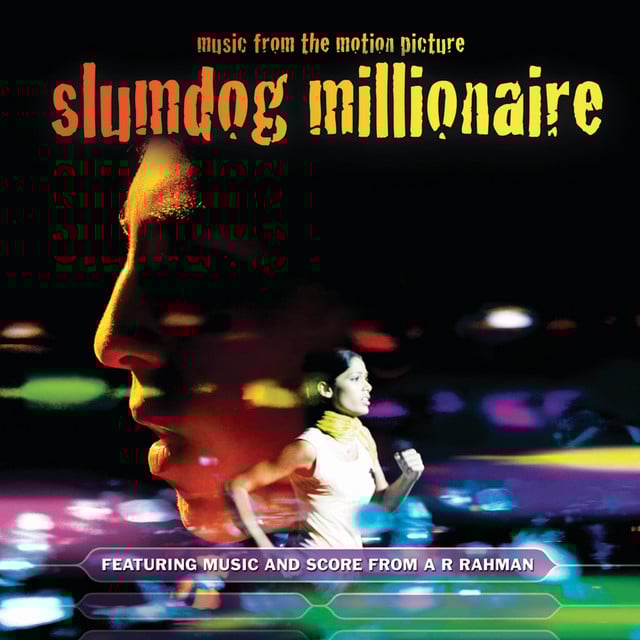
But in 2009, when A.R. Rahman picked up his Academy Award for Original Score for Slumdog Millionaire, he was coolness and calmness personified.
“There’s a dialog from a Hindi film, ‘Mere paas ma hai,‘” he said, dressed all in black. “Which means, ‘I have nothing but I have a mother’.”
Sixteen years later, Rahman has garnered many more accolades and achievements (including two Grammys, a BAFTA and a Golden Globe) but, as he talks to MBW during a break from the immersive spectacle that is his The Wonderment world tour – which has been packing them in from Abu Dhabi to Los Angeles – it’s clear he still retains that sense of perspective.
“I was in a very Zen mood,” he laughs, of that Oscars speech. “Three months before, I had a very important spiritual experience, which was overwhelming for me, and I was not able to come out of it. So, everything seemed to be smaller than what I had experienced…”
That mindset helped him cope with the massive interest, both at home in India and abroad, that followed his global breakthrough. For many, a double Oscar win (he also picked up Best Original Song for Slumdog’s Jai Ho at the 2009 ceremony) might have been the pinnacle, but Rahman was just getting started.
Already an established name in Indian cinema and classical music, he has since become one of western cinema’s favorite composers, working on the likes of Couples Retreat, 127 Hours, The Hundred-Foot Journey, Million Dollar Arm, Pelé: Birth Of A Legend and Inside Man, alongside countless projects in Indian cinema and elsewhere.
He played for President Barack Obama at a White House state dinner, worked on the 2012 Olympics opening ceremony and has moved into the worlds of musical theater and pop, planning his own musical and collaborating with everyone from Mick Jagger to U2 and Diane Warren to Pharrell.
Hollywood is a long way from Rahman’s roots in Madras, India. Rahman’s father introduced him to the world of music – as a child, A.R. would deliver his father’s lunch and watch him conduct the orchestra at theater showings – and A.R. was playing piano from the age of four. His father passed away when AR was nine, and the young prodigy left school soon after to help support his family.
After working as a session musician and some early experiments with rock music, he started making jingles for adverts, only moving on when he realized his work featured on every single advert in a show he was watching.
He shifted into film music, making his debut with Tamil movie Roja and winning a National Film Award for Best Music Director. He became the go-to composer for Indian cinema and set up his own studio and label before heading for Hollywood.
Now, he shuttles between Mumbai and LA and now, having transcended classical music, can seemingly turn his hand to almost anything, fizzing with enthusiasm over future projects such as his avatar band Secret Mountain; his mentorship of classical music/dance ensemble Jhalaa; his work with Hans Zimmer on the forthcoming epic Ramayana movie score; his numerous music education projects; and his April date at London’s Royal Albert Hall with classical composer Rushil Ranjan.
Rahman, however, remains supremely grounded – sharing many of his fellow musicians’ concerns over streaming and the studios’ approach to film music. Much of his catalog was recorded as a work-for-hire, a practise particularly common in Indian cinema, meaning he does not participate fully in its streaming success, despite having over 40 million monthly listeners on Spotify (“And we get peanuts from that!”).
That partly explains his recent enthusiasm for playing live, with his The Wonderment tour taking music from all stages of his career to a huge, mainstream audience; a bit like his own version of Taylor Swift’s Eras Tour – although he professes to know little about that particular cultural juggernaut. He is similarly bemused/amused to learn that Jai Ho has become the soundtrack to a popular college sports team drinking game, where people have to chug their beer between utterances of the song title.
But, before he heads for the stage, it’s time for the legendary composer to sit down with MBW and talk Hollywood, Bollywood and how he got involved with the Pussycat Dolls…
ARE YOU FINDING THERE IS MORE INTEREST IN INDIAN MUSIC FROM INTERNATIONAL AUDIENCES THESE DAYS?
There is, but not as much as K-pop I believe! [Laughs]
I’ve told this to my team, after Jai Ho – which became a whole world rage – I should have been a little more aggressive and done more concerts, more entrepreneurial stuff in other countries, but I just chilled out. I was like, ‘Ah, I’ve arrived, let me chill out for five or six years’ – but it’s never too late!
DO YOU FEEL THAT WAS A MISSED OPPORTUNITY?
Not missed. I could have done more, but then all my life I’d been slogging away from the age of 12 so I bought a house in LA, I chilled out and did stuff I never did before – like going to parties, meeting Spielberg, John Williams, JJ Abrams. I was flexing my power I guess!
I never thought I’d be crossing the border and people would be recognizing me on that side of the world. And people who I used to adore, like John Williams, Dave Grusin, Quincy Jones – I met all of them.
HAD YOU ALWAYS WANTED TO WORK IN HOLLYWOOD?
It was a dream. I always felt my music shouldn’t just be limited to Indian movies. In fact, from the start my interviews were like, ‘I want my songs to travel beyond India’, so I worked towards the production and sound recording having a vibe that everyone can listen to.
YOU’VE DONE AN AMAZING RANGE OF COLLABORATIONS. WHAT’S THE KEY TO A GOOD ONE?
A good collaboration is not just a box tick, but it’s something where we jam, we talk about life, we talk about what we like and musical tastes. And then, when something comes out, it’s really genuine. That rarely comes.
Through that, we learn from each other and we also exchange audiences a little bit, we introduce each other to our audiences.
YOU’VE WORKED WITH DIANE WARREN [Pictured], WHO LIKES TO WRITE A SONG EVERY DAY. WHAT’S YOUR APPROACH?
I don’t write a song every day, but sometimes I sit and write five songs. It depends on the mood.
Sometimes I feel like only empty bullets are coming out, and sometimes I sit there and feel the energy, then it just flows. And then almost 80% are worthwhile songs.
I’m also very self-critical. When you go forward three decades, you need to leave many things which are your safeguards and walk into the fire.
HOW DO YOU FEEL ABOUT THE TREND FOR MULTIPLE CO-WRITERS ON SONGS?
Even when I listen to some of the K-pop stuff, I feel like for eight bars, you know which composer [was writing it] and then another eight bars feel like another composer, the hook seems to be [another] composer.
The average listener may not feel it but, because I’ve been writing songs for the past 35 years now, I can see how it’s been chopped together.
I am a little old school that way, but I love lyric writers. Now we have AI assistance with lyrics – like, what is the rhyme? It’s fun, it’s like an enhanced Google rhyme generator, so we use it like that.
Although, when it generates, after three times it hits the ceiling and starts repeating itself – and it also spits out what has been there, not a whole new perspective for life. Then you understand, that’s how much they’ve stolen, they will steal more to get even better.
SO YOU ACTUALLY USE AI?
Just as a reference point sometimes. It’s a good tool when it’s used right, it speeds up work, it opens up the imagination, especially in art.
I love stuff like that, when people are empowered, even though they don’t have the talent to be an artist, they have the vision to prompt and get something.
But it needs to be controlled so that it doesn’t fall into the wrong hands, where people lose their jobs and nasty things happen to humanity!
SO YOU’RE NOT WORRIED ABOUT BEING REPLACED?
[Laughs] I’m not worried. Worrying is a bad thing. We always find ways to survive.
There’s always something this shit can’t do. The clichés will be there, and people will have to find new ways to express more human experience.
Like the whole live industry surge for the past two or three years has been amazing – there are great examples of what people want to come and watch; the artists whom they love, the songs which they love – they want to see flesh and blood, which is a good thing.
DID YOU EVER THINK SLUMDOG MILLIONAIRE WOULD BE AS BIG AS IT BECAME?
No. It was very underwhelming for me, because usually when I score a movie, I score around 120, 130 cues and for Slumdog, I probably worked for two weeks and had 18 tracks, that was it.
But with Danny [Boyle], every score was pushed up, he would crank it up in such a way that the whole world noticed it. I give it to him, his style of film-making and post-production definitely lifted the whole score and portrayed me to the whole world.
DID THE OSCAR WINS CHANGE YOUR LIFE?
I wanted to get the award and move on with my life, but I couldn’t. For the next three years it was ‘Oscar, Oscar, Oscar – we want to celebrate you and felicitate you’.
I had to get away. We had bought a house in a village near Rajasthan. I told my Mum who was there at the time, ‘I want to get away from all that stuff’. I secretly went off until somebody spotted me.
We didn’t have screens in the bathroom because it was a new house, and there were 300 people standing on every damn house with cameras! I didn’t come out for two days, I was like, ‘Just feed me, I’ll just sleep’ – and they were standing there for nine, 10 days waiting for me to come out. That seems like another life now.
HOW DID JAI HO BECOME A GLOBAL HIT?
Jimmy Iovine liked the song a lot, so he said something which my agent hated: ‘How about AR and the Pussycat Dolls?’
My agent went, ‘No way is AR going to do that!’ But they called me and I said, ‘Why not? Think about the reach if I do it in English’.
“The only thing I’m remorseful about it is, I could have kept the momentum and expanded much more, done more things.”
So that really worked. In that movie, whatever decision I took was great for me! There were people insisting I should not do the movie, but I said, ‘No, I’m going to do this’.
I wanted to pat myself [on the back] like Snoop Dogg says, for doing all the courageous things. The only thing I’m remorseful about it is, I could have kept the momentum and expanded much more, done more things.
DO YOU USUALLY KNOW WHEN YOU’VE WRITTEN AN EXCEPTIONAL PIECE OF MUSIC?
It could go either way. Sometimes you think it’s great and people don’t like it, sometimes you think it’s OK and then people are like, ‘Oh my God, what have you done?’ It’s hard to predict.
But they know that I want every song of mine to become a hit, rather than, ‘Oh, I’ll just write one OK song today’ – I won’t do that. I want to find something that is interesting.
ARE YOU REALLY DRIVEN BY HITS?
Well, not a ‘hit’ hit. But something unique, something which gives a new perspective or a new vibe.
No artist wants to repeat themselves like, ‘Let me do a song like whatever I did three decades back or two decades back’, you only want to find what’s new.
You can see the enthusiasm in the team, the engineer or the musicians, and that’s really cool when they say, ‘I love this’. Mostly, you just want to write something that people will remember forever. The thought is, something that everybody can embrace in every situation. Like Lean On Me or I’m A Believer. All that stuff is very enticing; we’re all hard-wired to search for ourselves.
HOW TOUGH WAS IT HAVING TO LEAVE SCHOOL SO EARLY AND WORK?
It was the mental torture, thinking, ‘No one’s going to respect me, because I left school’. That was the mentality I had, that the person who didn’t graduate was not respected in that society – I hope no one cares anymore! Now it’s like, ‘How much money does he have?’ [Laughs]
YOU MUST HAVE BEEN VERY DRIVEN TO SUCCEED…
Well, I fail, but secretly! Unlike before, we don’t have to display our work in front of 70 people with an orchestra.
So, when I do tunes, probably around 50% get rejected by the director, but nobody knows about it.
SURELY YOU DON’T GET REJECTED MUCH THESE DAYS?
I’m not a person who’s like, ‘This is it, take it or leave it’. I want them to be happy, to invest in it and come back again and say, ‘I love this, people love it, let’s work together again’ – and mostly that’s the case. I’m a people pleaser!
Remember, if I want to do my own thing, I have my platforms, I can put anything out, so that’s how I convince myself. Like, you can afford to do it yourself and commission yourself, why fight with people? Without compromising what I want to do of course…
IS FILM MUSIC TAKEN AS SERIOUSLY AS IT SHOULD BE?
Good directors come with vision and [when they] partner with good composers, great things can happen. But with the studios, I give up.
With all respect, studios want to rehash what is already there. In my experience, they put on temp music and ask the composers to copy it.
That’s the end of creativity – that’s why I lost the zest for scoring in Hollywood. I’d rather score some beautiful indie movies where people let me loose.
I have had great experiences, but with the big studios there’s so much bulldozing. And this scapegoat they use – ‘We screened it in five different places and they said how great the music was’ – it’s already chewed and spat, why do you want to pick that up? Why can’t you do something new – unless you do new, how will you know?
People still remember La La Land and Black Panther for the score, so the music makes the movies more memorable. We still remember Cinema Paradiso because of the theme, we still remember Schindler’s List. Imagine they had to put something derivative [on that], it would never have stood the rest of time. We still remember the first Gladiator for its music, even if you don’t remember anything else. There’s nothing like a tune. You remember Titanic for that tune, not for the temp music.
IF YOU COULD CHANGE ONE THING ABOUT THE MUSIC BUSINESS, RIGHT HERE AND NOW, WHAT WOULD IT BE?
Musicians and writers should get paid fairly.
The credibility of the professional should go up. I made a movie called 99 Songs which addresses this whole thing – nobody takes a musician seriously. Like, if somebody says, ‘What does your son do?’ ‘He’s a musician’. ‘No, what does he do?’ That second question always comes. ‘He plays the cello’ – ‘Yes, the cello’s fine, but what does he really do?’
And that’s because the fairness is not there, there’s no credible structure for finance and pension, all that stuff. Music education should start from the lower grades [in school]. People can listen to a piece of music and be transported, but all that stuff only comes when you learn music and you understand it.
They should be educated from the ground up, so they become better humans and have more empathy.