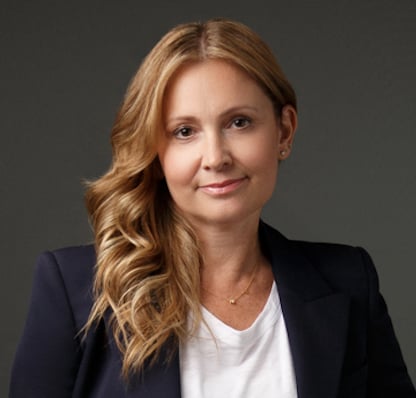
The following MBW op/ed comes from Victoria Furniss (pictured inset), Executive Director and CEO of ARIAM (the Alliance for Responsible Innovation in the Arts & Media), a global coalition launched in June to push for responsible AI development across the creative and media sectors. ARIAM’s members include Disney, the BBC, and The New York Times, and in September, Sony Music Group became the first music company to join.
Furniss previously held leadership roles at Netflix and Warner Bros. and played a key role in establishing the Alliance for Creativity and Entertainment.
Here, Furniss argues that Suno’s decision to build its new Visuals product on a model from MiniMax, the Chinese AI firm being sued by Disney and other Hollywood studios, raises serious questions about training data, due diligence, and how creators get paid.
Suno, the AI music-generating company being sued by much of the music industry, just last week announced a product, Visuals, built on a model from MiniMax, the infamous AI video-generating company being sued by major movie studios. This is like the copyright infringement all-stars!
Suno and MiniMax have both been sued for copyright infringement, repeatedly. It’s hard to think of a better example of the AI industry’s voracious appetite for reducing all human creative expression to content that can be strip-mined without any care or concern for either the artists and actors who created it to begin with or the consumers who might want to consume it.
And it raises a lot of questions. For example: how will artists and rightsholders get paid? Unclear. Suno says you can’t replicate public figures, but what about a new artist or an up-and-coming actor? Also unclear. What about the training data? Suno says it can’t speak to how MiniMax’s model is trained. Did they not do any due diligence before they went into business with them? If not, why not?
All this puts Suno in an uncredible position when it comes to being in any way responsible and certainly at odds with its stated position that “transparency is important” when it comes to AI labeling. Suno is happy to pay lip service to responsible innovation, but apparently paying artists and rights holders is a step too far, in blatant disregard of what it tells its consumers.
Millions of people work in creative industries around the world, and they produce some of humanity’s most beloved work. It’s not just artists and actors: songwriters, musicians, engineers, directors, screenwriters, visual effects artists, and countless others bring a creative vision to life. Apart from [AI companies] taking their work without permission, using it to train their models, and then making money from it, there’s much more invidious damage being done.
By making it possible for anyone to instantly plagiarize their work, some generative AI companies also threaten the livelihoods of people who created the content that was taken without permission to train the models in the first place.
People in creative industries don’t need immunity from competition, including from new technology. But they do need to be treated fairly, and they need AI companies to be subject to the same rules as everyone else.
If you want to use a song in an advertisement, or make a collectible figure of a movie character, you can license it. That’s fair: it allows authorized use of intellectual property, ensures creators are compensated for their work, and makes sure that the creative works are used as the creator intended, protecting the consumer in the process.
If not, copyright protection laws kick in. It’s not perfect, but it’s a system that has allowed generations of musicians and filmmakers to earn a living while creating art that has enriched our culture. Adopting this approach for AI would require knowing what the models were trained on and enforcing existing laws and, where those laws fall short, bringing in new ones.
Some AI companies resist, arguing this would hold back innovation. The irony, of course, is that it’s completely backwards. Building products responsibly with good-quality content and proper testing is how you unlock the widest possible benefits and build the public trust that every new industry needs.
“If the recent history of technology has taught us anything, it’s that you can fight accountability tooth and nail, only to be ultimately forced to comply anyway and shred your public support along the way.”
Yes, sometimes you can briefly seize ground in a new market by pushing or breaking the boundaries of legality. But to create a lasting business, you need social permission and consumer trust to operate. Being seen to operate fairly and with accountability is central to that, especially for a technology as contentious as AI.
By refusing to even do the basics of responsible development, AI companies are actually reducing the opportunities for people to build valuable and interesting things – new creative tools that musicians can experiment with, new experiences for fans to engage with the characters and songs they love – while at the same time further hardening people’s opposition to the technology.
If the recent history of technology has taught us anything, it’s that you can fight accountability tooth and nail, only to be ultimately forced to comply anyway and shred your public support along the way.
There’s a better way, of course: respecting existing laws, making sure you protect your consumers from harm, compensating artists fairly, and generally building products responsibly.
That’s what we expect of other industries, and it’s what will help ensure AI achieves the best of its potential – while protecting our creative industries, our culture, and our society from the worst.Music Business Worldwide