MBW’s World Leaders is a regular series in which we turn the spotlight toward some of the most influential industry figures overseeing key international markets. In this feature, we speak to SM Entertainment Co-CEOs Daniel Jang and Dmitry YJ Tak. World Leaders is supported by SoundExchange.
SM Entertainment, the company that helped build K-pop, is reinventing itself.
Founded in 1995 by Lee Soo-man (who exited the firm in 2023), SM is one of the Korean industry’s major players.
Its trainee system and production methodology helped establish the template for the modern K-pop business, while acts like BoA, TVXQ, Super Junior, and Girls’ Generation introduced the genre to international audiences in the 2000s.
Korean technology giant Kakao became SM’s largest shareholder in 2023, the same year that SM launched an ambitious in-house music publishing company, Kreation Music Rights (KMR).
Today, under Co-CEOs Daniel Jang and Dmitry YJ Tak, SM’s roster spans multiple generations – from those early pioneers to global phenomena like EXO and NCT, to newer acts including aespa, RIIZE, and Hearts2Hearts.
SM recently launched its “SM NEXT 3.0” strategy – a blueprint built on more aggressive M&A activity, deeper AI integration, and a restructuring of how music is produced at the company.
Explains Jang: “Under SM NEXT 3.0, we have retained our five ‘Multi-Production’ units but fundamentally redesigned how they operate. Specifically, we established three core pillars – the Artist Center, the Creative Center, and the A&R Center – and transitioned to a matrix-based, agile operating model. In this structure, functional teams work fluidly across all five production units, enabling greater coordination and flexibility.”
The strategic overhaul arrives amid strong momentum at the company.
SM posted consolidated revenues of KRW 319 billion (approximately USD $220 million) in Q4 2025, up 16.6% YoY, fueled by booming concert activity and merch sales.
SM’s quarterly concert revenue jumped 53.6% YoY in Q4, with Super Junior’s 20th anniversary world tour selling out globally. Meanwhile, aespa, NCT DREAM, RIIZE, and NCT WISH have all launched major tours in recent months, plus EXO will return to the road in 2026 following their recent comeback, as TVXQ mark two-decades-plus with stadium concerts in Japan.
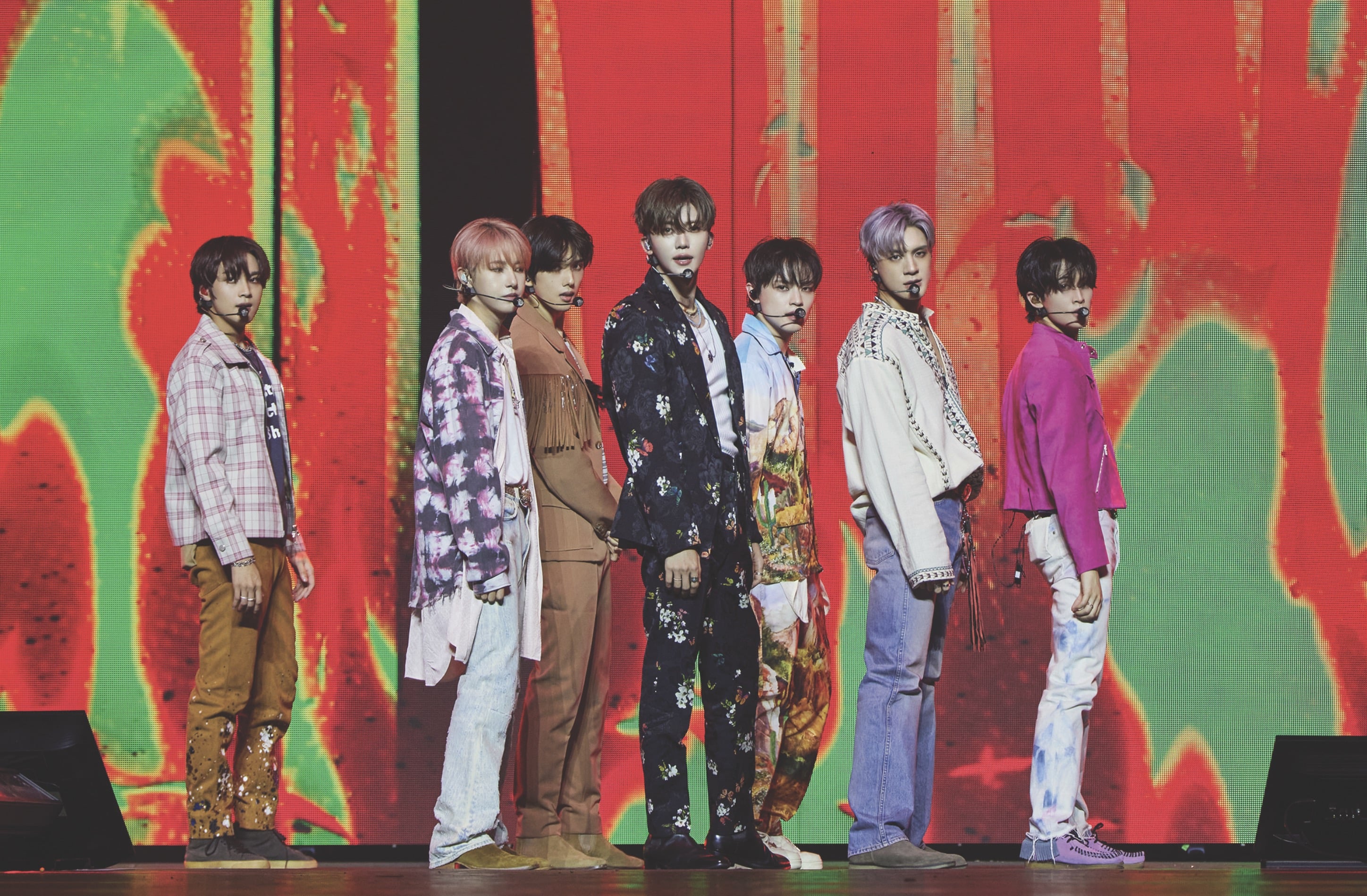
Dmitry YJ Tak joined SM in 2001 as an in-house artist manager. Today, as co-CEO, he oversees both IP production and artist management.
He explains: “New artist development sits directly under CEO-level oversight [at SM], so I remain closely involved from the earliest planning stages. Setting the right direction at the outset is critical.”
Co-CEO Daniel Jang began his career as a certified accountant before joining SM as CFO in 2022. He now leads company-wide strategy and organizational design.
“My role is to build systems that allow creative professionals to operate with both autonomy and accountability,” he says. “In a creative company, sustainable growth depends not only on strong ideas, but also on strong systems.”
Here, Jang and Tak discuss SM’s creative transformation, its localized IP ambitions, the company’s AI strategy, and what success looks like…
You’ve confirmed a new boy group will debut in 2026, having been developed via the televised reality program, Reply High School. What gap in SM’s roster is this group designed to fill?
Dmitry YJ Tak: The new boy group is not simply a roster expansion. It is part of our broader global strategy, where we segment strategic markets by artist and tailor our approach accordingly. As fandom demand becomes increasingly layered and sophisticated, we recognized the need for a team that represents a distinct tone and evolution from our existing groups.
“As fandom demand becomes increasingly layered and sophisticated, we recognized the need for a team that represents a distinct tone and evolution from our existing groups.”
Dmitry YJ Tak
SMTR25 serves as the starting point of that vision — a pre-debut platform that allows audiences to experience the members’ growth journey in real time. Through the reality program Reply High School, we are gradually showcasing their skills, personalities, and team dynamics while building narrative depth ahead of debut.
With distribution extending beyond Korea to Japan, Thailand, Taiwan, the U.S., and Europe, SMTR25 also establishes early international touchpoints, laying the foundation for a strong global presence from the outset.
What other priority artist projects are you most excited about this year?
Tak: In addition to the debut of our new boy group, we are celebrating NCT’s 10th anniversary with a series of concerts and special projects reflecting on their decade-long journey and deepening their connection with fans.
We also have major releases and tours planned for aespa, RIIZE, and NCT WISH. In March, Hearts2Hearts will celebrate their first anniversary with their first U.S. showcases in Los Angeles and New York.

On the legacy side, EXO will return to touring following their recent comeback. TVXQ will mark their 22nd anniversary with large-scale stadium concerts in Japan, while Super Junior’s 20th anniversary world tour — which has consistently sold out — will conclude successfully this year.
Across groups, solo artists, and unit activities, we will continue delivering diverse projects. With our Multi-Creative system now firmly established, our priority is ensuring that each project fully reflects the artist’s unique identity while maintaining a consistently high level of creative execution.
SM has historically been credited with pioneering K-pop’s global expansion. What does SM need to do today to differentiate itself from other players?
Tak: We must continue evolving how K-pop is made. SM has never relied on chance success. Over the past 31 years, we have transformed the collective expertise of our creators into structured systems and embedded them into our production framework. That heritage remains our foundation.
Our focus now is making that system more flexible and artist-specific, allowing us to execute tailored production and market strategies with greater precision. At the same time, we continue to build on what we call ‘Pink Blood’ — a brand identity shaped by audiences who recognize and support SM’s experimental sound and uncompromising creative standards.
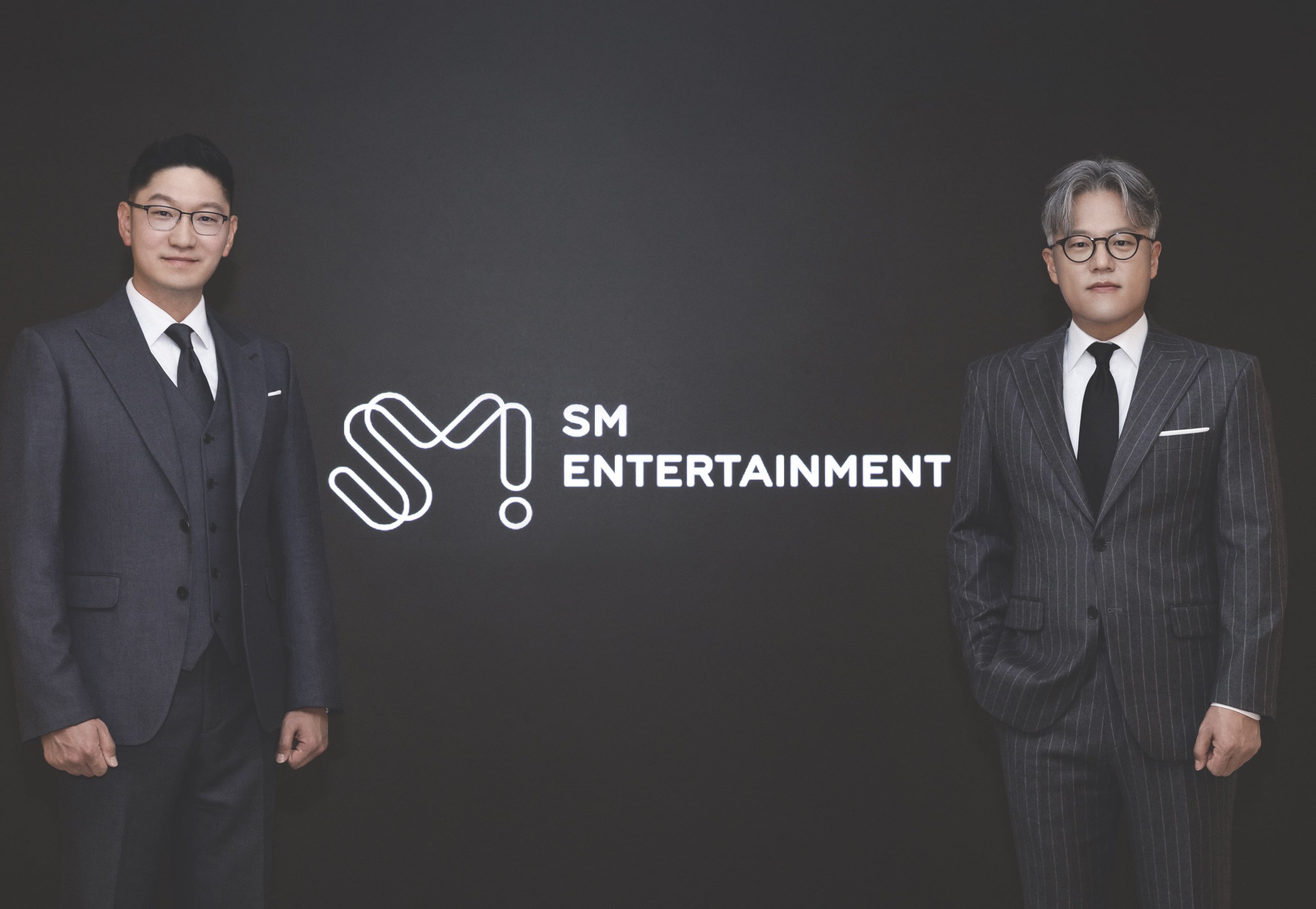
Daniel Jang: I also believe that the key lies in strengthening what is difficult to replicate — our intangible competitive advantage. K-pop is ultimately driven by human creativity and instinct. SM’s strength is not found in a manual, but in a heritage accumulated over decades and embedded in our DNA.
We must move quickly in a rapidly changing market, but we cannot compromise on quality. Speed and excellence must coexist.
How do you balance focus on locally important artists while maintaining the distinct SM creative identity?
Tak: The key is a hybrid approach. We preserve the core pillars of K-pop — artist development, performance discipline, and musical quality — while adapting storytelling and engagement to resonate locally. Even in localized IP initiatives, SM leads casting, training, and production to maintain creative standards.
At the same time, we collaborate with strong local partners on management and marketing to ensure cultural relevance. Our production system protects our identity, while local partnerships enable connection and expansion. That balance allows us to grow globally without losing what makes SM distinct.
Jang: A strong example is our first UK-localized IP, Dear Alice. We launched the group in partnership with Kakao Entertainment and Moon&Back Media, with their debut journey broadcast on BBC One ahead of their first single release in February 2025.
The members were cast locally, while SM led the training and production, applying K-pop methodology and creative standards. Since debut, the group has actively promoted across major UK cities.
Their debut single Ariana and first EP bitterSWEETsummer both entered the UK Official Charts, and additional releases and concerts are planned for this year.
SM’s partnership with Tencent in China is notable. What does success look like there, and how do you navigate political sensitivities?
Jang: In China, we do not define success by short-term metrics or one-off outcomes. Success means building a sustainable partnership framework that enables our music and content businesses to operate consistently over time.
Our priority — in China and in any market — is to respect local laws, regulations, and cultural context. We maintain close communication with our partners, remain adaptable to evolving conditions, and place strong emphasis on compliance.
A steady, disciplined approach is essential when operating in a complex market.
You’ve set an ambitious goal for KMR to become “Asia’s largest and most respected publishing company” within five years. What’s your strategy?
Jang: SM has built an A&R system tailored to each artist, and through close collaboration with our publishing subsidiary KMR, we have strengthened our global A&R infrastructure. KMR’s ambition is not just scale, but trust. Our goal is to build a publishing platform that global creators rely on.
“On M&A, we will continue to evaluate opportunities in music-related businesses.”
Daniel Jang
To do that, we are refining collaboration models that offer fair participation and sustainable revenue opportunities for songwriters worldwide, while expanding our music IP beyond K-pop into the broader global pop market.
On M&A, we will continue to evaluate opportunities in music-related businesses. We will prioritize areas closely tied to our core operations, while remaining open to scalable companies that can contribute meaningfully to long-term growth.
How are you using AI to change your A&R process?
Jang: We use AI not to replace human creativity, but to enhance it. In A&R, a significant amount of time is spent listening to, evaluating, and archiving demo submissions. Given the sheer volume of music produced globally, there are clear limits to how much can be reviewed and compared manually. AI helps us reduce that time substantially.
By streamlining the sorting and analysis process, our teams can focus more on creative judgment — identifying stronger material, refining concepts, and developing stronger songs. We believe this ultimately improves the overall quality of the work.
That said, all final musical decisions and development choices remain in human hands. AI is a tool to support the process, not to define it.
You’ve brought fan-to-artist communication service DearU into the SM group. How do you see the future of direct-to-fan (D2F) platforms evolving?
Jang: The relationship between artists and fans is evolving beyond physical and time constraints into something deeper and more continuous.
Direct-to-fan platforms are becoming the core infrastructure enabling that shift. DearU’s Bubble represents one of the closest connection points between artists and fans — a space where content is experienced first and communication happens directly.
Bringing DearU in as a consolidated subsidiary reflects our view that D2F is not simply a service, but a strategic asset that shapes and strengthens the overall fan experience. We believe D2F platforms will play an increasingly central role in artist-fan engagement.
How important is the merchandise business relative to recorded music at SM today?
Tak: Merchandise today goes far beyond product sales. It functions as a medium through which fans directly experience an artist’s content and creative universe.
K-pop is characterized by a high level of fan engagement, and as a result, merchandise formats and touchpoints have expanded significantly. Our MD and IP licensing businesses are growing in importance because they provide fans with more diverse and immersive ways to engage with K-pop content. We are committed to continuously developing new experiences in this space. That said, recorded music remains the foundation — everything ultimately begins with the music.
How key is the live music sector for SM? Do you think record labels will generally invest more in ticketing, venues, etc?
Tak: Live music is not simply a revenue stream for SM — it is the deepest point of connection between our artists and audiences. If recorded music and content build an artist’s universe, live performance is where that IP fully comes to life. Going forward, recorded music and live will not operate as separate businesses, but will be conceived together from the earliest planning stages as part of a single, integrated IP cycle.
Jang: From an industry perspective, the importance of live will continue to grow over the next few years. As global streaming becomes universal, live performance becomes the primary way to convert fan engagement into tangible value.
That said, rather than owning every piece of infrastructure directly — such as ticketing platforms or venues — labels are more likely to pursue strategic partnerships or selective investments based on each artist’s market and scale. At SM, we approach live not as short-term revenue, but as a long-term strategic business that expands the value of our IP.
You’ve signaled more aggressive M&A activity. What are you looking to acquire?
Jang: Our priority is companies directly tied to SM’s core business — particularly those that strengthen music production capabilities and enhance IP value.
Over the medium to long term, we’re also open to opportunities that may be adjacent to our core business but demonstrate strong growth potential and scalability. For the past three years, we focused on streamlining non-core assets and reinforcing the fundamentals of our music and production systems. Going forward, we see this as the next phase — pursuing inorganic growth in a more proactive and strategic way.
Kakao, SM’s largest shareholder, has developed its own AI capabilities. What AI fields are you most excited about, and are there any you’re cautious about?
Jang: Kakao is one of Korea’s leading AI companies, with its own large language models (LLMs) and AI agent capabilities. Our collaboration is structured around a clear division of roles: SM defines the key pain points within our entertainment production process, and Kakao provides AI infrastructure and technical development support to address them. To support this effort, we have established a dedicated AI initiative team, and plan to deepen collaboration between Kakao, Kakao Entertainment, and SM.
How do you generally view AI-generated music and virtual artists?
Tak: We view SM’s first virtual artist, nævis, not as a replacement for human artists, but as an IP model that expands storytelling and creative universes.
Originating from aespa’s narrative world, nævis extends the boundary between reality and virtual space through music, visual content, and storytelling. It represents how technology can create new experiences and new forms of narrative.
“Our approach is clear: AI should amplify human creativity – never replace it.”
In music production, artistic judgment and sensibility remain essential. We use AI as a tool to streamline processes and reduce repetitive tasks, allowing our teams to focus more deeply on creative decision-making. Given the songwriter and producer network we’ve built and carefully managed over the past 30 years, our approach is clear: AI should amplify human creativity — never replace it.
Looking at SM’s next 30 years, what does success look like – and what are the biggest challenges you face?
Jang: Success, for SM, means becoming a company that gives each person at least one song that defines a chapter of their life.
Building on the foundation and legacy we’ve established over the past 31 years, our role is to work together as an organization to give trainees a dream, artists a career with cultural influence, and fans unforgettable moments and memories. When we do that well, financial growth follows naturally — creating a virtuous cycle that benefits shareholders and employees alike.

The biggest challenges are twofold. First, we must keep pace with rapidly diversifying fan expectations while maintaining the quality and depth of our content. Second, we must remain agile and strategic in responding to evolving partnerships, platforms, and regional trends in the global market. SM is approaching both challenges with a long-term perspective.
If you could change one thing about the music business today, what would it be?
Tak: Strengthening the sustainability of the people who power this industry — creators and the teams behind them. Music is fundamentally a people-driven business. For creativity to thrive, there must be an environment where experimentation and risk-taking are supported. That belief is reflected in our NEXT 3.0 strategy, as we continue building systems that ensure fair opportunity, reasonable compensation, and long-term collaboration.
Jang: I would elevate the level of trust and predictability across the industry. When transparent standards and accountable operating principles become widely established, the industry can grow in a healthier and more stable way, while still protecting creative autonomy and experimentation.

SoundExchange was independently formed in 2003 to build a fairer, simpler, and more efficient music industry through technology, data, and advocacy. The only organization designated by the U.S. government to administer the Section 114 sound recording license, SoundExchange collects and distributes digital performance royalties on behalf of 700,000 music creators and growing.Music Business Worldwide