MBW’s World Leaders is a regular series in which we turn the spotlight toward some of the most influential industry figures overseeing key international markets. In this feature, we speak to Olukorede ‘Kay’ Ikazoboh, Head of Nigeria for Virgin Music Group. World Leaders is supported by SoundExchange.
Olukorede ‘Kay’ Ikazoboh says that she got her start in the music business by following the art, “not the industry”.
Growing up in South London in the UK, Ikazoboh tells us that her upbringing “was a blend of two worlds”.
“Inside my home, it was Lagos (according to my parents ); outside, it was South London,” she adds.
Ikazoboh explains that “music was the language that bridged the gap” between that geographic divide.
Her career began by supporting artists she believed in, before evolving into “building structures around talent” – driven by what she describes as “a dual passion for music and entrepreneurship”.
That passion led her from founding her own agency, Kimani Moore Entertainment – where she guided the careers of artists like Santi and Tay Iwar – to working for Warner Music Group, where she headed diaspora marketing and A&R for emerging markets.
“My vision was and is threefold: respect the culture, scale the infrastructure, and invest in the people.”
Olukorede ‘Kay’ Ikazoboh
In September 2023, Ikazoboh was named Head of Virgin Music Nigeria. She calls the appointment “a significant milestone” in her career, but says that “the true highlights are the moments of trust when an independent label owner, an entrepreneur I deeply respect, calls me or my team before anyone else”.
She adds: “That’s when I know we’re not just doing deals; we’re building a legacy.”
Under her leadership, Ikazoboh says Virgin Music Nigeria has positioned itself as “the home for the modern African music entrepreneur.”
The timing couldn’t be more significant. IFPI recently reported that recorded music revenues in Sub-Saharan Africa grew 22.6% year-on-year in 2024, surpassing USD $100 million for the first time – a milestone that Ikazoboh believes is “long overdue” and “just the beginning.”
Virgin Music Nigeria’s strategy under Ikazoboh has been deliberately focused on what she terms “authentic integration”.
The company has forged key partnerships with local entertainment companies like Dvpper and recently extended its reach by partnering with RainLabs in Ghana to support talent across West Africa.
Ikazoboh’s philosophy around VMG’s presence in the market extends far beyond traditional distribution models. “We are not a passive distributor; we are an active development partner,” she explains.
“We provide the strategic framework that turns a song into a story and a brand.”
Here, Kay Ikazoboh discusses Virgin Music Nigeria’s positioning, the evolution of Africa’s music business, and her predictions for a market that she insists “isn’t ’emerging’ – it has arrived and is simply undervalued…”
YOU WERE NAMED HEAD OF VIRGIN MUSIC NIGERIA IN SEPTEMBER 2023. WHAT WAS YOUR VISION FOR THE VIRGIN MUSIC BRAND IN THE MARKET GOING INTO THE ROLE?
My vision was and is threefold: respect the culture, scale the infrastructure, and invest in the people.
The Virgin brand has a legacy of championing the independent spirit. But Nigeria doesn’t need a foreign entity to ‘discover’ its music; we have been setting global trends for decades.
“My vision was to position Virgin Music not as a gatekeeper, but as a bridge.”
My vision was to position Virgin Music not as a gatekeeper, but as a bridge. We are here to provide African creators with what they truly need: transparent partnerships, robust infrastructure to build careers beyond viral moments, and access to global platforms without the cost of cultural dilution. I came in with a clear mandate to put creators first and build long-term equity for African talent.
TELL US ABOUT YOUR STRATEGY FOR EXPANDING THE COMPANY’S OPERATIONS IN THE MARKET OVER THE PAST COUPLE OF YEARS?
Our strategy has been deliberate and focused on authentic integration. First, we empowered our local team, ensuring that decisions are made by people who live and breathe the culture. We’re not just present in Nigeria; we are Nigerian/ African.
Our expansion has been partner-led. We identified the most innovative entrepreneurs and label owners in the ecosystem, the ones already building the future and offered them the tools to amplify their vision on a global scale. This led to key partnerships with industry leaders like Dvpper. We’ve also extended our reach, recently partnering with RainLabs in Ghana to support talent across West Africa.
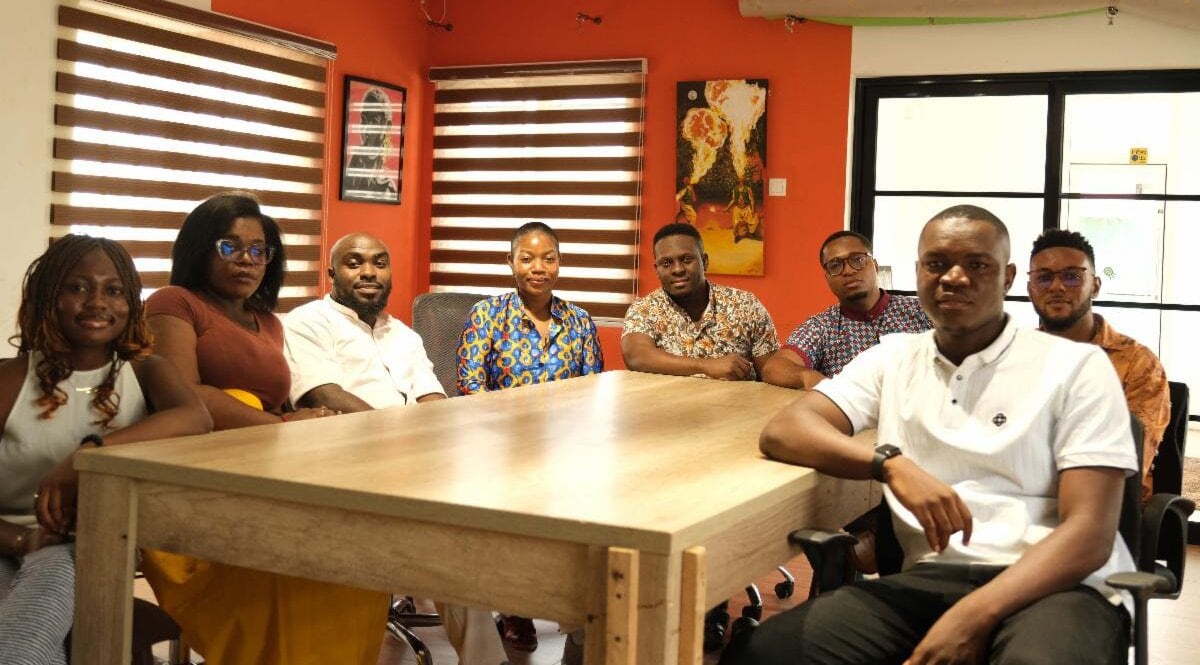
Ultimately, our strategy is about being embedded. If you’re not in the studios, the clubs, and the cultural conversations, you’re just observing. We are active participants.
HOW IS VIRGIN MUSIC POSITIONED IN NIGERIA’S MUSIC BUSINESS TODAY?
We are the home for the modern African music entrepreneur. We cater to independent-minded artists and labels who demand both local credibility and a sophisticated global strategy. We’re not aiming to be the biggest; we are relentlessly focused on being the most trusted.
“Our position is clear: creative-first, data-smart, and globally fluent.”
Our position is clear: creative-first, data-smart, and globally fluent. We are the partner that provides sophisticated analytical tools but also shows up to the show. We pride ourselves on a people-first approach. In a market crowded with options, our goal is for our partners to want to work with us, not just need to.
What creative or business trends are you seeing in the local market and across the wider African continent that we should know about?
Creatively, there’s a fascinating return to introspection and vulnerability in songwriting, paired with what I call ‘Afrofusion 3.0’—a sonic movement blending indigenous languages and instruments with futuristic, global sounds.
On the business side, the shift in mindset is profound. Artists are now demanding to see cap tables, not just hear applause. We’re seeing a surge in creator-owned IP, hybrid label-service models, and a more sophisticated approach to catalog management, which really picked up in late 2024. Artist managers are evolving into venture capitalists.
“Across the continent, the most exciting trend is the collapse of creative borders.”
Across the continent, the most exciting trend is the collapse of creative borders. Amapiano from South Africa is the pulse of clubs in Accra, and Lagos street-pop is influencing drill scenes in Nairobi. Africa is in a state of constant, brilliant cross-pollination.
What are the biggest challenges facing independent artists and music entrepreneurs in the market today, and how is Virgin Music positioned to help them solve those challenges?
The primary challenge is the gap between distribution and development. Simply uploading a track to DSPs is not a strategy for sustainability. The second, and related, challenge is a lack of financial literacy and business acumen, which prevents artists from converting streams into long-term wealth.
“For entrepreneurs, we act as an accelerator, offering the infrastructure, data, and global network to help them build robust, scalable businesses.”
This is precisely where Virgin Music intervenes. We are not a passive distributor; we are an active development partner. We provide the strategic framework from metadata optimization to creative marketing and global campaign management that turns a song into a story and a brand.
For entrepreneurs, we act as an accelerator, offering the infrastructure, data, and global network to help them build robust, scalable businesses. We are the power adapter between raw talent and real enterprise.
What advice would you give entrepreneurs starting out in the music business today?
First, know your ‘why’ before you start chasing the ‘who.’ Connections might open a door, but it’s your character, vision, and integrity that will keep you in the room.
Second, build for longevity, not just for hype. The culture has a way of humbling those who are only in it for fleeting moments of fame. Serve the art, respect the business, and be patient enough to build something that lasts. The financial and emotional returns on legacy are infinite.
What does success look like to you?
Success is tangible and systemic. It’s when our label partners have the financial freedom to reinvest in local infrastructure, building studios and hiring teams here in Nigeria/Ghanq and across Africa. It’s when I see more women appointed to positions of power, leading major music markets with their vision fully supported. Success is when my team achieves their goals, our artists build real wealth, and the global industry finally stops underestimating the strategic prowess of African professionals.
For me, success is about building a legacy of empowerment and creating a sustainable ecosystem for the next generation.
What are your creative and commercial predictions for Nigeria’s music business over the next five years?
Creatively, I predict a diversification beyond the ‘Afrobeats’ monolith. We’ll see the rise of hyper-regional genres that blend local sounds with global influences; think Yoruba drill, Hausa reggaetón, or even gospel trap. The era of genre-fluidity is upon us.
“Commercially, the next five years will be about infrastructure and ownership.”
Commercially, the next five years will be about infrastructure and ownership. We will see the rise of artist-owned platforms, a serious push for the auditing and collection of performance royalties, and a significant wave of investment in technology and catalog acquisition.
I firmly believe we will also witness the emergence of major streaming platforms and payment solutions built by Africans, for Africans.
IFPI reported that recorded music revenues in Sub-Saharan Africa grew 22.6% YoY in 2024 and surpassed USD $100 million for the first time. What are your predictions for the wider Sub-Saharan Africa market over the next 12 months?
That milestone is long overdue, and it’s just the beginning. In the next 12 months, I predict an acceleration of catalog licensing and acquisition deals. We’ll see non-traditional players like telcos and fintech companies deepen their investments in music as a tool for user engagement. Furthermore, expect a strategic expansion of African talent into new markets like Latin America and the Middle East, moving beyond the traditional focus on the West.
However, the most significant growth will come from within by improving the monetisation of local consumption through more efficient performance rights organisations, micro-subscription models, and sophisticated, data-driven marketing. The continent isn’t ‘emerging’; it has arrived and is simply undervalued.
If there was one thing you could change about the music business, what would it be and why?
I would dismantle the culture of ego and replace it with a foundation of empathy and loyalty. Too much of our industry is built on gatekeeping and the glorification of struggle. I would redesign the business to prioritize wellness, transparency, and genuine communication.
“Imagine an industry where artists aren’t expected to burn out by 30, and executives don’t hoard power.’
Imagine an industry where artists aren’t expected to burn out by 30, and executives don’t hoard power. An industry where artists and their day one teams, the managers and labels who believed in them from the start can grow and succeed together, (Mavin comes to mind) without the story ending in a bitter dispute.
When the business truly serves the creators, and the creators understand that the ecosystem is bigger than just them, everyone wins.
Music Business Worldwide