
Few platforms in the history of the live music business are credited with breaking as many artists as the Vans Warped Tour.
For nearly a quarter of a century, from 1995 to its “final” cross-country run in 2018, Warped Tour was a traveling carnival of punk rock, ska, emo, metalcore, and hip-hop whose stages served as a launchpad for the likes of Blink-182, Fall Out Boy, Paramore, My Chemical Romance, Sum 41, Good Charlotte, and countless others.
The Warped Tour format was unlike any other major festival: bands were listed alphabetically with no billing hierarchy, and set times were only announced on the day, scrawled on a giant inflatable board at the entrance, meaning fans had to show up early, make snap decisions, and discover acts they’d never planned to see.
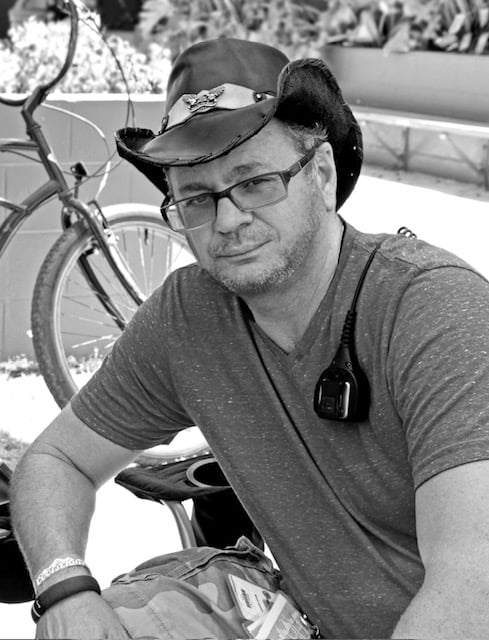
It all came from the mind of Kevin Lyman, who got his start throwing punk shows in Long Beach, California, and stage-managing Lollapalooza in 1991.
“The No Doubts, the Sublimes, [the] Quicksands – those bands were willing to take a leap of faith with me,” Lyman recalls of Warped’s inaugural lineup.
“That was a group of peers [who] really wanted something like this, and they let me be the [torch] bearer to go forward with it and take the lumps, the good and the bad.”
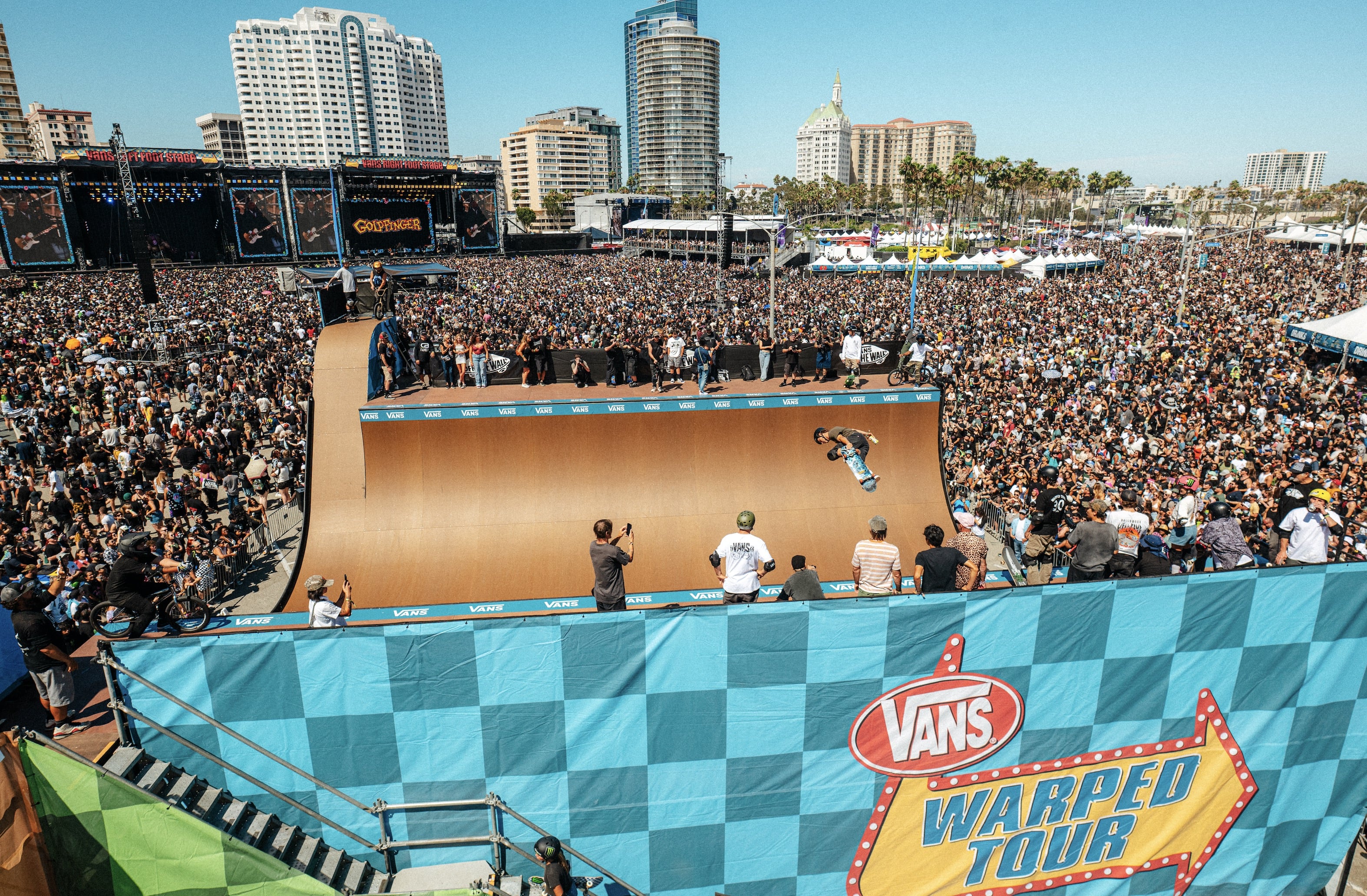
What followed was a 25-year run, which became what’s believed to be the longest-running touring music festival in North American history. It also became a testing ground for rising rock stars during pop punk and emo’s mainstream crossover in the late nineties and 2000s, and its influence rippled from fans to bands and the wider industry.
“I started getting calls from band members going, ‘Man, I just got told, if we don’t get on Warped, we don’t get pushed.’ And that was a little hard,” he remembers. “I never built [it] to be in a position of having that much influence over someone chasing their dream.
“The labels were out there scouting, too. They were looking at our Ernie Ball Battle of the Bands every day; six to eight bands playing on that stage every day that we’d vetted from thousands [of submissions].
“Everyone goes, ‘Don’t you listen to the band?’ I watched the front of the stage. If there were six kids singing those songs as passionately as 1,000 kids would sing Bad Religion when I was working in a club, that group had something.”
Lyman drew it all to a close in 2019, but after a six-year hiatus, brought Warped back in 2025 in partnership with Live Nation-backed Insomniac Events.
It was an emphatic return: the festival’s three two-day stops, in Washington, D.C., Long Beach, and Orlando, sold a combined 240,000 tickets, with the Long Beach stop alone drawing over 40,000 fans a day.
Lyman says that the revived event is appealing to a new generation of rock fans.
“Last year was an anomaly. We sold out without announcing bands,” he says. “I would never bring [Warped Tour] back as a complete nostalgia play,” he adds. “I wanted to pay homage [to the past], of course. But we had to look to the future – of fans, brands, and bands.
“But the cool thing about last year [and] it’s not science, [but] about a third of the people that came to Warped last year were at their first festival or even first concert. That was pretty impressive.
“And this year we’re seeing a two-to-one ratio of new credit cards to [returning ones]. It’s not scientific either, but it’s an indicator that we’re attracting a new audience again.”
“It was too close to my soul. I couldn’t just sell it. I knew someone would have wrecked it in a year.”
Kevin Lyman
Warped Tour is returning in 2026 with dates in D.C. (June 13-14), Long Beach (July 25-26), Montreal (August 21-22), Mexico City (September 12-13), and Orlando (November 14-15).
In addition to appealing to a new generation of fans, Lyman says keeping ticket pricing accessible is a non-negotiable. “Since 1995 I’ve had the lowest-[priced] tickets for festivals,” he claims, adding: “The entry point to a festival has become quite high.” Today, two-day general admission passes for Warped Tour start at $149.
Beyond the festival, Lyman is an associate professor in the Music Industry program at the University of Southern California, and a recently honored recipient of the Canadian Live Music Association’s Global Impact in Live Music award, presented to him in Toronto.
Here, Lyman discusses Warped Tour’s 2026 return, why the live industry needs a reality check on pricing, his approach to artist discovery, and the one thing he’d change about the music business…
HOW DO YOU KEEP ticket prices accessible WHEN COSTS ARE RISING EVERYWHERE?
It’s always been a challenge. Since 1995 I’ve had the lowest-[priced] tickets for festivals. But having this new partner with Insomniac, they’ve been very supportive, and even helped me keep the ticket price lower last year than I thought it could be.
They invest in culture. They invest in their community, the EDM community.
They don’t look at it as short-term. They don’t look at it as ‘this’ show. They’re looking at it as a long-term investment in the community, and that’s a great partner to have.
WARPED TOUR HAS ALWAYS BEEN FAMOUS FOR ITS RANDOMIZED SCHEDULES – SET TIMES DECIDED ON THE DAY, NO OFFICIAL HEADLINERS, BANDS LISTED ALPHABETICALLY. WHERE DID THAT PHILOSOPHY COME FROM?
That stemmed from being the stage manager of Lollapalooza in 1991. I’d worked in clubs for so long, 320 nights a year, and I’d see opening bands play as people were coming into the venue. I watched Henry Rollins, one of the most intense performers in history, going for it on a big stage with empty seats sometimes.
“I watched Henry Rollins, one of the most intense performers in history, going for it on a big stage with empty seats sometimes.”
And I would just sit there and go, “What if I could put him on right between Siouxsie and the Banshees and Jane’s Addiction? How would that have changed the trajectory of an artist like him?”
So when I started Warped, I did everything differently. I started doing my posters alphabetically. We were the first ones to do that, because I hated dealing with billing. Billing is the biggest waste of time in music, in my opinion.
Then it was like, mix up the schedule, because I watched bands get lulled into a certain spot on a bill. It wasn’t challenging for them. Warped was a controlled chaos that kept you a little off balance. I put Katy Perry on right before Bring Me the Horizon, or right after Pierce the Veil, and she got to be a better live artist because of that. You were challenged to get those people back to your stage.
“BILLING IS THE BIGGEST WASTE OF TIME IN MUSIC. PEOPLE ARGUE ABOUT IT FOR WEEKS. GET OUT THERE AND PROMOTE.”
In Long Beach [in 2025], we were supposed to open the doors at 11, and we had to open at nine.
We had 45,000 people through the doors at 11 in the morning. That first band, probably 15,000 people ran to that stage. Either that’s a catalyst for their future, or they’re going to have the most amazing video to show their grandchildren of when they were playing [to] 15,000 people.
WARPED TOUR HELPED BREAK BLINK-182, FALL OUT BOY, PARAMORE, MY CHEMICAL ROMANCE, AND MANY OTHERS. HOW MUCH OF AN A&R ROLE WERE YOU AWARE YOU WERE PLAYING AT THE TIME?
I was in a lucky position, because a lot of times when someone has a festival, they do a lot of favors, putting young bands on. I was able to put the best musical band on my shows.
I think I had a pretty good ear, but honestly, I think I’m kind of tone deaf. I really am. But I can hear the emotion in the music [and] I can tie that into the live show. That’s why we could sign Flogging Molly or Gogol Bordello. I was trying to make it emotionally successful, not commercially successful.
That memory of seeing Gogol Bordello live and getting splashed with red wine and people crowd-surfing on your head? I think we’re in a society [where] we all just need to mosh sometimes, physically, mentally, emotionally.
THERE’S A LOT OF TALK IN THE MUSIC BUSINESS ABOUT ‘SUPERFANS’ RIGHT NOW. WHAT ARE YOUR VIEWS ON HOW THE INDUSTRY IS APPROACHING THAT?
Unfortunately, our industry keeps talking about monetizing the superfan. It’s always about monetizing them. Reward those superfans. Give them experiences. Give them something, and then they become superfans organically.
If you can have an organic superfan, the monetization comes naturally. It’s not a forced monetization thing.
“REWARD THOSE SUPERFANS. GIVE THEM EXPERIENCES. GIVE THEM SOMETHING, AND THEN THEY BECOME SUPERFANS ORGANICALLY. THE MONETIZATION COMES NATURALLY.”
Those are the fans [that have allowed] bands like The Maine, Mayday Parade, and Less Than Jake to maintain a career of 30 years as band members – because they recognized that early and stuck with that model.
YOU RECENTLY RECEIVED THE GLOBAL IMPACT IN LIVE MUSIC AWARD IN TORONTO, PRESENTED BY SUM 41’S DERYCK WHIBLEY. HOW DID THAT FEEL?
I didn’t realize I had that much kind of an impact on [Deryck’s] life. He was very [generous] in his introduction to me. He related to when they were young and didn’t have anyone to go to [for] Thanksgiving, [and] we invited his band over, and they had Thanksgiving dinner with our extended families.
I was never one of those people [seeking adulation]. We’re workers, me and my wife. But to find out that I’ve been part of people’s lives — that I’ve allowed them to live this lifestyle for as long as they have — it’s been a pretty nice ride.
The clearest theme from the bands backstage [at the 2025 comeback] was when a band told me: “We play festivals as part of our business plan now, but coming back to Warped is like coming home.”
CONSOLIDATION IN LIVE MUSIC IS A MAJOR TALKING POINT today. WHAT’S YOUR VIEW?
Consolidation breeds innovation. You see it when the major agencies consolidate, then [they] lose people and those people go form smaller booking agencies. There are always people who want to create an alternative existence.
HAD THERE BEEN MANY ATTEMPTS TO ACQUIRE THE WARPED TOUR BRAND OVER THE YEARS?
Yeah. People were like, “You could have sold the name.” And I go, “No. It was too close to my soul. I couldn’t just sell it. I knew someone would have wrecked it in a year.”
IF YOU WERE IN YOUR TWENTIES TODAY WITH NO INFRASTRUCTURE, NO CONTACTS, AND NO CAPITAL, COULD YOU BUILD SOMETHING LIKE WARPED TOUR?
I think a young [promoter] needs to work like I did, for 12 years in the club, and build up those relationships to allow you to fail. I was allowed to fail that first year, but I’d made so many people look good, and worked so hard, and [had been] kind to people, that I was given a second chance.
A lot of people who come in [to the business now] might have the confidence, but they border on cockiness, [thinking]: ‘I don’t have to pay my dues.'”
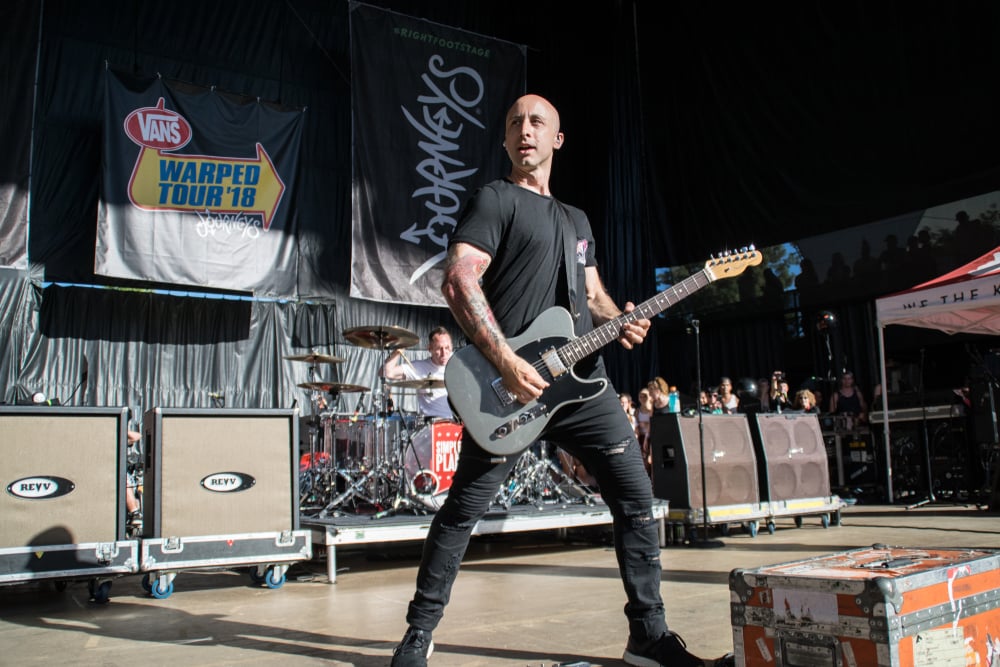
[In the early days], the No Doubts, the Sublimes, [the] Quicksands – those bands were willing to take a leap of faith with me. Then that second year, NOFX and Pennywise saw it. I’m doing some work with will.i.am [right now], and he walked in the room and gave me a giant hug and flipped right back to that parking lot, telling [me] how he made relationships in punk rock at Warped Tour that he never thought he’d have in life.
Those people gave me a second chance in ’96, and then things started strangely falling in place.
Blink was right on my bus [that] summer. They couldn’t afford the transportation costs. I remember paying them $250. And now they get seven figures or more for a festival. That’s not going to fit my economic model, but it’s awesome that they went that far, because our scene of music never went that far.
IF THERE WAS ONE THING YOU COULD CHANGE ABOUT THE MUSIC INDUSTRY, WHAT WOULD IT BE AND WHY?
I think these major companies that are reporting record profits should create a fund to support younger artists as overall tour support, and for the smaller clubs, to keep them in business. 100-to-500-seaters are closing left and right because they were built on a model of alcohol pays the bills and tickets sell. We’re losing all those venues.
There’s got to be a few million [dollars available] that can make our industry better – helping mental health, helping crew, artists, bands in need.
[If] these businesses are recording record profits, why don’t they give a little bit back to that artist [community] that we’re trying to keep alive? Our industry should support them a little more.Music Business Worldwide