MBW Reacts is a series of analytical commentaries from Music Business Worldwide written in response to major recent entertainment events or news stories. Only MBW+ subscribers have unlimited access to these articles.
Universal Music Group has filed its response brief in Drake’s appeal against the dismissal of his lawsuit over Kendrick Lamar’s Not Like Us.
In the 83-page brief, which you can read here, UMG argues that Drake’s case fails because “he seeks to strip words from their context and deem them actionable defamation”.
Drake filed his 117-page appellate brief in January, challenging Judge Jeannette Vargas’s October dismissal of his defamation lawsuit against UMG over Lamar’s Not Like Us.
He originally sued UMG in January 2025, about eight months after Not Like Us was released, alleging that UMG “intentionally published and promoted” the song, knowing that its lyrical content was false and defamatory.
In October, Judge Vargas ruled that Lamar’s diss track “constitutes protected opinion rather than actionable defamation,” finding that the accusations could not reasonably be interpreted as factual given the context of what she called “perhaps the most infamous rap battle in the genre’s history.”
Following Drake’s appeal, UMG is now urging the Second Circuit of the US Court of Appeals to affirm that dismissal, pushing back on each of Drake’s arguments.
Here are three things worth noting from the filing:
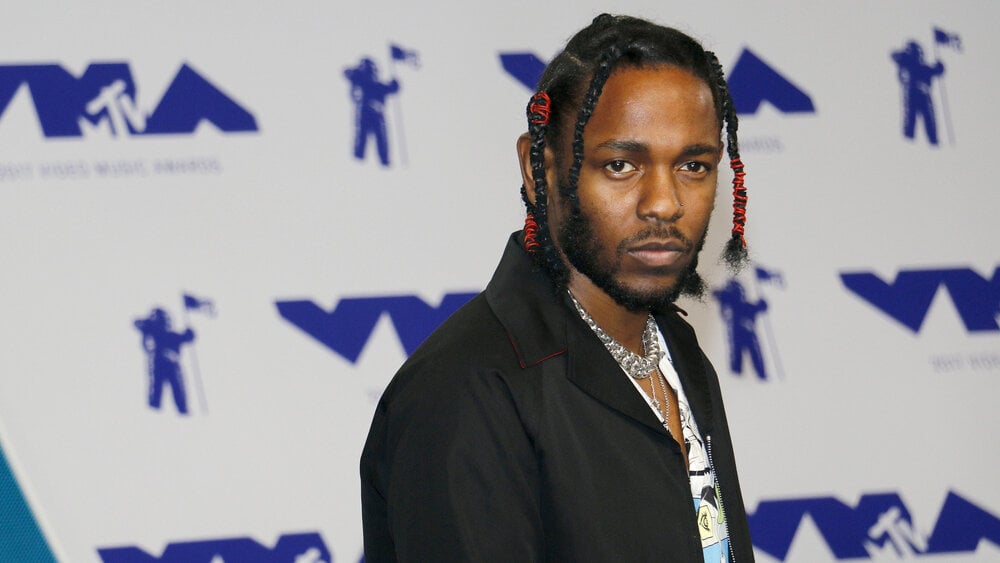
Credit: Tinseltown / Shutterstock.com1) UMG SAYS DRAKE ‘GOADED’ LAMAR INTO THE VERY LYRICS HE’S NOW SUING OVER, USING AI-GENERATED VOICES TO DO IT
UMG’s brief returns repeatedly to one point: that Drake provoked the exact content he now claims is defamatory.
UMG noted that Drake and Lamar had a “rap beef” in 2024 and traded several “diss tracks, sometimes within the same hour.” One of those tracks is Drake’s Push Ups, released on April 19, 2024, which mocks “Lamar’s height and shoe size” and “questions Lamar’s success.”
Without a response from Lamar, Drake released another diss track called Taylor Made Freestyle a few days later, in which he used AI-generated voices of rapper Snoop Dogg and the late rapper Tupac Shakur “to goad Lamar into responding,” according to UMG’s brief. In that track, Drake, via Tupac’s AI-generated voice, encouraged Lamar to “[t]alk about [Drake] likin’ young girls” on his next track.
UMG added that “Drake, in his own voice, further taunts Kendrick for failing to come up with a satisfactory response.”
“DRAKE, IN HIS OWN VOICE, FURTHER TAUNTS KENDRICK FOR FAILING TO COME UP WITH A SATISFACTORY RESPONSE.”
UNIVERSAL MUSIC GROUP’S BRIEF
When Lamar eventually released Not Like Us, the lyrics Drake now claims are defamatory, including “Say, Drake, I hear you like ’em young,” directly echoed what Drake had invited, says UMG.
According to the brief, Lamar responded by releasing Euphoria on April 30, 2024, which “accuses Drake of fabricating his claims.” Lamar’s song targeted Drake’s music, parenting, character and identity.
Lamar later released 6:16 in LA, calling Drake a “terrible person” and a “bully,” while Drake responded with Family Matters, criticizing Lamar’s authenticity, questioning whether Lamar is the biological father of one of his children, and suggesting Lamar cheats on his partner and is a domestic abuser.
UMG argues this context is central to understanding the track as opinion, not fact. The brief noted that Drake’s counsel “could not provide the Court with any alternative understanding” of the Taylor Made Freestyle lyric at oral argument, and does not offer one in his appellate brief either.
2) UMG ARGUES RAP DISS TRACKS SIGNAL OPINION, NOT FACT, AND THAT DRAKE HAS ARGUED THE SAME THING HIMSELF
UMG’s brief highlighted how competition and verbal sparring have been part of rap music since the 1970s, and how Drake is a “prolific combatant, having traded diss tracks with many artists before Lamar.”
UMG argued that “A rap diss track signals—if not shouts—opinion not fact. It is the quintessence of an art form expected to contain ‘considerable hyperbole, speculation, [and] diversified forms of expression and opinion.'”
“A RAP DISS TRACK SIGNALS—IF NOT SHOUTS—OPINION NOT FACT. IT IS THE QUINTESSENCE OF AN ART FORM EXPECTED TO CONTAIN ‘CONSIDERABLE HYPERBOLE, SPECULATION, [AND] DIVERSIFIED FORMS OF EXPRESSION AND OPINION.'”
UNIVERSAL MUSIC GROUP’S BRIEF
In its brief, UMG noted that in November 2022, Drake himself signed a petition criticizing prosecutors who use rap lyrics as evidence in criminal cases.
“The petition decries that ‘more than any other art form, rap lyrics are essentially being used as confessions in an attempt to criminalize Black creativity and artistry,’ and that the ‘use of lyrics against artists in this way is unAmerican and simply wrong,'” UMG noted.
Drake had argued in his appeal that the district court’s purported categorical rule “ignores that rap music can convey factual assertions” because “rap lyrics are regularly used as evidence in criminal cases[.]”
UMG said “Drake’s argument is nonsensical,” and that the rapper’s argument is “astoundingly hypocritical,” given his November 2022 petition.
3) UMG PUSHES BACK ON DRAKE’S ‘REPUBLICATION’ ARGUMENT, INCLUDING THE SUPER BOWL
In his appeal, Drake argued that the court erred by overlooking UMG’s purported “republications” of Not Like Us. His lawyers argued that UMG’s republications of the song, including Lamar’s performance at the Super Bowl, Grammys and political rallies, reached new audiences who had no rap battle context.
“Millions who tuned in to the ‘Big Game’ – including young children and people whose religious or cultural beliefs, or simply their taste in music, leave them with no interest in or exposure to rap battles – were unaware of the feud and ‘had never before heard the [Recording] or any of the songs that preceded it,'” Drake’s January filing stated.
In the latest brief, UMG said that argument is “without authority and meritless.”
“First, Drake did not tell the court below that it needed to do separate context analyses. He barely raised republication, conceding at oral argument that there was ‘a lack of grappling with the—and perhaps due to imprecise briefing on our part—the nature—the role that republication plays in this case’.”
UMG’s legal team added that Drake’s “republication” argument “is undone by his admission that Not Like Us immediately became ubiquitous, generating a record-breaking 13 million streams in 24 hours, debuting at No. 1, and reaching 96 million streams in a week.”
UMG said Drake did not explain how subsequent plays of a song already heard on that scale reached “a new audience” in subsequent “republications.”
UMG also noted that at the Democratic National Convention, one of Drake’s cited “republications,” the track was actually excerpted so the audience only heard the hook “they not like us” on repeat, not the lyrics Drake claims are defamatory.
On Lamar’s Super Bowl performance specifically, UMG argued the context actually put the audience on greater notice of the feud, given rampant pre-performance media coverage. UMG also noted that Lamar himself referenced the lawsuit during the halftime show, telling the audience: “I want to play their favorite song… but you know they love to sue.”
Beyond the republication argument, the brief also addresses a notable episode in the case’s procedural history. Drake’s original complaint alleged that UMG used bots to artificially inflate streams of Not Like Us. According to UMG’s brief, that assertion was “directly refuted by the source Drake relied on.”
After UMG sent a Rule 11 letter, a formal warning that can precede sanctions for filing claims without adequate factual basis, Drake “agreed” to “withdraw… and correct” the allegation before filing his amended complaint.
Drake’s remaining GBL claim, which alleges UMG engaged in deceptive business practices to artificially boost the song’s success, now rests largely on anonymous online commentary and “information and belief” allegations. UMG argues these fall well short of plausibility standards and that Drake has not identified how any consumers were actually harmed.
On Drake’s claim of market harm, UMG said: “It is pure speculation that a Drake song would necessarily have been played instead of Not Like Us.”
Both Drake and Kendrick Lamar are signed to UMG (Drake via Republic Records, Lamar via Interscope).Music Business Worldwide