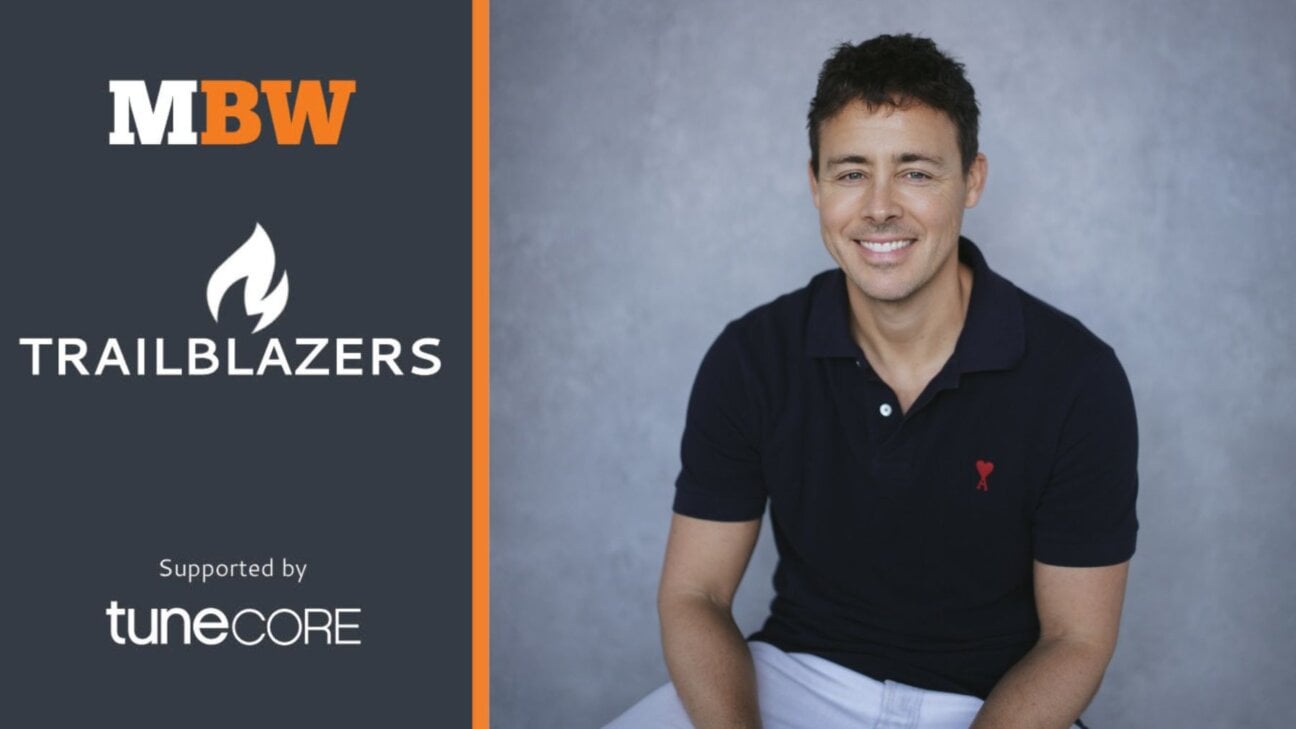
Tyler Brown, founder of London-based Funfair, forged at Simon Cowell’s Syco, which Brown joined as an A&R assistant in 2008.
He went on to work A&R on One Direction alongside Sonny Takhar, before being named managing director of Syco Music in 2016.
After Syco’s days as a label operation ended in 2020, Brown struck out on his own: first building Funfair into a management, publishing, and recordings business backed by Coran Capshaw, then co-founding emerging markets-focused label Heatwave Records with former Ultra Music Publishing A&R exec Harold Serero in 2024.
The successes are starting to rack up.
James Essien, the first writer signed to Funfair Publishing back in October 2022, co-wrote SWIM, BTS’s Hot 100-topping comeback single – and the first song released in 2026 to pass 500 million Spotify streams.
Funfair Publishing client Silva Bumpa, meanwhile, landed his first UK Top 10 single this summer with On 2nite and sold out his headline show at London’s Roundhouse within 24 hours.
On the label side, Brown says Nigerian artist Mavo – whom Funfair co-signed with Nigeria’s Inner Circle – has amassed more than 500 million streams over the past 12 months, alongside six Top 5 records in his home country.
Here, MBW speaks with Brown about the ‘World Domination’ WhatsApp group that started it all, why he’ll never go back into the major label system, the lesson in loyalty he learned from Simon Cowell, and why songwriters should be taking a share of master income…
What was the gap in the market – or the frustration with how things were being done – that made you start this company?
I started the publishing company pretty naively, hearing some demos from a songwriter who I thought was incredible – James Essien – and wanting to help him become one of the biggest songwriters in the world. The first WhatsApp group we started with him and his manager was titled ‘World Domination’!
I was coming out of the Syco Music system, where the mission was always to break acts internationally; domestic success wasn’t really celebrated. James didn’t have many cuts under his belt or much in the pipeline, but I hadn’t heard a songwriter from the UK before who I genuinely thought could crack the R&B-pop market in the US.
Roll on four years, and James has become one of the biggest songwriters in the world, co-writing SWIM by BTS – which is the fastest-selling single in the world in 2026 – plus releases with Giveon, LISA, Sienna Spiro, Joji, Tyla, Chris Brown and many more.
Funfair isn’t purely a development play, though. Where does volume come into it?
The focus is still on development – Silva Bumpa, who we signed nearly three years ago, has had a great year with his first hit, On 2nite – but I realized quite quickly that this needs to be balanced with volume in business.
Last year, I noticed a gap in the market in the phonk genre. There were a lot of successful labels, but not really any publishers who were focusing on publishing only. We quickly started signing shares of big phonk records, which led to signing artists in the space.
Our phonk catalog has streamed well over 2 billion [times] in the last 12 months, and we have some of the biggest names in the space signed to us – 2KE, DJ Zarek, n7san7os, DJ Orbital. It’s been a fantastic business move, and I found an A&R who has flourished in his role in this venture, which has been an added bonus.
We have also been extremely busy in the US rap space, signing producers who have had releases with artists such as A$AP Rocky, Kanye West, Yeat, A$AP Ferg, Kodak Black, Lil Tecca and Zeddy Will.
What’s your long-term ambition – and how do you get there?
To be recognized as one of the most successful independent labels and publishers in the world. I get there by a combination of signing, developing and breaking a number of long-term career artists, songwriters and producers, plus creating a business that generates significant profit across all of our activities.
The key to this is building a team who share the same ambition and passion for their work and for the business at large. It’s taken me over five years to find a team that I trust implicitly and back to deliver the long-term ambition I’ve described. I believe it’s the hardest thing to do in business – and when you find a great young team, never take them for granted.
I really only want to work with people I genuinely think will become future business leaders in our industry. My role is to try and mentor them in a way I was mentored when I was coming through the system, from the likes [of] Sonny Takhar and particularly Simon Cowell, who is a true maverick and by far the smartest person I’ve ever met!
As I get older, I get a lot of satisfaction from seeing younger executives grow in their roles. When I was at Syco and having a lot of success, an older manager tried to get me fired for basically having morals and sticking to them. I never understand why someone like that, who’d had a lot of success in their career, would want to try and squash a younger executive. Thankfully, Simon fully had my back, which taught me another lesson in loyalty!
What’s the thing about running a company that nobody warns you about?
I ran Syco Music for a few years under Simon, and it’s extremely different to running your own independent company. At a major, you have so much support from various departments. Now, I understand recording and publishing contracts back to front, and have become a million times better at negotiating deals.
The hustle is different as well. You have to think more outside the box to generate business, and you have to make every pound count, which creates a new energy which I really like.
I would never go back into the label system. I had a great time in it, but there’s a ceiling, particularly in the UK, and I don’t feel that ceiling at all in my business. I also think I’m past having a ‘boss’. Being able to pick and choose what you sign and who you work with is such a privilege, and one I truly appreciate.
I like the pressure it comes with as well. You effectively ‘eat what you kill’; there are no existing master catalogs to fall back on. It’s the here and now which counts, which keeps you on your toes!
How have you funded the company’s growth so far?
We’ve taken outside investment for Funfair and Heatwave. Unfortunately, I didn’t have a few million pounds spare to plonk into the businesses.
We have great partners in Red Light / Co:Brand for Funfair and Too Lost for Heatwave. It’s been great to see Too Lost go from strength to strength. Their founder, Gregory Hirschhorn, is super smart – I’ve been very impressed by my interactions with him.
Would you ever sell?
I would always sell at the right price, but I’m not really thinking about that at this stage. I feel like we’ve laid some good foundations, but it’s just the start really.
I’ve always liked collaboration, and find it much more fun to create or work on something with a partner that can add value and bring a different skillset to the party. I’ve never been particularly precious about protecting ‘my share’, and have always just wanted whatever I have worked on to become as big as possible, no matter how we get there!
I would rather have 1% of a hit record than 100% of a record that wasn’t. Success breeds success, and I think as an executive or as a business you always have to be involved in ‘hot’ songs/artists, no matter what your share is. That is effectively your currency, and it’s the best magnet for future business.
What’s the most meaningful piece of business advice – music industry or otherwise – you’ve ever been given, and who passed on the wisdom?
Simon always said, ‘Play by your own rules.’ I completely got what he meant in the grand scheme of things, and I’m still trying to implement that mentality into my own routine to get the best out of myself every day.
You can waste a lot of time trying to appease creatives or fellow executives, and I learned later on in my career that it’s better to be honest rather than tell people what they want to hear. They will like you in the short term if you do that, but won’t respect you in the long term.
The other piece of advice I’ve received from various people is: always trust your instinct. The moment you start second-guessing your instinct in the music industry, you should go and do something else. The most successful people in any industry are the ones with the best instinct – you either have it or you don’t. Thankfully, I think mine is pretty good more often than not.
What’s something most people in the music business believe that you think is wrong?
I think people’s attitude to AI is generally very negative. It can definitely be a force for good in the music industry if used in the right way.
Whenever there is a technological change, people get worried and push back. It’s human nature. I remember when streaming first came into the market and a lot of people tried to resist it – it can make you look very silly. AI is going to change life as we know it, and the smart people will understand that unless they embrace it, they will be left in the past.
I don’t think there’s a single person in the music industry advocating for AI artists to replace real artists. True artists will never be replaced; human emotion and storytelling will always shine through and be the most relatable forms of music. However, if AI can improve processes in the studio or in the day-to-day running of a label or publishing company, I really don’t see any issue.
Other than yourself (obvs), who is the most talented music executive working in the global music industry?
I’ve never met him, but what Ghazi Shami has built at EMPIRE is extremely impressive. They are significantly bigger than the majors now in Africa, and I hear they are doing great business in the Middle East, which could be the next territory to emerge.
That company is definitely a huge inspiration for our business, Heatwave. We’ve had hits across all of South America, in Nigeria, Indonesia, Philippines and Chile, but not with the consistency that EMPIRE have had yet – that’s what we’re aiming for.
I’d also like to give a shout-out to a future star of the music industry, Caleb Oyolola, who is the founder of Inner Circle Entertainment, based in Nigeria. We’ve had huge success over there with Caleb on the Fido and Mavo projects. He is the most talented young operator I’ve met in many years, and is no doubt gonna be a global power player in the not-too-distant future.
If we could give you a magic wand to change one thing about the music business right here and now, what would it be – and why?
I don’t think songwriters get the respect they deserve. I’ve always valued songwriters as much as I have valued artists; the two have always gone hand in hand for me. If I look back at my career, the majority of my successes have come from having strong and long-lasting relationships with songwriters, which have led to hit records!
It’s so hard to make a living now as a songwriter if you are just starting out. When I entered the industry in 2008, a songwriter could make a living out of album tracks – not necessarily on projects that were globally successful, either. Nowadays, particularly in the UK, that’s impossible. You have to have commercially successful singles from day one, which is completely unrealistic.
There’s no doubt we’re losing a lot of potentially very good songwriters from the industry because they can’t afford to continue. Songwriting is a craft. You don’t become Max Martin overnight, and some very successful songwriters having hits now took time to flourish and find their confidence. The major publishers are being way more selective now as well, so that route has shrunk too.
So what’s the fix?
Songwriters should be taking a share of master income on songs they help create. I know this is starting to happen, but it should be an industry-wide stance.
It also bugs me when songs are nominated at award shows and the songwriters aren’t invited to celebrate in the success. I know it rightfully upsets the songwriters as well – another example of the industry not showing enough respect.