
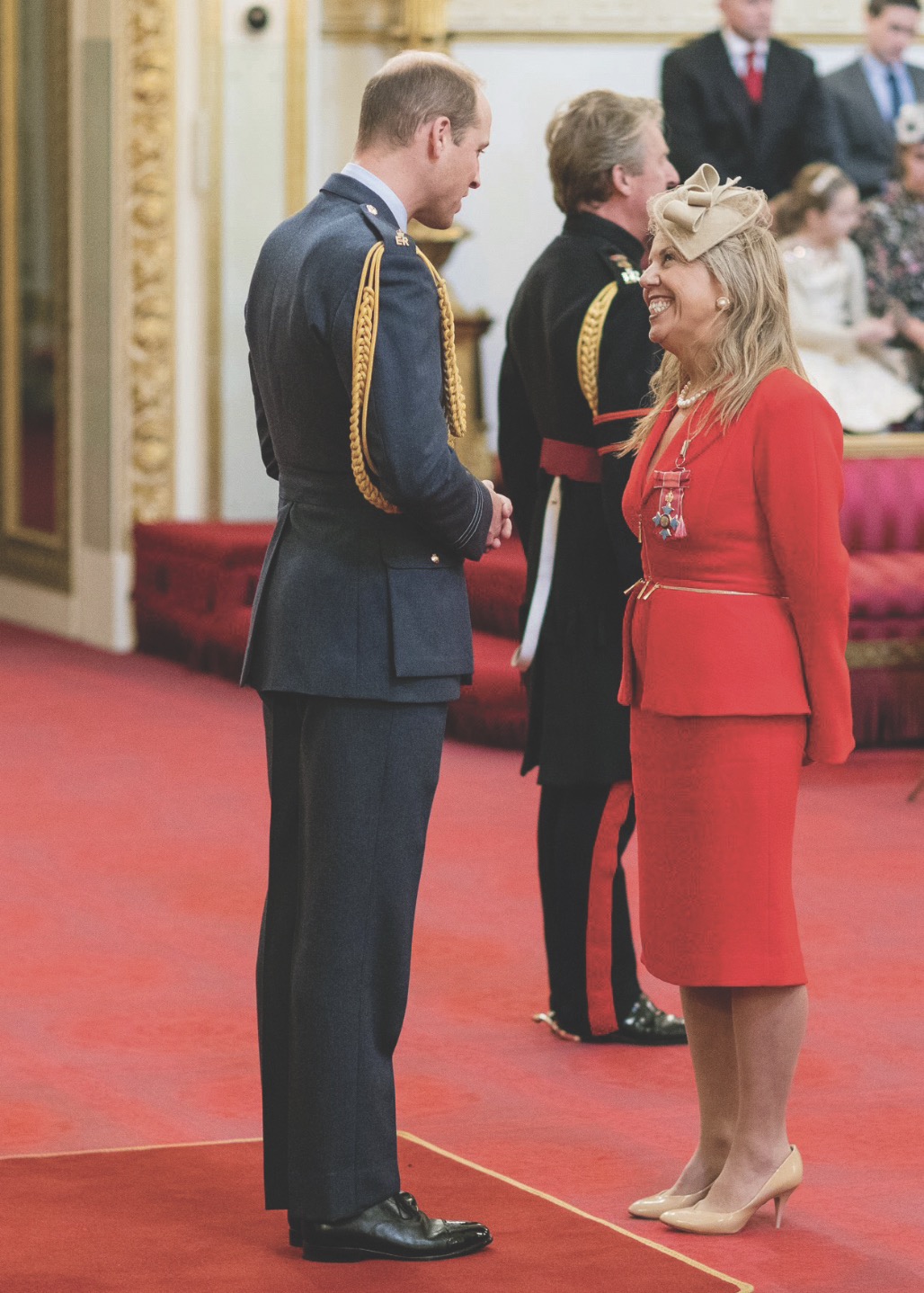
If you’re ever worried about whether you’ve achieved enough in your life, you are hereby advised not to look at Stevie Spring’s CV.
Her remarkable 50-year career has taken in hugely successful stints at everywhere from TV-am and numerous advertising agencies (where she leant in to the power of jingles such as “Hello Tosh, got a Toshiba?” and “Ariston, and on, and on”) to Clear Channel, Future Publishing, The British Council and The Co-operative Group (where she worked on the group’s involvement with festivals and Manchester’s Co-op Live – brushing off the latter’s troubled launch as “little local problems”).
She’s also held a number of high-profile roles at charities and non-profits, including Mind and BBC Children In Need.
“I have had a very long career, because I’ve had a dual career,” she laughs. “From the age of 16, I’ve always done something that paid me [while also working for] a not-for-profit. I was a junior trustee and earned my first wage packet at the age of 16 and it’s been non-stop since then. Which is over 50 years, so it sort of feels like I’ve had a 100-year career!
“I have also been blessed with a zig-zag career,” she adds. “Most of my executive career was working with amazing creative people, literally some of the best in business. And I’ve leant into some really difficult commercial roles and I’m still standing and still smiling.”
Her latest role certainly seems to be making her happy. She was made chairman (she prefers that term to ‘chair’ as “I’ve done a lot of work in private equity and most of the guys there don’t realise that women can be chairmen and that chairman is just a job description”) of the PRS for Music Board in January 2024.
It’s her first job directly in the music business after a life spent “on the edges, observing”. But her passion for music is clear – she saw Led Zeppelin at Knebworth in 1979, and enthuses about sitting next to Robert Plant at the Classic Rock Awards, as well as recent gigs from the likes of Gary Barlow and Peter Andre (“Don’t judge me!”).
At a recent meeting with songwriter and ASCAP president/chairman Paul Williams, she found herself singing his own song Evergreen to him in the middle of The Wolseley.
“I’m not sure one is ever up to speed in this industry, because it’s complex and it spans tech, licensing, creation, regulation, membership and all points in-between,” she says.
“So every day is a learning day. But it is all the things I love. I love the dinner party brag of, ‘We process three times as many transactions as Visa in a year’.”
Spring has been something of a turnaround specialist in her previous roles, but PRS for Music is in rude health. Under CEO Andrea Czapary Martin, it paid out a record £1.02 billion to songwriters, composers and publishers in 2024, up 8.1% on the previous year.
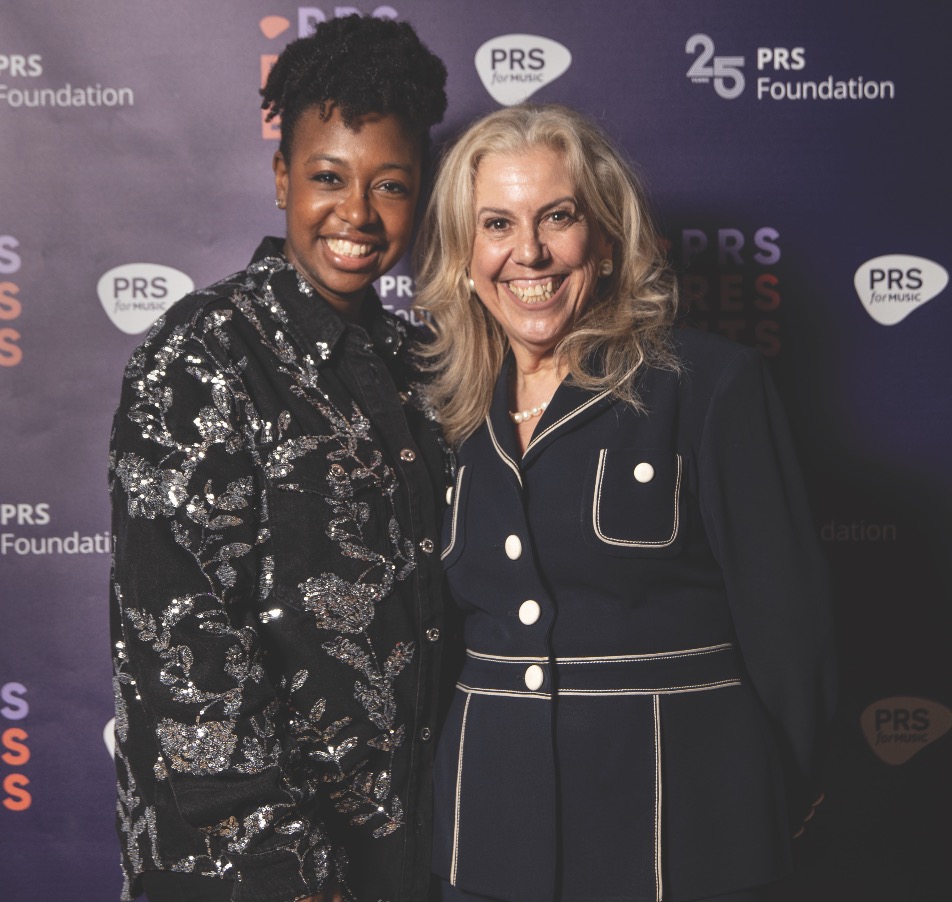
Such huge sums are a long way away from Spring’s childhood, raised in a single parent family by her father in a railway flat in Camden Town (“We didn’t have any money, but we had everything else”).
They held family board meetings to discuss resource allocation from when Spring was just seven years old, teaching her numerous vital lessons for decades spent in boardrooms, many of them as a rare female CEO in male-dominated industries.
Furthermore, while boss of Future Publishing, she was – for want of a better word – outed by the Independent On Sunday’s Pink List (“It wasn’t that I was secretive about being in a same-sex relationship but, equally, I wasn’t walking around with a Pride banner at every meeting”).
Nothing seems to faze Spring, however. In person, she’s excellent company, bursting with jokes and anecdotes about seemingly everyone who’s anyone – no wonder she was once named one of the most connected women in Britain by GQ magazine.
She’s also one of the busiest, but MBW managed to pin her down at PRS HQ in London to talk about Spotify, AI and the importance of something called BHAGs…
Had you always wanted to work in music?
Well, when the headhunter phoned me up I did almost rip his arm off! I thought, ‘Ooh, that’s got my name on it – tech, music and creators’. And I must have wanted it, because the recruitment process was the most intense and difficult of any I’ve ever done, including ones that paid ten times as much!
Music’s always been a really important part of my life. I love live-anything but particularly live music. I spent four years at the British Council, waving the flag for British culture around the world, a big part of which was music.
How do you see your role at PRS?
It’s a weird hybrid between an unapologetically commercial arm and a cooperative owned by the creators. It’s about doing your best for the membership and working in partnership with our licensees and our partners overseas that we work with on collection and distribution.
We have to be friends to a lot of people across the ecosystem that we might otherwise be frenemies with. But I love the cooperative ownership model and I have specialised in profit with purpose throughout my career.
The press release when you joined talked about “maximising value”. Given the exponential growth in PRS revenues, hasn’t that happened already?
No. There are a few data points that we need to really focus on.
We have to concentrate very hard on our cost-to-serve [rate] so that we are efficient and invest our members’ money as though it was our own.
Lots of people who work for PRS or PPL-PRS are members. They write and perform their own music, outside of their day job. I would love those colleagues not to have to come to work at PRS or PPL-PRS, so that they could earn their living from creating. That’s all about pushing the value of what they create
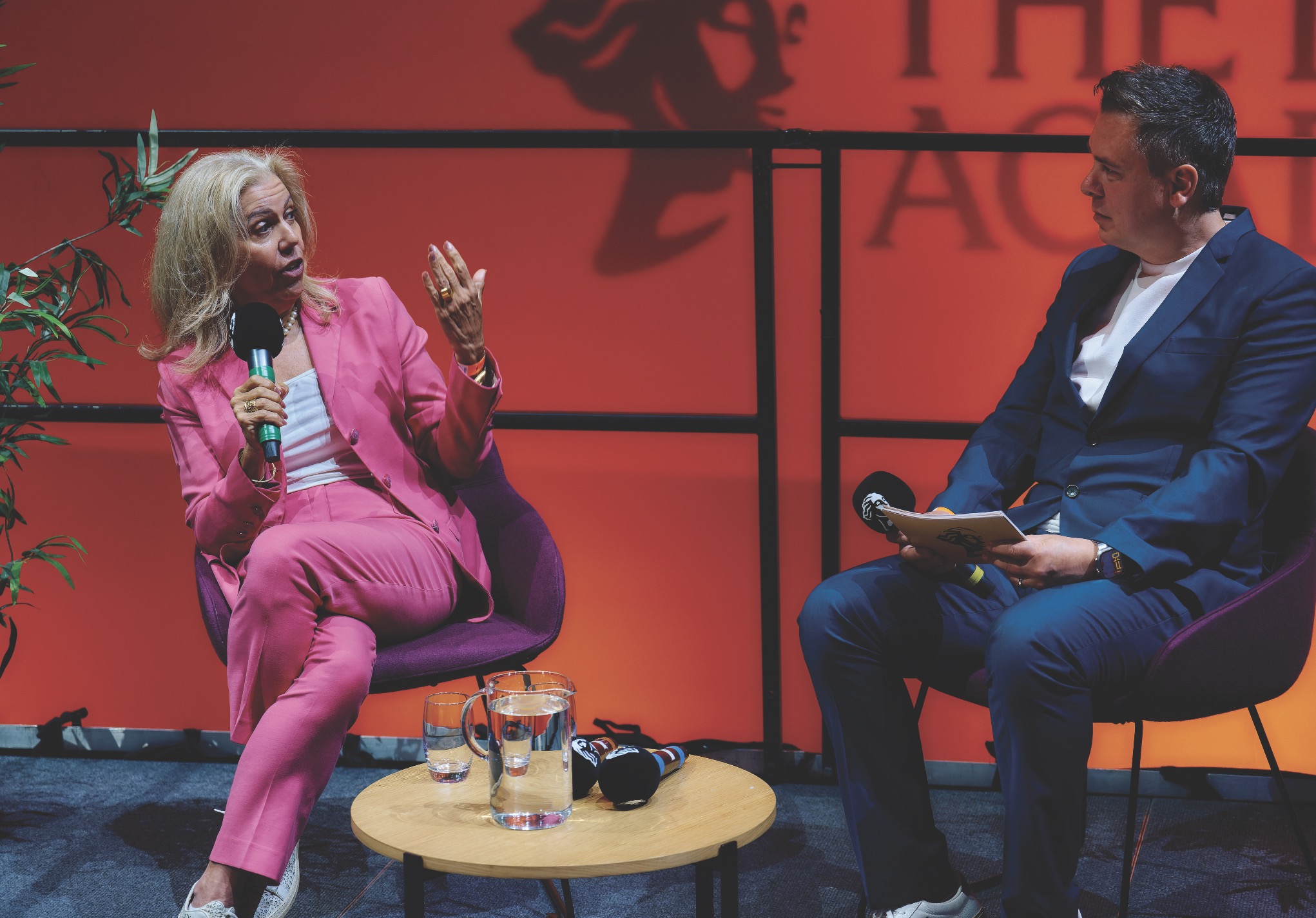
The exponential growth that we’ve seen has been driven by digitisation and that’s starting to flatten off. So, where are the new areas that we go into? Where are the areas internationally? How can we be more accurate?
The ratio and the return on investment needs to be appropriate. We’re currently under 10% [of revenue] as a cost base. But, if we were 11% and we were doing £2 billion [in revenue], would our members rather have that? I think the answer would be yes.
I’ve seen the value of music in retail, in terms of dwell time, keeping people in store longer, and the effect on mood, which means that you spend more. And, through Mind, I see the value of music to management of mental health.
The work that songwriters do is literally lifesaving. It’s an honour and a privilege to serve the membership.
You mentioned the prospect of £2 billion in revenue one day. Is that really a possibility?
I believe in having BHAGs – Big, Hairy, Audacious Goals. I could go back and say, ‘If we had 100,000 active members and each of them needed to earn 25 grand, that’s £2.5 billion’. So a couple of billion would be a good BHAG.
How long will it take to get there?
A lot of it depends on how good we all are globally, because we work in partnership. We work with STIM and GEMA on ICE, we work with the international societies on collection and distribution. We work with streamers, broadcasters – every single one of them needs a valued licence – and they need to value it as much as we do.
So, I wouldn’t put a timeframe on it, but it’s important to have a flag to salute. And rather than looking at £2bn, £3bn, £1.5bn, whatever, we are here in the service of our members. What do our members need? If they are defined as professional, they should be able to earn their living from creating music.
The goal is about members earning appropriately, rather than a number. So, getting £2bn and 90% of it going – much as I love them – to Elton John, Ed Sheeran and Paul McCartney isn’t quite the same.
They deserve to do alright for themselves – I don’t have a problem with a Bill Gates making a lot of money out of a fantastically brilliant, brave idea and I put our best songwriters up there with the best of our entrepreneurs.
How do you feel about tech entrepreneurs making millions off the back of songwriters?
They are partners. Amazon has yet to make any money. You say they’re making a lot of money, but they haven’t actually returned on their investment yet.
Daniel Ek has cashed in nearly a billion dollars by selling his shares though…
It doesn’t mean that Spotify is making any money. The public company is valued at something like 90-times earnings because it’s a growth stock. Yes, individual shareholders who launched amazingly innovative platforms have made obscene amounts of money.
“The balance of power between creators and exploiters is a tension we deal with every day.”
The balance of power between creators and exploiters is a tension that we deal with all day, every day, because we’re valuing licences and we have a fantastic team under Dan Gopal. He understands the nature of a partnership, trying to get to a win-win for everybody. I’ve spent a lot of my career with commercial negotiation and he’s really good.
Where do you see the opportunities to grow revenues?
I would put it into three buckets: the first is geographic; there are lots of markets where, frankly, the licensing and collection is not yet optimised.
The second is licensing new areas. When YouTube first launched, they didn’t pay music royalties and thought it wasn’t part of what they did. Now it’s one of the major licences that we have.
The third area where we’ve still got a lot of work to do is in valuing music. One of the things that I worry about is a customer base who see the music licence as a de facto tax rather than a benefit.
It’s all of our jobs to be an ambassador for the value of music. It’s not a tax, it’s a business builder. I gave the example of retail but, even in an office or factory, if you enhance the well-being of your colleague base, they will be more productive, they will stay longer and be happier and heathier. It’s a really important part of looking after the people that are responsible for your success or failure.
How was your experience as a trailblazing female CEO?
I was christened Stephanie, but I spent my first 12 years as Steve and then transitioned to Stevie, so most people, before they meet me, assume that I’m Mr Spring.
When I joined Future, they had just had three consecutive profit warnings and it was the classic glass cliff – ‘Jesus, it’s so bad we may as well throw a woman in and see what she can do’. I candidly had the advantage of standout, so when you’re going round the City or to investor meetings, you do stand out because you’re female.
I also was very strict with my then finance director that I wouldn’t let him answer any of the finance questions unless I asked him, because otherwise you get put in the fluffy bunny box. Everybody assumes you’re the marketing person but, for the proper stuff like, ‘What’s the effective tax rate and the EBITDA to EBITA leverage?’, they want the bloke to answer.
So, I was very intentional about managing my corporate reputation. But I did – and I don’t know if I’m ashamed to say it or proud – always wear skirts and dresses to emphasise difference.
The music industry likes to think it’s more progressive than other sectors. Is it?
Like any creative industry, the music business is a broad church that includes lawyers, accountants, administrators, enablers, back office staff, sales people, people who design, manage and caretake, as much as people who create and perform.
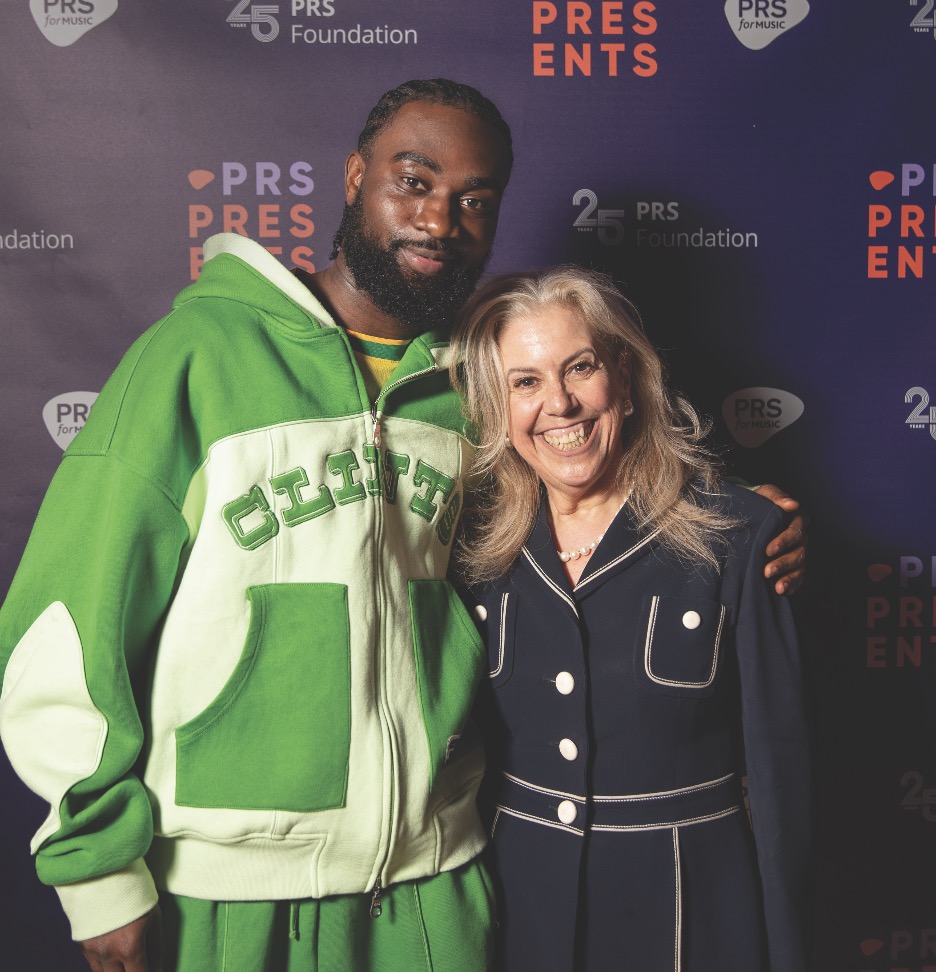
So it’s open by association – you can be in the music business, but also a very straight-laced accountant, working out of Milton Keynes. That doesn’t necessarily make [people] as liberal as you would expect the industry to be. And it’s a global industry and there are still real issues of gender and sexuality when you are operating on a global stage.
There still aren’t as many female CEOs or chairs as there should be in the music business. What does the industry need to do to change that?
It’s changing. It’s all about pipeline. At the moment, a lot of the experience still sits in a male cohort. What we need to do is make the pool deeper and richer. And for that, we have to concentrate hard on what the barriers are.
Like it or not, women are still primary care-givers, they are still the only ones who can actually give birth and that can be seen differently within an organisation. It’s our job to shine a different spotlight on the statue. Equality is better for everybody, men included.
How do you see the increased global competition for collecting performance rights?
Let’s call it co-opetition! It means that there are areas in which you compete, and areas in which you cooperate, within the bounds of the regulatory framework.
I don’t think that’s exclusive to the music industry. As the world digitises, the problems are global, not national. The geographic boundaries are irrelevant and PROs, CMOs are set up geographically.
We predominantly have the rights of UK music-makers, so we need to be a strong competitor for growth, but cooperation and partnership is almost a bigger part of how we best serve our members.
I already see us as a global organisation, because music is global and so is consumption. I would arrogantly say that English is the lingua franca of songs.
It’s because of the dominance of the States as much as the genius of the UK, but we punch above our weight, we have more than our fair share of creative geniuses producing amazing works. But the talent pool is global, the consumption is global, increasingly the partners are global, so we are de facto a global organisation.
What effect is AI going to have on PRS members?
I want AI to do the laundry so they can do the artwork. I don’t want AI to do the artwork so they can do the laundry.
We have really strong and effective copyright laws in the UK, we just need to make sure they are complied with, so [we should] not have a [copyright] exception.
We are all fighting hard on behalf of our members. But, candidly, it is a global issue and we need to work collaboratively and collectively, not just with other musicians, but across the creative ecosystem to make sure that creators are paid for their creativity.
“I want AI to do the laundry so that our members can do the artwork.”
I don’t think we can stop it, or put the genie back in the bottle. I do think we can negotiate hard for payment. I come back to YouTube, who didn’t pay in the beginning, but they do now.
I’m an optimist, we will work together and find a way that is fair because, at the heart of what we do, it’s about equity and it’s unfair to steal and exploit somebody else’s copyrighted creation.
We are all facing the same issues, so we all need to be singing off the same songsheet and asking for the same things. We need to make it easy for our politicians to tick the box; it’s not choosing between having a vibrant creative community and having a state-of-the-art tech community, it is both.
And tech is such a big part of creation. Every single one of our members uses technology, hardware and software, to do amazing things faster and cheaper than they could do it five, 10 or 20 years ago. And that’s really exciting.
MBUK is available as part of a MBW+ subscription – details through here.
All physical subscribers will receive a complimentary digital edition with each issue.Music Business Worldwide