MBW’s Inspiring Women series profiles female executives who have risen through the ranks of the business, highlighting their career journey – from their professional breakthrough to the senior responsibilities they now fulfill. Inspiring Women is supported by Virgin Music Group.
Cindy James has come a long way. Not just because she’s gone from putting on indie rock shows to being General Manager of Virgin Music Group’s North America division, via stints at Sony and Island.
But because she’s gone from Sydney, Australia to LA, via stops in London and New York. That’s nearly 17,000 miles. And it’s been some journey.
As a teenager, she recalls “music felt less like a hobby and more like a language”. She specifically remembers, in the early 2000s, “local bands putting Sydney on the map: kids packed out shows, and there was this buzzing scene with no one to organize it — so I did”.
James started booking and promoting shows, “creating the moments I wanted to experience”, as well as launching a blog reviewing new music and gigs.
By way of an explanation, she says, proudly: “Australia has this incredible get-it-done spirit. If you want something to exist, you build it. That shaped me long before I understood it as culture.”
At the same time, she first realized that “the stories behind the songs were just as powerful as the songs themselves, and I knew that was the world I wanted to spend my life in.”
Alongside the promoting and the blogging, James had got herself a proper job in, where else, a record store. And it was there that a Universal rep suggested she apply for a role on the company’s sales team. She aced the interview and she was on the ladder.
“I was young, ambitious, and endlessly curious, probably asking more questions than anyone had time to answer”
Looking back, she says, “I was young, ambitious, and endlessly curious, probably asking more questions than anyone had time to answer. I volunteered to help with additional tasks, showed up early, stayed late, covered lunch breaks, and took every opportunity to learn every corner of the business.
“That curiosity has been the through-line of my career. As I often say, curiosity is the most underrated leadership skill.”
It certainly helped James climb that ladder, led her to the forefront of music’s digital revolution and, ultimately, to the heart of the industry’s powerbase.
First though, like many Australians looking to make an impact on the world, it took her to London…
How did you get over to the UK – and how hard was that move?
After a few years at Universal Music Australia, I set my sights on becoming a field sales rep, which led me to Sony Music. That move changed everything.
A couple of years in, I transitioned into the Digital team just as the region was undergoing a massive transformation. Streaming was emerging, APAC was shifting quickly, and artist-led brand activations were becoming major revenue drivers. My role expanded to include oversight of the Digital Sales, Web Development, and Digital Operations departments, which gave me a front-row seat to the early stages of the digital & streaming era.
I helped lead teams across the organization navigate into the streaming era. That journey included working with Spotify as they launched in Australia and New Zealand and, prior to that, working closely with APAC regional commercial teams on the rollout of iTunes across Asia.
Those moments placed the company at the forefront of digital music adoption and gave me a front row seat to how quickly audience behavior was evolving. The work also brought me into close collaboration with our global headquarters in New York, at a time when an international team was taking shape in London.
Having experience across Australia, Asia, and the very early days of streaming gave me a valuable perspective on global strategy and market nuance. Ole Obermann and Dennis Kooker were instrumental in opening the door to that next chapter.
Moving to the UK was a real leap, personally and professionally, but I have always believed you can’t lead through disruption by playing it safe. You lead by staying curious and embracing change. Going to London was me choosing that path.
Living and working across continents became one of the greatest gifts of my career. Music is a global language, but every market has its own heartbeat, and once you understand that, the industry reveals itself in an entirely new way.
You were on the forefront of streaming and digital marketing as they were becoming dominant — do you feel that gives you an advantage?
Absolutely. I’ve always been drawn to staying at the forefront of change. Starting my career during the music piracy era really showed me that the way people consume music is always evolving, and it’s our job to stay ahead.
Those early years taught me that technology is never the story itself; it’s the amplifier. Innovation in music isn’t just about the tools; it’s about imagining new ways for artists and fans to connect. That mindset has shaped everything I do and continues to guide how I lead today.
You spent pretty much 10 years at Sony across Sydney, London and New York. What were the biggest lessons you learned there? And can you talk about some of the biggest artists you worked with — and the execs that gave you the best advice?
Those years at Sony were my foundation — the place where I grew up professionally. I was surrounded by leaders who invested in my growth and encouraged me to think bigger, take risks, and build teams with heart.
One small example that has stuck with me is my former CEO’s license plate, which started with ‘ATD’ — short for Attention to Detail. Every time I make a mistake through a lack of ATD, I remind myself of the critical foundational skills that matter.
Another favorite saying was a testament to why so many records broke out of Australia: “If you’re driving home and the entrance to your street is blocked off, are you going to sleep in your car and wait for it to reopen, or find another way to bring it home?” It was a vivid reminder to remove roadblocks and drive the record to the top.
During my time in London, I contributed to global campaigns and artist launches across multiple markets, each of which taught me something new about the power of storytelling. My role focused on aligning and building campaigns to break records on streaming platforms, showing the industry that simultaneous releases on Spotify and elsewhere would not harm chart debuts.
We broke records working closely with Spotify’s Kevin Brown, Chris Stoneman, and Louise Woolsey from Sony Music UK. One campaign with One Direction was the first track to ever go straight to # 1 on the Spotify Global Charts on release day.
I also worked on major campaigns with Calvin Harris, whose song Blame, featuring John Newman, became the most-streamed song in a single day at the time and helped him become the first British solo artist to reach one billion streams.
Other campaigns along the way ranged from Beyoncé to The 1975.
The best advice I received during those years came from a mentor: “Stop, look, act.” It has guided every step I’ve taken since.
How did the move to Island – and New York – come about, and what was that experience like for you?
As the streaming landscape evolved, Sony suggested relocating my role to New York to focus on streaming strategy for the US market, particularly with the frontline labels — a setup unlike any other market. It was an incredible opportunity to get a taste of the frontline world and see firsthand how a major repertoire owner signs, develops, and breaks artists.
In my role, I was one step removed from the artists, focusing on streaming strategy, market growth, and audience adoption. Experiencing the energy and pace of the frontline labels up close reminded me why I love the business so much.
Then, as if the universe had a hand in it, a recruiter reached out about a role at Island Records, leading the label’s Commercial and Streaming Strategy under David Massey and Eric Wong.
“Working at a frontline label has a magnetism that’s hard to describe. I loved being in the room, helping bring an artist’s vision to life, from emerging talent to some of the biggest acts globally.”
After reflection, I decided to make the move. Having worked across Australia, APAC, London, and the US central strategy team, I realized that joining a frontline label would round out my experience and take me closer to the music. That opportunity simply wasn’t available at Sony at the time, so I moved back to Universal Music Group at Island Records.
Working at a frontline label has a magnetism that’s hard to describe. I loved being in the room, helping bring an artist’s vision to life, from emerging talent to some of the biggest acts globally.
Remind us where Virgin Music Group was in its evolution when you joined in 2019 — and what made you want to join that journey?
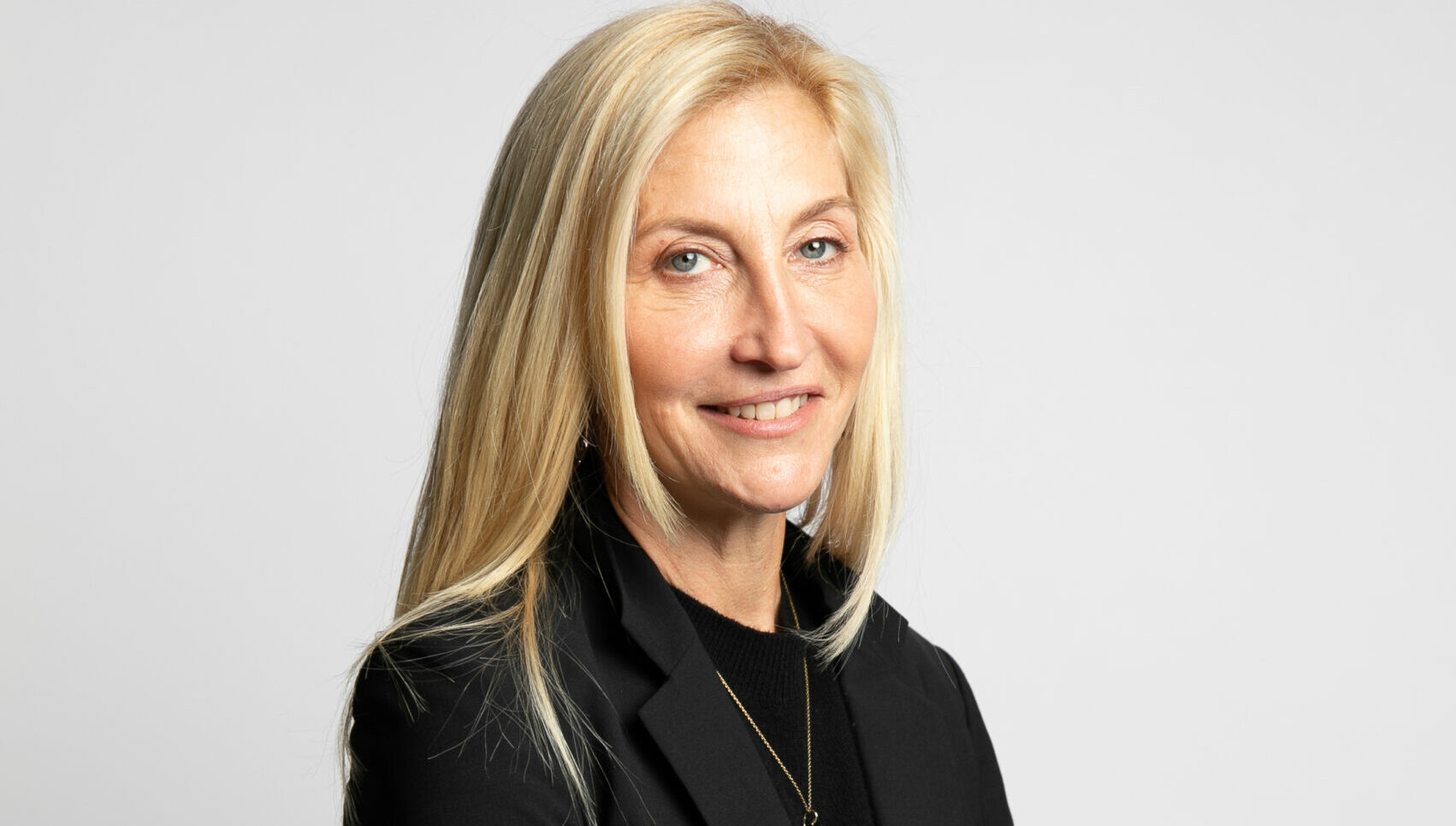
When Jacqueline Saturn [pictured], Matt Sawin and Steve Barnett at Capitol Music Group invited me to join them in Los Angeles, it was to join what was then known as Caroline, which sat within Capitol Music Group.
Independent labels and distributors were starting to make waves in the industry, and I found that landscape fascinating. I had watched it from afar but hadn’t yet experienced it firsthand. I could see that this part of the business was thriving with huge potential, and I wanted to be part of that era.
In 2022, Virgin Music Group launched as the global independent music division for UMG, where Nat Pastor and JT Myers joined as Co-CEOs of the global organization. There was electricity in the air! We rallied at the idea of creating the best company possible to serve and support independent labels and artists around the world.
I’ve always been drawn to building, and Virgin is a place where we collaborate with entrepreneurial partners to support and amplify their efforts globally to help them reach their goals. Empowering independent music and helping it thrive on a global stage is the kind of work that makes me excited to wake up in the morning.
What were your biggest successes in those first years at Virgin?
My early years at Virgin aligned with a wave of global breakthrough artists, and helping shape those stories was some of the most rewarding work of my career. I was deeply involved in the early development and commercial expansion of artists like Rema with our label partner Mavin, David Kushner, and Mark Ambor (Hundred Days), each requiring a different strategic approach but sharing the same objective: build a global foundation that could sustain real, long-term careers.
With Rema, it was about amplifying a movement already happening — tapping into culture, positioning him as a global leader in the Afrobeats explosion, and building a commercial strategy around what made him a star. Rema’s vision was to take Afrobeats to the world, and that became our mission, guiding every decision we made and grounding our global approach.
For David Kushner, it was recognizing and accelerating lightning-in-a-bottle momentum with his single Daylight, using pre-release data and audience insights to turn a viral spark into a global hit while building a story and identity, and creating space for him to grow into the artist he was becoming.
And with Mark Ambor’s Belong Together, it was about recognizing the song’s universal pull early and building the right conditions for it to travel — aligning markets, partners, and narratives so the record could find its audience everywhere.
How would you describe the culture at Virgin? Has it changed at all during your time there?
Over the past few years, we have become even more connected and collaborative as a global organization, which helps us to better serve our partners’ local and global needs. Our core values and entrepreneurial spirit are part of our DNA.
For me, leadership means creating a culture and space for other voices to be heard, and that mindset shapes how we collaborate every day. Our culture is inclusive, curious, and unafraid to challenge assumptions, which is exactly what the modern music landscape demands.
In a competitive landscape, what’s your pitch to artists looking for a partner?
My pitch is simple: we see you — not just the metrics or the moment, but the whole arc of what you’re building.
We want every label and artist we work with to feel seen, understood, supported, and set up to win.
We pair creativity with insight, global reach with local expertise, and ambition with the operational muscle to back it up. And we are in it for the long game.
What’s the best career advice you’ve ever received and who was it from?
Jacqueline Saturn once challenged me with the simple question, ‘Will it help or will it hurt?’. In the context of an industry where we’re pulled in a dozen directions every day — meetings, events, travel, commitments — it’s so easy to overextend yourself.
Her question became a simple but powerful filter that helps me stay grounded, avoid burnout, and make intentional choices about where I direct my time and energy. It’s also a constant reminder that relationships sit at the heart of everything we do in this business… they’re the compass, the foundation, and often the reason the work matters at all. That framing has made the advice one of the most practical, protective, and perspective-setting gifts I’ve ever received.
What are your headline goals for 2026?
To empower more independent partners to break globally, strengthen our data and insights capabilities, continue building a culture that attracts bold, diverse thinkers, and champion the next generation of leaders, especially women rising through the industry.
Virgin Music Group is the global independent music division of Universal Music Group, which brings together UMG’s label and artist service businesses including Virgin and Ingrooves.Music Business Worldwide