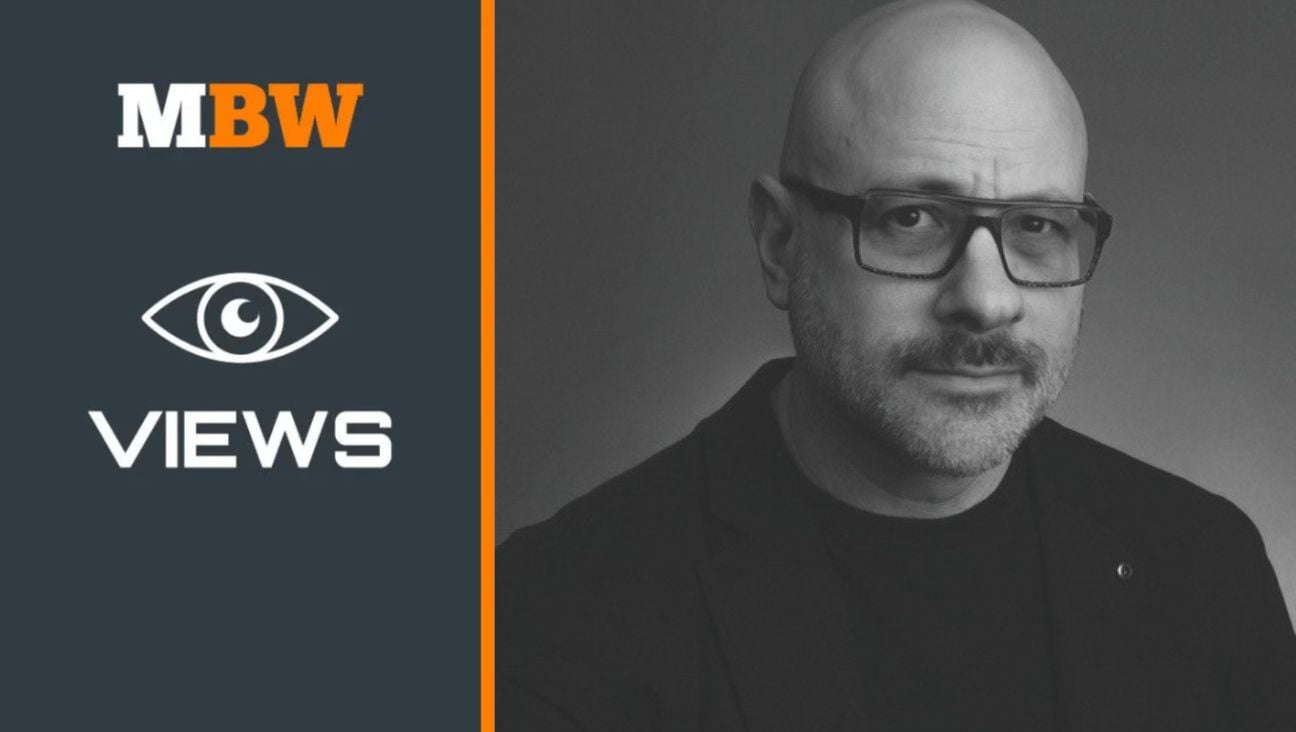
MBW Views is a series of op-eds from eminent music industry people… with something to say.
The following MBW op/ed comes from Bill Werde, director of the Bandier Music Business Program at Syracuse University. You may have heard of Tamborzão – but you don’t hear a lot of it in mainstream channels outside of Brazil. Below, Werde wonders why not…
It is spring of 2025, and I am dancing on a street corner in Rio.
Specifically, I’m in a small cobblestone alley off the renowned Monday night Pedra do Sal party in Rio’s Saúde neighborhood. There are seemingly thousands of people in every direction, most of them dancing frenetically.
Tamborzão beats ricochet from graffiti-covered, chipped brick walls, and the mass of revelers – the city itself, really – seems to pulse with the sound. Street style is everywhere you look, tight crop tops and soccer jerseys atop baggy jeans and the latest sneakers.
If you pay attention, you’ll see some discreetly inhale loló from glass vials in between tracks, getting high from the illegal but popular street drug. It is the most dynamic, energetic and edgy scene I have experienced in years, possibly since the early days of the rave scene.
So why, more than 20 years after we started hearing about it, can this music still not seem to connect with the world outside of Brazil? In an era when K-pop and reggaeton and other genres have proven that English is not necessary to have hits on the charts, why has this incredible scene fallen short?
It’s a structural failure of the modern music business, which knows how to market songs and genres for sure, artists somewhat – but scenes no longer at all.
“When English is no longer necessary to have hits on global charts, why has this incredible scene fallen short?”
This matters right now, possibly more than ever. It’s no secret that the industry needs to discover growth opportunities. They are tucked in mostly urban pockets all over the world: Egyptian trap in Cairo; Punjabi hip-hop in Chandigarh (and Toronto); new wave amapiano in Johannesburg. Do we know how to nurture these scenes?
As director of the Bandier Music Business Program at Syracuse University, I take a dozen top students into emerging markets every spring. Students danced next to me at Pedra do Sal, on a trip that also took us to meet with top industry executives across Brazil, Mexico and Colombia. This spring we went to India and met with many of the top companies in Mumbai. We’ve been to China, Vietnam, Korea, and Indonesia. Next, we will likely tour the industry in a few African countries.
Everywhere we go, there are highly talented, passionate and savvy executives, with enormous pride in their local scenes. Increasingly, they are under pressure from major label partners or New York/Los Angeles-based corporate headquarters to produce more as A&R centers.
Our conversations in Colombia last year crystallized common emerging market dynamics: local heroes like Shakira, Karol G, Maluma, Feid and others end up making their labels much more money outside of Colombia.
Emerging markets can generate stars more easily than they can generate disposable income. ARPU is a cruel mistress.
The real structural problem is that the companies that can afford to invest in bringing Brazilian artists to the States are looking for stars and hits, not scenes. The majors need fast scale, not development projects.
When it comes to growing emerging markets, independent music companies (or other investors) could take a page from Sub Pop in the late ’80s and early ’90s, when that indie label broke the grunge scene.
The label marketed bands such as Nirvana, Soundgarden, Mudhoney, and L7 by emphasizing the shared style (flannel), energy (disillusionment), and somewhat consistent sound of Seattle and all the bands that were emerging.
“The real structural problem is that the companies that can afford to invest in bringing Brazilian artists to the States are looking for stars and hits, not scenes.”
They distilled a brand identity, essentially, and then carefully curated its distribution, sending vinyl records to early fans via their famous singles club. They flew in a journalist from the UK to tell the story.
This careful world building created a powerful rising tide that lifted all artists – and offers a template that is eminently repeatable in today’s climate of influencers and experience hunters.
Fans crave authenticity and Brazilian funk has it in spades. But consider the two most successful attempts at exporting the music. One was the global pop star, Anitta, who watered down the sound for pop-leaning songs that never quite caught fire Stateside.
The other was courtesy of the great audio opportunist of our times, Diplo. During an early-2000s visit to Brazil, he fell in love with the scene and one song in particular: Injeção by Deize Tigrona. It then became the inspiration for the Diplo-produced Bucky Done Gun by M.I.A., for which Tigrona eventually got her credit and royalties. How’s that for giving authenticity a shot?
As a writer, I got my start in the rave scene, and have loved every form of dance music for the last 30 years, from Frankie Knuckles to Daft Punk, Fela Kuti to Bad Bunny. I’ve given Brazilian funk a try on more than one occasion over the years, and it never stuck.
But after spending time in that scene, even just that one evening in Rio with a handful of my students, feeling alive and connected, now I keep the music on rotation. That’s the power of context and narrative. Music companies need to put fans into these scenes, screen by screen, and it will be much easier to break acts.
Brazil is not without blame. Brazil and every other country with burgeoning local music scenes should be studying – no, worshiping – at the altar of Korea, which applied intention, vision and investment to grease the wheels for K-pop to become a global phenomenon.
K-pop is now worth well over USD $10 billion a year across music, live, and merchandise – and that’s before the spillover. K-pop today is a top-of-funnel that drives tourism, K-dramas, and purchasing of other Korean products.
K-pop is a true soft power that has revolutionized the way younger generations think about Korea. Brazilian funk, with its raw sexual and sometimes violent lyrics, has spent most of its lifespan being criminalized or banned from mainstream airwaves and promotion.
This has led in some ways to Brazilian labels potentially misunderstanding their opportunity. They are trained to think that music that is too explicit can’t find success. Artists may need to leave the streets behind to find success in more mainstream Brazil.
But it’s those very streets that might be most appealing in Western markets. The popification and subsequent stagnation of hip-hop has left a perfect space for urban sounds coming from Brazil and elsewhere.
“They are trained to think that music that is too explicit can’t find success.”
Most of these scenes started with the seeds of exported US hip-hop and bass music. It would be fitting if it could find its way, and some commercial success, back home.
Finally, though, these hyperlocalized markets need artists who want to be global stars.
There is a saying I heard more than once while in Rio and São Paulo, that “Brazil has its back to Latin America, and its face to the Atlantic Ocean.” Because of language and geography, Brazil often sees itself and behaves as much more of an independent unit than do other countries in South America.
The typical pathway for Latin records to break is by heading north. They emerge regionally in South or Central America, spread to and break in Mexico, then spread to the Spanish-speaking diaspora in America and beyond. Brazilian records are challenged to utilize this path.
At the same time, local artists have to want to put in the work to go global. One refrain I heard frequently from Brazilian executives was that artists are often content to make it in Brazil. There is enough money in that country and enough of a population that they can live a wealthy and famous life without crossing over elsewhere. It is risky and expensive to travel to the United States and do the work required to establish a fan base.
This is where elements of the modern music industry should be brought into play. Labels like GR6 in Brazil are incredibly nimble, have strong relationships (distributed globally by Virgin Music Group since 2020), and fully operational and staffed audio and content studios.
Can they play a different game than they’ve been playing? Can they collaborate, maybe even with competitor companies, to blow past the social stigma that exists in Brazil around funk, and build experiences in America that bring funk carioca and all of its vibrant context straight to a new group of fans?
“When it works in Brazil, it will work elsewhere in the world.”
It’s not too late. Brazilian funk could and should be the next hip-hop. But it will require approaches that we haven’t previously seen. When it works in Brazil, it will work elsewhere in the world. There’s a lot of money – and a much richer future culture – at stake.

All MBW+ subscribers get digital access to our Music Business Worldwide magazine, with six issues released each year. Music Business Worldwide