MBW Views is a series of op-eds from eminent music industry people… with something to say.
The following MBW op/ed comes from Diana ‘ladidai’ Umana, a freelance music writer. Below, she digs into the new artist discovery process – with some expert voices – and concludes that what truly moves an act forward is advocacy. And guess what? Every advocate starts as a fan of what they hear and see…
On August 23, 2026, Dante Nicholas tweeted a clip of an artist named Washington performing Monday Blues with a one-line caption: “He only has 500 monthly listeners on Spotify, but the music is fire.”
Six days later, Washington had 20,200 monthly listeners and Monday Blues had 56,303 plays. By early September, Nicholas posted a screenshot of Washington’s artist page showing 115,700 monthly listeners and 236,856 plays on the song. That’s a 231x jump in under three weeks.
Nicholas, who runs YAMSThePlaylist and YAMS Magazine, didn’t find Washington through a pitch or a playlist. The clip surfaced in his Instagram feed, where Washington was already building momentum off short visual content made for the song.
Nicholas won’t take all the credit. “Multiple factors, and a great song, helped that number skyrocket,” he said.
Those factors are the story: a song good enough to survive the scroll, visuals built to travel, and one person with an audience who decided to vouch for it in public. That last piece is the one the industry talks about most and measures least.
For years, the industry’s answer to infinite supply has been better discovery: more playlists, smarter recommendations, more places to be found. Luminate’s 2025 Year-End Music Report counts 106,000 new tracks reaching DSPs every day, with 88% of tracks drawing 1,000 or fewer streams over the year. Recent analysis suggests neither algorithms nor curators have closed that gap, and playlists never delivered the discovery revolution they promised.
What nobody publishes is how much of the flood the people who decide what breaks can actually hear. So I asked them. Their answers point to a different problem.
“Recent analysis suggests playlists never delivered the discovery revolution they promised.”
Discovery gets you in the room. Advocacy, a person with ears and reach deciding to be in your corner, is what carries a career, and independent artists have more control over earning it than the numbers suggest.
What one person can actually hear
Annabelle Kline-Zilles receives around 400 songs in a typical week through submissions, pitches, DMs, and tags.
She founded That Good Sh*t, the Brooklyn platform built around emerging artists, and she and her team get through about 75 of those songs.
Peter A. Berry, a former music editor at Okayplayer, fielded roughly 115 submissions a week for his roundup and dug into at least 25 of them. “The volume of new music makes my ears get numb,” he said. Keeping up meant listening while he worked out and edited.
Elsie Not Elise, who curates for ENE Media, gets around 40 submissions a week before DMs and tags. Brian “Z” Zisook, co-founder and EVP of Global Operations at Audiomack, presses play on thousands of songs a week and finishes very few.
Tatiana Snead, Founder of The Listening Room Workshop, programs R&B, African, and Caribbean music for Pandora and SiriusXM and reviews more than 100 new releases on a typical playback day.
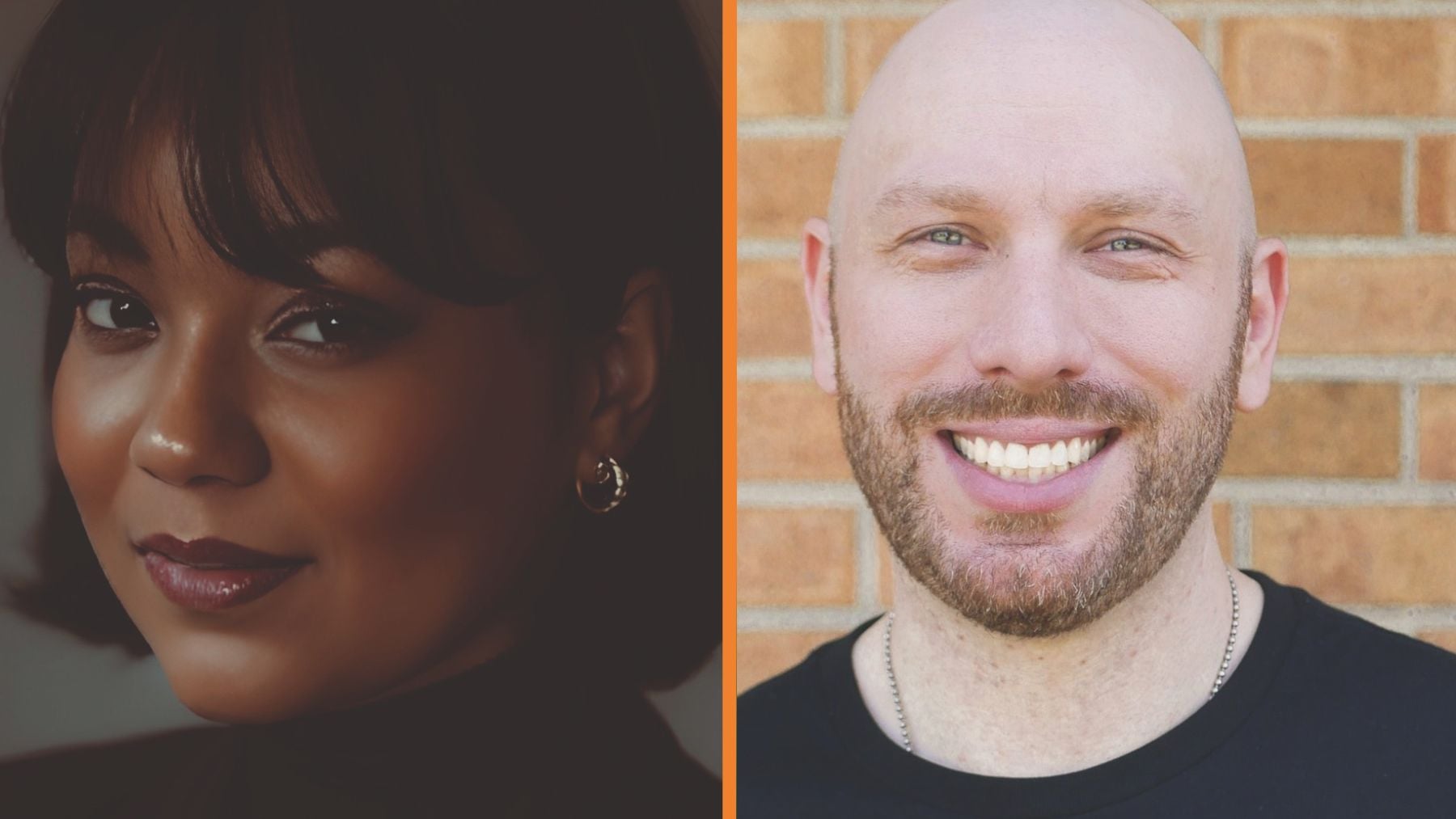
That number hasn’t grown with the upload count, because her queue fills with what labels, distributors, and artist teams flag as priority. “If everything is a priority, then nothing is truly a priority,” she said. The pool stays about the same size while who’s in it rotates by demand, audience size, and early traction.
Nobody framed this as a grievance. Each described their capacity as part of the job. But the ratio holds from a Brooklyn-based indie platform to a publicly traded satellite radio company. Uploads keep multiplying, and the number of people listening closely stays roughly where it was.
Algorithms scale a yes
Dr. Nick Seaver, Associate Professor of Anthropology and Computer Science & Director of the Program in Science, Technology, and Society at Tufts University, spent years embedded with the companies that build algorithmic recommender systems. He says limited human listening is a big reason those systems exist.
“At least in the development of recommender systems, the capacity of humans during curation was absolutely treated as a bottleneck,” Seaver said. It was often reason enough to skip human curation entirely, or to confine people to narrow jobs like checking data sources and spot-checking classifications.
One startup tried anyway. The Yams (no relation to Nicholas’s YAMS) built playlists by people, for people – a model Seaver says worked small and nowhere else.
What won out was a hybrid. Pandora’s original model had humans tag music and algorithms build stations from the tags. Spotify runs what Seaver calls “algotorial,” where curators work from algorithmic suggestions or software extends a playlist past where the person stopped.
For artists, the takeaway is that the machines still follow people. According to music curation research, Spotify’s algorithmic playlists favor established artists with deep behavioral data, while human-curated playlists champion new artists based on editorial judgment.
Washington’s numbers moved on Spotify after people moved first on Instagram and X. An algorithm can amplify a yes, but someone has to say it first.
What makes gatekeepers press play
With so little time, curators look for reasons to say yes fast, and their reasons overlap. For Kline-Zilles, it starts with the sender. “The first thing I usually notice is who sent it,” she said. A friend or collaborator whose taste she trusts gets a listen. Presentation comes next. “I am a sucker for world-building and beautiful visuals.”
Zisook agrees. “In the streaming era, many of us listen with our eyes first,” he said. To him, the way an artist handles cover art shows how much care went into the music and the world around it.
Elsie says a strong visual identity “goes a very, very long way,” and weak packaging can make her pass on music that’s actually good. Algorithmic recommendations barely factor into her listening. Her gut, her relationships, and co-signs do the work.
Berry’s bar was earnest intent. With so few outlets left covering new artists, he tried to include more music than he left out, as long as he sensed sincerity and liked what he heard.
There’s a newer screen, too. Deezer recently reported receiving nearly 90,000 fully AI-generated tracks a day in June, more than half of all new music delivered to the service on peak days. Snead’s team now flags suspected AI tracks and researches unfamiliar artists across social media and other DSPs.
“We’ve taken a firm stance against programming AI-generated music,” she said. An artist with a visible, human life around the music clears that check faster.
“A trusted referral, a record that sounds finished, and visuals with a point of view, turn a skipped submission into a full listen.”
Money helps at every stage. Bigger budgets buy more pitches, better-connected publicists, and more shots in front of the right person. But nothing these curators described requires a major-label check.
A trusted referral, a record that sounds finished, and visuals with a point of view, turn a skipped submission into a full listen.
Advocates start as fans
A yes is the beginning. “Curation is not even half the battle when it comes to breaking an artist,” Snead said. Getting programmed or playlisted is often just the entry point.
Kline-Zilles says conversion comes from two habits working together: steady organic social content and community building. A thousand fans who buy every album and every piece of merch and show up to every show, she said, can change an artist’s trajectory.
Building that takes resources, and not everyone gets the same share. “The industry is clearly investing less in Black music, and that has a ripple effect across the entire ecosystem,” Snead said. Touring, marketing, and the collaborators and engineers an artist needs all feel it.
No creative wants to hear that consistency is key. Elsie doesn’t mean posting seven days a week. For her, the bigger gap for independent artists is trying to do everything alone, when splitting the work is what lets a career grow.
Consistency looks more like putting in the hours to refine the art and the person behind it, because both have to cut through. On feeds crowded with AI-generated tracks and bot accounts, the artist who shows up as recognizably human, with or without the numbers, gives curators a reason to stay invested through the setbacks.
Adanna Duru has spoken about how she kept hitting walls until Justin Bieber’s co-sign got her over the hump into a record deal. Whether it’s a pop sensation or a playlister, it comes down to a human being trusted for their taste.
It only takes one
The math won’t resolve. There will be more songs tomorrow than today, and the people listening closely won’t get more hours. Snead is at peace with that. “There isn’t room for everyone to eat here, and I don’t think there should be,” she said matter-of-factly.
The listeners who matter are building businesses on their taste, which keeps more of them in the game. Snead sees tastemakers hired to curate tours, shape cultural activations, and decide who’s in the room. Nicholas funds YAMS through brand partnerships, live events, and relationships with DSPs.
“The math won’t resolve. There will be more songs tomorrow than today, and the people listening closely won’t get more hours.”
Washington’s jump started because one of those people pressed play, liked what he heard, and said so in public. Nicholas didn’t need a campaign. He needed a great song in his feed and a reason to believe in it.
That’s the opening for every artist: learn how Instagram, TikTok, and streaming services read momentum, and give them something to read; make the record and the visuals as strong as you can, because quality travels further than most artists expect; treat relationships as infrastructure, because a curator, a writer, or a fan who finds you early tends to root for you for good.
Somebody out there can’t wait to discover you. It only takes one of them to set everything else in motion. As long as there are humans who care about music, there’s hope for the people making it.
All MBW+ subscribers get digital access to our Music Business Worldwide magazine, with six issues released each year. Music Business Worldwide