Tencent Music Entertainment‘s share price plunged nearly 25% in a single trading session on Tuesday (March 17), after the company’s Q4 2025 results spooked investors.
It has barely recovered since – closing at $9.05 on Tuesday (May 12), down from a 52-week high of $26.70.
Multiple Wall Street banks – including Morgan Stanley, Macquarie, UBS, and Benchmark – have downgraded the stock since March.
TME’s leadership used its Q1 2026 earnings call this week to warn of “industry chaos” driven by AI-generated content and intensifying competition in China‘s music streaming market.
At the center of that competitive anxiety sits Soda Music – a music streaming app owned by TikTok parent company ByteDance that has grown from a quiet beta launch in 2022 to reportedly more than 140 million monthly active users.
Its rise has coincided with a sustained decline in TME‘s own user base – and investors have taken notice.
Here’s what Soda Music is, how it got here, and why it has become such a preoccupation for TME‘s shareholders.
What is Soda Music?
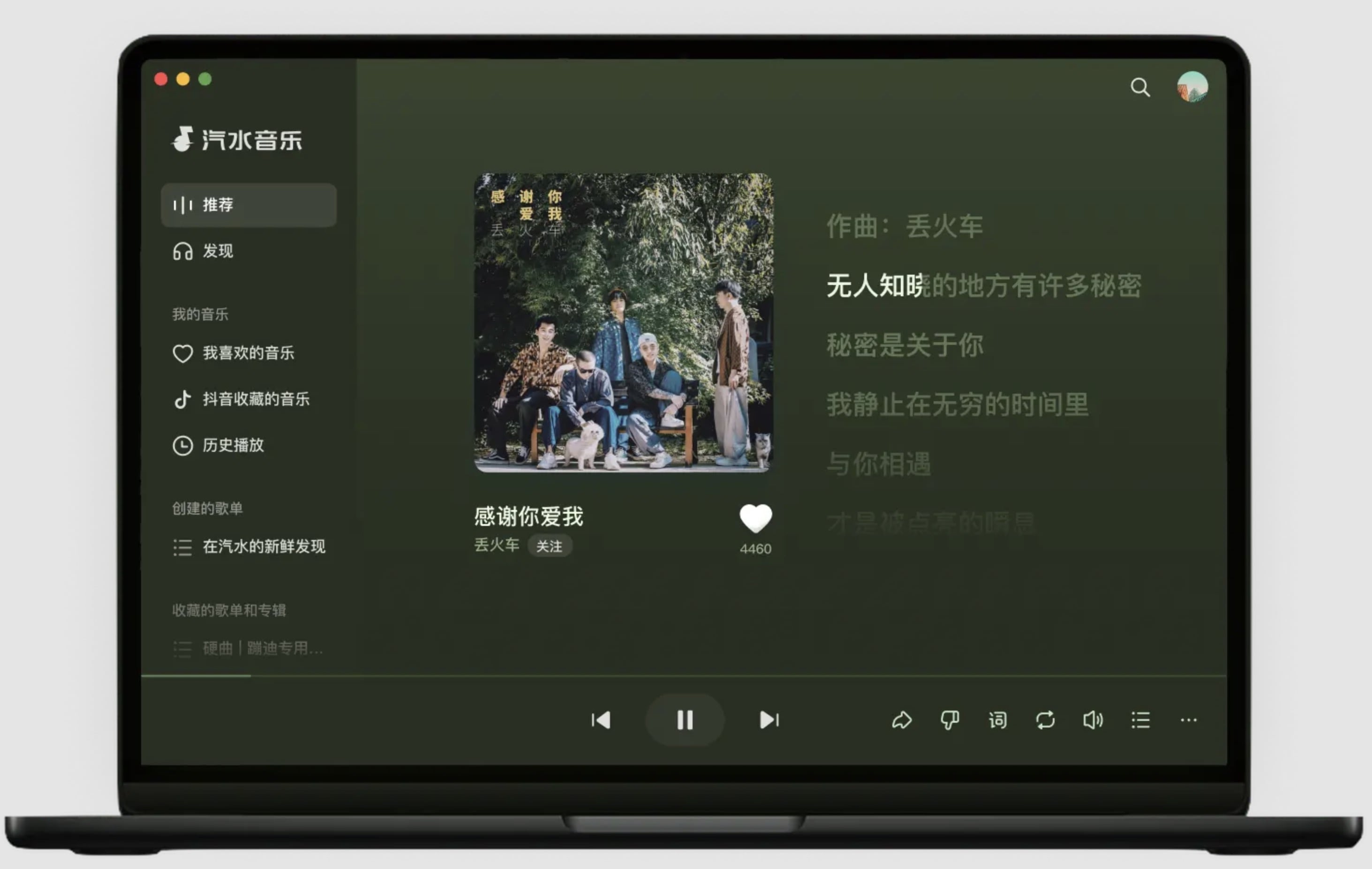
Soda Music – known in Mandarin as Qishui Yinyue (汽水音乐) – is a music streaming app developed by ByteDance.
It launched in June 2022 and operates as a companion to Douyin, the Chinese version of TikTok.
The app is built around a vertical-scrolling, algorithm-driven interface – similar in look and feel to TikTok itself – and recommends music based on user preferences and listening habits.
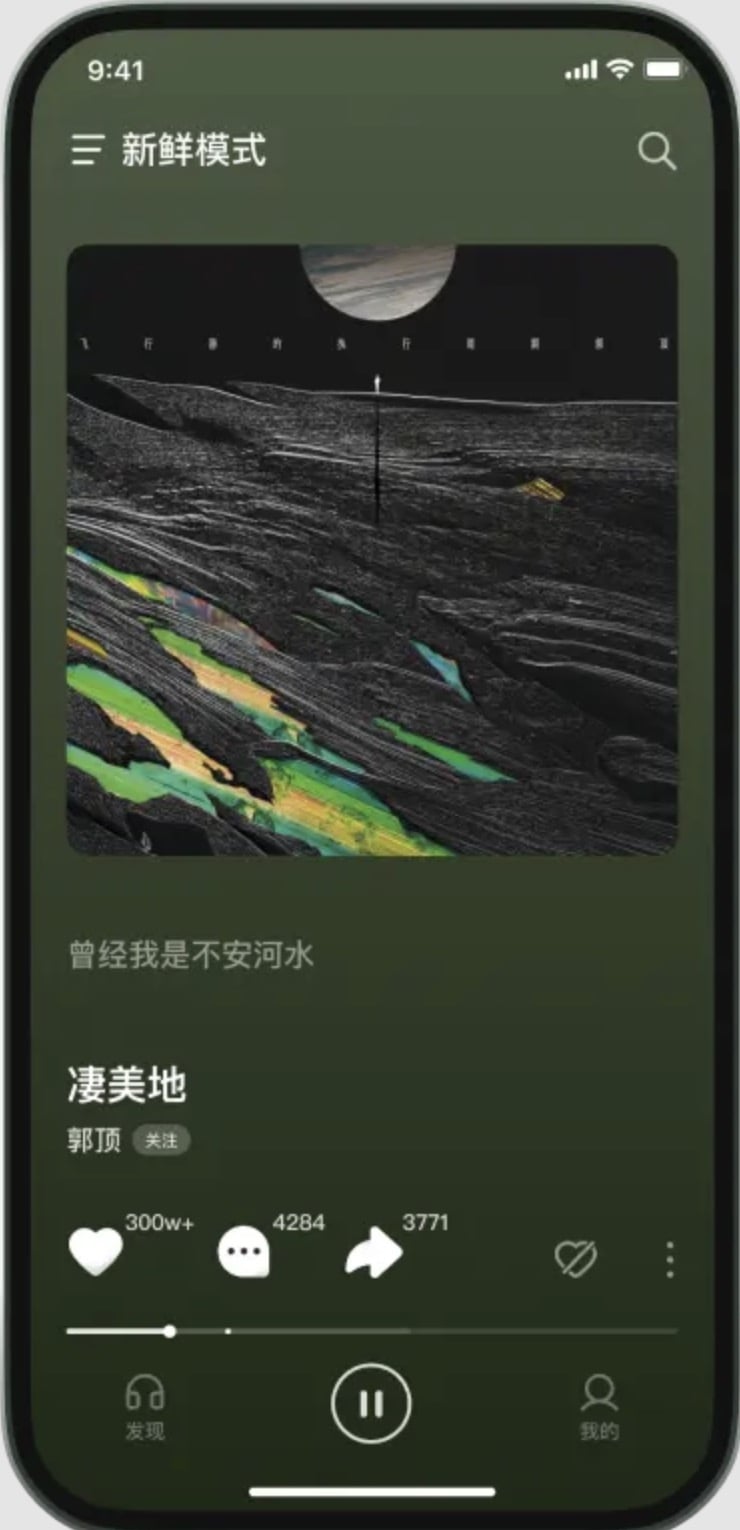
Its catalog reportedly stands at around 50 million songs, according to industry reports – substantially smaller than the libraries available on TME‘s flagship QQ Music or rival NetEase Cloud Music.
But the app’s core advantage lies in its integration with the Douyin ecosystem.
When a user hears a track in a Douyin short video, they can tap through to listen to the full song on Soda Music – creating what industry analysts describe as a seamless pipeline from music discovery on short-form video to streaming consumption.
Douyin reportedly has more than 700 million daily active users in China – making it one of the most powerful user-acquisition funnels in the country.
How did it grow so fast?
Soda Music‘s origins can be traced back to 2019, when ByteDance first began work on a domestic music streaming project.
That initial effort faltered, in part because of the prohibitive cost of licensing music in a market where TME controlled exclusive rights to catalogs from all three major record companies.
The landscape shifted in July 2021, when China‘s State Administration of Market Regulation (SAMR) ordered Tencent to relinquish all exclusive music licensing deals within 30 days following an antitrust investigation.
The ruling opened the door for competitors – including ByteDance – to license music directly from rights holders on equal terms.
Soda Music launched the following year, but growth was initially modest.
A turning point came in 2024, according to reports, when ByteDance implemented a copyright bundling strategy: as Douyin‘s licensing agreements with rights holders came up for renewal, the company stipulated that new deals would cover both Douyin and Soda Music.
That approach reportedly expanded Soda Music‘s catalog to 50 million songs – enough to serve as a viable standalone streaming service.
By September 2025, data from research firm QuestMobile showed Soda Music had reached 120 million monthly active users – reflecting year-on-year growth of more than 90%.
By early 2026, that figure had reportedly climbed to 140 million, placing Soda Music within striking distance of NetEase Cloud Music‘s 147 million, according to the same QuestMobile data – and making it the fourth-largest music streaming app in China.
By March, it had overtaken it: QuestMobile‘s 2026 Spring Report, published in late April, put Soda Music‘s MAU at 156 million – surpassing QuestMobile’s NetEase Cloud Music estimate of 147 million for the first time and making it the third-largest music streaming app in China, behind only TME‘s Kugou Music (205 million) and QQ Music (201 million).
Why are TME investors concerned?
The concern for TME shareholders is not just that Soda Music is growing – it’s that TME‘s own user base is shrinking at the same time.
When TME published its Q4 and full-year 2025 results in March, it reported that its online music monthly active users had declined 5% YoY to 528 million.
Macquarie had already downgraded TME from Outperform to Neutral in early March, citing threats to average revenue per paying user and user acquisition.
The Q4 results triggered a further wave of downgrades.
Morgan Stanley downgraded the stock to Equal Weight, cutting its price target from $25 to $12.30, and cited what it called an underestimated risk from Soda Music.
JPMorgan cut its price target from $30 to $12.
UBS slashed its target from $26 to $13.
The fear among investors centers on TME’s freemium user base – the ad-supported listeners from whom paying subscribers are converted.
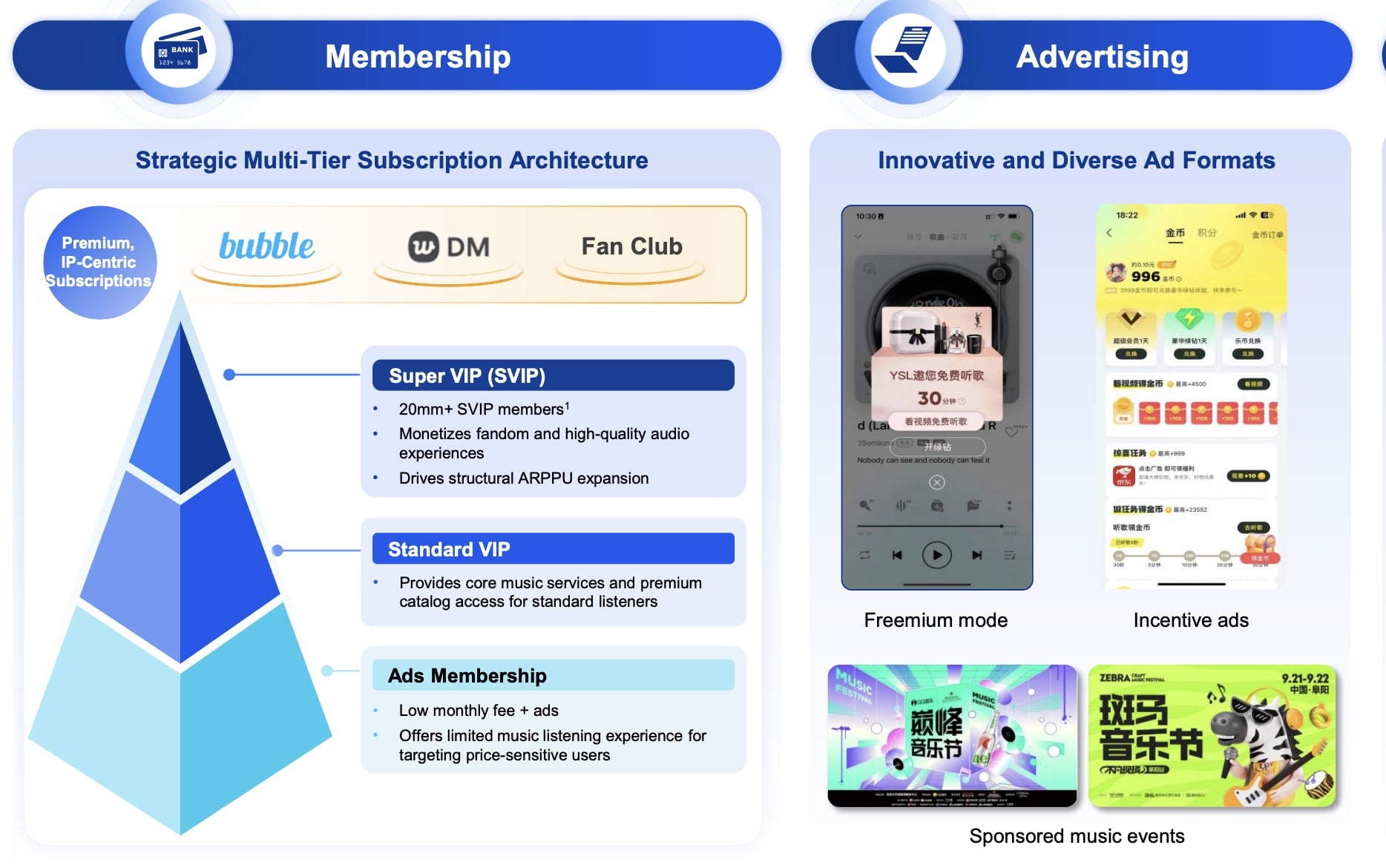
If users are migrating to Soda Music – which operates a free, ad-supported model leveraging Douyin’s traffic – then TME’s ability to grow and monetize its subscriber base narrows.
QuestMobile data appears to support that concern: reports indicate that the number of “wavering” users between Soda Music and TME‘s Kugou Music and QQ Music platforms each exceeded 21 million by late 2025, with year-on-year increases of more than 60%.
On TME‘s Q1 2026 earnings call on Tuesday (May 12), CEO Ross Liang acknowledged the competitive pressure directly.
“[The Q-o-Q membership softness was] mainly because of the competition on the music streaming business and especially for those free and ad-supported members,” Liang said.
Users on TME‘s Kugou platform, Liang added, are “more price-sensitive and promotion-sensitive” and, in the face of multiple choices, “easily flowing away.”
TME‘s Q1 2026 results showed total revenues of RMB 7.90 billion (USD $1.15 billion), up 7.3% YoY – with membership services revenue growing 6.6% YoY to RMB 4.57 billion (USD $662 million), though dipping slightly on a quarter-over-quarter basis.
Alongside the Q4 results in March, TME had also announced it would stop reporting quarterly data on online music MAUs, paying user numbers, and ARPPU – a move that has done little to ease investor anxiety.
What is TME’s response?
TME has pointed to its Super VIP tier as evidence that its highest-value subscribers remain loyal.
The company said its SVIP subscriber base surpassed 20 million by the end of 2025 – up from 10 million as recently as Q3 2024.
On Tuesday’s earnings call, TME leadership also took aim at rivals – without naming them – accusing competitors of using AI-generated content to fill out their catalogs and lure users.
“Some competitors are using AI to quickly fill their music libraries and [using an] aggressive strategy to divert traffic and users into their platform,” Liang said.
Executive Chairman Cussion Pang went further, warning of “industry chaos” and vowing to “do everything in our power to suppress ‘song-washing’ and other infringing behaviors.”
TME disclosed in its 2025 ESG report that it removed over 250,000 policy-violating songs and reviewed more than 600,000 cases involving “high-risk copyright content” across its platforms last year.
Of those, more than 27,000 songs were specifically flagged for “song theft,” “song laundering,” and “trend hijacking.”
Whether Soda Music can convert its free user base into a paying subscriber business that competes with TME‘s remains an open question.
Soda Music‘s catalog, while growing, reportedly lacks the depth of classic artist copyrights and licensed albums available on QQ Music and NetEase Cloud Music – a limitation that analysts say makes it harder to retain users seeking a full-library streaming experience.
But with ByteDance‘s resources, Douyin‘s traffic engine, and a market that is now open to non-exclusive licensing, Soda Music‘s trajectory shows no sign of slowing.