
Spotify is introducing a new verification badge for artist profiles.
It goes beyond simply confirming whether a profile is claimed, and instead attempts to signal something the streaming platform says has become harder to establish in the age of generative AI: the authenticity of the artist behind the music.
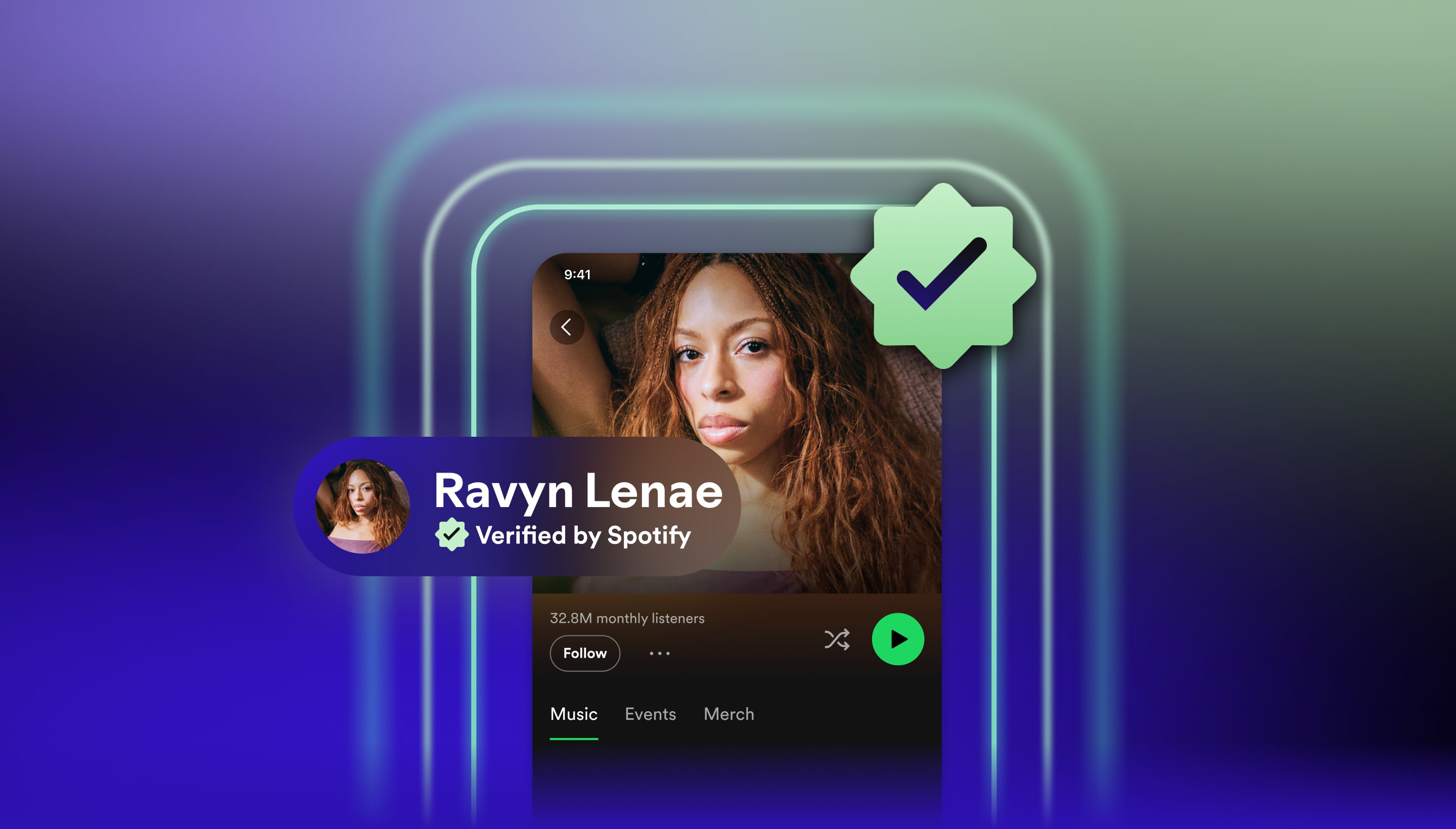
The new “Verified by Spotify” badge, announced on Thursday (April 30), will appear on artist profiles and next to artist names in search, marked by a light green checkmark icon.
Spotify said in a blog post published today that “at launch, profiles that appear to primarily represent AI-generated or AI-persona artists are not eligible for verification”.
The post added: “In today’s music landscape, the concept of artist authenticity is complex and quickly evolving, and we’ll continue to develop our approach over time”.
The move follows Spotify’s launch last month of its Artist Profile Protection feature in beta, which lets artists review and approve releases before they go live on their profiles, and arrives just days after the streaming platform reported 293 million Premium subscribers on its Q1 2026 earnings call.
“In the AI era, it’s more important than ever to be able to trust the authenticity of the music you listen to. Our focus is providing you with more context about artists and their music, so you can build more meaningful connections with them.”
Spotify
In January, Spotify had already retired its long-standing “Verified Artist” blue checkmark, which simply indicated that an artist had claimed their profile, and replaced it with a “Registered Artist” label.
At the time, Spotify said that “over time, the term ‘verified’ came to suggest more than the checkmark was designed to represent.”
The new Verified by Spotify badge now reclaims that language, but applies it to a different, more selective standard.
“In the AI era, it’s more important than ever to be able to trust the authenticity of the music you listen to,” Spotify said in a blog post. “Our focus is providing you with more context about artists and their music, so you can build more meaningful connections with them.”
To receive the badge, artists must demonstrate consistent listener activity and engagement over time, maintain good standing with Spotify‘s platform policies, and show signals of a real artist presence both on and off the platform — such as concert dates, merchandise, and linked social accounts.
Spotify said it will pair these criteria with “human review and judgment to identify real artists behaving in good-faith, not just filtering out bad actors.”
In its blog post, Spotify claimed that at launch, “more than 99% of the artists Spotify listeners actively search for will be verified, representing hundreds of thousands of artists — the majority independent — spanning genres, career stages, and geographies.”
The blog post added that the company is prioritizing “artists with active fan interest, or who have made important contributions to music culture and history, rather than functional music creators and content farms whose content is primarily designed for passive or background listening”.
Approvals will be rolling, and the absence of a badge on an artist profile does not mean the artist will not receive it in the future, according to Spotify.
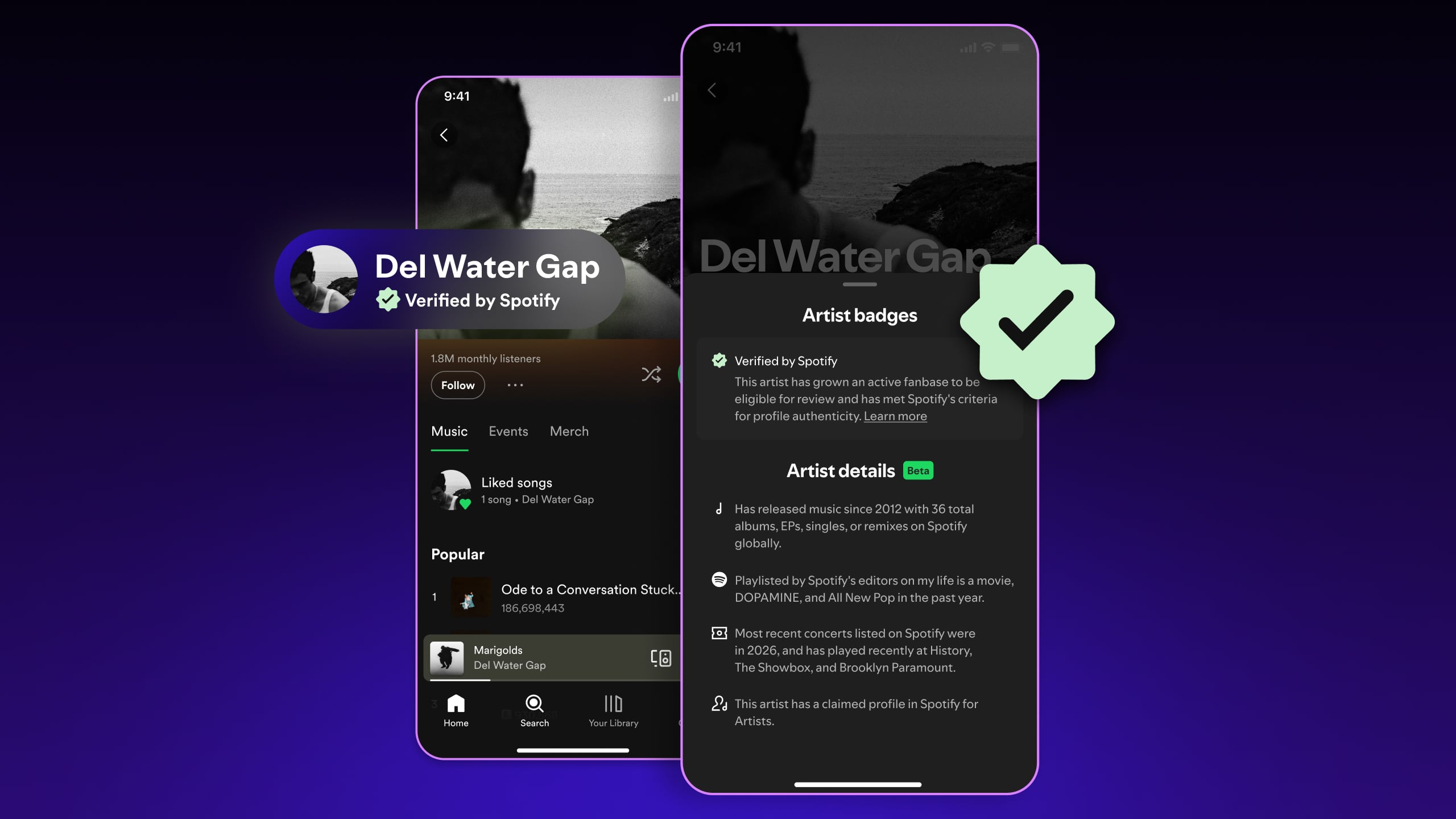
Alongside the verification badge, Spotify is also introducing a new section across all artist profiles, regardless of Verified by Spotify status, that highlights career milestones, release activity, and touring. The feature, currently in beta, will appear in the About section on mobile.
“Much like nutrition facts offer a quick, reliable snapshot on what’s inside packaged food, these details — based on Spotify’s platform data — give meaningful signals of an artist’s authentic activity on Spotify, even for those who haven’t yet met our Verified by Spotify criteria,” the company said.
The announcement forms part of a series of measures Spotify has rolled out in 2026 aimed at reinforcing artist identity and transparency as AI tools and AI content proliferate — from Artist Profile Protection in March, to AI Credits in Song Credits earlier this month, which show listeners where artificial intelligence was used in making a track.
Those features followed Spotify‘s announcement last October that it would develop “artist-first” AI music products in partnership with Sony Music Group, Universal Music Group, Warner Music Group, Merlin, and Believe.
When Spotify published its AI commitments blog post in September 2025, it noted that it had removed more than 75 million “spammy tracks” from its platform over the past year.
“We know we won’t get everything right from day one,” Spotify said most recently about the new verification program. “We’ve designed this new verification program thoughtfully with listeners and artists in mind, and we’ll continue to evolve this program over time.
“Our goal is to make it easier for you to trust and understand the human artistry behind the music you listen to on Spotify, and develop long-term, meaningful connections with the artists and music you love.”
The urgency of Spotify’s measures is underlined by data from rival Deezer, which said earlier this month that it now receives nearly 75,000 fully AI-generated tracks per day — representing 44% of all new music uploaded to its platform.
Deezer claims to be the first streaming platform in the world to independently detect and tag AI-generated music at the platform level – a move it first made in June 2025.
The company says it has now detected and tagged more than 13.4 million AI tracks on the platform over the course of 2025.Music Business Worldwide