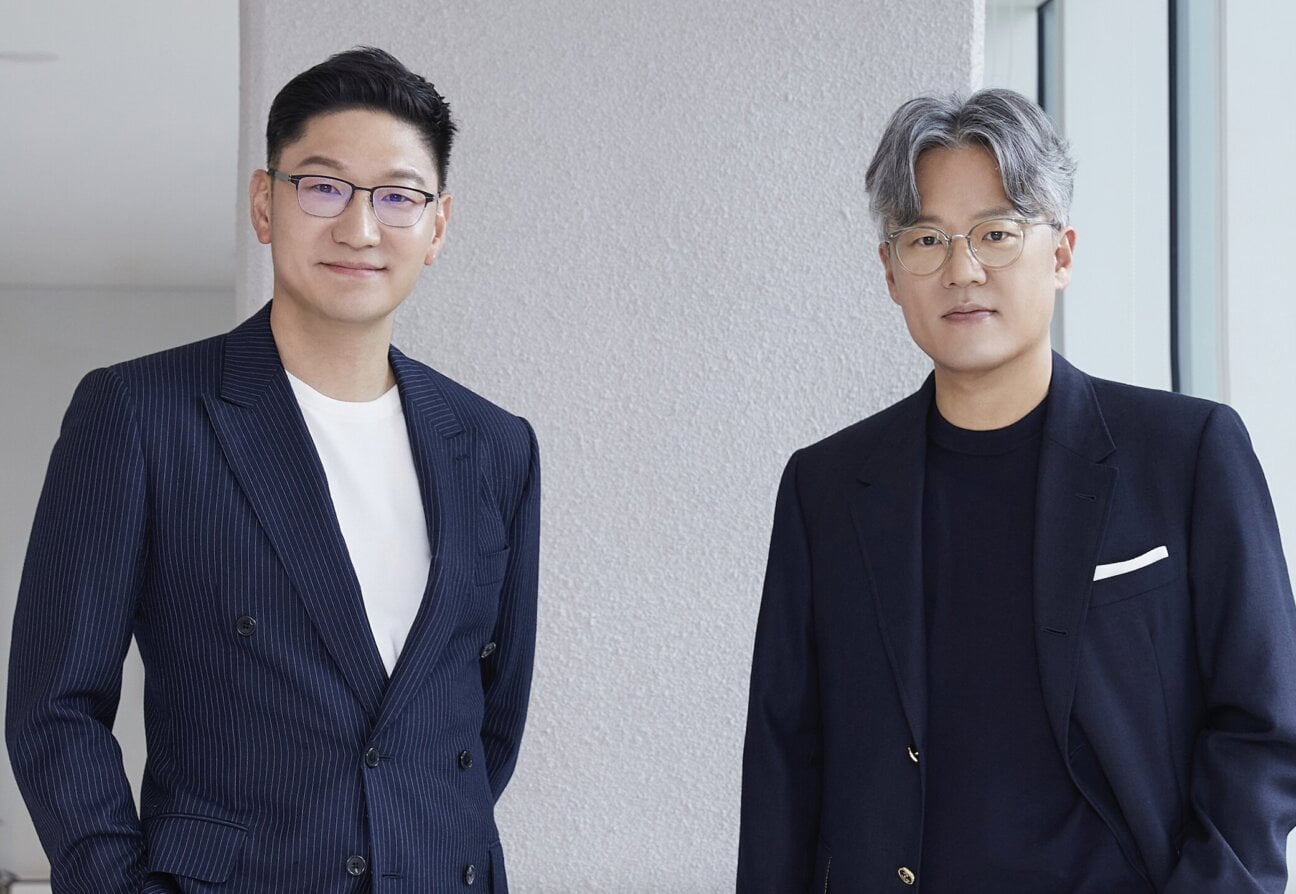
SM Entertainment Co-CEOs Daniel Jang and Dmitry YJ Tak are betting big on AI, and plan to ramp up M&A activity within music as they chart a new course for the South Korean K-pop giant.
The pair have unveiled a blueprint for the company’s growth in the wake of its 30th anniversary last year, including its IP strategy, business and global expansion ambitions, plus management and investment strategies.
Speaking alongside Chief A&R Officer (CAO) Chris Lee on SM’s official YouTube channel, Jang and Tak said “SM NEXT 3.0” represented “the borderless expansion of K-pop” as the firm – known for acts such as NCT 127, EXO, Riize, and aespa – evolves from its existing “SM 3.0” system into a “Multi-Creative” structure.
SM also shared plans to “more actively” pursue M&A opportunities through music.
“We will pursue M&A opportunities within music and related industries more actively than in the past three years, and increase capital investment to accelerate growth,” said Jang.
Elsewhere, as part of the new SM NEXT 3.0 Strategy, the company aims to build Asia’s “largest and most respected publishing company” via its Kreation Music Rights (KMR) subsidiary.
“Through KMR, our goal within the next five years is to build Asia’s largest and most respected publishing company”
CHRIS LEE, SM Entertainment
“KMR has established a strong foundation for a global repertoire by expanding from Korea and Europe into the United States in 2025,” said Lee. “Today, it maintains exclusive or sub-publishing agreements with more than 370 composers worldwide and manages a core K-pop catalog of over 7,000 songs.
“Through KMR, our goal within the next five years is to build Asia’s largest and most respected publishing company, and on that foundation, to grow further as a hub for intellectual property (IP) and a leader shaping the future of the music market.”
He also outlined plans to further upgrade SM’s A&R systems through artificial intelligence, noting that AI could be used to analyse tens of thousands of songs accumulated over SM’s 30-year history to recommend tracks with a high level of suitability for each artist, helping fans discover music that better aligns with their individual tastes.
Addressing AI as a key future growth driver, Jang stated that SM had a “distinct advantage” in being able to leverage the AI technological capabilities of majority shareholder Kakao.
“We see strong potential for meaningful synergy at the intersection of a rapidly evolving K-pop landscape and AI,” he said.
Further detailing SM’s global localized IP strategy, Tak said the company was strengthening its presence in key markets through local partnerships.
He continued: “In China, we are working with Tencent Music Entertainment; in Thailand, with True; and in Japan, we are currently in discussions with multiple partners. Our focus is on creating locally resonant IP while maintaining SM’s creative identity.”
SM also announced the introduction of what it calls an enhanced Multi-Creative structure, designed to place artists “at the core of the creative process”.
“SM is positioning merchandise not merely as products, but as a medium through which fans can experience an artist’s universe”
Daniel Jang, SM entertainment
“By placing artists at the center and flexibly assigning the most optimal creative teams, we aim to achieve growth and transformation simultaneously,” said Tak.
“As each artist’s universe evolves, it calls for new artistic languages. Rather than operating within a fixed production hierarchy, we will build flexible, project-optimized creative lineups that allow every artist’s transformation to be realized with the highest level of precision and quality.”
In addition, SM discussed its business and investment strategies in response to evolving fan consumption patterns – particularly around merchandise and concerts
Jang said: “Live performances play a critical role in the evolving K-pop industry, and we are focused on delivering concert experiences optimized for fan communities in each region.”
He added: “As artist IP–based secondary businesses continue to grow, SM is positioning merchandise not merely as products, but as a medium through which fans can experience an artist’s universe. We are leading new trends in this space and plan to expand further into lifestyle merchandise going forward.”
In addition, SM noted that it has brought DearU, operator of superfan platform Bubble, into its group as an affiliated subsidiary, and will continue to collaborate with global platforms to deliver K-content experiences to fans worldwide.
“Through disciplined, sustainable growth alongside bold, forward-looking investments, we will continue to shape the future of the global entertainment market,” concluded Jang and Tak.
In its most recent financial results, the company reported a 261.6% year-over-year increase in operating profit for Q3 2025, to 48.2 billion won, or USD $34.8 million at the average exchange for the quarter. That growth was driven by a streak of hit albums, rising concert revenue, and growth at fan platform DearU.
Kakao Entertainment, together with its parent Kakao Corp., holds a 40.28% stake in HYBE rival SM Entertainment and owns several major K-pop agencies including Starship Entertainment, EDAM Entertainment, and Antenna
Kakao Entertainment also owns South Korea-based music streaming service Melon.Music Business Worldwide