MBW’s World’s Greatest Producers series sees us interview – and celebrate – some of the outstanding talents working in studios across the decades. This time out we meet Sean Momberger, co-producer of the song of 2024, Kendrick Lamar’s Not Like Us – who also worked with artists such as Jack Harlow, Chris Brown, and Doja Cat. World’s Greatest Producers is supported by Kollective Neighbouring Rights, the neighbouring rights agent that empowers and equips clients with knowledge to fully maximise their earnings.
Kendrick Lamar stares right down the lens of Sean Momberger’s mobile phone as he raps, never missing a beat.
The year was 2013 and the then-rookie rapper was playing a college tour in Gainesville, Florida. Momberger – then a hip-hop obsessive, business management student and wannabe producer – made sure he was in the front row for Lamar’s set, filming the footage of “baby Kendrick” that he’s proudly showing MBW on his phone right now, in 2025.
“It was a great show,” Momberger reminisces. “I remember being super-inspired, so it’s crazy now that I get to work on Kendrick’s music…”
Indeed, these days, Momberger has a different kind of front-row seat for Lamar’s phenomenal success. He rode shotgun as co-producer (alongside his regular collaborator, Dijon “Mustard” McFarlane) on Not Like Us, a song born in the white heat of Lamar’s beef with Drake, but that has gone on to be anything but a minor hit, striking a chord everywhere from UK football stadiums to the Grammys and the Super Bowl Halftime Show.
“Just to be living in LA for the past year and all the places I’ve heard the song, it’s like the theme song for LA, all the sports teams are using it. It’s a cultural touchstone right now.”
“It’s crazy,” Momberger laughs, showing off his official Kendrick Lamar Super Bowl hoodie (although he missed the gig because he was sick). “I didn’t necessarily even know the track was going to drop and then, when it did, I really didn’t grasp how big the song would be. Just to be living in LA for the past year and all the places I’ve heard the song, it’s like the theme song for LA, all the sports teams are using it. It’s a cultural touchstone right now.”
It’s also diamond-certified proof of Momberger’s own late-blooming super-producer status. He grew up in Gainesville and, while he never took to the piano and drum lessons his parents made him take (“that always felt like homework”), he got his first drum machine in middle school and discovered music production via Kanye West YouTube videos.
After college, he moved to LA with his brothers and started working with a rapper called Skeme, who ended up inviting Momberger to London to work on an Iggy Azalea record with production team The Invisible Men. Momberger ended up playing keyboards on Azalea/Charli XCX’s 2014 megahit, Fancy.
“I added several things and they discarded some of it, but they picked one sound I added and it made it to the final mix,” he shrugs. “I don’t think they knew it was going to be that big and, somehow, I got my name on it. I was a footnote on that song, I wasn’t a producer, but just to see how big a song can get was inspiring. That was definitely the point in my career when I could see how far I could take it.”
Skeme also introduced Momberger to Mustard, and the two formed a dynamite production team (“I’m Robin to Mustard’s Batman,” Momberger says, with trademark humility).
They were jobbing producers for years, working their way up the hip-hop ranks together and now find themselves red-hot, courtesy of Lamar’s Not Like Us and TV Off, while Momberger was also a co-producer on Jack Harlow’s monster hit, Lovin’ On Me, sourcing its distinctive Cadillac Dale sample.
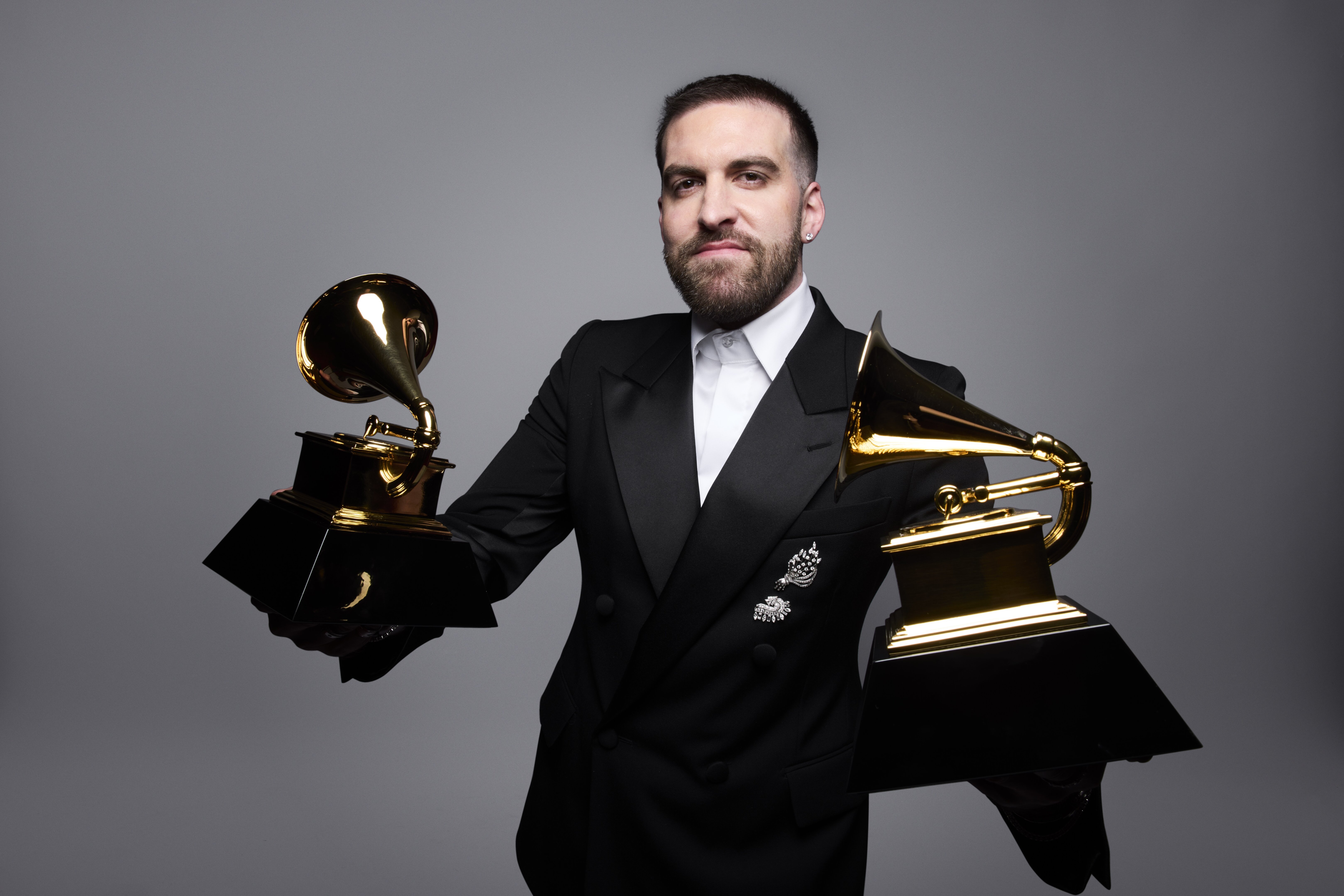
It was Not Like Us, however, that swept the 2025 Grammys, picking up five, including Record Of The Year and Song Of The Year, an event still fresh in Momberger’s mind as he catches up with MBW.
“I definitely was not expecting it, but my gut was telling me it was Kendrick’s year,” says the producer, who had a low-key celebration with his publishers (300/Warner Chappell) and his brothers after the ceremony. “When I woke up, I was still in disbelief.”
Momberger should probably get used to it. Now 34 years old, he admits it will be difficult to top his recent success (“Where can you go? I don’t know…”), but his phone has been ringing red hot, and he has big plans to develop some new artists of his own and take his collaboration with Mustard to the next level.
But first it’s time for him to sit down with MBW in his LA studio and talk AI, sampling and why he’s not bothered about Not Like Us court cases…
DID YOU REALLY NOT KNOW STRAIGHT AWAY THAT NOT LIKE US WOULD BE HUGE?
Not at all. The way Mustard and I work is, he’ll text me saying, ‘I need ideas for so-and-so’. That week he was like, ‘I’m sending stuff to Kendrick’.
When he said that, I got a little spark of inspiration. I came across this Monk Higgins record (I Believe To My Soul), which became the song I chose to sample. When I made it, I thought Kendrick might like it, but that was just one of the ideas I made that day. I didn’t leave thinking like, ‘Oh man, I made the most incredible idea’.
I sent it to Mustard and he did his thing. When I heard it was the one Kendrick was going to use, I kept going back to the idea and listening to it on my computer like, ‘Is this really the one he picked, what’s this going to be?’ That’s the special part of Kendrick; he’s just a genius creative and he got it right away. So, when it came out, I was super-surprised at how it came together. I definitely didn’t think it would be the hit it became.
Do I usually know a hit? I would say no! The Jack Harlow song I knew was going to be a hit, but other than that I just keep my head down, do a few ideas a day and see where the chips fall.
WHAT DOES A HIT LIKE THAT DO TO YOUR CAREER?
I’m not like a young, up-and-coming producer, so it feels like I’ve finally had this moment and all the hard work has paid off.
I’ve been working a lot more with new producers and artists, it’s been life-changing. I would always get a couple of records a year, smaller placements, and I’d be pretty satisfied with those, but I just didn’t realise what a No.1 would do for your career.
Just a couple of hits can change your whole career and it’s been really humbling to see, especially because I’ve been doing it for so long.
If this happened when I was 21, who knows what would have happened? It probably would have been too much. Being older, knowing how to deal with finances and expectations, knowing you can get a couple of hits and then not have anything for years… I’m very aware of that!
WHY DOES YOUR WORKING RELATIONSHIP WITH MUSTARD WORK SO WELL?
It’s funny, because the first four years I worked with him, we didn’t really have that many significant songs. I was like, ‘We’re going to get one one day’ and it just happened to be the biggest record of both of our whole careers!
I just always trust his vision and how he approaches making music. He’s definitely a special producer.
He’s definitely more the club guy; he’s going to put all the special ingredients in to make it stand out on the radio. He’ll put his signature drums and his signature bounce on it. I just stick to the melody section or the samples, the idea that starts it, all then he’ll put all his special sounds on it to make it a big production.
THERE’S BEEN A LOT OF TALK ABOUT HIP-HOP GOING OFF THE BOIL CHARTS-WISE, SO ARE YOU AND MUSTARD SAVING IT?
[Laughs] I don’t really pay too much attention to the charts, because it’s nothing I can control, that’s more for the fans and the music execs.
There’s a lot of good hip-hop out right now, so I wouldn’t say Kendrick’s saving it. Pop is doing really good right now, a couple of years ago rap was doing good, country was doing good last year… It just has its phases.
DO YOU LIKE WORKING WITH OTHER PRODUCERS?
I’m pretty introverted, so I’m not super-collaborative with everyone, but I love working with other producers, just to see what they would do to an idea I have. And it’s super-big right now in rap production; all the big producers are working with somebody, versus back in the day it was more solo production.
WHAT KIND OF A PRODUCER ARE YOU?
I know a lot of producers are more hands-on, but I like to let the artist do their thing. I bring an idea to the table and then let the artist write to it, and then maybe do the drums after.
It’s definitely a collaborative effort; I love the input of the artist, and engineers are really important in the studio. I’m very humble, so anyone in the room that has ideas, I’m always graciously accepting them. I love working with everyone in the room.
DO YOU CHANGE YOUR STYLE WHEN YOU’RE WORKING WITH A BIG NAME LIKE DOJA CAT OR JUSTIN BIEBER?
I stick to my style. Doja is pretty R&B/poppy, but she decided to do a rap album and I was lucky enough to get to work with her.
But I don’t like to chase placements, I like to create music and, if the ideas speak to the artist, then that’s great. I just do my own thing and see what happens.
YOU HAVE A REPUTATION AS KING OF THE SAMPLES…
Yeah, that’s my calling card right now. That’s testament to being a true hip-hop fan. All the songs I listened to when I was a kid in middle school, they were all samples. I was by that process of producing where you take an old record, flip it and turn it into something new. Sampling is the DNA of hip-hop; when it started in the Bronx, everyone was sampling records and breaks.
THE JACK HARLOW SAMPLE on Lovin’ on me WAS PRETTY OBSCURE. HOW DO YOU FIND THEM?
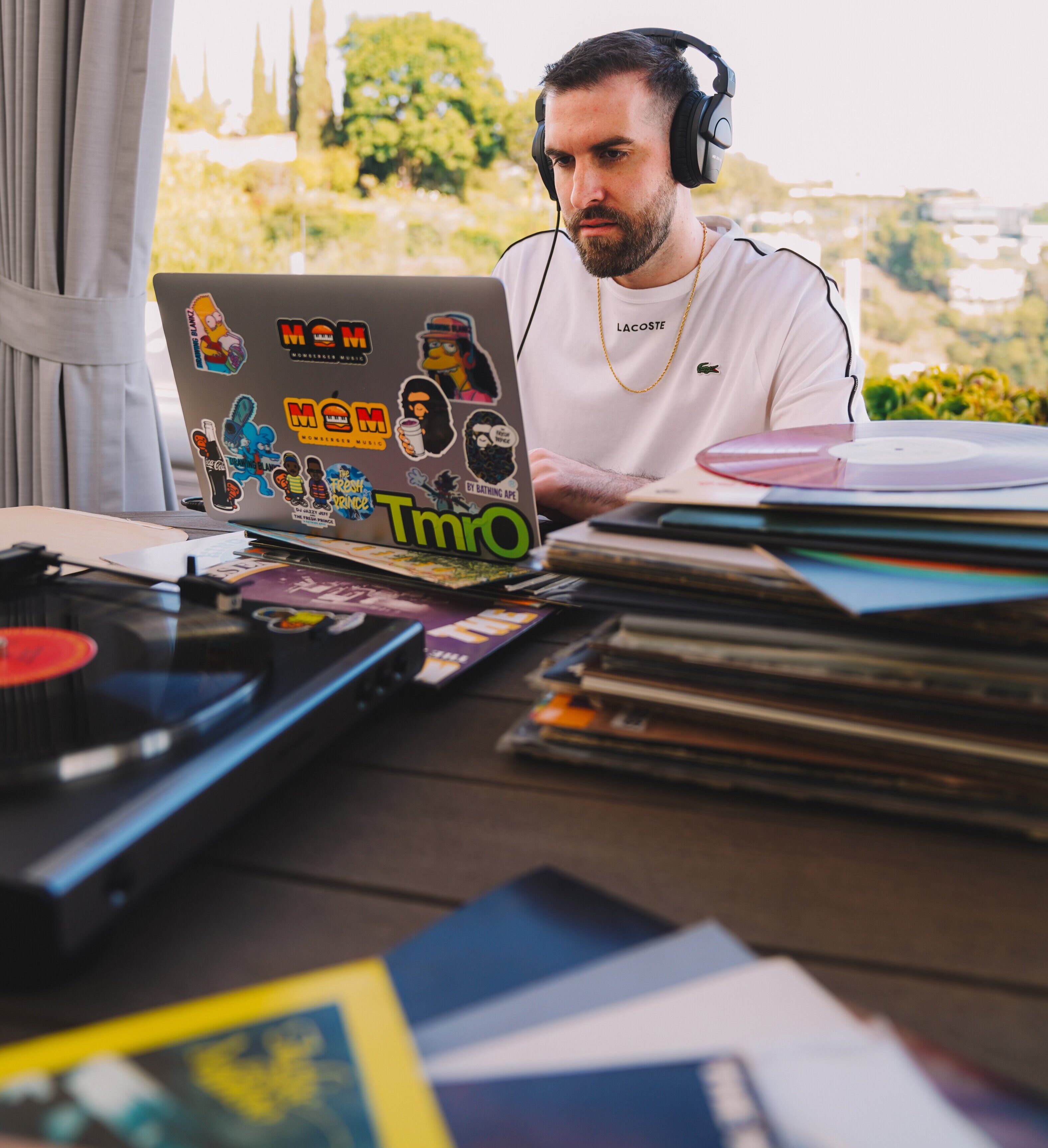
Nowadays, a lot of old collectors will upload their music online. I go to a lot of record stores, but you can find a lot of stuff on YouTube. I just sift through sounds all day, spending five to six hours a day listening to new music, new ideas, new inspirations.
It doesn’t have to be obscure, but that’s usually where you find the gold; stuff people haven’t heard or used.
DO YOU ALWAYS KNOW A GOOD SAMPLE WHEN YOU FIND IT?
Yes, right away I pull up Pro Tools and I’m off to the races. I don’t spend much time over-thinking; right when I hear it, I’m ready to start working.
There are two things I’m looking for – either a dynamic sound or an incredible loop that’s already ready to go. The best-case scenario is, you come across a beautiful, amazing little four- to eight-bar loop that might not be throughout the song, but you find it hidden in a record.
HAVE YOU EVER NOT BEEN ABLE TO GET PERMISSION FOR A SAMPLE YOU WANTED TO USE?
Yeah, it happens all the time – that’s the hiccup with sampling. You get a placement and the artist and label will ask for the sample details, you’ll send it to them and you might hear in a couple of weeks that they don’t want to clear it. Usually, they want too much of the record or too much money and the artist doesn’t have the budget, or they don’t want to do it.
Those are bad days when I get that notification; we either have to replay it or scramble – it’s a fun little mission to try and make a similar vibe and replace the sample. But respect to all the artists, it’s their copyrighted music so, if they don’t want to clear it, I respect it.
YOU DIDN’T HAVE A PUBLISHER UNTIL QUITE RECENTLY. ARE YOU QUITE CAUTIOUS ABOUT THE MUSIC INDUSTRY?
Yeah, I know that’s weird because a lot of kids sign with publishers and managers. But I’m self-managed and me and my brother handle all our business. I do have a lawyer that I’m good friends with – all you need is a lawyer and then, if it makes sense, partner with a publisher.
I like to keep to myself – I love all the people who work in the music industry, but it can be overwhelming and, if you sign a bad deal, it can leave a bad taste in your mouth.
DOES THE INDUSTRY VALUE PRODUCERS AS MUCH AS IT SHOULD?
Everyone’s under-valued, to be honest. The whole streaming era has been frustrating for producers and songwriters and even artists.
You make a song like Not Like Us, with over a billion streams, it’s heard in every city across the world and the royalty rates are just so low that you really have to have several of those one-in-a-million songs in your career to live comfortably.
“You’d think with a song like that, you’d never need to work again but, sadly, it’s not the case with how streaming works.”
You’d think with a song like that, you’d never need to work again but, sadly, it’s not the case with how streaming works. The radio pays a little better, but I really hope Spotify and everyone’s rates can come up a bit, so all the writers can feel a little better about themselves.
It’s weird, because it’s a tech company, but everything on their website is from musicians. We make all the stuff that’s making them billions of dollars and then the royalty rates we get back are so low.
HOW DO YOU FEEL ABOUT AI?
Oh man! It’s definitely the future and I’d hate to not use it, I’m always down with what’s new.
I know The Beatles’ song that was up for Record Of The Year (Now And Then) used AI and I use some AI stuff, separating stems.
I’m not a fan of taking away jobs for musicians, but it is going to have a place in the music industry. We’ve got to find a way to use it appropriately and respectfully, so it doesn’t take jobs away.
I don’t worry about people taking my sound. I’m more worried about people saying, ‘I need a guitar’, and not going to a guitar player, taking a session musician’s job. But you can’t ever get it quite like a human could do it, you’re still going to need the love and care that needs to go into it.
HOW DO YOU FEEL ABOUT DRAKE SUING UNIVERSAL MUSIC OVER NOT LIKE US?
I have no thoughts on what’s going to happen with it or any involvement in it. To me it’s just entertaining to see in the news. It makes people go back and listen to the song, so that’s fine with me!
It’s fascinating though, it adds a whole another level to the song and it’s kind of unprecedented so, in that sense, it’s a historical moment for sure.