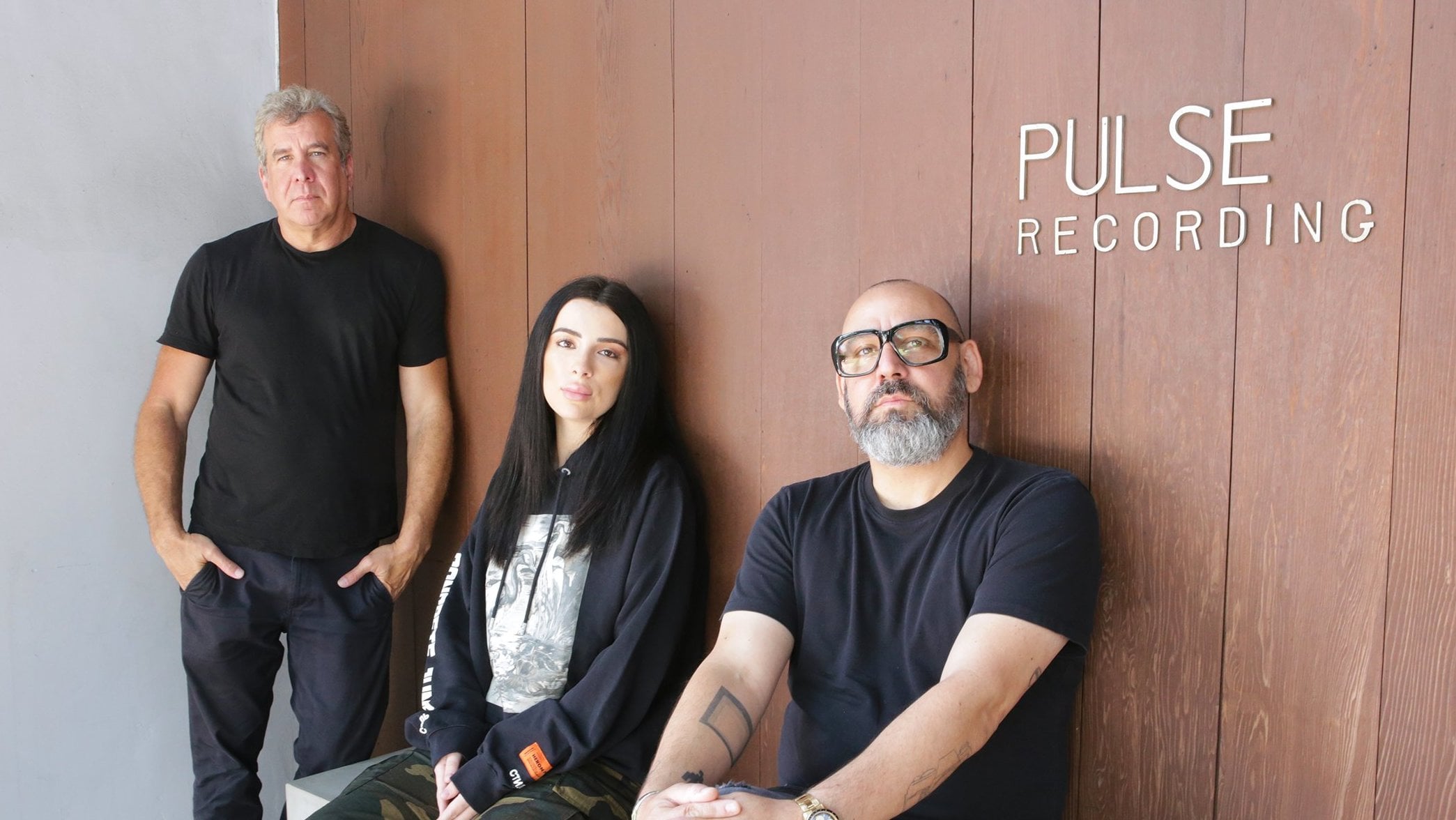
Pulse Music Group doesn’t operate out of a corporate office. It operates out of a recording studio.
That studio – the old Soundcastle complex in LA’s Silver Lake, where everyone from Madonna to Paul McCartney, Tupac to Bruce Springsteen, Dr. Dre to the Beach Boys has cut records – was bought by record producer Josh Abraham in 2004. Four years later, he and songwriter Scott Cutler planted a flag on the same lot: a music publishing company that would spend the next two decades looking nothing like its competition.
Today, Pulse is a standout independent music publisher in the United States.
Its client roster (currently 250 strong) has racked up more than 100 billion streams and a quarter of a billion RIAA-certified units, with writers behind megahits including Miley Cyrus’ Flowers, Harry Styles’ As It Was and Watermelon Sugar, Katy Perry’s Roar, Teenage Dream and California Gurls, Maroon 5 and Cardi B’s Girls Like You, Camila Cabello’s Havana, Rihanna’s Needed Me, and the Justin Bieber-assisted remix of Luis Fonsi and Daddy Yankee’s Despacito. Multiple Pulse-published songs featured on Beyoncé’s Cowboy Carter.
In January 2020 – after Concord Music Publishing acquired FujiPacific‘s stake in the business – Pulse entered an exclusive A&R-focused joint venture with Concord. That spine has since been extended: in 2023, Cutler and Abraham – today the Co-CEOs of Pulse – launched Pulse Records in partnership with Concord, which promptly landed the breakthrough of the following year in Tommy Richman’s Million Dollar Baby.
What makes Pulse’s rise particularly strange is that its two co-founders arrived at that founding moment from almost perfectly opposite directions – and spent most of the 2000s missing each other entirely.
Scott Cutler came to LA as a songwriter at 22. He was a member of alternative rock band Ednaswap, and co-wrote a smash song called Torn – later a global No.1 for Natalie Imbruglia, and one of the world’s most-played radio singles of the 1990s.
He went on to co-write the Grammy-nominated Piano in the Dark with Brenda Russell, the Critics’ Choice-winning Listen for Beyoncé in Dreamgirls, and cuts with Madonna, Katy Perry, Miley Cyrus, Sinéad O’Connor, and Kelly Clarkson.
Josh Abraham, meanwhile, was one of LA’s most in-demand record producers. Raised in the city with a guitar in his hand and (by his own description) an ear that instinctively broke music down into its component parts, Abraham cut his teeth producing rock and alternative acts, with credits including P!nk, Thirty Seconds to Mars, Linkin Park, Shakira, Weezer, Kelly Clarkson, Velvet Revolver, Courtney Love, Slayer, and Alkaline Trio.
In 2004, he bought the Soundcastle studio complex – the site that would, four years later, become Pulse’s home. Before Pulse, he’d served as SVP of A&R at Virgin Records on the West Coast.
A pop hit machine and a rock-leaning producer, operating in overlapping ZIP codes but entirely separate lanes. The kind of pairing that, but for a remarkably persistent set of coincidences and one fateful table plan, would never have happened at all…
Scott Cutler: This is a story about fate. I came to LA at 22 years old and became a songwriter. I got a publishing deal early; soon enough, I had a song that charted. Then I spent a bunch of years trying to figure out why that happened, and how to make it happen again. That’s when the work really began.
At one point, I lived in a house up in Laurel Canyon with a home studio in the garage. This was the beginning of home studios – there weren’t many of them around. I was selling a piece of gear in the paper, and this kid Josh showed up to buy it.
Josh Abraham: The Recycler was our hard-copy version of eBay at the time. I went with a friend to look at a Yamaha SPX 90, and wound up leaving with that AND a Linn 9000 for 500 bucks, total. The Linn alone was worth 900. Smash and grab; I robbed him!
Scott: The next day, he called me out of the blue and asked: “Hey – out of interest, do you want to sell your house?” I talked it over with my co-writer Anne [Preven], also a co-founder of Pulse, and decided: Um, no, I’m good. So I called him back: “It’s not for sale.”
A year or two later, I’m trying to buy a piece of art I really like, a piece by Yoshitomo Nara, and they tell me there’s a guy ahead of me in the bidding. It’s Josh Abraham. I tell them: “I know this guy, Josh. Don’t tell him it’s me.”
This keeps happening. It even happens when I buy my next house, on Mulholland Drive. There’s a backup offer on the property. Who is it? Josh again.
Josh: On that house: I was in the studio and my wife called me. She said: “You’ve got to come see this. It’s up on the hill. The view is incredible. Detached garage that could be your studio. But I don’t think there’s enough time – somebody else is putting in an offer right now.”
I told her: “Put in a backup offer, tie it up until I get to see it.” I asked her who the other guy was. She had no idea who Scott was. She just said: “Some music guy.”
Scott got the house. I got the art. I didn’t even know about that bidding war until later.
Scott: To be clear: at this point, we weren’t friends, we didn’t talk. He was doing his thing, I was doing mine. I knew of Josh, though, and I had respect for him. This kid Josh Abraham who was recording bands, doing it in an interesting way. I was a traditional songwriter, and he was a traditional producer of bands. Our worlds didn’t connect at all.
Josh: Our tastes always lined up, even before we knew each other. That’s why, some time after the house thing, I ended up calling Scott out of nowhere to ask his advice about buying a studio that’s now the Pulse campus [in Silver Lake]. We’d been weaving in and out of each other’s lives for years. And I trusted his taste.
Soon after that, we ended up sitting next to each other at a dinner for a mutual friend’s birthday. About ten of us, round table, at Madeo’s. I could have been four seats away. I just happened to be next to him.
We were trying to figure out what to order. I turned to Scott: “What if I get the chicken parm and you get the pasta – and we split it?” We dug in. I genuinely think there’s something in that kind of sharing. We’ve been sharing ever since.
“By the end of that dinner, Josh had hit me with the idea of starting a publishing company together.”
Scott Cutler
Scott: By the end of that dinner, Josh had hit me with the idea of starting a publishing company together. He thought I had good taste, and I thought he had good taste; it was worth a try.
Josh: As a record producer, I’d had success – Gold, Platinum, multi-Platinum records. That was a good buzz. But the decline of record sales, people downloading MP3s and burning CDs, made me nervous. I started to see the budgets shrink at the majors, and those thousand-yard stares from A&Rs who couldn’t get approvals.
I’d been SVP of A&R at Virgin on the West Coast: As well as being the producer, I A&R’d a multi-Platinum album for Thirty Seconds to Mars. So I’d seen the inside of the building. And I had to figure out what was next. Part of that was: I needed 100% autonomy and control of my destiny. I also knew: if you own the copyrights, you’ve got a stake in the ground.
I’d tried a record label thing before Pulse – it didn’t amount to much. So when Scott and I got together, it was just clear to me that publishing was the right thing to do. It was kill-or-be-killed. I was not going to make it to the next step in the music business any other way.
Scott: The record business was still kind of cold. This was 2008, just before Spotify started becoming known. Record sales were down. Josh wanted a songwriter partner for Pulse – somebody with similar taste. Anne and I started it with him very loosely at first. I still had one foot in songwriting. It took a year to fully make the transition, from being a songwriter to sitting at a table pitching songwriters and producers to sign to Pulse.
Josh: Scott had great taste, he had my trust, and he had really good business acumen.
Scott: Josh spotted something in me I hadn’t seen in myself. I didn’t think I had good business acumen; I had to buy a bunch of business books just to work out what the fuck we were doing!
We had a theory that the reason to sign to Pulse was… there were no cool publishing companies. I’d been published since I was 22, so I knew. You’d walk into a publisher’s on the third floor of a bank building. Off the elevator, into a waiting room with rows of file cabinets, past a bunch of ASCAP Awards on the wall. You’d go see your guy, have the meeting, play your song, and get back on the elevator. Validate your parking, get out.
There was nothing cool about any of that. Josh and I thought: what if Pulse looked more like Sub Pop, or XL, or early Geffen? What if you saw the people who were published there, and you wanted to be part of that? The campus was central to it. Studios and offices on one lot. In one room you’d have a Diplo and a Greg Kurstin; in the next room, some random writer – and they’d interact. It would feel like early A&M or Virgin. Publishing companies didn’t have that aesthetic at all.
Josh: Being honest, we didn’t start Pulse with a business plan. Scott was a great songwriter; I was a producer. We had an idea, and the rest built itself.
Scott: Having the experience of 15-20 years each in the industry meant the moves we were making for our writers were intuitive. Somebody would call me to produce a session: ‘I’m not right for that, but this guy might be.’ We were doing things instantly that might take others years to learn.
We knew that if we kept doing it, there was something on the other side of the fence. That Pulse would become a true destination independent publishing company.
The North Star was a story everybody knows: Nirvana signed to Geffen because Sonic Youth did. We always knew that’s what Pulse needed to be – a destination with a point of view. We thought that hadn’t been done in publishing.
When Skrillex came out with Scary Monsters and Nice Sprites, I remember going: “This is going to change everything. How do we publish him? We need him.” We talked about cultural moments as we talked about anything. At some point, Josh brought Rick Rubin to the table to discuss partnering and building [American Songs] from scratch. That completely lined up with our aesthetic.

Josh: For me, a big one was watching how A&M was built. Jerry Moss and Herb Alpert were creative people. Together, they built this beautiful company on the lot. The lot itself was an inspiration. Companies like Virgin, too – built out of nowhere, because they had an idea and stood behind it. Branson just wouldn’t take no for an answer. That energy was a North Star.
Scott: Island, too. These companies were built in the spirit of the people who created them. Ninety percent of their decisions are in their image. I was in a band [Ednaswap] for about seven years before all of this, and we had a bunch of record deals.
One was with Chris Blackwell, and he was personally there for the signing. His statement to me was: “I’ll make as many records with you as I have to – until the world catches up.” I remember thinking: “That’s the greatest thing I’ve ever heard.” That’s what we were trying to carry forward.
Scott: Josh’s thing when we started was: Think of every session you’ve ever been in, every band you’ve ever sat with – who was the real writer?
Josh: Every A&R thinks they know who it is – and they’re nearly always wrong! My mandate to Scott was: “Dude, we can do this. Think about the best writer today who’s working at a coffee shop because they missed their moment. Let’s hit them up, and put our team together around them.”
Scott: I remember the first writer we pitched who said yes. They were on their way to signing with a major, and they chose us at the last minute. That gave me my first little bit of confidence. Okay – there’s something in what we’re saying that’s landing.
Josh: Everything had to be intentional. Every JV. Every signing. If it didn’t fit, we didn’t do it. We self-funded for the first five years. Twice after that, we brought in partners to grow [FujiPacific, followed by Concord]. Those were important moments. But our own culture has always been at the core.
Scott: There were moments over the years when another indie company would come up, and I’d notice them, think: “That looks interesting.” But they all sold; they all left. Somehow, today, we’re still here – with that same culture. In a world of three major publishers and just a handful of indies, that means something.
Josh: Along the way, what we learned – and this was Scott’s strength – was building executive talent. You can always sign great writers. But to actually operate and have a functioning company, you need good executive talent. Scott wrangled together an amazing team around us.
Outside of that, this whole article can be summed up in one line: Somehow, Scott found me, and I found Scott. That’s ‘how it started’. And I continue to be extremely thankful for it.