Up until last week, Robert Kyncl‘s position vis-à-vis Suno was – in his sphere of the music biz – a lonely one.
Nine months ago, the Warner Music Group CEO agreed to drop WMG’s lawsuit against Mikey Shulman’s company, whilst agreeing to a go-forward licensing deal with the gen-AI platform.
As part of that agreement, Suno publicly committed to limiting the number of downloads its users can pull from the platform (a move it announced last week), while also promising to launch an entirely new model licensed by industry partners (which it says is coming). MBW hears that WMG also banked equity in Suno as part of the pact.
Then, last Wednesday (August 12), suddenly, Kyncl was no longer alone: BMG announced that it too had struck a global licensing agreement with Suno, while confirming it would also participate in building the platform’s new licensed models.
The industry’s two largest players, however, continue to see things differently. Both Universal Music Group and Sony Music Group, via the RIAA, remain in active litigation against Suno – accusing the platform of mass copyright infringement.
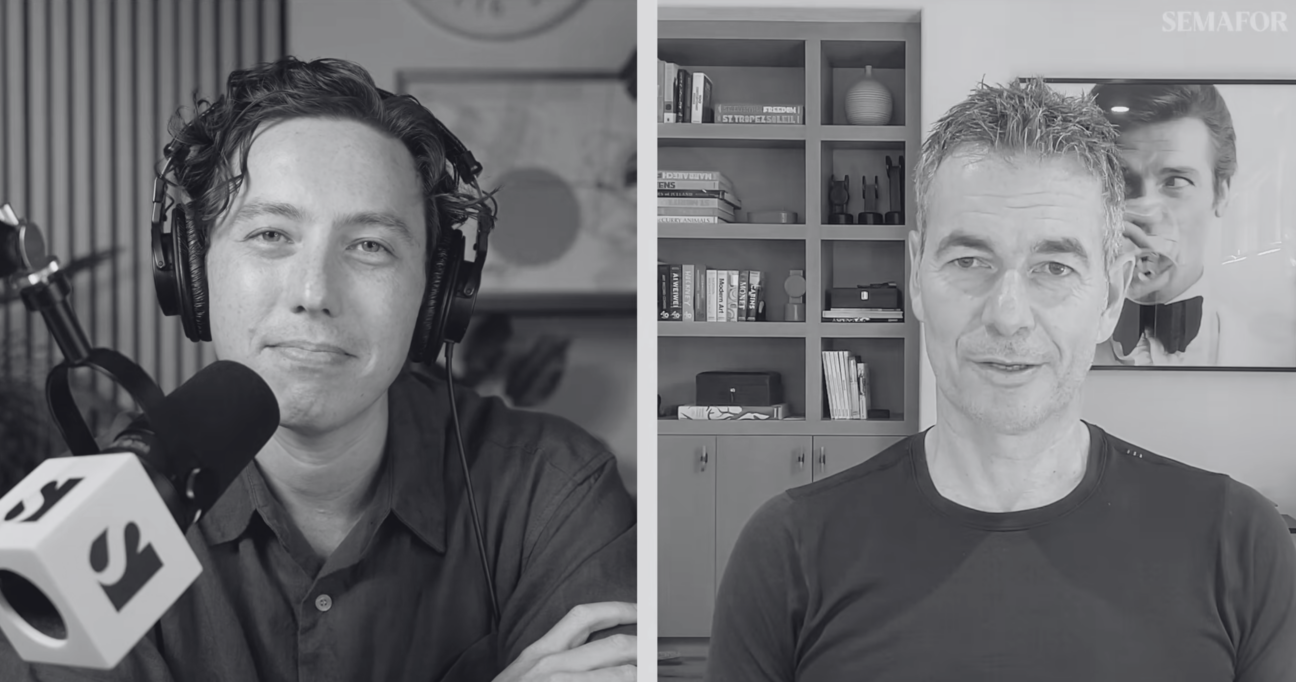
It was against this backdrop that Kyncl appeared on Semafor’s Mixed Signals podcast on Friday (August 14), where he was asked a handful of smart questions by co-hosts Max Tani and Liz Hoffman.
One of those questions: Why are your biggest rivals continuing to “fight the last war” against Suno in the courtroom, rather than making a deal to get paid from it?
And with that, Kyncl set out his stall.
“For me, it comes down to the audience,” said Kyncl, adding: “When somebody builds a [music] AI service and has traction with the audience, as Mikey Shulman did at Suno, and if [that person is] willing to transition to a licensed model – basically ‘go legit’ – in my opinion, you embrace it.”
“we have a chance [to build] a licensed regime with a market leader who’s growing really fast.”
Robert Kyncl, Warner Music Group
Continued Kyncl: “[If a new service has] significant traction with users – a very difficult thing to do – then we have a chance [to build] a licensed regime with a market leader who’s growing really fast.
“We can make this whole new market, versus [trying] to kill it.”
Universal and Sony would no doubt contest Kyncl’s assertion that Suno had “gone legit” – and may point to Suno’s loss in a legal fight against GEMA in Germany earlier this month.
However, Kyncl cautioned his competitors that, should they succeed in terminating what they deem to be unlicensed AI platforms, “the users… don’t really care about the lawsuits and the shenanigans happening on the business level.”
He added: “Users say, ‘I just want to do this.’ If they can’t do it [on Suno, they’ll] move on to something else. And if that something else is an unlicensed, open-source model somewhere in a place that we can’t touch, that’s bad news for artists and songwriters.”
Kyncl’s reference to “in a place we can’t touch” there might have been a nod to China, where AI services have begun to encroach into music through, for example, DeepSeek’s integration into Tencent Music’s platforms.
Kyncl likened the music rights industry’s battles with Suno to its growing pains with YouTube over a decade ago.
“I view AI as UGC on steroids. The difference is that with UGC, the actual [music] content was attached to something else – and with AI, it’s getting modified.”
Robert Kyncl, Warner Music Group
Kyncl was Chief Business Officer of YouTube from 2010 to 2022, prior to joining WMG. (Prior to joining YouTube – and this will become germane shortly – Kyncl spent seven years at Netflix, where he led its expansion into streaming film and TV content.)
“I [was] on the receiving end of [music biz animosity] when I was at YouTube in the early days,” Kyncl told the Semafor podcast. “YouTube had a lot of different lawsuits over copyright infringement at that time; I worked on removing those and instead building commercial relationships with [the music industry]… and we ended up making billions of dollars – for everybody.”
He added: “I view AI as UGC on steroids. The difference is that with UGC, the actual [music] content was attached to something else – and with AI, it’s getting modified. Therefore, it’s more uncomfortable – rightly so – which is why the guardrails have to be really strict.”
Kyncl further indicated that low-level charting music produced by AI platforms like Suno hadn’t given him many sleepless nights so far – though he acknowledged that, with AI’s rapid evolution, everything can change quickly.
He opined that in an “increasingly digital world where robots deliver your food and drive your cars,” people will seek out more human experiences – and music “is the perfect vessel for that.”
“Music is [particularly] great because an artist touring is like a blue check mark on identity,” he said, noting that fans also ‘follow’ the human story behind their favorite artists: “Look at Taylor Swift. People are like following the wedding [to Travis] Kelce… and that happens with artists of all sizes.”
Added Kyncl: “I think the more risky area [from AI music] could be… a whole bunch of average music that just sucks up a lot of time, passive listening… and eats into the content pool from which artists and songwriters get paid.
“This is where our negotiations are focused with the DSPs, because this is like the real meat and potatoes of how money is made and how [AI music] could impact it.”
One standout part of the Semafor pod saw Kyncl questioned about what he’d do if he were running Netflix today, especially in light of headlines about YouTube eating into the TV/film streamer’s market share.
Kyncl acknowledged with a laugh that he remains friends with Netflix co-CEO, Ted Sarandos, and that his answer to the question was “obviously self-serving.”
Commented Kyncl: “Funnily [enough], I think Netflix is missing one huge content lever in its fight with YouTube, which is music.
“All of the music on YouTube is not exclusive; the music videos, everything in the entire history of music, concerts, different versions, it’s all non-exclusive.
“When I was at YouTube, obviously music was a massive portion of [views] and a big contributor to growth. That’s one of the things that’s missing on Netflix.”
“Netflix is missing one huge content lever in its fight with YouTube, which is music.”
Robert Kyncl, Warner Music Group
Kyncl was asked, if he was running Netflix, whether he’d consider buying Spotify to fill that gap.
“I wouldn’t buy a [music] service,” he said. “I would simply license all the same music that YouTube is licensing.
“[Netflix] have the ability to do it. [Music licensing is] actually fairly concentrated in the industry, so it’s pretty easy to get their hands [on it].
“It would be the single largest content ingestion anyone could go through. Imagine a section on Netflix that’s purely music-dedicated that you can create lots of consumption around, and then create a whole bunch of super-interesting original programming on top of that… it [would bring] reach and frequency, and you can differentiate with doing extra exclusive specials on top, new music releases every week etc. I think it would be a potent lever for them.”Music Business Worldwide