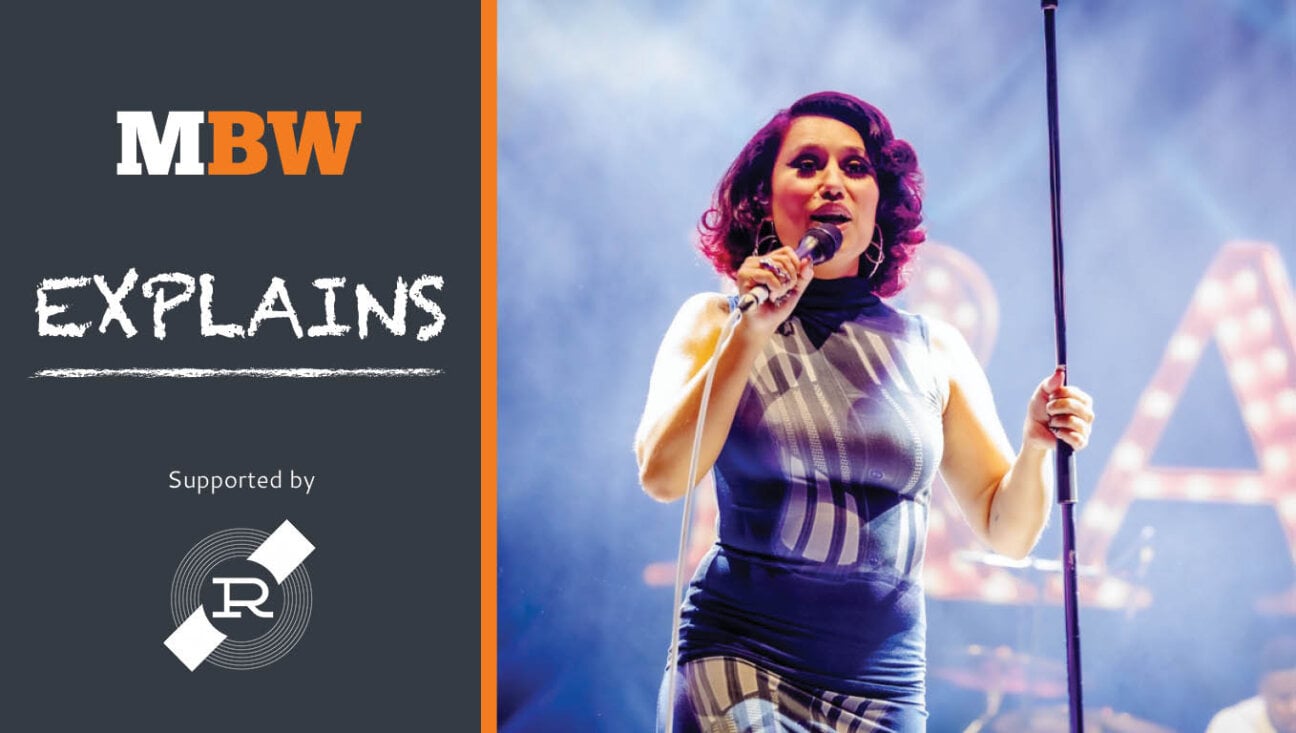
In October alone, bots have disrupted ticket sales for Raye, Garth Brooks, and Sam Fender.
Fender was the latest, postponing the presale for his Newcastle homecoming shows on Wednesday (October 28) after promoters told him of a “sophisticated bot attack.”
Here are five things to know about the arms race behind primary ticketing – and what could change it.
1. The bots are hitting every stage of the sale
Raye’s presale was targeted before a single ticket went on sale.
Run through a page hosted by fan marketing platform co:brand, the sign-up for her October 23 show at London’s Royal Albert Hall drew 1.8 million registrations for 5,000 seats.
“Sadly our sign-up process was overwhelmed by scalpers, using AI bots to create hundreds of thousands of fake registrations,” Raye wrote on October 13. “It is a new world we are living in now, I have never witnessed bots on this scale.”
Raye’s team then manually reviewed the list and emailed codes to a shortlist of people it believed were “real fans,” as MBW reported at the time.
For Brooks, the bots arrived in the queue.
Sales for a Kansas City matinee at T-Mobile Center were shut down shortly after opening through AXS on October 23, and the show was later canceled.
“When tickets went on sale that morning, more than 90,000 people were in the queue,” a statement on Brooks’ website said. “Most of that number turned out to be bots.”
Fender’s presale for St James’ Park was hit at the ticketing site itself, Gigantic.
“Being told by the promoters that there’s been a sophisticated bot attack to the gigantic ticket site which is impacting the St James’ Park Pre-sale,” Fender wrote on Instagram. “We’re going to have to move the Newcastle pre-sale to 9.30am tomorrow to ensure real fans get the tickets.”
The presale was pushed to Thursday (October 29), while presales for other tour dates, sold through sites including Ticketmaster, went ahead, MBW reported.
2. Ticketmaster says it blocked nearly 260 million bot attempts a day in 2025
Live Nation and Ticketmaster put numbers on the problem in an October 13 court filing answering the US Federal Trade Commission’s BOTS Act lawsuit against them (more on that below).
“In 2025, Ticketmaster detected and blocked nearly 260 million attempts daily by bots to access its services, and currently blocks tens of thousands of suspected inauthentic account-creation attempts each day,” the filing states.
In an October 2025 letter to US senators, Dan Wall, Live Nation’s EVP for Corporate and Regulatory Affairs, said the company had blocked 8.7 billion bot access attempts in April 2025 alone.
The Royal Albert Hall said in July 2024 that it had blocked more than 38 million bot requests in a single 24-hour period.
A 2026 report by French technology group Thales found that bots accounted for more than 53% of all web traffic in 2025, and that AI-driven bot attacks rose 12.5x year-over-year.
Thales says bot activity is no longer confined to one-off campaigns such as scraping, and is now a constant presence.
3. Accounts, verification codes, and IP addresses are the target
A separate FTC lawsuit, filed in August 2025 under the BOTS Act, a 2016 law aimed at ticket bots, sets out how one ticket broker allegedly worked around Ticketmaster’s defenses.
The FTC alleges that Maryland-based Key Investment Group created or obtained more than 13,000 Ticketmaster accounts and used thousands of credit card numbers to avoid fraud detection.
It also alleges that the broker masked its location using proxy services and spoofed IP addresses, and used “SIM banks” loaded with dozens of SIM cards to receive the codes Ticketmaster sends to verify accounts.
According to the complaint, flyers handed out in Baltimore offered recruits USD $5 per account created, plus $5–20 for each Verified Fan presale code received, under the pitch “Make Money Doing Verified Fan Sign Ups.”
For one Taylor Swift Eras Tour show in 2023, the broker allegedly used 49 accounts to buy 273 tickets, against a six-ticket limit.
Key Investment Group has said its purchases did not use bots and did not breach the BOTS Act.
In April, a federal judge in Maryland refused to dismiss the case, ruling that the law applies to “any person” and not just to bots. The ruling allowed the case to proceed but did not decide its merits.
4. CAPTCHAs are no longer a reliable filter
Ticketmaster says in the October 13 filing that its defenses include “CAPTCHA challenges, account authentication, analytics that detect accounts under common control, and the cancellation of inauthentic accounts.”
In 2024, researchers at ETH Zurich used a modified version of the YOLO image-recognition model to solve 100% of the image challenges set by Google’s reCAPTCHA v2.
The researchers also found that bots needed to solve about as many challenges as humans to get through, and that Google’s system leaned heavily on cookies and browsing history to judge whether a user was human.
Thales found that 27% of bot attacks now go straight to APIs, skipping the user-facing parts of a website altogether.
“AI is transforming automation from something organizations try to block into something they must also manage,” said Tim Chang, Global Vice President and General Manager, Application Security at Thales.
“The challenge is no longer identifying bots,” Chang added. “It’s understanding what the bot, agent, or automation is doing, whether it aligns with business intent, and how it interacts with critical systems.”
In his October 2025 letter, Wall said Ticketmaster would limit every entity, including professional resellers, to a single account, require a unique taxpayer ID for any account listing tickets for resale, and use AI to find fake or duplicate accounts.
5. Lawmakers on both sides of the Atlantic are rewriting the rules
In November 2025, the UK government announced plans to ban the resale of tickets above face value, and to bar individuals from reselling more tickets than they were allowed to buy – a measure aimed at bulk-buying bots.
Those measures were included in the King’s Speech in May as a draft Ticket Tout Ban Bill, which must go through pre-legislative scrutiny before it can be formally introduced to Parliament.
After the Raye presale, a Royal Albert Hall spokesperson told the BBC that the “law needs to catch up.”
In the US, the BOTS Act already bars circumventing the security measures ticket sellers use to enforce purchase limits.
The MAIN Event Ticketing Act, which cleared the House Energy and Commerce Committee 36-0 on September 16, would go further.
In the version taken up by the committee, it would require ticket issuers to keep technical controls in place to enforce purchase limits and to report known circumventions to the FTC within 30 days.
Live Nation supports the legislation, but Wall warned in his October 2025 letter that the bill’s reporting requirement could overwhelm ticket sellers, writing that attempted circumvention “happens constantly and at enormous scale.”
The bill would also set minimum civil penalties of USD $10,000 for each day a violation continues, plus $1,000 per violation.
It still needs a House floor vote, and its Senate counterpart, S. 196, also awaits a vote.
Separately, the FTC and seven states are suing Live Nation and Ticketmaster, partly under the BOTS Act, alleging that Ticketmaster knowingly let brokers buy beyond artists’ ticket limits.
In their October 13 filing, the companies call the case “misguided” and warn that the FTC’s approach “risks a severe chilling effect on abuse prevention.”
After halting a Salt Lake City on-sale in September, Brooks made a request of his own.
“If the powers that be are not going to make scalping illegal, can you please make bot activity during on sales illegal?” Brooks said in a news release. “It’s just not fair for the REAL person.”
Raye ended her post: “I’m not sure what the future holds for ticketing, I do know this experience has really opened my eyes. Me and my team are going to think really hard about what we can do in the future.”