
The music rights industry is becoming increasingly enamoured with two aspects of today’s business: ‘name, image, and likeness’ (NIL) rights, and ‘experiential’ events for fans.
You can see the power of this combination in London’s ABBA Voyage, which comfortably generates more than $125 million a year despite being locked to just one location (for now).
You can also see it on Broadway, where music-adjacent shows like the Tony-winning Michael Jackson hit MJ: The Musical continue to play to packed-out audiences each night. (Not for nothing did Sony Music Group boss, Rob Stringer, recently remark that having five MJ: The Musical productions playing around the world simultaneously was “like a touring act times five – quite lucrative”.)
The latest major move into the experiential world of music comes from a company that’s been maximising NIL’s potential for two decades: Primary Wave.
The New York-headquartered company is the co-creator of the new Las Vegas immersive live show spectacular, Bob Marley Hope Road.
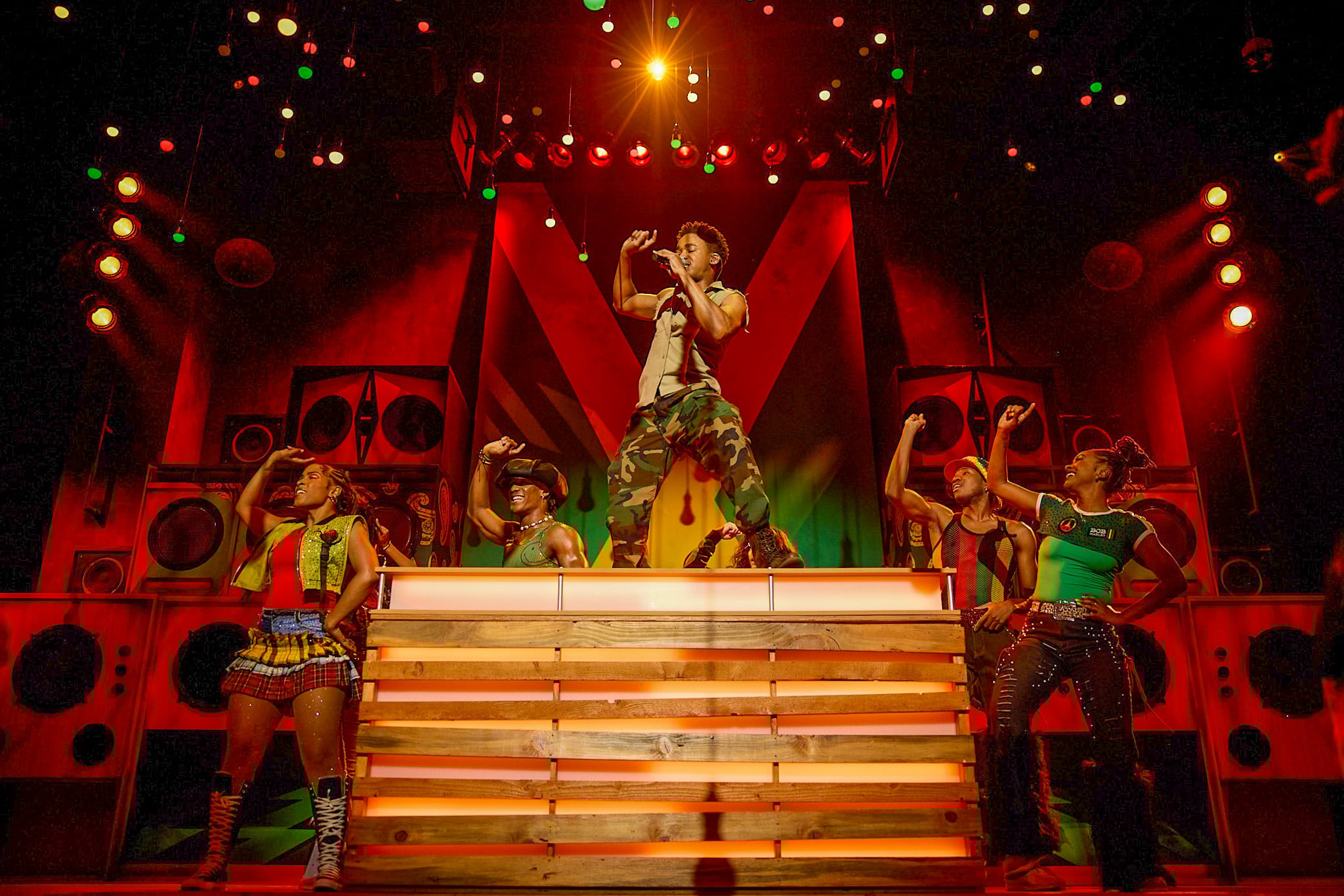
Held at the Mandalay Bay Resort & Casino, guests move through themed rooms with the cast as they perform. The uniquely designed, non-seated show utilizes cutting-edge technology with a capacity of approximately 180 ticketed guests per performance.
Depending on whether you’re buying as an early bird or a standard customer, Hope Road tickets on the Mandalay site typically cost between $69 and $99 (excluding taxes/booking fee).
Five evening shows per day are already up and running, across five days each week. That’s around 100 shows per month.
And Larry Mestel, the CEO of Primary Wave – who struck a $50 million deal to acquire a stake in Bob Marley’s estate seven years ago – says a whopping NINE shows per day (X5 per week) will soon be operational, across three different casts.
“Add in special packages – plus, crucially, merch – and this ballpark annual revenue figure could easily tip closer towards $40 million for Primary Wave and its partners.”
Doing the quick-sketch math, that creates an event with clear potential for a $30 million+ annual gross turnover. Add in special packages – plus, crucially, merch – and this ballpark annual revenue figure could easily tip closer towards $40 million for Primary Wave and its partners in the show, including producer FiveCurrents.
One reason this frequency of shows is possible is that Hope Road is relatively concise, at 75 minutes long – something Mestel says was a conscious decision.
“We picked a [shorter] show when considering the attention span of audiences, and all their opportunities for entertainment, especially in Vegas,” he tells MBW. “The upside is that it allows us to do multiple shows a day.”
Mestel is coy about Primary Wave’s real financial projections for Hope Road, but is happy to reiterate that the merch element (think happy holidaymakers strolling the Vegas Strip in Bob Marley tees and hats, all bought in the official Hope Road store) is a “big piece” of the event’s roll-out.
A model built on partnership
The economics of Hope Road are especially interesting because of Primary Wave’s particular M&A strategy.
Like most of PW’s acquisitions, the deal for Bob Marley in 2018 wasn’t a simple rights-buyout. Instead, it enabled Primary Wave to acquire its stake, while the Marley estate also retained some equity.
This partnership structure, says Mestel, is core to most of the acquisitions that Primary Wave has closed.
“We partner with families [of iconic artists] – partly to keep everything as true to the artist as possible, and partly so that [the family] gets the benefit and the recognition when these things are successful.”
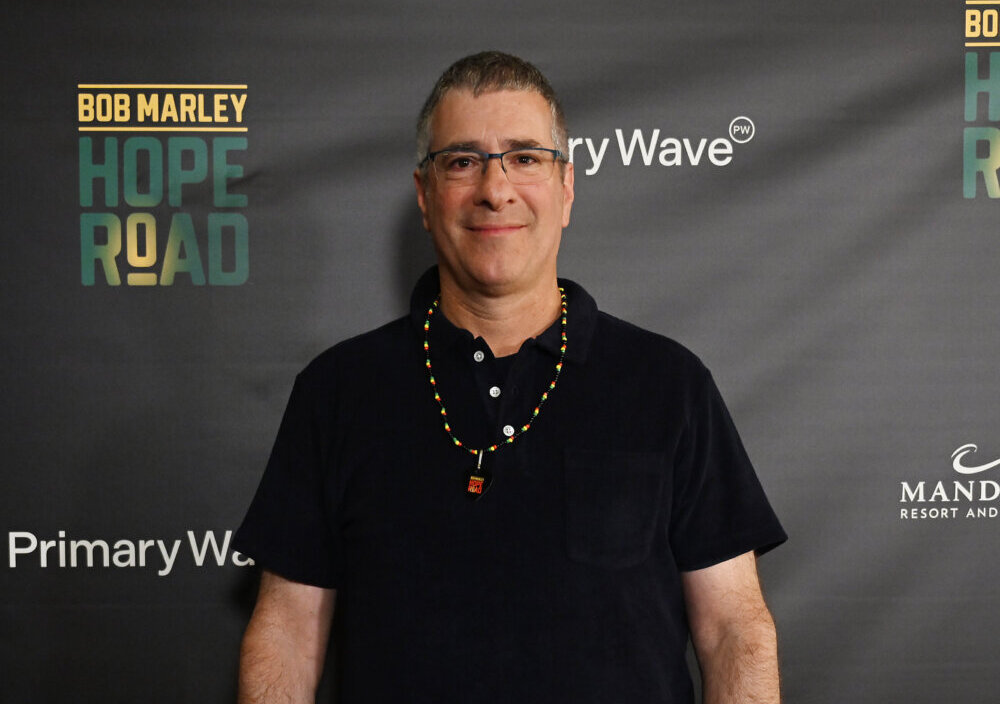
Larry Mestel, Primary Wave
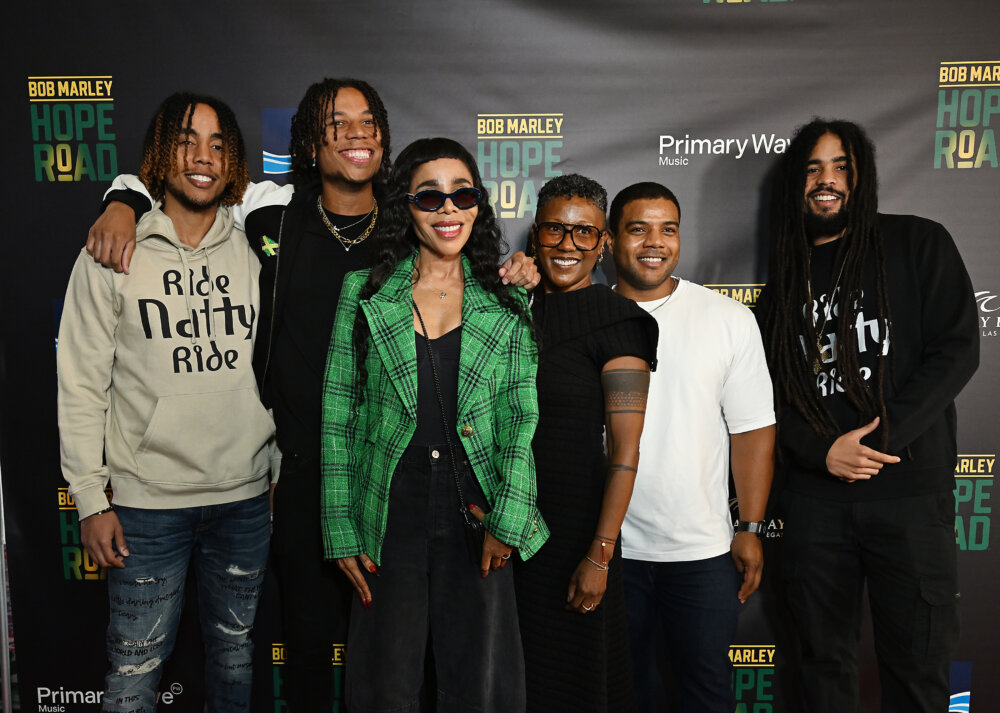
“Primary Wave, the Marley family, and [FiveCurrents] are all partners in Hope Road, and it does make a difference,” says Mestel, who last week attended the Vegas premiere with members of the Marley family, including Bob’s widow, Rita, and Chris Blackwell, founder of Island Records.
“Part of our model is to partner with these artists and families – partly to keep everything as true to the artist as possible, and partly so that [the family] gets the benefit and the recognition when these things are successful.”
Hope Road occurs across multiple stages, with the crowd standing just feet away from actors performing and dancing to some of Marley’s most iconic material.
It’s gotten off to a promising start: barely a week after launch, it’s averaging five stars across over 200 Google reviews.
(Such acclaim is not a forgone conclusion for ‘immersive’ music events; just ask the organisers of London’s roundly panned Elvis Evolution.)
Scaling the experiential model
For Mestel, Hope Road represents the culmination of a strategy Primary Wave has been building toward for years.
“We were probably the first music company to start investing in ‘name, image, and likeness’ rights – starting in 2006 – and this is the exact reason we did so,” he says. “This took five years to develop, with a lot of careful curating.”
He adds: “We have three different casts who’ll each do three shows a day. So we’ll have nine flights a day – that’s unprecedented.
“And this is a show that we can travel in the future. We could do a similar version of it in London, Miami, Jamaica, wherever our team and the Marley family wish to do so.”
Hope Road’s broad demographic appeal was bolstered by the success of the 2024 Bob Marley biopic One Love, which Mestel credits with helping to “drive the demo younger.”
The film’s success, combined with Primary Wave’s broader content strategy around the Marley estate, demonstrates how multiple content formats can work together to expand an artist’s reach.
Swimming against the streaming tide
Outside of Hope Road, Mestel says Primary Wave currently has “30-plus content pieces in development, from immersive experiences to biographical films and exhibitions”.
He’s talking about a future where PW increasingly leans on NIL rights as the bedrock to expand iconic artists’ audience – and their income opportunities.
Interestingly, Hope Road arrives at a time when the traditional music rights business is facing headwinds. Streaming growth has slowed in established markets, not least the United States.
Meanwhile, multiple companies continue to eat up catalog acquisitions despite the challenge of servicing debt in a higher-rate environment than we saw 5-10 years ago.
Mestel remains positive on the future for streaming royalty income, both from DSP price rises and growth in emerging markets. Yet he predicts a reckoning for one or two over-leveraged competitors.
“Some newer entrants into the space are having to overpay to compete with us,” he says.
“You’re going to see, over the next few years, that they’re going to have trouble generating appropriate returns for their equity investors because of the prices they pay, and the fact that they don’t have an infrastructure like we do to grow their income beyond streaming.”
“You’re going to see people becoming over-leveraged, and in three, four, and five years, many of these companies will be on the market [for sale].”
Larry Mestel, Primary Wave
Adds Mestel: “You’re going to see people becoming over-leveraged, and in three, four, and five years, many of these companies will be on the market [for sale].”
Discussing Primary Wave’s long-held focus on maximizing ‘name, image, and likeness’ rights, Mestel notes that today “70% of our 115 [employees] are experts in marketing, digital, brand, and content creation, as well as A&R”.
He adds: “There’s no question traditional income streams, like performing rights and streaming synchronization, are still a predominant form of income. But leveraging these ancillary rights is increasingly becoming part of our overall cash flow in the business.”
Primary Wave’s approach with Whitney Houston provides a template.
“Think of all we’ve done with Whitney: a perfume line, a beauty line, a biographical film, now an enormously successful slot machine; plus the remixes that we created on Higher Love with Kygo. It’s all designed to bring in new fans, to make the music more available, and to reach youth culture.”
Looking ahead: The live entertainment future
Sources close to Primary Wave say that it now has USD $2.5 billion in cash to deploy on M&A and creative investments.
Mestel won’t confirm that figure, but states that his company sees “plenty of opportunity out there” for more iconic artist catalog and name-and-likeness acquisitions.
(The $2.5 billion cash amount is noteworthy, not least as PW last publicly announced an investment raise in 2022: a $2 billion deal with Brookfield.)
With significant cash resources at its disposal, Primary Wave looks well-positioned to extend the ‘NIL-plus’ model of Bob Marley and Hope Road across its extensive catalog of legendary artists.
Consider the iconic IP that PW already has to play with: from Prince and Whitney Houston to Stevie Nicks, James Brown, Ray Charles, and (as confirmed last year) Notorious B.I.G, amongst 200+ other catalogs.
If Hope Road continues to prove the concept works, more music rights companies are likely to take notice of an event-centric model that could fundamentally change how legacy catalogs generate revenue in the streaming age.
As Mestel puts it: “This is the future of this business, and many companies in this space don’t even understand what NIL means.
“It’s one thing to acquire ‘name, image, and likeness’ rights, alongside the music. It’s another thing to have the in-house expertise, resources, and ingenuity to be able to get it done.”Music Business Worldwide