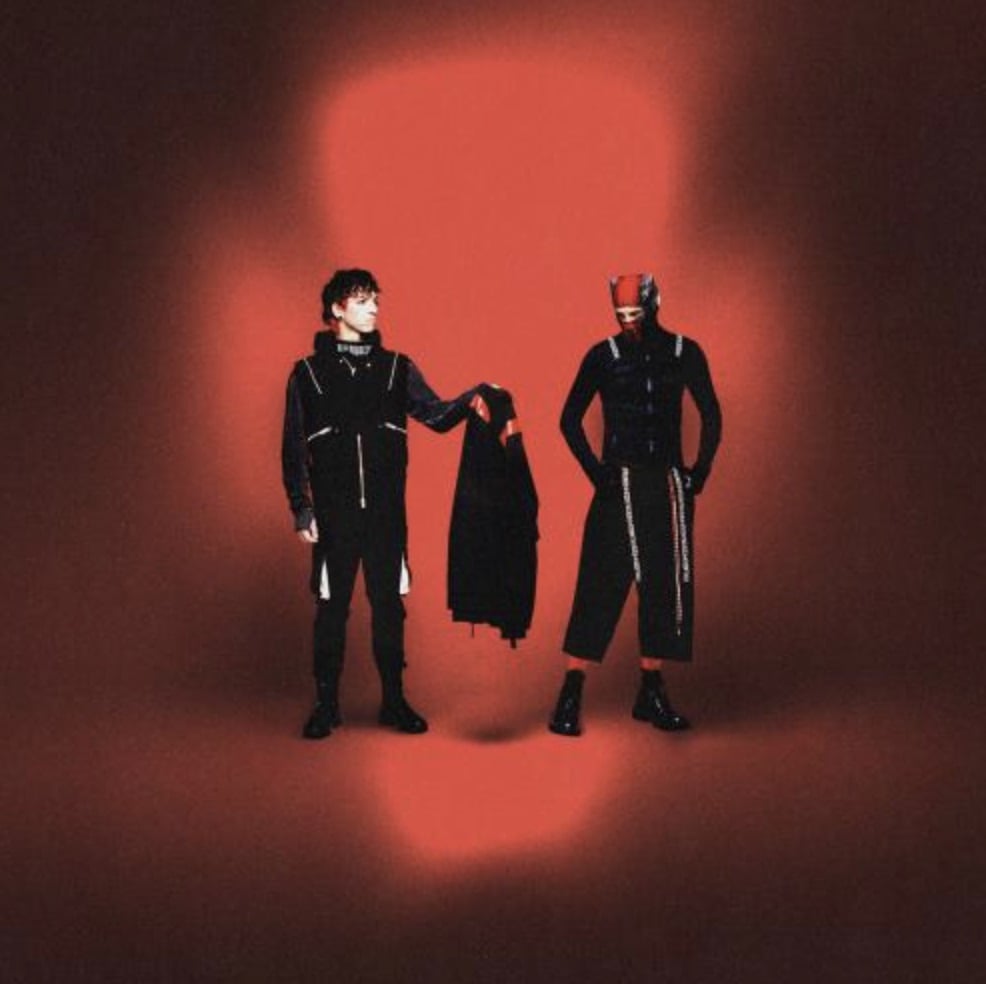
Their album Breach (Fueled by Ramen/Atlantic) achieved over 200,000 total sales and equivalent streams in its first week – the highest debut for any rock band in six years, and the duo’s first US No.1 album in a decade.
Even more striking: nearly 170,000 of those units came from pure album sales – physical product fans chose to purchase rather than stream.
Thom Skarzynski, who worked closely with management on the campaign while at Atlantic Music Group, notes that it’s become common to see rock bands with massive touring power, selling hundreds of thousands of tickets, generating just 10,000 to 30,000 in streaming equivalent album sales during release week.
Skarzynski, founder of boutique music marketing firm Happiness. Marketing, suggests a solution: “What can artist teams do to boost that? Not much. But they can create a beautiful physical configuration – a book, a memento, something meaningful for fans – and package it with a copy of the vinyl or CD to make it chart-eligible.”
The Breach campaign built on Skarzynski’s earlier work with the band: 2024’s Clancy, which sold 143,000 units and reached No.3 in the US.
These campaigns represent a broader conviction that Skarzynski has been developing throughout his 20-year career in the music industry, which has included senior marketing and sales roles at Atlantic, Epic Records, andSpotify.
He argues that streaming has become increasingly difficult to “move the needle” on, while physical music, when strategically deployed, offers artists with loyal fanbases a powerful alternative revenue stream and chart strategy.
Skarzynski says he started his New York-headquartered company, Happiness. Marketing, because he “saw a disconnect between artists who could sell out Madison Square Garden and artists at the top of the Billboard charts”.
Recent Luminate stats support his thesis about the commercial significance of physical music. According toLuminate’s 2025 Year-End Report, US vinyl sales increased for the 19th straight year in 2025, growing 8.6% YoY to 47.9 million units.
Plus, more than four in ten vinyl records were sold at independent record stores, while Direct-to-Consumer sales now make up 13.6% of all physical albums sold – a 2.1 percentage point increase vs. 2024.
“Physical, especially vinyl, has crossed the threshold from ‘trend’ to core fan economy,” says Skarzynski. “Going into 2026, physical will continue to segment toward D2C, limited editions, tiered offerings, and tour-linked campaigns, supported by smarter infrastructure.”
Skarzynski’s background spans the full spectrum of the modern music business.
He started in radio promotion, moved into product management at Fueled By Ramen and Epic Records (working on campaigns for Paramore and A Tribe Called Quest, among others), and joined Spotify’s artist marketing group during a pivotal growth period.
“Physical is a fandom game,” he argues. “It’s driven by intent, emotion, and identity – not passive consumption.”
Thom Skarzynski, Happiness. Marketing
He eventually ran the sales department at Epic Records, where he worked on Travis Scott‘s ASTROWORLD.
While at Atlantic, he says he helped develop what would become Happiness. Marketing’s core offering: treating physical music and direct-to-consumer strategies not as afterthoughts, but as primary campaign drivers for artists with dedicated fanbases
“Sony and Atlantic taught me scale and accountability, that great ideas don’t matter unless they can survive real-world manufacturing, retail, and revenue pressure,” Skarzynski reflects. “Spotify taught me the other side: how fans actually discover music, how behavior forms, and how important artist and fan trust really is.”
Now, through Happiness. Marketing, Skarzynski positions himself as a partner, not a replacement, to labels and artist teams, embedding himself in campaigns early to establish physical and D2C strategies from the ground up.
His approach comes at a moment when the industry is grappling with streaming’s limitations. He points out that TikTok’s virality engine has become less predictable, editorial playlists no longer guarantee the impact they once did, and radio doesn’t correlate with streams the way it used to.
“Physical is a fandom game,” he argues. “It’s driven by intent, emotion, and identity – not passive consumption.”
Here, Thom Skarzynski discusses the campaigns that proved his approach, his predictions for physical music in 2026, and why he believes the industry needs to redefine what success looks like…
After 20 years in the industry – including time at Atlantic, Sony, and Spotify – what did you learn from each of those experiences that shaped how you built Happiness.Marketing?
Sony and Atlantic taught me scale and accountability — that great ideas don’t matter unless they can survive real-world manufacturing, retail, and revenue pressure. Running the sales department at Epic in particular trained me to think in outcomes: units, margins, inventory risk, and long-term demand, not just marketing narratives.
“Happiness is built on that synthesis: major-label rigor, fan-first thinking, and a focused, hands-on approach to physical and D2C strategy.”
Spotify taught me the other side of it — how fans actually discover music, how behavior forms, and how important artist and fan trust really is. That experience still shapes how I think about physical: product should deepen a relationship, not just inflate a number.
In my final role at Atlantic, those worlds finally fused. Sitting between marketing and sales with a heavy eCommerce focus, we built modern, physical-first campaigns for artists with real fanbases — and that became the blueprint. Happiness is built on that synthesis: major-label rigor, fan-first thinking, and a focused, hands-on approach to physical and D2C strategy.
You say you started Happiness.Marketing because you saw artists with “rabid, loyal fanbases who can sell out tours” but couldn’t transfer that to streaming numbers. What was the specific moment or artist where you realized this was a problem?
It wasn’t one artist — it was a pattern. Especially in my final role at Atlantic, I kept working with artists who could sell out rooms night after night, but whose streaming numbers didn’t reflect the real-world demand or depth of fandom they were seeing.
At the same time, I was watching thousands of fans line up at merch tables, buy multiple formats, and treat physical product like collectibles. There was clearly a real economy there — it just wasn’t being strategically captured.
The moment it really clicked was when we re-centered physical and D2C as primary levers and watched the narrative around those releases completely change. That’s when it stopped feeling like a one-off and started feeling like a systemic gap — and that gap is what Happiness was built to address.
You position Happiness.Marketing as a “partner to, not in place of” labels and artist teams. What does that partnership look like day-to-day?
Day-to-day, it’s being embedded in the campaign build, not parachuting in with ideas. I’m usually brought in early, before a release plan is finalized, and I work directly with label and management to architect the physical and D2C strategy from the ground up.
Practically, that means building and pressure-testing forecasts, designing the product mix, locking timelines, and working through manufacturing, pricing, margins, retail and D2C splits, and fulfillment realities. I’m in active conversations with marketing, sales, eCommerce, merch, and operations so physical isn’t siloed — it’s fully integrated.
Because I’ve run these departments internally, the partnership is very hands-on: connecting teams, flagging risks early, spotting opportunities, and making sure physical is treated as a core growth engine, not a last-minute add-on. When it’s working, the campaign doesn’t feel outsourced — it just runs smarter.
What types of artists (and genres) or releases are coming to you/are you looking to work with? Are these mostly established acts, or are you working with developing artists too?
Happiness tends to work best with artists who already have real-world proof of demand — acts who can sell tickets, move merch, and sustain communities — whether they’re developing or deeply established.
That can mean a newer artist selling out clubs, or a legacy act selling out theaters. The common thread is not scale, it’s intent: fans who want to participate, collect, and feel ownership.
While at Atlantic, you delivered 170,000 physical sales for Twenty One Pilots’ Breach out of 200,000 total. How did you plan and execute that campaign?
First and most importantly, I need to credit Twenty One Pilots’ management team, Element 1. We all took huge swings together and were equally deeply involved in all conversations. That’s a partnership I wouldn’t trade for the world.
Physical was cemented in the strategy from day one; we built the campaign around fan behavior, developed an intentional product ecosystem with different roles, and aligned forecasting, manufacturing, and timelines to real demand.
The strategy for this album was truly a collaboration – we focused on every minute detail to end up with the most impactful plan possible, knowing that the fans would be able to sniff out any inauthenticity in the campaign.
In all, the execution was obsessive and tightly coordinated across teams, but the real win was continuing to build the fandom around the artist — not just a set of configurations.
On Clancy, they sold 143,000 first week and the album went Gold. You mentioned that if dependent on streaming alone, this is an album that would have only accomplished ~28K first week.
Could you tell us more about that campaign and what you learned across these and other case studies that can be applied to future campaigns?
Clancy was the campaign that confirmed this wasn’t an isolated win — it reflected a broader pattern in how fans were choosing to engage.
We knew early on that Clancy wasn’t going to be driven by massive streaming volume, and that was actually clarifying: it forced us to stop designing around algorithms and start designing around people.
The Twenty One Pilots fanbase has always been deeply emotional, deeply participatory, and deeply physical — so the entire campaign was built around giving that audience meaningful ways to show up.
“The biggest lesson I learned — and the one that applies everywhere — is that physical works when it’s treated as culture, not merchandise.”
Physical, D2C, and indie retail were treated like core marketing channels from the start; we built an intentional product ecosystem with different roles, staged manufacturing to real demand, and obsessively tracked what fans were responding to so the campaign could evolve in real time.
It didn’t hurt that the band created an incredible body of work.
The biggest lesson I learned — and the one that applies everywhere — is that physical works when it’s treated as culture, not merchandise. When campaigns are built around fan behavior and the product is designed with purpose, physical stops being nostalgia and becomes a modern growth engine.
Physical sales have been growing for several years now, particularly vinyl. What’s your read on where the physical market is headed in 2026?
Physical — especially vinyl — has crossed the threshold from “trend” to core fan economy.
Streaming is a volume-based game to play, and it’s gotten harder and harder to “move the needle.” The data is clear that the landscape is shifting: TikTok doesn’t drive virality the way it once did, editorial playlists don’t garner the impact they once had, terrestrial radio doesn’t directly correlate to streams, and syncs don’t mean the same thing now that the number of platforms to watch has ballooned.
“Physical — especially vinyl — has crossed the threshold from “trend” to core fan economy.”
Physical is the opposite. Physical is a fandom game. It’s driven by intent, emotion, and identity — not passive consumption.
Going into 2026, physical will continue to segment toward D2C, limited editions, tiered offerings, and tour-linked campaigns, supported by smarter infrastructure.
Streaming will always drive awareness, but in 2026 physical won’t be a sideshow: it’ll be a core strategic revenue and brand channel — and the teams that treat it that way will benefit most.
D2C has also exploded in music over the past few years. Where do you see the D2C space evolving in 2026 and beyond?
D2C is still early — even though it doesn’t feel like it.
Over the past few years, a lot of music-based D2C has been focused on standing something up quickly: Shopify stores, bundles, pre-orders, limited drops.
That phase proved there’s real demand. The next phase is about maturity.
Going into 2026 and beyond, I believe D2C will shift from being a transactional layer to being an operating system for fandom. That means better data ownership, smarter segmentation, longer-tail product ecosystems, and campaigns designed to evolve over time instead of peaking once and disappearing.
“The teams who win in D2C will be the ones who treat it less like marketing and more like retail.”
We’ll see far fewer “one-week box set moments” and far more always-on consumer businesses built around artists. Stores that feel more like brands than merch pages. Product strategies that account for lifecycle, not just street date.
I also think the bar operationally is going to rise – it simply has to. That means faster fulfillment, clearer communication, better international execution, and more thoughtful pricing and packaging. As fans spend more directly with artists, expectations rise.
The teams who win in D2C will be the ones who treat it less like marketing and more like retail.
Ultimately, D2C becomes the place where artists stop renting their audience and start owning their consumer relationship. That’s the real shift. Everything else — vinyl, box sets, experiences, subscriptions, ticketing tie-ins — becomes possible once that foundation is built.
The music industry has been very focused on monetizing and engaging with superfans over the past couple of years. Beyond physical music, where do you see superfan monetization heading in 2026 and how will that tie into what you’re building Happiness.Marketing?
Superfan monetization is moving from moments to relationships. The next phase isn’t just premium drops — it’s continuity: ongoing access, evolving membership, recurring collectibles, and ecosystems that live between album cycles.
“Superfans don’t just want more things. They want closeness, recognition, and participation.”
Superfans don’t just want more things. They want closeness, recognition, and participation — and that will show up across physical, access, touring, owned platforms, and long-tail programs.
Happiness. starts with physical because it’s powerful and under-leveraged, but the real goal is helping artists design fan economies, not product lines. The future belongs to whoever builds the strongest relationship.
What’s the state of the independent record store landscape in the US in 2026? And on the chart strategy side, how do you use indie retail weighting strategically?
Independent record stores in 2026 are more than retail outlets — they’re community hubs and cultural validators. They’re the place fanbases can gather and share a singular pulse while listening to an album.
They’ve survived disruption by offering experiences, exclusives, and authenticity that streaming and mass retail can’t replicate.
“On the charts, indie retail weighting is a cornerstone strategic lever as it signals organic demand and diversified point-of-sale.”
There’s nothing like walking into an independent record store and taking it all in – and I believe the experience will continue to improve over time. This new generation needs record stores and that sense of community; streaming doesn’t provide the same feeling in any way, shape, or form.
On the charts, indie retail weighting is a cornerstone strategic lever as it signals organic demand and diversified point-of-sale. A strong indie performance doesn’t just lift numbers — it shapes perception.
How do you want your company to be positioned in the music business in the next 12-24 months?
Over the next 12 to 24 months, I intend for Happiness. Marketing to evolve from a specialist practice into a focused, best-in-class company built around physical, consumer, and fan-economy strategy.
One of the first priorities is scaling — intentionally and early. There are an incredible number of deeply talented people out of work in the music industry right now, many of whom come from the same artist-first background I do and believe in this exact same opportunity. I want to bring those people together under one roof and build a team that treats physical and D2C not as a department, but as a core piece of artist identity.
Creatively and culturally, I also want Happiness to help rebalance what success looks like. The charts — and the systems around them — currently undervalue entire genres with some of the most loyal fanbases in music.
“Creatively and culturally, I also want Happiness to help rebalance what success looks like.”
I want to see more alternative, rock, and metal acts not just crack the top ten, but compete for number ones and, more importantly, stay there. We’ve proven how to drive explosive first weeks. The next phase is building campaigns that live beyond release cycles — always-on physical and consumer strategies that support longevity, not just debuts.
Structurally, Happiness is lucky in that we can be nimble. I love the major-label system and spent most of my career inside it — but large organizations evolve slowly by necessity. I want Happiness to be the group that can move early: to test, build, and prove new models before they become departments. To be brought in when teams know change is needed, but systems don’t yet exist.
If we’re doing this right, Happiness. Marketing becomes known not just for big first weeks, but for building modern artist businesses. We’ll scale, but we’ll keep a “survive and advance” mentality — partnering only with people who understand why this work matters, and building something durable enough to grow with the next era of the industry.
If there was one thing you could change about the global music business, what would be and why?
I would change how narrowly success is defined. The industry has become very good at measuring scale, but far less focused on depth — fan commitment, ownership, and long-term artist economics.