
Since being appointed Managing Director of London’s Abbey Road Studios in 2023, Sally Davies has set about reshaping how the world sees the legendary institution.
Long synonymous with The Beatles’ recordings and seminal Pink Floyd albums, Abbey Road’s heritage is formidable — but Davies is determined it won’t be its only story.
“When we introduce ourselves, the first thing most people want to talk about is The Beatles and Pink Floyd. And that’s wonderful — we love celebrating the brilliant work those bands did,” she says.
“But we never want to be seen as a studio defined solely by them. I’d hate for us to be viewed as a dusty collection of analogue gear, because we’re doing extraordinary work in contemporary music, innovation, creativity and film.”
Today, Abbey Road, owned by Universal Music Group since 2012 (following UMG’s acquisition of EMI), is far more than a recording studio.
Alongside its historic rooms, it runs development programmes such as Equalise, supporting female and non-binary creatives, and artist accelerator Amplify. The latter recently expanded to Manchester following the launch of the adidas Originals Recording Studio, engineered by Abbey Road, within the city’s Co-op Live Arena.
Abbey Road also acquired audio technology company Audiomovers, incubates startups through Abbey Road REDD, and is exploring opportunities in photography, fashion and even in-car audio.
Davies arrived at Abbey Road after a career spanning the Science Museum, AEG (including London’s O2 Arena), and Vivendi Village, where she was most recently CEO of the live promoter, producer, and entertainment company U-Live.
The Covid-19 pandemic prompted a period of reflection. “Like many people, I had this existential crisis of, ‘What am I doing? Am I doing something meaningful? Am I happy?’” she says. “I didn’t just want to work in a commercial business, selling a product and chasing a bottom line. I wanted to do something deeply meaningful. And nothing feels more meaningful than Abbey Road.”
Here, Davies reflects on Abbey Road in 2026, the lessons she’s learned across her career, how AI fits into the music ecosystem, and much more besides…
Abbey Road is steeped in legendary musical history. How does it feel to be working at the heart of that?
I often get asked, “What did it feel like when you were offered the job?” Terrifying! It’s a huge responsibility to have Abbey Road in your hands. We have around a million people walk across our zebra crossing every year, even though they can’t come inside. They stand at the gates, looking up at the building, hoping someone famous might walk out. It’s a constant reminder that we’re so much more than a studio. We’re an iconic cultural institution and somewhere that inspires creativity.
I see my role as that of a custodian. We’ve been here for nine decades, and my job is to ensure we remain relevant and continue doing brilliant work for the next one. At some point, I’ll hand over the baton to someone else to carry that forward. It’s a caretaker role — and an incredibly important one.
How does your career pre-Abbey Road inform what you do today?
My experience at the Science Museum is probably the closest parallel because, as you say, Abbey Road is steeped in heritage. Our job — and we have to do it exceptionally well — is to bridge heritage and relevance without ever undermining what came before. That balance is something we’re constantly thinking about.
You walk through our corridors and see these incredibly brilliant tape machines. This is analog gear we would have used at the time of recording The Beatles in Studio Two and Studio One. On a session today, artists may be using an iconic Abbey Road REDD desk, which is analog in the same workflow with Audiomovers and some of our plugins, samples and loops. That’s a perfect example where we champion heritage and blend it with digital technology. The fact we can do that seamlessly makes us incredibly unique as a studio.
You’ve said one of the main things you’ve been working on since joining Abbey Road is shifting its perception. Can you tell me more about that?
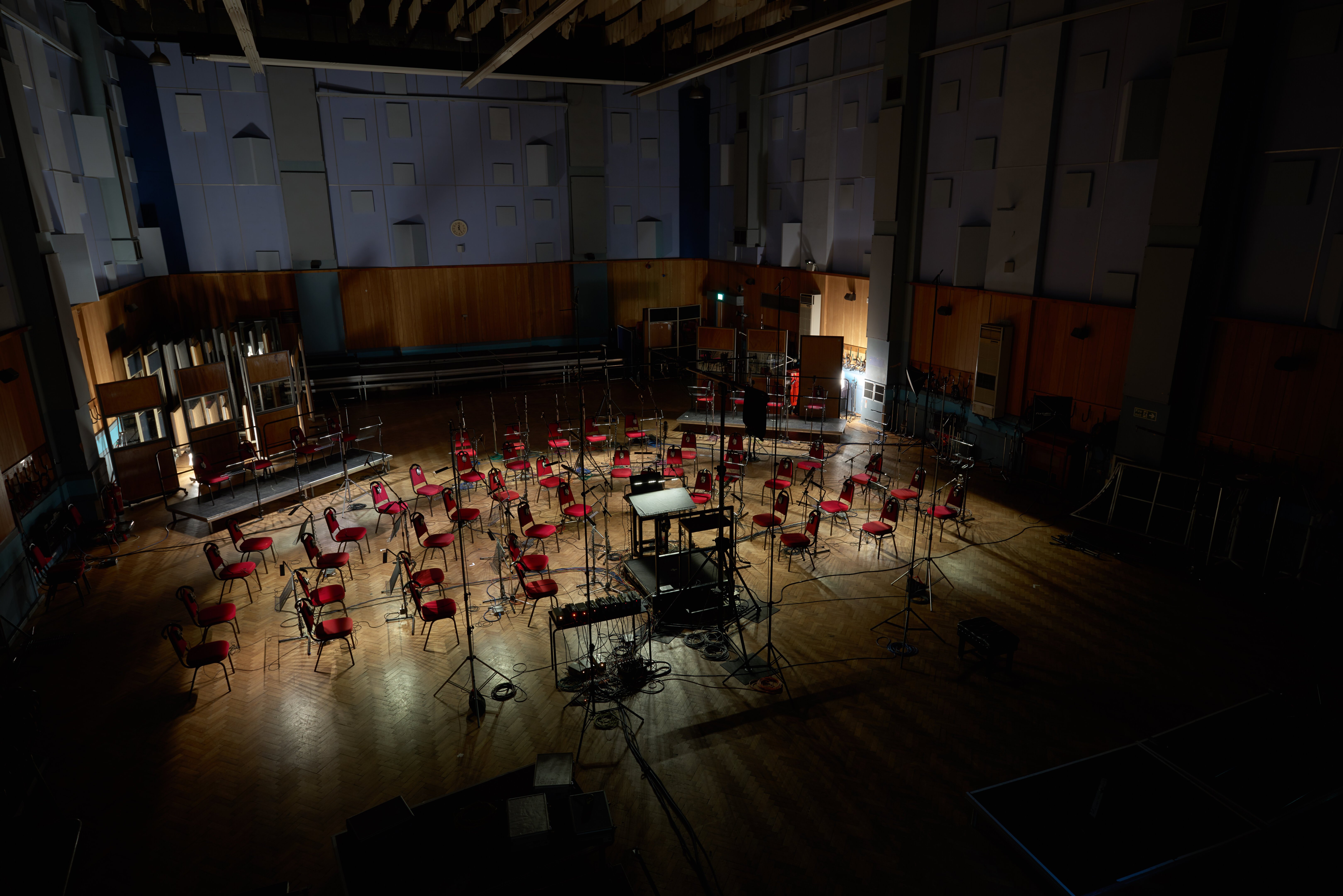
Studio One is the leading film scoring studio in the world — six or seven out of every ten blockbuster films are scored there — yet many people don’t realise that. Part of my role is to share the brilliance we perhaps haven’t talked about enough because we’ve been so focused on simply doing the work.
Innovation is another example of the breadth of what happens here. Stereo processes like artificial double-tracking were invented at Abbey Road — innovations that changed how music is captured, recorded and mixed. And we’re still innovating. We own an audio technology company called Audiomovers, which is essentially the Zoom of studios. A vocalist can be in London, a producer in LA, a drummer anywhere in the world, and we can record them together in real time at the highest quality. I’m passionate about continuing to tell that innovation story alongside the creative one.
“There’s the illusion that we are probably super expensive or you have to be invited. None of that is true.”
Accessibility is another big focus. Historically, there’s perhaps been a perception that you have to be a major artist to record at Abbey Road and that can be incredibly intimidating for emerging artists. There’s the illusion that we are probably super expensive or you have to be invited. None of that is true. So we’re building programmes that actively reach into the creative community. Equalise supports women and non-binary creatives. Amplify is our artist accelerator. The Abbey Road Music Photography Awards champion music photography. I’m keen that we support emerging talent in the same way we support established artists.
Talking of innovation, can you tell me about the startups that are currently being supported via the Abbey Road REDD incubator?
We’ve got two companies. One of them is called Uhmbrella, which has developed a technology that helps identify if music is AI-generated. It’s an incredibly meaningful piece of technology that’s super useful for rights holders and libraries. The other one, which I think is equally brilliant, is a solution called ProStudioTime. It’s a bit like a booking.com or Airbnb for studios. You can be an artist anywhere, find a studio closest to you and make sure it has everything you need. You can then book it in a single click. We don’t have anything like that in the studio landscape.
You mentioned Equalise, Amplify and The Abbey Road Music Photography Awards. How do you see that work expanding in the coming years?
Right now, the focus is on expanding what we’ve already built. This year, for the first time, we’re taking Equalise to Manchester — Amplify launched there last year. We’ve opened a studio in the Manchester Co-op Live Arena because creativity shouldn’t be London-centric. Being present in Manchester allows these programmes to have much broader impact.
With Equalise, the statistic that only around 2% of audio production roles are held by women is mind-boggling — and I suspect the true number may be even lower. Showcasing women already working in those roles and creating pathways for women and non-binary people to access role models and support is deeply meaningful work. I’d love to see that continue to grow.
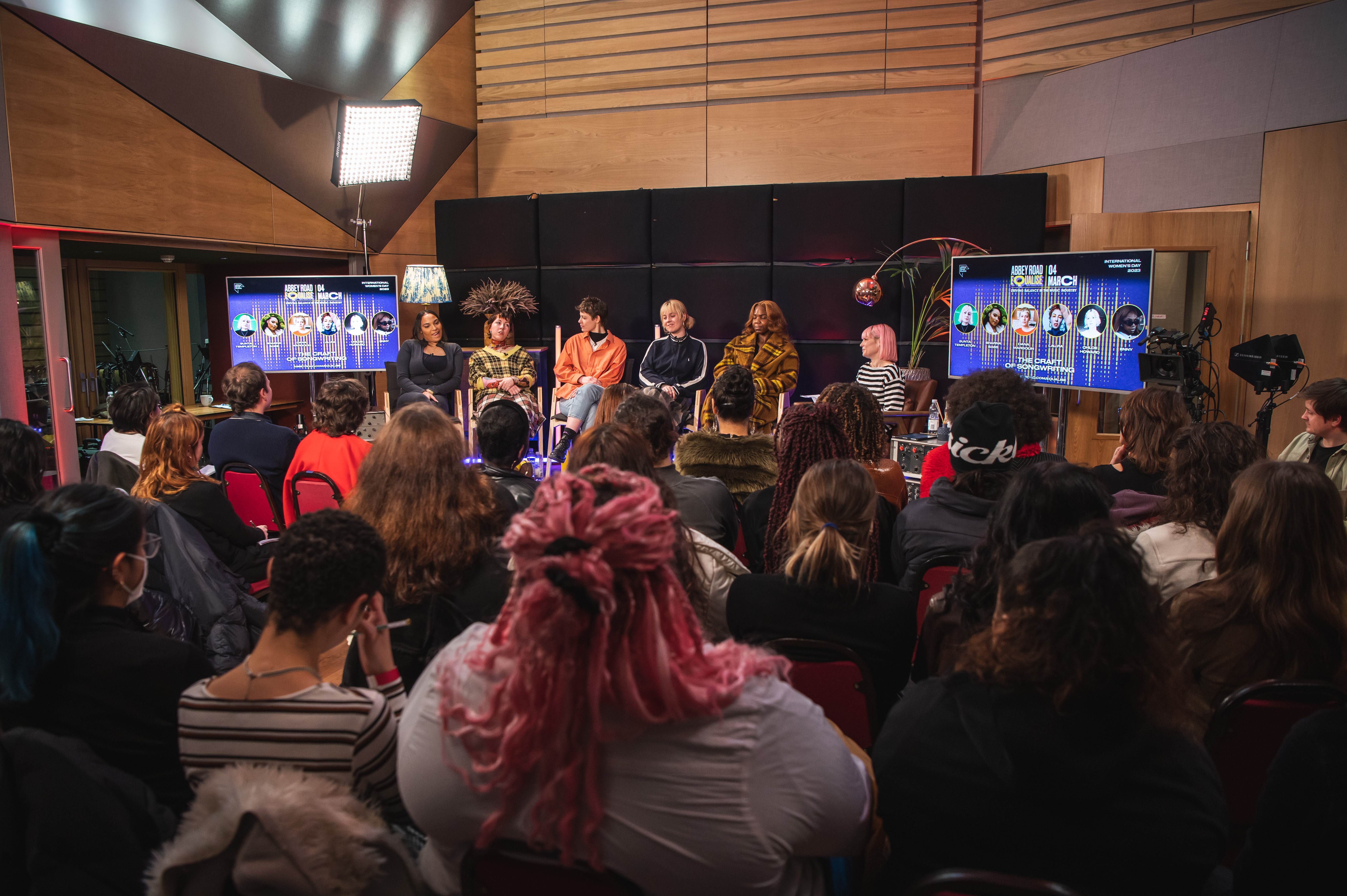
Amplify supports emerging artists by connecting them with established producers, engineers, A&Rs and industry executives through studio sessions, panels, mentoring and masterclasses. Before we invent new programmes, there’s still huge opportunity to expand the brilliant ones we already have.
We also run a runners programme in partnership with universities delivering audio engineering and production courses. We select top students for a 12-month placement at Abbey Road, where they gain hands-on studio experience. When they move into their first industry roles, having Abbey Road on their CV opens doors. It’s about creating the next generation of talent.
The move to Manchester follows other music companies expanding outside London. How important is that for long-term geographical diversity in the UK industry?
Expanding to Manchester doesn’t mean the job is done, we’ve got to do so much more than that. That’s why the work we’re doing with Audiomovers is particularly interesting because we should be collaborating with producers and musicians in other parts of the world. It lets you do that in a way that is high quality and means you don’t have to jump on a plane or go into a studio space, which might be cost-prohibitive.
Looking back at your career, what have been the biggest lessons you’ve learned?
All of my best lessons have come from failures. Failure is such an important part of growing and developing. A recent example was my idea to introduce a uniform for our runners. I’m incredibly proud of that programme — it’s competitive and demanding, and those individuals work incredibly long hours. I wanted to spotlight them as the talent of tomorrow. We have a great relationship with Adidas, so I thought we could create an Abbey Road x Adidas uniform.
They disliked it as it doesn’t align with our joint values and that it emphasised their position at the bottom of the ladder. Instead of being Kate or John or James, they became “runner.” People would say, “Excuse me, runner, can I have a tea?” What I thought was celebratory landed as dehumanising.
The lesson from that is we have so many teams of people in Abbey Road that deeply value working there, because it’s a lifelong dream and ambition, and it’s important to take a minute to make sure I hear them, see them, and engage with them in a meaningful way.
That is a perfect example where I have oversimplified and thought, ‘Brilliant idea,’ and didn’t take a minute to go, ‘Let’s just talk about that with you for a moment.’
On the upside, I’d say it’s a positive reflection of your leadership style that they were able to be so honest with you about it…
I’m glad they were but at the same time, I’m looking at myself going, ‘How did I get that wrong?’ Another memorable failure was when I was in the festival business. I spent a lot of money on an ‘80s festival thinking it was going to be absolutely brilliant and it died on its ass. There was a lot of money written off as a consequence of that decision. That taught me that when you move with the trend, you’re too late. You’ve got to be three steps ahead otherwise you’ve missed it.
As anyone in the startup world will tell you, failure is a huge part of success.
Oh my goodness, yes. And we don’t talk honestly about it enough. The thing I’d have told myself earlier in my career is don’t be scared to fail. We are so preoccupied about getting it right first time but if you don’t fail, it means we’re not pushing the boundaries enough, we’re not innovating. You’re not being ambitious enough if you’re not failing. Failure takes courage, it takes vulnerability, and it’s in that space we can be truly creative and innovative.
That’s important in Abbey Road because artists are sometimes using reference points in their life that are incredibly vulnerable and putting it out there for the world to comment on. When we are in the studio, supporting those artists to do their best work, we have to understand what it means to hold that vulnerability and be respectful of it. The only way we can do that is to understand it in ourselves.
You’ve recently been appointed the UK Government’s AI champion for the creative industries. What are your ambitions in that role?
First of all, there’s got to be an acknowledgement that it is incredibly broad. Being an AI champion in music is one thing, but in this instance, it’s for the creative industries. You’ve got fashion, media, gaming and TV. In my conversation with DCMS, we arrived at the point where I said, I don’t think one voice can represent such a broad church. It would be remiss of me or anyone to think we can do it justice. Each of those lanes will have its own nuance and considerations around AI.
Really, my role is to corral voices because Abbey Road is at the intersection of a lot of that work. Film, TV work and game scoring is done in our home, The Music Photography Awards give us a brilliant in-road into photography and we’ve recently done some great stuff in fashion with the fashion designer Charles Jeffrey. We’re seeing the application of AI play out in those workflows and whether we like it or not, whether it’s helpful or uncomfortable, that’s the reality.
I’m going to be able to bring a real pragmatism to that conversation. You can intellectualize and hypothesize around what AI will do to our future and what we need to do about it but in reality, we need to look at what’s being deployed at the minute, understand how that is good and how that might be problematic.
What do you envision a future looking like in which AI genuinely supports and strengthens the creative ecosystem?
My personal view on AI and anything that Abbey Road does in that lane is that it’s always got to be additive to the creative process.
“when we develop AI tools, it will never be to remove an engineer, mastering engineer, producer or artist in the creative ecosystem.”
We’ve got to be so careful that we don’t bring in technologies or support technologies that remove human creativity from the heart of it. On a practical level, when we develop AI tools, it will never be to remove an engineer, mastering engineer, producer or artist in the creative ecosystem. It is to augment their process, to give them more tools, to allow them to experiment and express themselves in new and different ways. In so many ways, that flex is what The Beatles did with us in the sixties. Their music is so incredibly powerful because of the degree of experimentation and innovation that happened. I see parallels here with AI.
There are concerns about rising business rates threatening UK studios. How do you see that issue?
We’re fortunate to be part of the Universal Music family so we are the exception because of our ownership structure. I completely agree it is a huge problem and if we don’t do something about it, we run the risk of some studios closing. That is hugely problematic because we as Abbey Road can’t satisfy the demands and needs of everybody. We need to have studios in different cities and different locations for creativity to continue.
If we’re not supporting music creation from the beginning, we will never get to the point where music is produced and released to the world, and everybody benefits from that. We need to take a minute and think about that. It’s the same challenge we’re seeing with small venues. We’ve got to protect the grassroots of the music ecosystem because all of that adds to the broader success of music, creativity, music exports, UK P&L, etc.
What’s the best piece of career advice you’ve received?
The first one is just something I’ve learned along the way, which is that there’s no shortcut to hard work. You’ve got to put the graft in and when you’ve worked in different positions, it makes for a better leader. I would never ask someone to do something I wouldn’t do and my experience allows me to truly understand the amount of work that goes into whatever I’m asking for. The other one is what we were saying earlier about failure. We should get a lot more comfortable with celebrating failure and I wish I’d understood that much sooner.
Looking ahead, what excites you most about Abbey Road’s future?
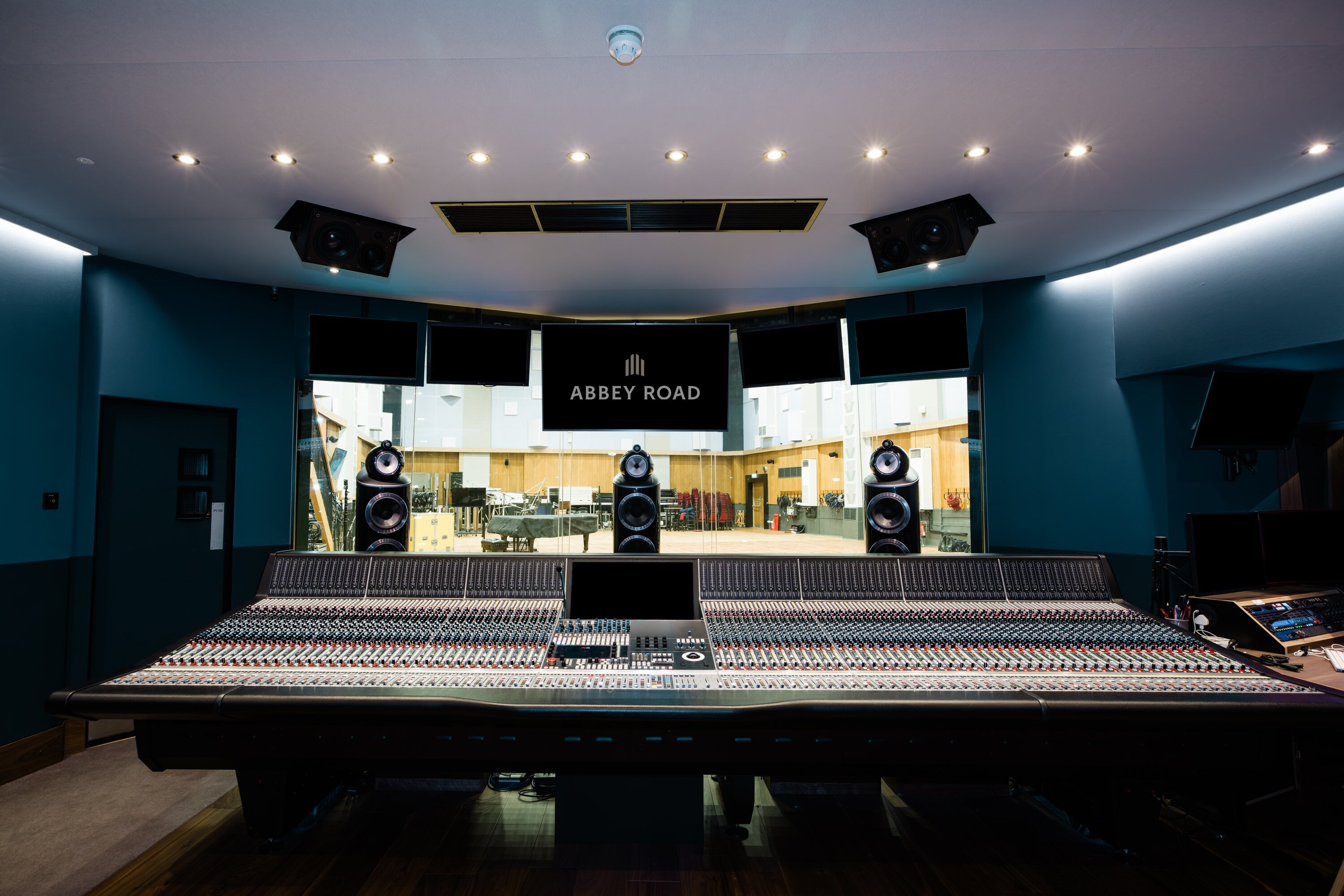
We are at a really exciting time for Abbey Road. You can feel a shift in the studio when you come through — we’ve redesigned our spaces to be a lot more inspiring to create.
We recently did a brilliant technology collaboration with Bowers & Wilkins by engineering the in-car audio experience for the sound systems in a Polestar or Volvo. We’ve taken the cabin of the car and made that sound phenomenal in a way nobody else can.
I’m really excited about how we might change people’s experience of audio in future because we know how it should sound. We might have been there at the point a film was scored, so we know how that should sound from a composer and director’s perspective. We know how a track should sound because it might have been recorded with us. You can look out for more plays from us in consumer technology.
Virgin Music Group is the global independent music division of Universal Music Group, which brings together UMG’s label and artist service businesses including Virgin and Ingrooves.Music Business Worldwide