MBW Reacts is a series of analytical commentaries from Music Business Worldwide written in response to major recent entertainment events or news stories. Only MBW+ subscribers have unlimited access to these articles. The below article originally appeared in Tim Ingham’s latest ‘Tim’s Take’ email, issued exclusively to MBW+ subscribers.
“He’s brilliant at translating our artists’ personal creative visions into the digital universe.”
That’s what then-Atlantic bosses Julie Greenwald and Craig Kallman said about Paul Sinclair when they promoted him to EVP in 2019.
Today, Sinclair is “translating creative visions into the digital universe” for a very different kind of company: Suno. The AI music platform accused of “mass copyright infringement” by the world’s biggest record labels.
Sinclair’s history at Warner Music Group was likely one factor in increasing cordiality between Suno’s CEO, Mikey Shulman, and WMG boss Robert Kyncl in recent months.
Last week, we saw the result: WMG settled its lawsuit with Suno, inked a licensing deal, and will start getting paid when its catalog is used to train the platform’s models.
WMG artists and writers get opt-in control; royalties will flow from whatever hits might emerge.
This is a significant moment. The leading generative AI music platform — with 100 million+ users — has accepted a core principle: training data must be licensed and paid for.
But the WMG/Suno announcement isn’t without its curiosities.
The Songkick strangeness
Tucked into last week’s press release was confirmation that, as part of the new agreement, Suno has acquired Warner’s Songkick — the live music discovery platform.
Hmm. Except AI artists can’t play live. So what exactly does Suno want with a concert app? And what economic role did it play in the settlement with WMG?
I’ve reviewed Songkick’s latest annual accounts at Companies House in the UK (where it trades as SK Acquisition Ltd). The picture isn’t pretty.
In its most recent financial year (ending September 2024), Songkick generated GBP £4.5 million (circa USD $6 million) in turnover.
From that, it achieved a pre-tax profit of precisely… zero. The prior year was worse: a pre-tax loss of £495,000 (see below).
More striking still: as of September last year, Songkick owed GBP £13.5 million to fellow Warner Music Group companies, likely for tech and other support. That figure increased by around 50% year-on-year.
The accounts explicitly state that Songkick’s health as a going concern is dependent on WMG “not seeking repayment of the amounts currently due” and continuing to “make available such funds as they are needed”.
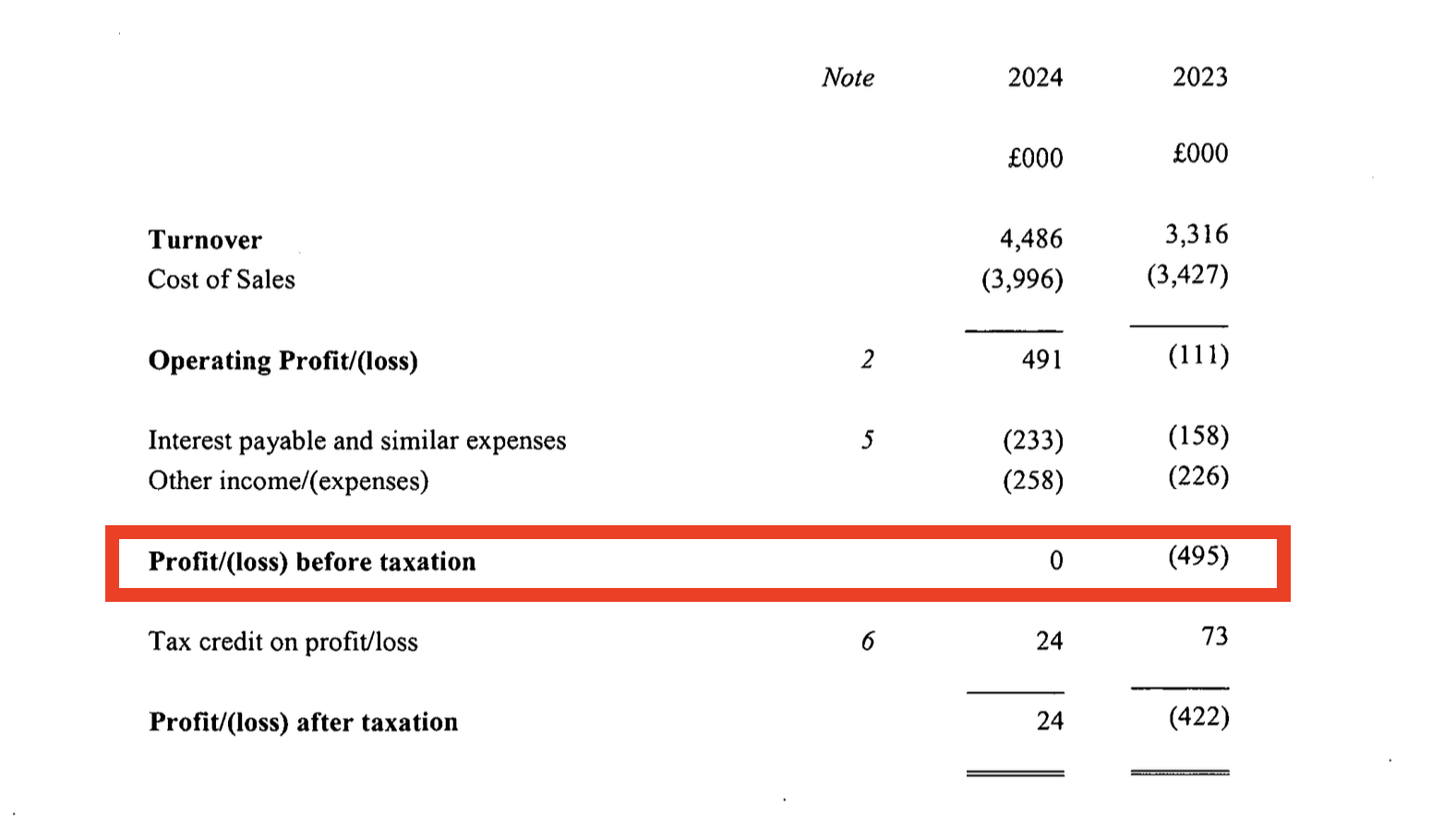
In short, Songkick is a great app for consumers, but for WMG it was a commercial dog: unprofitable, kept afloat by intercompany subsidies, and owing £13.5 million it was likely never going to repay.
By folding Songkick into the Suno deal, Robert Kyncl offloads a non-core liability. He also sheds Songkick’s 25 employees, which advances his mission to cut another USD $300 million in annual cost from WMG… mostly through layoffs.
For Suno? This might be about data.
Songkick sits on years of user data tied to Spotify listening habits. That’s a rich seam of behavioural insight — invaluable to an AI company trying to understand what humans actually want from music.
But did Suno also get a simpler benefit by agreeing to absorb Songkick? A reduction in the cash it needed to settle with WMG?
Just two days before WMG’s press release landed on Wednesday, November 26, Billboard obtained a pitch deck Suno recently used to secure USD $250 million in fresh funding.
Buried in that deck was a breakdown of how Suno expected to spend its new war chest.
According to Billboard, just 15% of the money was earmarked for ‘data’ costs, with a measly 5% allocated to ‘partnerships’. The remainder? Compute power (30%), M&A (20%), ‘discovery’ (20%), and marketing (20%). (Yes, I know that adds up to 110%, but apparently that’s what’s in there.)
Even if we generously combine “data” and “partnerships” into a single pot, we’re looking at 20% of $250 million = $50 million.
Is that really enough to cover settlements with the three major music companies — not to mention a separate lawsuit from indie artists? If so, did folding Songkick into its WMG agreement help Suno reach a settlement valuation it couldn’t match in cash?
Where does that leave Suno’s ability to settle elsewhere?
Remember: Universal Music Group and Sony Music Group continue to pursue legal action against Suno for alleged “mass copyright infringement”.
Neither is known for accepting pittances for the keys to their catalogs.
Robert Kyncl: Keeping an eye on China?
In October, Universal Music Group announced a landmark deal with Suno rival, Udio, which transformed the platform overnight.
User downloads were shut off. Paying subscribers woke up to find their creations trapped – with a grace period of just 48 hours to extract them.
As UMG’s Chief Digital Officer Michael Nash told Rolling Stone, the aim was for UMG’s artists to avoid “direct cannibalization” — preventing AI-generated songs from competing with human releases.
Suno’s WMG deal, by contrast, looks positively libertarian.
Yes, Suno’s current training models will be “deprecated” in 2026 when new licensed versions launch. And yes, there will be monthly caps on downloads for Suno subscribers.
But Suno’s fundamental functionality survives: create a song, download the file, distribute it to Spotify if you want.
Why would Kyncl grant Suno this freedom, rather than locking the service into a walled garden like Udio?
Probably because he knows that neutering Western AI platforms too aggressively carries its own risks. Particularly given China’s history of copyright, erm, playfulness — and the very real rise of DeepSeek.
The title of one Reddit thread for Suno lovers, launched after the WMG deal announcement, captures this fear: “Suno is falling. Don’t worry, China is surely cooking up its open-source killer.”
Suno users on a different Reddit thread bemoaning the WMG deal came to similar conclusions:
“Soon there will be a model from China to fill the gap.”
“China needs to cook up a clone ASAP.”
“Very disappointing, weak… well, China will be swooping in now.”
Such platforms are already embedded in China’s music ecosystem.
In March, Tencent Music Entertainment — China’s largest music streaming provider — announced it had integrated DeepSeek into its AI-powered songwriting tools.
Robert Kyncl understands this, and is attempting to strike a tricky balance: a licensed-but-functional Suno beats a neutered platform that cedes the AI music market to actors beyond the industry’s control.
WMG’s Suno deal doesn’t kneecap the product; it legitimizes it. That’s not how you negotiate with a platform you’re trying to punish – it’s how you negotiate with a platform you’re betting on.
That goes double if my spidey sense is correct… and Warner managed to bag some Suno equity as part of the bargain.
And yet. For all the comparative freedom Suno users will retain post-WMG deal — downloads, create-and-export functionality — their reaction hasn’t exactly been celebratory.
“It was great till it lasted,” mourned one music-maker on r/Suno, 24 hours after the WMG agreement was announced.
“So all the models will be licensed,” observed another. “It’ll basically just be a fucking remix hub.”
The most poetic response from angry, paranoid Suno-ers?
A single, exasperated line that may yet serve as the epitaph for the AI music gold rush.
“That’s it. I’m buying a guitar.”
Music Business Worldwide