
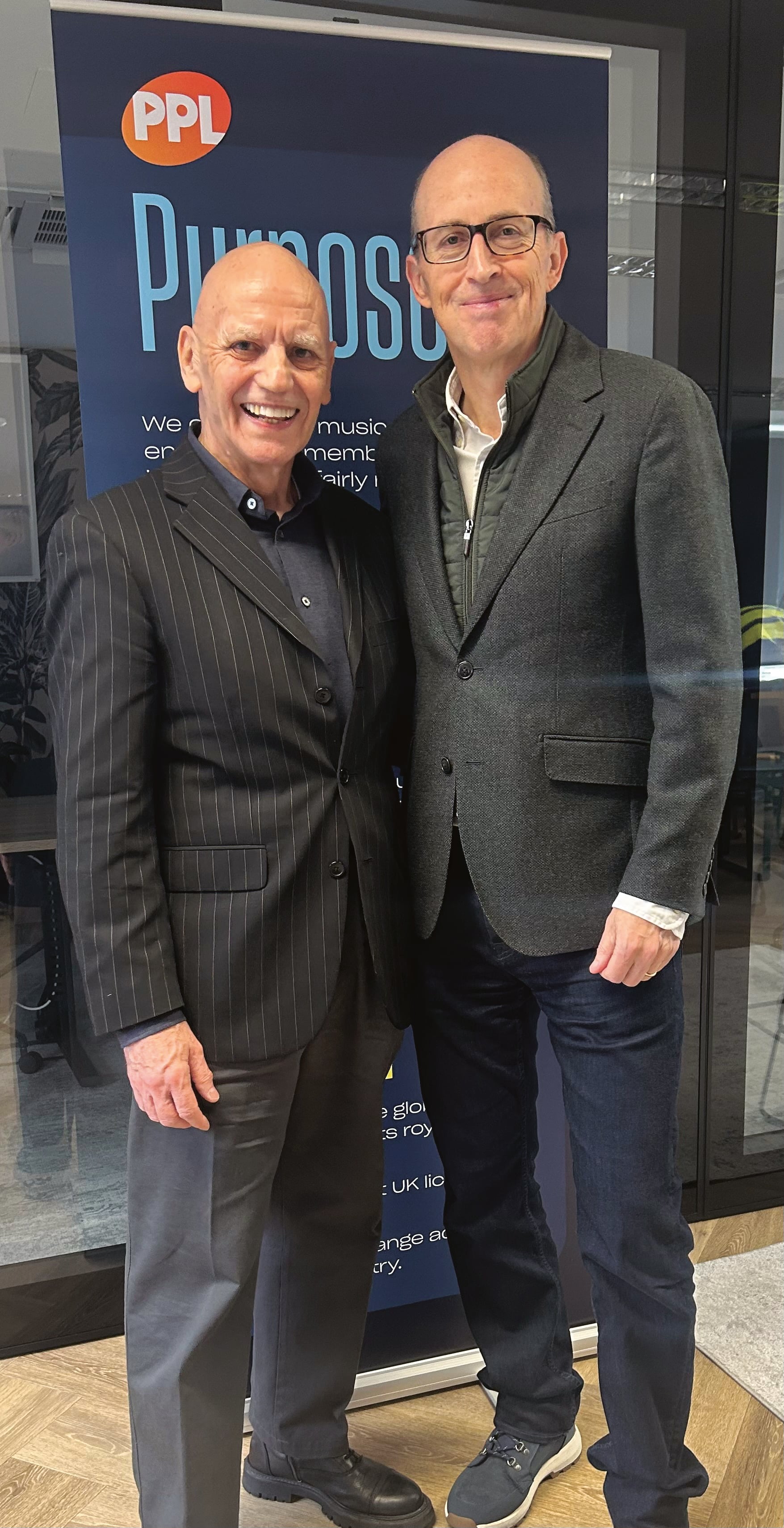
If he’d done nothing else, the fact that Dr. Richard James Burgess MBE coined the phrase ‘New Romantic’ would have earned him at least a footnote in musical history.
The New Romantics were a small but hugely influential group of post-punk British scenesters based in London’s legendary Blitz club (and then emulated by the cool kids in other big cities such as Birmingham, Sheffield and Liverpool).
They eschewed the stripped-down aggression of punk (but picked up and ran with the DIY ethos), and were instead inspired by the glamor and dandyism of T-Rex, Roxy Music and, most notably, ’70s Bowie.
Guitars took second place to synths, and 36-date tours of pubs and universities gave way to videos and magazine shoots.
The most famous New Romantic artists were Culture Club, Spandau Ballet, Duran Duran, and Ultravox (at least two of whom went from a cellar in Covent Garden to world domination). Landscape weren’t quite in that league. But they did have a UK Top 5 single with Einstein a Go-Go (do check the video), and they did feature Burgess as drummer, singer and driving force, thereby kicking off a career that could scarcely have been more diverse.
As well as going on to become a successful producer (credits include the first two Spandau albums), he co-developed, along with engineer Dave Simmons, the Simmons SDS-V, the electronic drum kit that defined the percussive sound of the 1980s.
As an executive, he went from management, to running business operations at the Smithsonian Folkways label, to a decade leading A2IM, the American Association of Independent Music, until he stepped down at the end of 2025.
From the start of 2026, back in Britain, he has been the Chair of PPL, the licensing company for performers and rightsholders.
And while it is tempting to press him for tales of rivalry and peacocking at the UK’s most famous subterranean club since The Cavern, the slightly less sequined line of inquiry focuses on international collections, metadata, the health of the independent sector, the future of radio revenues, and, inevitably, the impact of AI…
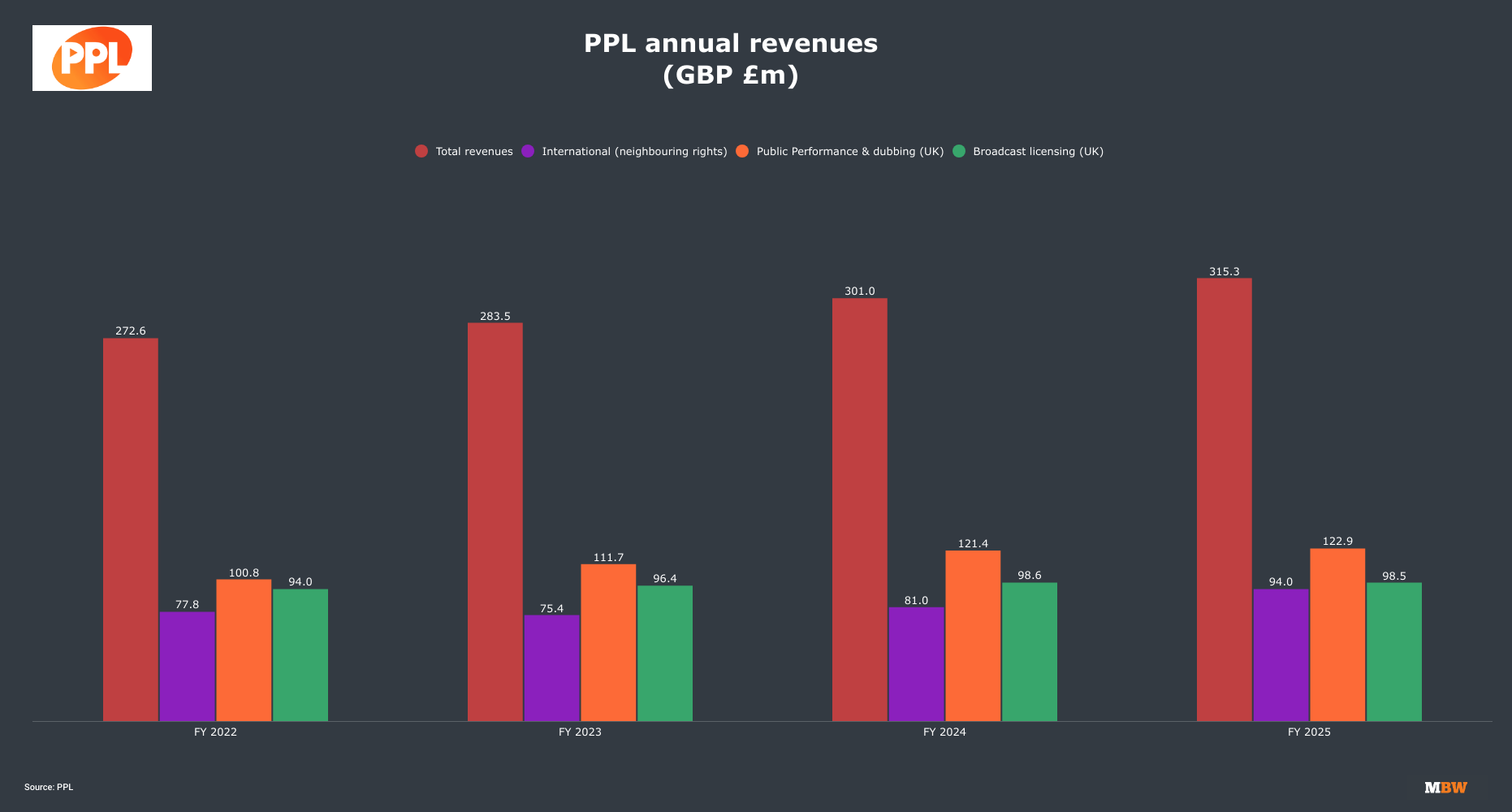
PPL continues to grow revenues (+4.75% YoY in 2025) at a time when not every collective management org can say the same. From your perspective, where are the most meaningful areas of growth going to come in the years ahead, and how will PPL capitalize?
It’s certainly a good time to join PPL, with collections exceeding GBP £315 million in 2025. The whole team deserves enormous credit for delivering year-on-year growth.
Our task now is to continue that growth. We see three main opportunities: increasing international collections; ensuring that music use which should be licensed is licensed; and using better data and technology to identify and distribute the money we collect more efficiently.
A great deal of value is being created by recorded music around the world which still isn’t being captured as efficiently as it could be – or in some places, not captured at all.
Peter [Leathem – PPL CEO] often points out that only about a third of the world’s countries currently recognize performance rights for record companies and performers. Even in those markets, there is considerable scope to improve tariffs and licensing coverage.
Ultimately, however, success is not simply about increasing PPL’s top-line revenue. It is about ensuring that more of the money generated through the use of recorded music reaches the performers and recording rightsholders to whom it is due – accurately and efficiently. Good data is fundamental to achieving that.
PPL is well placed to deliver in all three areas. It has a strong record of creating value for members, the trust of its customers and extensive experience in the collaborative data and technology initiatives that have transformed sound-recording rights over the past 20 years. The team is ambitious, outward-looking and clear about the choices required to remain successful in a rapidly changing market.
Many have already started writing off – or at least writing down – a future decline in radio/broadcast revenues (Universal Music Group recently told investors to brace for a “secular slowdown in radio and linear TV performance revenues” in the publishing sector). What’s PPL’s take, especially from an international rather than US-only perspective?
It is important to distinguish changes in listening habits from assumptions about value.
Listening behavior is clearly changing, particularly among younger audiences, and streaming and social platforms play a growing role in music discovery. But that does not mean radio has stopped creating value. It remains an important source of licensing revenue, and different markets are evolving at different speeds and in different ways.
“The central question is not whether a service is called ‘radio’; it’s whether recorded music is creating value — and whether the people who created and invested in that music participate fairly in that value.”
Nor should we underestimate radio’s ability to reinvent itself. Broadcasters continue to evolve through digital radio, online services and new distribution models. PPL’s broadcast revenues are stable, and we continue to generate additional value from existing licensing while exploring new opportunities for growth.
The central question is not whether a service is called ‘radio’; it’s whether recorded music is creating value — and whether the people who created and invested in that music participate fairly in that value. Our responsibility isn’t to preserve a particular technology. It’s to ensure recorded music is appropriately licensed wherever it creates value.
Unmatched and unclaimed money hits session performers and small rightsholders hardest, and better registration and metadata for independents was one of your themes at A2IM. What’s the fix, and how can a society like PPL lead it?
Metadata may not be the most glamorous subject in music, but it is one of the most important. Inaccurate or incomplete metadata remains one of the largest – and most preventable – causes of delayed or unclaimed royalties.
The music industry solved the global distribution of music before it solved the global distribution of rights information. Music can travel around the world almost instantly; the data and money associated with it need to move just as efficiently.
PPL is at the heart of international efforts to improve metadata, and we believe the answer lies in shared infrastructure rather than more silos.
We built and operate RDx on behalf of IFPI and WIN. Five years after its launch, it is helping members exchange current metadata more efficiently, so performers and rightsholders can be paid faster and more accurately.
“Music travels close to the speed of light. Rights data and money should do the same.”
We also support SCAPR’s VRDB and International Performer Number system, which help CMOs identify performers, match them with recordings and distribute royalties more accurately across borders. You cannot pay the right person if you cannot identify them correctly. Better data means fewer missing payments, faster distributions and more money reaching performers and recording rightsholders.
The scale and complexity of the task continue to grow, with tens of thousands of recordings entering the ecosystem every week. Continued investment in collaborative global systems such as RDx and VRDB – and a willingness to work together – will be critical.
You’re one of the few people in the AI debate who has been directly involved in disruptive technology – deploying electronic drums and the Fairlight at a point when plenty of people argued machines were coming for players’ jobs. Is the AI argument a rerun of that fight, or is it something categorically different?
In some respects, the AI debate is a familiar rerun, but there is a fundamental difference. Having spent much of my career at the forefront of music technology – from electronic drums and computer sampling to digital production tools – I can say that none arrived without warnings of impending disaster. So, I am skeptical when people predict that a new technology will destroy music.
Every major innovation has raised concerns about creativity and livelihoods. Yet artists have consistently found ways to use new technologies to expand what is creatively possible, and many are already using AI in music creation. As someone who is pro-progress, I find that exciting.
“AI may transform music creation and consumption, but copyright must be protected.”
What makes AI different is how some systems are developed. If copyrighted music is used to train commercial AI models, questions of permission, transparency, and remuneration arise. Those are not objections to technology; they are questions of rights. Technology should not need free access to somebody else’s property to thrive.
My view is simple: embrace technology, and respect rights. I am pro-technology and pro-rights; the two positions are entirely compatible. AI may transform music creation and consumption, but copyright must be protected.
You took over A2IM when independents were around a third of the US market. Ten years on, the sector has grown its share – but arguably its dependence on a few digital platforms has grown, alongside an increasingly major-owned distribution/services layer. What’s your take on the health of the independent ecosystem in 2026, post-Downtown etc?
The independent ecosystem is strong, but it can never afford to be complacent. Independence is not simply about company size; it is about choice, control, and entrepreneurship. A healthy music ecosystem offers genuine plurality, with a diverse range of companies bringing new ideas, talent and investment into the market.
I do not see this world as ‘majors versus independents.’ Vigorous competition exists between and within those sectors of the market, but every label, distributor, artist and musician ultimately depends on the overall health of the industry. And looking beyond PPL’s remit, that extends to publishers and writers as well.
The real test is whether the independent sector can continue to provide meaningful choice. If entrepreneurs can build sustainable businesses, artists have genuine options and competition stays vibrant, the independent sector will remain strong.
US terrestrial radio pays labels and performers nothing, affecting what American rightsholders can collect in Europe. Yet a key 2020 EU ruling – in the RAAP case – pushed European societies toward paying broadcast and public performance royalties to non-EU performers regardless. You campaigned to fix the US side with musicFIRST and SoundExchange; you now have a fiduciary duty to PPL’s members in the UK and beyond. With the RAAP case still in the Irish courts, how will this play out?
I have said for many years that the absence of a terrestrial-radio performance right for sound recordings in the United States is an anomaly. The US is one of the few recorded music markets in which performers and recording rightsholders are not paid when commercial radio uses their music to generate revenue.
With legal proceedings ongoing, it would not be appropriate for me to comment on specific cases or speculate about their outcome. My position has been consistent throughout my career: when recorded music is used commercially, the performers and recording rightsholders who created and invested in it should be remunerated fairly.
PPL’s focus is to secure the best possible outcomes for its members within the legal frameworks that exist today, while continuing to advocate for the principle of fair remuneration.
Beyond the US issue, where are the untapped opportunities globally? Are there territories, or types of radio and broadcast usage, where performers are still leaving money on the table – and what would it take to close those gaps?
We see three principal opportunities: first, rights that already exist are not always fully licensed, particularly in public performance; second, even where music use is licensed, incomplete or inconsistent usage data can make recordings harder to identify and prevent royalties from reaching the correct performers and recording rightsholders; third, rights frameworks continue to evolve in some markets, creating opportunities for fairer remuneration over time.
International growth is not simply about adding countries. It is also about making existing relationships, systems, and data work better. No single organization can solve these challenges alone, which is why collaboration among CMOs is so important.
Neighbouring rights are not about money flowing in one direction. They ensure that when recorded music creates value in a country, the performers and recording rightsholders behind the recording can share fairly in that value, wherever they are based.
Throwing forward three years, what would success look like for your time as PPL Chair in that time frame?
In three years, I would like PPL to be collecting more money for more people in more places – and distributing it even more accurately and efficiently.
Improving data quality will be central to that. Globally, too much revenue remains unmatched or unclaimed, and better data is essential if that money is to reach the performers and recording rightsholders entitled to it.
I would also like more performers and recording rightsholders around the world to regard PPL as their first choice for neighbouring-rights management. International neighbouring rights is a highly competitive market. Mandates must be earned through service, trust and results – qualities for which PPL has a strong reputation.
If you could change one thing about the industry today, what would it be and why?
Recorded music travels close to the speed of light. Rights data and money should do the same. Achieving that requires better data, closer collaboration and accurate rights information attached to recordings from the outset.
“Recorded music travels close to the speed of light. Rights data and money should do the same.”
Legacy complexity cannot become an excuse for inefficiency. We now have better identifiers, greater computing power, more effective data exchange and much stronger international collaboration. We must use them.
PPL is helping to make that change happen, and I am proud to play a part.
Speaking from experience
Burgess took over as PPL’s Chair in January, arriving with an unusually wide span of experience: artist, producer, studio and label owner, and, until recently, head of A2IM in the US.
What does he think that combination allows him to see about PPL’s members and what they need – and where does he see the priorities for the org over the next few years?
“I have been fortunate to occupy almost every seat around the music-industry table,” he says. “That breadth of experience has taught me that, while different parts of the industry naturally have distinct priorities, we are ultimately part of one interdependent ecosystem. We achieve the best outcomes when we recognize that mutual dependence and work together.
“At its simplest, creators should be fairly rewarded for their work, while the businesses investing in music must be able to earn a return so they can support future talent.
“Ten years as President and CEO of A2IM also gave me a clear understanding of the distinction between governance and management. My role as Chair is not to run PPL; Peter and his management team do an excellent job of that. The Board provides oversight, support and constructive challenge, while keeping the organization focused on its membership and long-term success.”
He adds: “Over the next few years, our priorities are sustainable growth, better use of data and technology, and a consistently strong experience for everyone who works with PPL. We want members, licensees and other CMOs to find us simple, fast and consistent to work with. We are refining our plans now, so it is an exciting time to be getting to know the organization in greater depth.”
All MBW+ subscribers get digital access to our Music Business Worldwide magazine, with six issues released each year. Music Business Worldwide