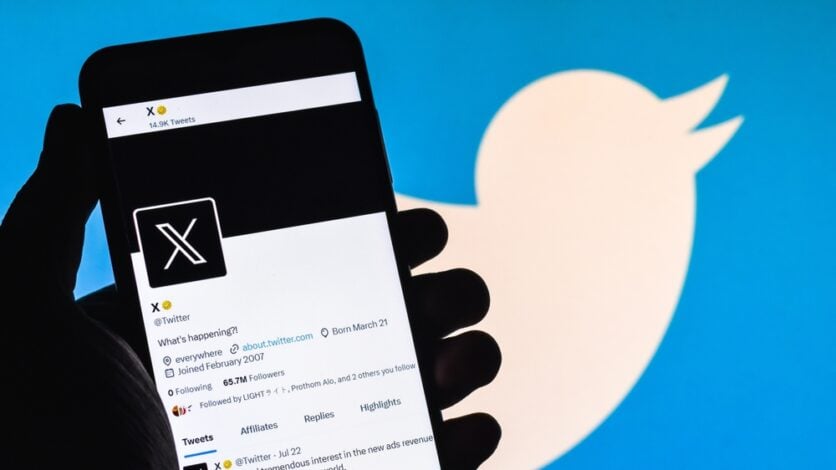
Music publishers asked a federal judge in Dallas on Thursday to dismiss X Corp’s antitrust lawsuit with prejudice, calling it a “retaliatory” lawsuit by Elon Musk’s platform against copyright owners who sued it nearly three years ago for streaming roughly 1,700 songs without licenses.
X sued the National Music Publishers’ Association and 18 publishers in federal court in Dallas in January, alleging a “group boycott” to force the platform into industrywide licensing at inflated rates.
On Thursday (April 2), the publishers asked a federal judge in the same court to throw out X’s claims, with prejudice, calling the complaint a “retaliatory antitrust suit” against copyright owners.
The publishers’ motion comes as X recently filed a separate argument in the Nashville federal court based on a new unanimous Supreme Court ruling in Cox Communications, Inc. v. Sony Music Entertainment. According to that March ruling, internet service providers cannot be held liable for copyright infringement committed by their users, unless the provider actively induced the infringement or provided a service tailored to that infringement — meaning a service not capable of substantial noninfringing uses.
Two days after the decision was handed down, X’s lawyers told the Nashville federal court that “under Cox, the liability theories that survived X’s motion to dismiss fail as a matter of law.”
Most recently, the publishers’ 56-page dismissal brief filed in Dallas, which you can read in full here, said: “X’s motivation in filing suit was different: retaliation and leverage for the copyright suit the Music Publishers filed against it, which is currently pending in Tennessee federal court. The Complaint should be dismissed.”
The Tennessee case that they were referring to was filed in June 2023 when a group of music publishers — including Sony Music Publishing, Universal Music Publishing Group, and Warner Chappell Music, alongside independents such as Kobalt, BMG, Concord, and Reservoir — sued X (then still known as Twitter) for alleged widespread infringement of around 1,700 copyrighted works, seeking more than $250 million in damages.
As MBW previously reported, that lawsuit, which was led by the NMPA, accused X of profiting from unlicensed music while refusing to enter into the kind of blanket licensing agreements that virtually every other major social media platform — including Meta, TikTok, YouTube, and Snapchat — has signed with music rights holders.
A Nashville federal judge in March 2024 partially granted X’s motion to dismiss but allowed the case to proceed on allegations including that X failed to promptly remove infringing content and neglected to act against repeat offenders.
In June 2025, as MBW reported, the two sides were granted a 90-day stay of proceedings to engage in settlement negotiations. By November, both parties reported making substantial progress toward a written settlement agreement.
However, the negotiations failed through and in January, instead of reaching a settlement, X filed an antitrust countersuit against the NMPA and 18 publishers in January, accusing them of colluding to force the platform into industrywide licensing at inflated rates.
In the latest brief, the publishers said X filed its retaliatory lawsuit as the company was “[a]pparently unwilling to obtain licenses, or abide by its obligations under the DMCA.”
“X does not identify a single instance where it sought an individual license and a Music Publisher denied that request, or where a Music Publisher (or NMPA) insisted on an industrywide license.”
NMPA’s Brief
X has accused the music publishers of engaging in a conspiracy to refuse to engage with X to license their copyrighted music. However, the publishers said: “X does not identify a single instance where it sought an individual license and a Music Publisher denied that request, or where a Music Publisher (or NMPA) insisted on an industrywide license.”
According to the publishers, X’s conspiracy theory centers on a single word in a single pre-litigation email sent by the NMPA to X in October 2021. At the time, NMPA President David Israelite wrote to the then Twitter platform, warning of DMCA takedown notices while offering to “develop a partnership, “similar to what many other social media companies have done, including YouTube, Facebook, Instagram, TikTok, Snap, Twitch, Triller, Roblox, etc.”
“X admits that it ‘is not interested in licensing musical compositions from every Music Publisher.’ X never identifies the Music Publishers with which it is interested in entering into a license agreement.”
NMPA’s Brief
Israelite’s letter closed with an invitation: “If you are interested in engaging in such a conversation, please let me know. If you choose not to do so, then please know we are open to starting a conversation at any point during the future process.”
X’s complaint seizes on the word “we,” arguing it was a signal that no individual publisher would deal separately with X, according to the publisher’s latest brief. The defendants call that interference “not only implausible” but “completely devoid of factual basis.”
The publishers also argued that X’s complaint pleads the opposite of what it alleges. Warner Chappell Music allegedly sent X an initial “experimental license proposal” in May 2021 and followed up 10 months later, noting that X “had been negotiating licenses with record labels” but not publishers.” The publishers noted that licenses from both are required to lawfully use music.
Sony Music Publishing and Universal Music Publishing also allegedly attempted to open licensing negotiations with X. However, the publishers said all three were rebuffed. “[A]ll X’s allegations show are unilateral attempts by Warner to engage in licensing negotiations, only to be rebuffed by X.”
The publishers added that “X admits that it ‘is not interested in licensing musical compositions from every Music Publisher.’ X never identifies the Music Publishers with which it is interested in entering into a license agreement.”
“It only alleges its own failure to negotiate with Warner. X does not allege it sought an individual license from any Music Publisher and was rejected. Nor does it allege any refusal by any Music Publisher to engage in licensing discussions or any actual demand by any Publisher (or NMPA) to enter an industry-wide license agreement.”
“X does not allege that any single Music Publisher has the power to control prices or exclude competition. It does not even allege any single Music Publisher’s market share.”
NMPA’s Brief
The publishers cited five grounds for dismissal including arguing that X never suffered antitrust injury because the music publishers are not X’s competitors.
“To establish antitrust injury, a plaintiff must plead injury ‘of the type the antitrust laws were intended to prevent and that flows from that which makes defendants’ acts unlawful’,” the publishers’ legal team wrote.
A boycott claim requires a competitor like Facebook, Instagram or TikTok conspiring with publishers to cut X off from having music licenses. “X alleges no such thing. Nor could it,” according to the publishers’ brief.
The publishers also alleged that X’s monopolization claims fail because X does not allege that any single publisher has monopoly power and that it only alleges collective market share.
“X does not allege that any single Music Publisher has the power to control prices or exclude competition. It does not even allege any single Music Publisher’s market share.”
Music Business Worldwide