
There’s a lot of noise coming from the MENA region’s music business.
The Middle East and North Africa was the fastest-growing recorded music region globally in 2024, jumping 22.8% YoY, according to data published by the IFPI in March. Streaming in the MENA region accounted for 99.5% of total revenues.
Saudi Arabia, one of the region’s key players, is a high-potential market with a young, highly connected and digitally savvy population, and its local music business is becoming increasingly visible on the world stage.
That has been driven in part by major music company partnerships and investments, as well as large-scale events such as this past weekend’s XP Music Futures conference and the upcoming Soundstorm Festival, which will feature superstars including Post Malone, Calvin Harris, and Cardi B performing in Riyadh.
Both events, XP Music Futures and SoundStorm, are organized by entertainment company MDLBEAST.
XP Music Futures 2025
MDLBEAST confirmed that the MENA-focused XP wrapped in Riyadh this past weekend (December 4-6) with its largest programming slate to date: 101 sessions, 20 workshops, and 284 speakers from 39 nations. The conference’s NITE program featured 203 artists across 113 acts representing 38 countries.
According to Nada Alhelabi, Director of XP Music Futures and General Manager of the MDLBEAST Foundation, the conference has evolved significantly since its inception.
“In the beginning, XP attracted mostly regional talent and industry insiders,” she explains. “Today, we’re seeing global labels, tech founders, festival operators, policymakers, managers, and creators from all over the world. It reflects how quickly the MENA music ecosystem is developing, and how much confidence international players now have in the Saudi market.”
The conference maintained its dual-format structure, pairing daytime industry programming with nighttime showcases. Alhelabi describes this approach as essential to XP’s value proposition: “I always say that XP is a full journey: you think during the day and you feel at night,” she says.
“The DAY program is where deals, ideas, and strategies are shaped. The NITE program is where people see the culture in action, where discovery happens. From a business point of view, both sides are equally important. Investors want to understand the market but also feel the audience. Artists want access to industry but also want to perform.”
“In the beginning, XP attracted mostly regional talent and industry insiders. Today, we’re seeing global labels, tech founders, festival operators, policymakers, managers, and creators from all over the world.”
Nada Alhelabi, MDLBEAST
This year’s edition restructured the program to “prioritize networking and meaningful interactions” integrating initiatives like HUNNA, Hearful, and XPERFORM directly into the main “flow” of the event. “One major lesson is that XP works best when people can connect easily,” Alhelabi notes. “We learned a lot about movement, scheduling, and how DAY and NITE interact with each other. Reducing friction across the site played a huge role in our design choices this year.”
XP’s talent development programs saw Jafar Amin win the fourth season of vocal talent competition XPERFORM, while Radish.world took the fifth edition of the Storm Shaker DJ competition. Both winners secured performance slots at Soundstorm 2025, scheduled for this coming weekend, December 11-13.
Each of these programs fills a specific gap in the ecosystem, according to Alhelabi. “HUNNA empowers female creatives and leaders. Sound Futures supports startups and music-tech innovation. XPERFORM helps emerging artists build real careers beyond the event. The impact doesn’t stop when XP ends, these programs build momentum for the entire year.”
India as Focus Country
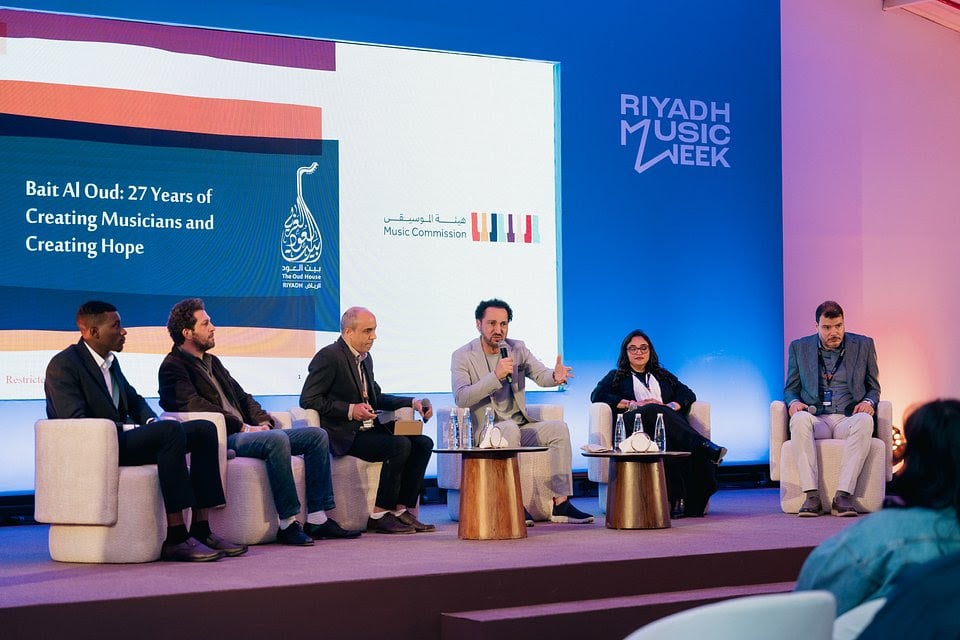
This year’s XP marked several notable developments, with India serving as the focus country. Programming included sessions on Indian music’s global expansion and partnerships with Indian brands.
“India and the Middle East have always had strong cultural connections, and both markets are growing fast with young, engaged audiences,” explains Alhelabi. “We’re already seeing natural collaborations between the two regions, so spotlighting India allows us to build a more structured bridge through co-writing, co-producing, touring, and investment. It’s a relationship that feels both natural and full of potential.”
Sessions at the wider conference covered topics including music’s role in sporting identity — following Soundstorm’s collaboration with Inter Milan FC — and how music events shape destination development across the region.
Alhelabi emphasizes that XP’s role extends beyond simply hosting panels and showcases. “XP brings everyone into the same room, creators, startups, investors, executives, policymakers. When that happens, opportunities start to form naturally. Programs like Sound Futures give investors direct access to music-tech innovation, while XPERFORM spotlights talent that’s ready for development. By showing the full ecosystem in one place, XP makes it easier for global players to understand where the opportunities are and how to get involved.”
What sets XP apart from other global music conferences, according to Alhelabi, is its regional specificity. “XP is built for this region, not copied from anywhere else. It reflects the ambition, identity, and energy of the Middle East while being completely connected to global industry standards.
“What sets it apart is the blend of conference, culture, festival, and innovation. And because XP connects directly to Soundstorm as both events are just one week apart, it creates something most conferences don’t have: immediate access to one of the world’s most exciting music audiences.”
Soundstorm 2025
MDLBEAST also organises a separate music festival called Soundstorm, which is scheduled for this coming weekend, December 11-13.
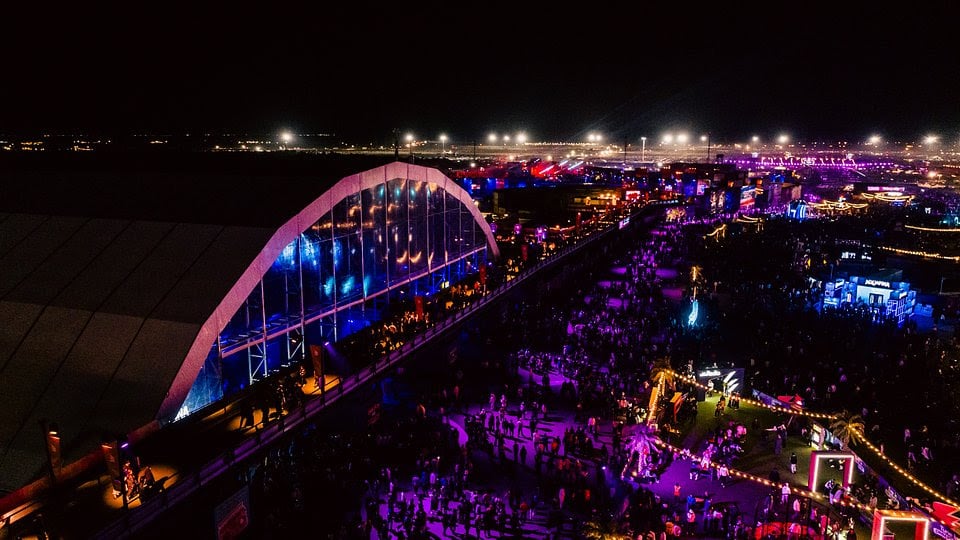
For this years’s event, Mazen Khamis, Executive Director of Marketing, Commercial, and Products at MDLBEAST, and his team, have undertaken a complete redesign of the festival’s layout. The size of the event is something to behold. Last year’s festival drew 450,000 people over the three-day period.
“This year, we pushed Soundstorm into its biggest evolution yet,” Khamis explains. “We rebuilt the entire festival as a City of Beats, a place you can actually navigate like a mini city with its own districts and personality. We now have 14 stages across four districts, all connected through Downtown, which acts as the heart of the whole experience.”
The new structure features 14 stages organized across four distinct districts, East, West, North, and South, connected by a central Downtown area. At the center sits Downtown, described as “a dynamic playground for food, fashion, and culture” and the main meeting point for social moments. “From there, fans can move naturally into the East, West, North, or South districts depending on what sound and energy they want,” says Khamis.
“Soundstorm has always been a festival of a huge scale. And that’s definitely something we want to keep but we felt the need to make it feel more intimate and bring things closer together, that’s how the idea of turning it into a small city came about. Our focus was simple: smoother movement, clearer navigation, and a festival that truly feels like a cultural city.”
“Soundstorm has always been a festival of a huge scale.”
Mazen Khamis, MDLBEAST
East forms the festival’s “largest and most high-impact zone” anchored by the Big Beast mainstage, built, according to MDLBEAST, for “global superstars and peak-energy performances”. The 6AG stage, meanwhile, “champions regional talent” with a focus on Saudi and Middle Eastern artists.
The North section of the site features stages including Park, which “brings band-led energy”, while Mixtape serves as the festival’s home of hip-hop and R&B. The Brass stage adds “groove-forward sets with live instrumental character”, and Yard spotlights indie, alternative, and emerging artists.
West becomes Soundstorm’s “dance and techno” district, with stages including Tunnel, Port, Plexi, Silk, Log, and Greenhouse “each bring their own corner of the electronic spectrum,” according to Soundstorm, “from EDM and progressive techno to house, disco, and harder techno”.
The South side of the site focuses on “ambient, slower, more atmospheric sounds” and includes Neon, a glowing 360-degree tent, and Roog, an “intimate space for deeper, slower-building electronic sets”.
The festival will host over 200 performers across the three days, with a superstar lineup that features Cardi B, Metro Boomin, Pitbull, Tyla, Benson Boone, Lil Yachty, and more global acts, alongside hundreds of regional and international electronic, hip-hop, and pop artists. The lineup reflects the festival’s positioning as one of the region’s largest music events, blending chart-topping global artists with emerging talent.
The transformation presented significant operational challenges. “When you redesign a festival of this size, you’re balancing creativity with massive operations,” Khamis notes. “Turning Soundstorm into a 14-stage city required a new approach to crowd flow, transportation, staging, and technology.”
One of his biggest priorities was ensuring the festival remains navigable despite its growth. “Even as the festival grows, it still feels clear and easy for people to move around,” he says. “Bringing in improved tech — like upgrades to our ticketing and navigation systems through NOFOMO, added another layer of complexity. But these challenges push us to innovate, and that’s what makes Soundstorm what it is.”
When asked about MDLBEAST’s trajectory, Khamis sees continued expansion.
“MDLBEAST has grown from a single festival into a multi-vertical entertainment company. My work has focused on expanding our commercial footprint, shaping new products, and building partnerships.”
Looking ahead, he envisions MDLBEAST “becoming a global cultural powerhouse, exporting Saudi creativity, expanding our product ecosystem, and building stronger connections between music, technology, and culture. Everything we’re doing is aligned with Vision 2030 and the long-term development of the creative economy.”
Music Business Worldwide