The majors and BMG have lost their bid to get the US Supreme Court to overturn a ruling that lets songwriters reclaim their copyrights worldwide.

Their challenge ended on Monday (October 19) without the court ruling on its merits, after four of its nine justices sat the case out.
The court’s order states that Justices Sonia Sotomayor, Neil Gorsuch, Amy Coney Barrett, and Ketanji Brown Jackson “took no part in the consideration or decision of this petition.” It does not give a reason.
That left the court short of the six justices it needs to act on a case.
The five remaining justices concluded that the case could not be heard and decided in the court’s next term – which, under federal law, required the court to uphold the lower court’s ruling.
The Supreme Court‘s order can be read in full here.
BMG‘s parent company, Bertelsmann, also owns Penguin Random House, which has published books by all four of the recusing justices.
The same four, plus Justice Samuel Alito, stepped aside from a copyright case against author Ta-Nehisi Coates in which Bertelsmann was named as a defendant.
The ruling that now stands was handed down in January by the US Court of Appeals for the Fifth Circuit.
US copyright law lets songwriters take back rights they signed away decades earlier: after 56 years for works from before 1978, and after 35 years for later works, as MBW has previously reported.
Until the Fifth Circuit‘s ruling, the industry had broadly treated that right as covering only the US, leaving publishers in control of a given song in the rest of the world.
Monday’s outcome means that ruling remains binding on federal courts in Louisiana, Mississippi, and Texas.
Because the Supreme Court did not rule on the merits, however, the outcome does not set a nationwide precedent, and courts elsewhere in the US could still reach a different conclusion in a future case.
Enforcing the decision outside the US could also prove difficult, according to Reed Smith partners Nick Breen and Joshua Love.
In an op-ed for MBW in August, Breen and Love argued that foreign courts, collecting societies, and licensees may apply their own countries’ laws when deciding who owns a song and who gets paid for it.
The case has its roots in a publishing deal struck more than 60 years ago.
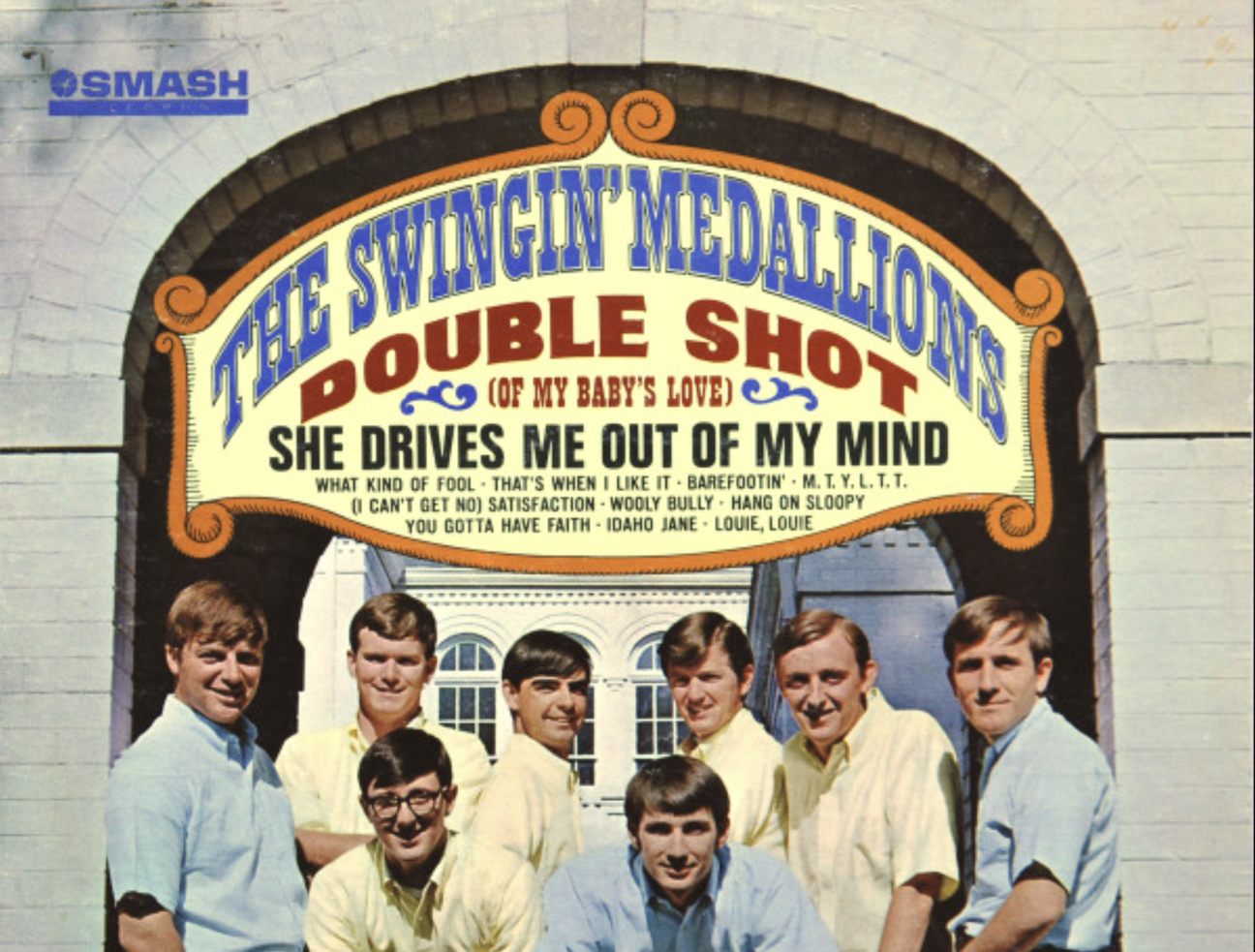
It concerns Double Shot (Of My Baby’s Love), a song written in 1962 by Cyril Vetter and the late Donald Smith.
In 1963, the pair assigned their rights in the song to Windsong Music Publishers “in exchange for one dollar,” according to the Fifth Circuit.
Vetter served a termination notice on Double Shot in 2019, taking effect on May 3, 2022.
Robert Resnik, whose Resnik Music Group bought Windsong in 2019, continued to claim a 25% stake in the song, according to the appeals court.
Vetter then sued Resnik in Louisiana federal court in 2023, asking to be declared the song’s sole owner worldwide.
In January 2025, Chief Judge Shelly Dick ruled that Vetter was “the sole owner of all right, title, and interest throughout the world” in the rights he had reclaimed.
The Fifth Circuit upheld that decision on January 12, 2026.
“Resnik‘s interpretation of the statute would deprive Vetter of the full set of rights he originally conveyed to Windsong, which is counter to the purpose of the statute,” the court wrote.
It also quoted a brief from the Artists Rights Institute, which argued that “[d]enying terminating authors the full return of a worldwide grant leaves them with only half of the apple – the opposite of [c]ongressional intent.”
In March 2026, four publishers bought Resnik’s asserted stake in the song and replaced him as defendants, so they could take the case to the Supreme Court.
They were Universal Music Group‘s Capitol CMG, Sony‘s Essential Music Publishing, Warner Music Group‘s Warner-Tamerlane Publishing, and BMG Rights Management.
“In a single stroke, the [Double Shot] decision… unsettled ’50 years of industry practice,'” the publishers argued in their petition, filed on June 11.
The petition claimed that the ruling “immediately calls into question the scope and meaning of countless negotiated agreements backed by billions of dollars in consideration and undermines international agreements and comity.”
The publishers’ lawyers, led by Paul Clement, warned that “the resulting chaos benefits no one – not U.S. authors, not publishers, not investors, and certainly neither foreign authors nor ‘the Progress of Science and useful Arts.'”
Vetter‘s lawyers urged the Supreme Court not to take the case, in a brief filed on September 14.
“Publishers were exploiting authors’ ‘unequal bargaining position’ and ‘the impossibility of determining a work’s value until it has been exploited’ by paying pittances for unknown works and then hoarding all the later profits from breakout successes,” Vetter‘s brief stated.
In a reply filed on September 30, the publishers pointed to their supporters’ briefs and said the ruling’s result was “disruption and instability so profound as to threaten the licensing of copyrighted works throughout the world.”
“This Court should not let one Fifth Circuit decision radically disrupt copyright worldwide,” the reply stated.Music Business Worldwide