MBW Explains is a series in which we dig behind the headlines, via data and context, to improve your understanding of key stories. Only MBW+ subscribers have unlimited access to these articles. MBW Explains is supported by Reservoir.
A federal jury on Wednesday (April 15) found that Live Nation Entertainment and its subsidiary Ticketmaster illegally monopolized the US ticketing and amphitheater markets.
The result handed a victory to the coalition of 33 states and the District of Columbia that pressed the landmark antitrust case to trial after the concert giant reached a settlement with the US Department of Justice.
The jury found in favor of the states on every claim after a five-week trial in Manhattan federal court, and determined that consumers had been overcharged on tickets.
The verdict now sets the stage for a remedy phase that could result in significant changes to how the live entertainment industry operates.
Here’s what happened, how we got here, and what comes next…
Ticketmaster willfully acquired or maintained monopoly power in the market for primary ticketing services to major concert venues through exclusionary conduct.
Ticketmaster did the same in the market for primary concert ticketing services to major concert venues.
Live Nation willfully acquired or maintained monopoly power in the market for large amphitheaters through exclusionary conduct.
In each case, the jury also found that the anticompetitive conduct caused harm, and that Live Nation controlled, dictated or encouraged Ticketmaster’s behavior.
The jury additionally found that Live Nation unlawfully tied artist promotion services to the use of its large amphitheaters (meaning artists were required to use Live Nation’s promotion services in order to play its amphitheaters).
On damages, the jury found that consumers were overcharged by $1.72 per ticket for primary concert tickets at major concert venues across 22 states and the District of Columbia. The jury also found violations of individual state competition laws in California, Florida, Illinois, Indiana, Kansas, New York, South Carolina, Tennessee and Vermont.
How we got here
The DOJ sued Live Nation and Ticketmaster in May 2024, joined by attorneys general from dozens of states and the District of Columbia. The trial began on March 2 in Manhattan.
One week later, Live Nation settled with the DOJ, allowing the company to retain ownership of Ticketmaster. The deal included a $280 million fund for state damages claims, the divestiture of 13 amphitheater booking agreements, a cap on service fees at 15%, and an eight-year extension of the company’s consent decree. Live Nation subsequently confirmed the details in a press release.
An initial coalition of 27 states and the District of Columbia rejected the settlement. New York Attorney General Letitia James said it “fails to address the monopoly at the center of this case.”
The states filed a motion for a mistrial, accusing the DOJ and Live Nation of “gamesmanship” and arguing they had been largely excluded from negotiations.
Judge Arun Subramanian declined to grant the mistrial but ordered the states to negotiate directly with Live Nation. Those talks failed, and the trial continued with a broader coalition of 33 states and the District of Columbia pressing their claims.
The settlement itself remains subject to Tunney Act review by Judge Subramanian, who must determine whether it is in the public interest before it can be finalized.
On the eve of the verdict, six US senators — Amy Klobuchar, Elizabeth Warren, CoryBooker, RichardBlumenthal, MazieHirono and PeterWelch —filed a letter, which you can read here, urging the judge to reject it, arguing that “mere behavioral safeguards like those in the proposed settlement are insufficient to remedy Live Nation-Ticketmaster’s monopoly power”.
The senators also raised concerns about the circumstances surrounding the settlement, citing sworn testimony from fired DOJ deputy Roger Alford that Live Nation lobbyist Mike Davis had threatened then-antitrust chief Gail Slater over a separate case, and later “admitted in sworn testimony that he recommended Ms. Slater’s firing to ‘anyone who would listen.'”
Slater was ousted from her position on February 12, less than a month before the DOJ settled with Live Nation.
The letter urged the court to conduct an independent examination into whether the settlement was “genuinely made in the public interest”.
Live Nation posted annual revenues of $25.2 billion for 2025, up 9% year-over-year, and reported that a record 159 million people attended Live Nation-promoted shows across 55,000 concerts.
What Live Nation says
Live Nation issued the following statement in response to the verdict:
“The jury’s verdict is not the last word on this matter. Pending motions will determine whether the liability and damages rulings stand.
“Live Nation will soon renew its motion for judgment as a matter of law, which the Court deferred until after the jury returned its verdict. That motion addresses all liability theories. The Court previously noted that Live Nation’s motion raises serious issues.”
“The jury’s verdict is not the last word on this matter. Pending motions will determine whether the liability and damages rulings stand.”
Live Nation
Live Nation added: “There is also a pending motion to strike the damages testimony on which the jury’s award was based. The Court deferred ruling on that motion as well, while noting significant concerns with the damages expert’s analysis.
“Of course, Live Nation can and will appeal any unfavorable rulings on these motions.
“The jury’s award of $1.72 per ticket applies to a limited number of tickets — those sold at 257 venues, which represent about 20% of total tickets — and only to purchases by fans (excluding brokers) in certain states over the past five years. Based on that scope, we believe the aggregate single damages figure would be below $150 million, which would be trebled. In connection with the DOJ settlement, Live Nation has already accrued $280 million toward state damages and civil penalty claims.
“Injunctive relief will be determined by the Court after the states make a remedy proposal, which we expect in the coming weeks. In the meantime, the Tunney Act proceedings regarding the DOJ settlement will continue. We remain confident that the ultimate outcome of the States’ case will not be materially different than what is envisioned by the DOJ settlement.”
What the states say
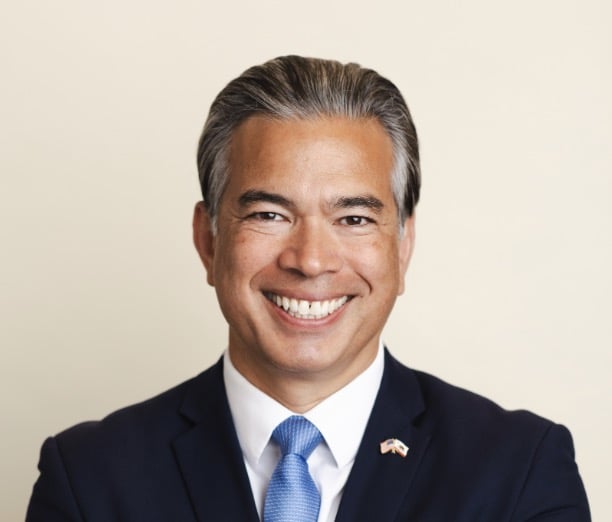
California Attorney General Rob Bonta said: “The verdict is in! A jury today found Live Nation/Ticketmaster liable for anticompetitive conduct that harmed the music industry and included overcharging consumers. This is a historic and resounding victory for artists, fans, and the venues that support them.
“In the face of dwindling antitrust enforcement by the Trump Administration, this verdict shows just how far states can go to protect our residents from big corporations that are using their power to illegally raise prices and rip-off Americans. We are incredibly proud of today’s outcome — and especially proud of our coalition made up of red and blue states alike who understood we needed to come together to protect our consumers, businesses, and state economies from Live Nation’s illegal conduct.”
“This is a historic and resounding victory for artists, fans, and the venues that support them.”
California Attorney General Rob Bonta
New Jersey Attorney General Jennifer Davenport said: “Today’s landmark jury verdict in our case against Live Nation confirms what we have said since the start of our case: For far too long, Live Nation has illegally profited from its monopoly at the expense of hardworking New Jerseyans. Live Nation’s illegal, anti-competitive practices have caused immense damage in our state, exploiting consumers by driving up the price of tickets and making it harder for fans to see their favorite artists.
“Our office, working in close partnership with a bipartisan group of state attorneys general, will continue to do everything in our power to ensure that Live Nation cannot continue to harm consumers, artists, and venues. We are committed to protecting our residents from illegal monopolies and restoring competition in the live music marketplace.”
New Hampshire Attorney General John M. Formella said: “Today a jury in New York found Live Nation and Ticketmaster operated as an illegal monopoly. This verdict ensures that Live Nation and Ticketmaster will be held accountable for violations of federal and state antitrust laws, including New Hampshire’s antitrust law. New Hampshire is proud to stand with our fellow State Attorneys General across the country in celebrating this victory for consumers. We are grateful for the jurors’ attention to this important case which impacts numerous aspects of the live entertainment industry.”
What the industry says
National Independent Venue Association (NIVA) Executive Director Stephen Parker said: “In the 44 days Live Nation’s lawyers spent arguing about whether they broke the law, Live Nation made $3.1 billion. Today, the jury confirmed what artists, fans, and independent venues have believed for 15 years: Live Nation is an illegal monopoly. The consequences should be swift and disruptive to their vertically-integrated market power.
“Live Nation and Ticketmaster must be broken up now. Ticketmaster should not be permitted to participate in the ticket resale market. Live Nation should not be able to promote more than 50% of artists’ tours. And the damages paid to the states should be remitted to the independent venues, promoters, festivals, and fans that have suffered under Live Nation’s monopolistic reign over the last 15 years.
“The nation’s fans and independent stages have hope once again because the jury saw Live Nation for what it is. Now the case is in the hands of the judge and the Plaintiff States to determine the remedies that will protect and compensate fans, venues, and promoters for the effects of their monopolistic conduct, and prevent it in the future.”
“The nation’s fans and independent stages have hope once again because the jury saw Live Nation for what it is.”
Stephen Parker, NIVA
The National Independent Talent Organization (NITO), the trade group for U.S. independent agents and managers and the thousands of artists they represent, said: “Now that a federal jury of ordinary Americans determined that Live Nation and its subsidiary, Ticketmaster, maintained monopoly power in ticketing, we urge Judge Subramanian to focus on remedies that guarantee an open market with greater transparency, reduced fees, and more options for both fans and artists. This is a positive step forward that can benefit all stakeholders.”
What happens next
Several things now happen in parallel.
Judge Subramanian still has to rule on Live Nation’s renewed motion for judgment as a matter of law and its motion to strike damages testimony. If he denies both, the verdict stands.
The states will then submit a remedy proposal. The most aggressive outcome would be a forced separation of Live Nation and Ticketmaster — the remedy the states have consistently sought.
However, court-ordered break-ups in US antitrust cases are exceptionally rare.
In the landmark Microsoft antitrust case in the early 2000s, a federal judge ordered the company to be split in two after it was found to have monopolized the PC operating system market, but that break-up order was overturned on appeal by the DC Circuit Court of Appeals, and the case was ultimately resolved through behavioral remedies.
The states’ argument for structural relief is strengthened by the fact that behavioral remedies have already been tried against Live Nation and, as the senators’ letter to Judge Subramanian argued, have repeatedly failed.
In 2019, the DOJ found that the company had violated that decree, and sought to extend and strengthen it. The DOJ’s March 2026 settlement represented another attempt at behavioral constraints, which the majority of states rejected as insufficient.
The jury’s clean sweep, finding monopolization on every claim, gives the states significantly more leverage in the remedy phase than a mixed verdict would have. But whether Judge Subramanian orders a full divestiture, more limited structural remedies, or enhanced behavioral conditions remains an open question.
The Tunney Act proceedings on the DOJ’s March settlement will continue separately. Judge Subramanian must determine whether that settlement serves the public interest before it can be finalized. The jury’s verdict could make it harder to argue that the DOJ’s deal was adequate.
If the verdict and damages stand, Live Nation has said it will appeal. Any appeal would go to the US Court of Appeals for the Second Circuit. That process could take years.
Reservoir (Nasdaq: RSVR) is a publicly traded, global independent music company with operations across music publishing, recorded music, and artist management.Music Business Worldwide