
How it started… is a new MBW series that delves into the stories behind the music industry’s most notable founder-led companies. Today, Larry Mestel’s multi-billion-dollar Primary Wave is an established player. But once upon a time, it took a miracle phone call to launch it skyward. How it started… is supported by EVEN.
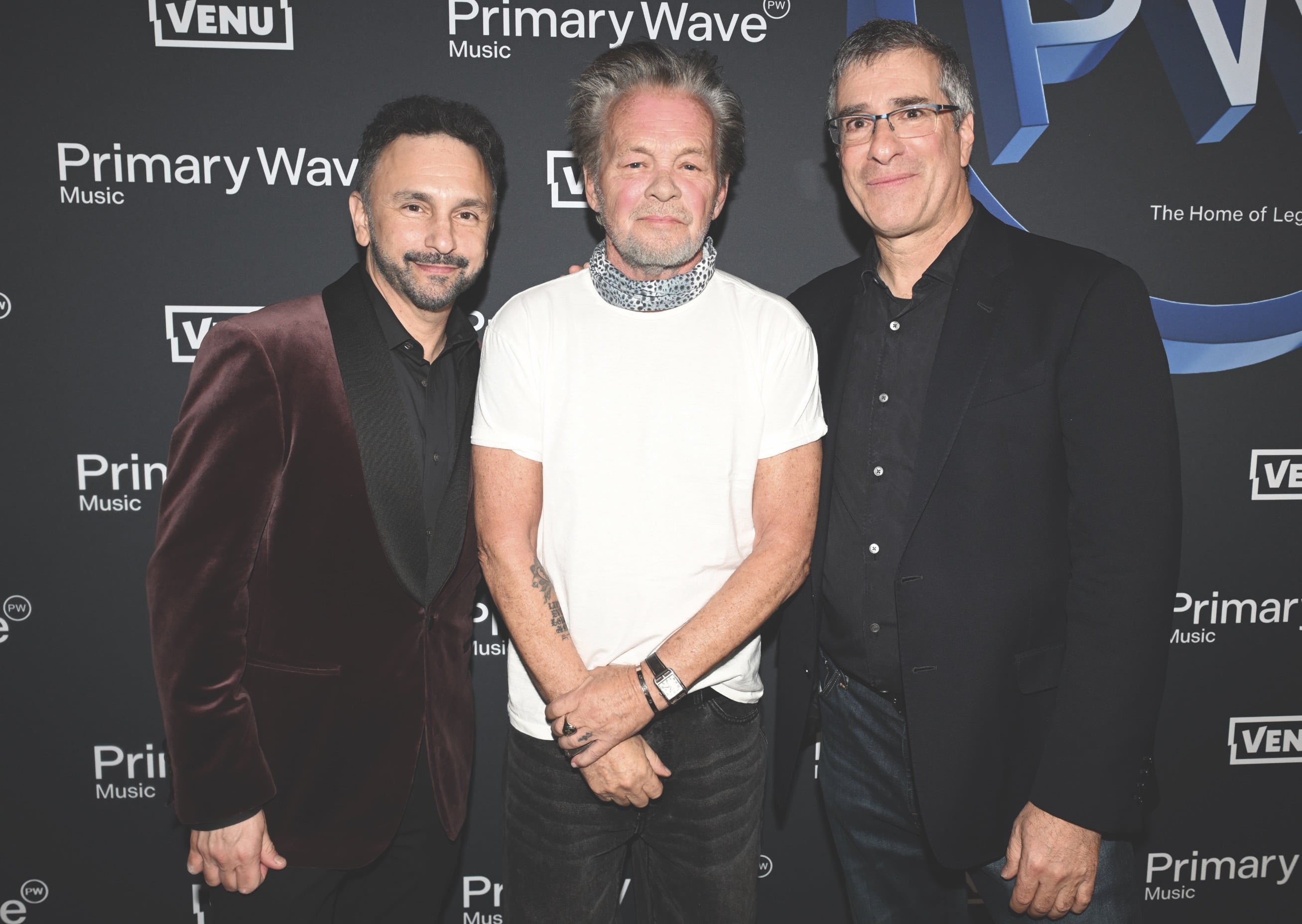
Set amid the 5-star splendor of the Waldorf Astoria, Beverly Hills, Primary Wave’s recent pre-Grammy party was one of the hottest gatherings in music’s most glamorous week.
John Mellencamp, Pete Townshend, and Def Leppard’s Joe Elliott and Phil Collen performed; Trombone Shorty, CeeLo Green, and Grandmaster Flash kept the room bouncing late into the night.
It was the kind of spectacle the biz has come to expect from Primary Wave – the ‘Home Of Legends’, which has deployed billions of dollars on catalogs of icons from Bob Marley to Whitney Houston, Prince to Stevie Nicks, James Brown to Ray Charles – and whose modern-day backers include Brookfield Asset Management and Creative Artists Agency (CAA).
Larry Mestel founded Primary Wave in New York City 20 years ago, and the company has grown rapidly ever since.
But, as Mestel tells MBW below, the firm’s first few days were fraught with the kind of tension – and blessed by the kind of miracle – that Hollywood movies are made of…
It’s December 2005; I’d just left Virgin Records, and I had a plan to launch Primary Wave. Catalog deal discussions were underway, and I needed to source capital. I’m introduced to a gentleman who decides, after a single, hour-long meeting, that he’s going to invest $100 million in Primary Wave. He was energized; I was ecstatic. You know when things just seem too good, and too easy, to be true? This was that.
After three months of negotiating the details, for one reason or another, it became apparent this person’s offer wasn’t real – and wasn’t going to happen.
By now, it’s early March, 2006. The problem: I’d thought this money was all wrapped up, so I’d entered into two letters of intent [LOIs] – one to buy Kurt Cobain’s music publishing, and one to buy a chunk of the MGM music publishing library from EMI. These were the bedrocks upon which Primary Wave would be built.
“I only had four days left. My ability to launch Primary Wave was on the line, as was my reputation.”
Larry Mestel
Both deals needed to be closed by the end of March. I had about two weeks to raise the money and close them. I’m up against it, but all is not lost. I go to my friend Richard Fields, a Managing Director of Allen & Co., and explain that I have a fortnight to find the money, and that I need about $60 million.
We agree that raising $60 million within two weeks, in a business that people don’t yet understand, will be tough. But [Allen & Co.] send me to a number of potential investors to have the conversation. They set me up with seven or eight investor meetings, and I separately set a few up on my own, using my contacts book and pulling in favors. I had about 12 meetings in total over a week and a half.
After almost every one of these meetings, people say, “This is interesting… but we need four or five months, to do due diligence and negotiate a deal for an investment of this size.” I didn’t have that amount of time. By the time of the crucial meeting I’m about to tell you about, I only had four days left. If I went past that deadline, the exclusivity of these deals would end. My ability to launch Primary Wave was on the line, as was my reputation.
I get a phone call from a friend. He says, “Hey, I have this company I want you to meet. It’s a major private equity firm who invest in media properties.” I think great, this could be it: my last shot.
I go to their office, sit down with their senior people. I pitch Primary Wave, and the future of music rights ownership. I quickly realize that the music business is alien to them – ‘media’ to them means the cable business.
After about 20 minutes of presenting and answering their questions, I become frustrated and head for the door. Without realizing, I accidentally leave my investment deck, my marketing book for Primary Wave, on their table.
At this point, it’s been nearly two weeks of meetings, presentations, and term sheets – of false hope and letdowns. I walk out of their offices thinking, “I’m done.” There’s no way I’m getting this money by Monday. I get home, and I remember saying to my wife: “I am so screwed. Not only will I not get to launch this company, but no one in music will do business with me again.”
Then the phone rings – literally two hours after I left the previous meeting. I’ll never forget it, and I swear this is how it happened: “This is Joe Bencivenga from Plainfield Asset Management. We want to be in business with you.”
I reply: “I’m sorry. I’m having the worst day; this can’t be true.” I hang up the telephone. Five minutes later, he calls back: “Don’t hang up! My name is Joe Bencivenga, Plainfield Asset Management. I’m putting on my partner and the CIO [Chief Investment Officer] of the company, Max Holmes.”
Max gets on the line, and repeats how keen they are to invest and do a deal. I ask him, How do you even know of Primary Wave? And he says: “Did you take a meeting about two hours ago?”
I said yes. “Well, we were in the meeting after you. We saw your marketing books; you left them on the table. We’re reading through them, and we really like what we see.
“Right now, we’re at the coffee shop around the corner. And I’m telling you: we want to do this deal.”
“I still think this can’t possibly be real; there’s no way this is happening.”
Larry Mestel
I still think this can’t possibly be real; there’s no way this is happening. I explain the LOIs, the terms, the deadline, everything. It’s Friday. Max says: “We’re getting this done. Fax us your term sheet, and we’ll go through it in our office in Greenwich, Connecticut. And on Monday, by the end of the day, we’ll fund these investments.”
The term sheet gets done, super fast – I think there was only one correction request before they signed it. And by the end of Monday, we’d wired money to Courtney Love and to EMI. And that’s how we started Primary Wave.
Plainfield eventually went out of business following the financial crisis, and Primary Wave obviously recapitalized. But Joe and Max are great guys and were tremendous partners, true to their word. I owe them a great debt of gratitude.
One of the funniest things is, two of the large institutional investors I met during that frenzied period – when I was trying to get the $60 million together – later found out about Plainfield investing. Both of them said to me, “Why didn’t you tell us? Had we known someone else was about to invest, we’d have closed our investment much faster!”
The moral of the story? It’s better to be lucky than good!

Music Business Worldwide