MBW’s Key Songs In The Life Of… sees us ask influential music industry figures about the tracks that have defined their life and career so far. The Key Songs… series is supported by Sony Music Publishing.
There’s always been a dress-down Friday feel to MBW’sKey Songs In The Life Of series.
Interviewees are happy (or often just relieved) to talk about music rather than the music business. And not just music as a product (or, to use the modern vernacular, ‘asset class’), but their music and their connection to it.
Universal’s EVP and Chief Digital Officer Michael Nash is probably more willing than most to lose (or at least loosen) that tie.
For, despite having a really quite arty start to his career (Long Beach Museum of Art Curator, Director of the Criterion Collection, come on!), his current role does not involve rolling the dice at the cutting edge of A&R.
He is not on the management rollercoaster strapped in next to a superstar client. And he is not constantly on the road, with AAA to all sorts of backstage bacchanalia.
Rather, he is the dealmaker, the firefighter, and the strategy-shaper. After more than a decade at UMG, few people have done more to define not just Universal’s but the entire industry’s relationship with a diverse roll call of digital partners.
In the words of Teddy Roosevelt, Nash speaks softly and carries a big stick – fighting for copyright protection and fair remuneration for artists.
Key Songs… then, is a break from the norm: a chance to discuss memories and theories to accompany a set of songs from artists including The Beatles, Joni Mitchell, Stevie Wonder, Devo, and X.
“So, I decided pretty quickly that I needed to go really early, to my roots, to songs that made a huge impression from an early age.”
Michael NAsh
Reflecting on the challenge set, Nash says: “It’s been a daunting task, of course. Because here’s the thing: it’s supposed to be the soundtrack of my life; well, guess what – long life equals long soundtrack. “So, I decided pretty quickly that I needed to go really early, to my roots, to songs that made a huge impression from an early age. The end result is that all these choices predate my first jobs in the arts and entertainment world. And that makes them especially personal, because they’re not swayed by any industry involvement.”
So an exec whose working life revolves around diplomacy and strategy delivers a set of Key Songs that couldn’t be more sincere and heartfelt – in chronological order…
1) The Beatles, A Day In The Life (1967)
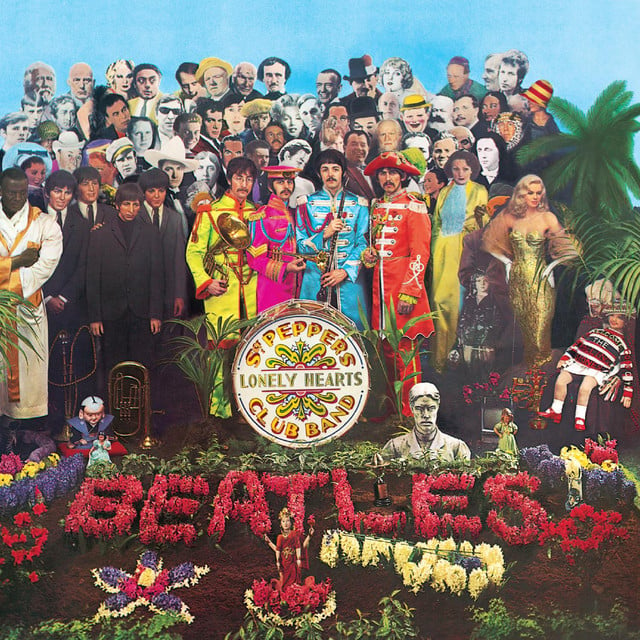
My dad was an Air Force officer. He came of age in the forties and fifties, and he loved music from that era. So this wasn’t really his kind of music, but, for whatever reason, he felt like his kids needed to understand contemporary culture. And so he bought Sgt. Pepper’s and he brought it home for us.
He was also very into stereo equipment, and I have this very clear memory of listening to the entire album, very loud, on headphones. I was 10 years old, and I have to confess, after A Day In The Life, which as you know is the last track on the record, I realized I was out of my depth. I was a little overwhelmed, I think.
There were a lot of things about Sgt. Pepper’s that I didn’t understand back then, but I was left with that feeling that it was really amazing. I didn’t know all the reasons why it was amazing, but I knew I needed to evolve as a person so that I could understand everything this album’s about. In that sense, this record is a true starting point.
From today’s perspective, because of Giles Martin’s inspired reworking of the Beatles catalog, I would say that Sgt. Pepper’s has never sounded greater. Which means that nearly 60 years later I’ve never had a better opportunity to revel in the greatness of A Day In The Life, and contemplate those 4,000 holes in Blackburn, Lancashire, and what exactly that means.
2) Joni Mitchell, A Case Of You (1971) / Neil Young, Heart Of Gold (1972)
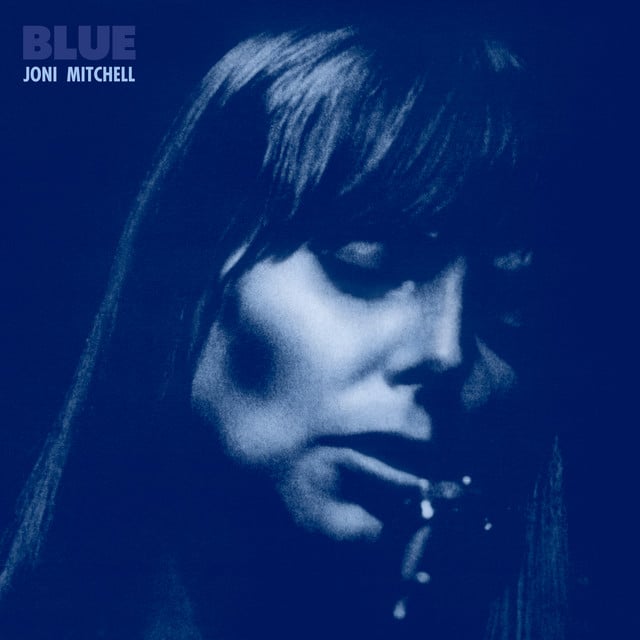
If the greatest love songs are about lost love, and I think they are, then you can make an argument that A Case Of You is one of the greatest love songs ever written. It’s certainly – because of Joni’s angelic vocal talent – one of the greatest love songs ever sung.
I found it a little later in my life, rather than when it was released, at a time when I had enough life experience to better understand the emotional content of the song. And it’s become one of those songs that’s stayed with me through my lifetime of important relationships.
Joni is a singularly amazing talent. And, as with The Beatles, we can listen to these recordings now in hi-res. We can experience all the nuance of her expression, her great instrumental talent – and how smart the production decisions were to keep it simple, which was the best way to showcase her talent.
A Case Of You is so profound, and I was reflecting on what it means to me and to so many people, in relation to what Björn Ulvaeus said about AI and love songs recently.
He was talking about how music is not just a product or an expression, it’s testimony of lived experience, and love songs are testimony of somebody who has fallen in love, and very often has lost love.
I think those love songs are really important to keep in mind when we endlessly debate AI, and consider the importance of human creativity. Because I don’t think there are many of us who want to have a robot tell us what it’s like to have a broken heart.
From around the same time and place, I first heard Heart Of Gold on the radio as a young teenager, and I loved it immediately. I went out with my allowance money and bought Harvest as soon as I could, and I have loved and felt connected to Neil Young’s music ever since.
Incidentally, not to dwell too much on this high-resolution issue, but later on in my life, when I was an executive at Warner, I had the pleasure of working with Neil around the time he was founding Pono, and I don’t think he gets enough credit for turning music quality into a cause.
Critics argue Pono didn’t push all the way through to market impact, but I disagree. He was providing leadership through example, he was banging the drum, and he is one of the reasons we all get to enjoy music in the highest quality now.
I was listening to Heart Of Gold over the weekend, and in hi-res it just shimmers and shines. It’s such a beautiful pop song, such a beautiful expression of a set of reflections, a contemplation of life’s journey by a great artist at a still-young age.
3) Stevie Wonder, Higher Ground (1973)
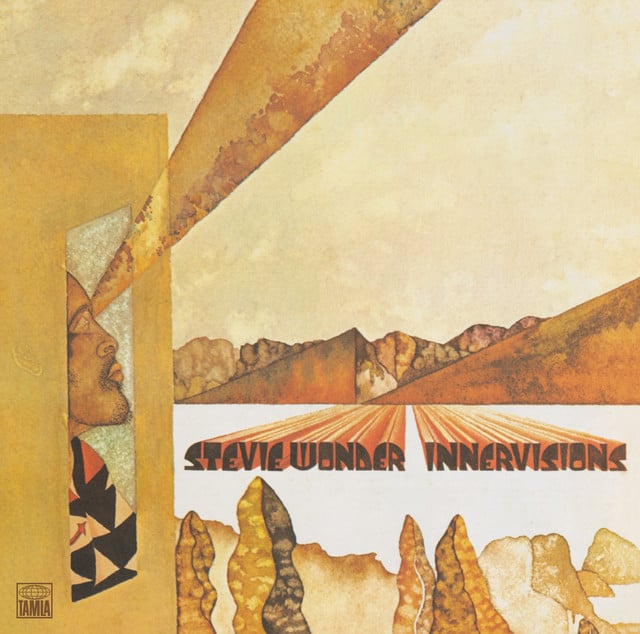
I love this song so much. I know this interview series is named after Songs In The Key of Life, but Innervisions is Stevie’s breakthrough album.
Higher Ground combines that relentless groove with a soaring vision of human experience.
It’s one of those songs that you go back to over and over again. It’s a song that I often reflect on, and it’s even become a kind of mantra that I invoke at different times, when you need a reminder of how you should operate.
We learn about culture through music, we learn what’s cool and fun. But we can also learn about values, because music is this universal language.
And so for me, in my own little world, trying to figure out these win-win partnerships, these complex situations, this song is a theme for me.
I say this all the time to my colleagues: let’s get to higher ground – the point of elevation that unifies the perspectives.
4) Keith Jarrett, Köln, January 24, 1975 Pt II C (Live) (1975)
I listened to a lot of jazz earlier in my life. I loved Sonny Rollins, John Coltrane too, but I tried to play the saxophone because of Sonny Rollins. I was terrible. I do not have any musical talent.
I am a guy behind the guy, permanently. Although I do think that trying and failing to master an instrument did help me appreciate and understand music more.
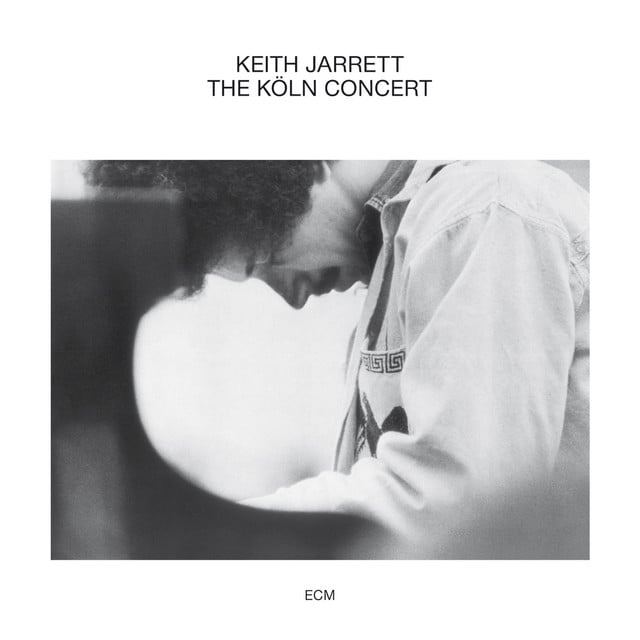
But the album that really changed the way that I listened to jazz was Keith Jarrett’s Köln Concert. An older, wiser person gave me it to listen to initially, almost as a challenge!
You’re hearing him compose improvisationally, on what we later learned was a flawed instrument; it was the wrong piano and it wasn’t properly tuned.
If you’ve ever seen Keith Jarrett perform live, he just walks out, sits down at the piano, and it happens. The virtuosity is incredible, but also to be that naked before an audience, with only your talent and your artistic instincts to drive that experience, and then to create something like this through that method… You’re on that journey with him, discovering what he’s discovering, occupying that space and time, fully present for each note and each chord.
I know this will sound kind of pretentious, but I really learned how to listen to live music, and especially how to listen to improvisational jazz, through the greatness of that album.
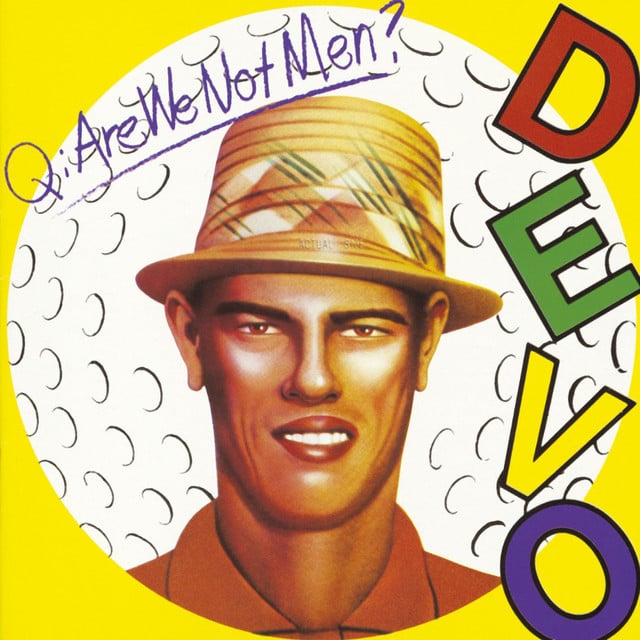
5) Devo, (I Can’t Get No) Satisfaction (1977) / The Police, Message In A Bottle (1979)
I’m especially drawn to covers of great songs, because they can showcase the genius of the underlying composition, while also making you see it in a new light.
There are lots of instances where great artistic choices for a cover contrast with the creative choices that were made on the original, and it all works to amplify your love of the original.
In this case, I love the original Stones track. I mean, who doesn’t? I first came across Devo’s version watching them on Saturday Night Live in the late seventies.
My first reaction was, ‘What is this?’ My second was, ‘This is amazing!’ It’s like a deconstruction of Satisfaction, with the jerky rhythm and vocals, plus the whole performance, it was so different; it was like getting hit with a lightning bolt.
You could say this about a bunch of other bands, but how’s Devo not in the Rock and Roll Hall of Fame? The greatness of that music and how incredibly influential it was – and still is… A little further down the new wave path, the very first thing that I ever wrote for publication was a review of a Police concert. It was the Ghost in the Machine tour, and they were amazing.
And, for whatever reason, that’s the first time I remember hearing Message In A Bottle, even though I must have heard it before, because it was on their second record [Reggatta de Blanc].
But I’ll always associate it with that concert, hearing it live, with this trio at the height of their powers. For me, this song is about how to take a really simple motif and turn it into a sort of existential parable. Musically, it’s also a great example of The Police’s fusion of rock and reggae. I would argue that this is an example of a pretty much perfect pop song.
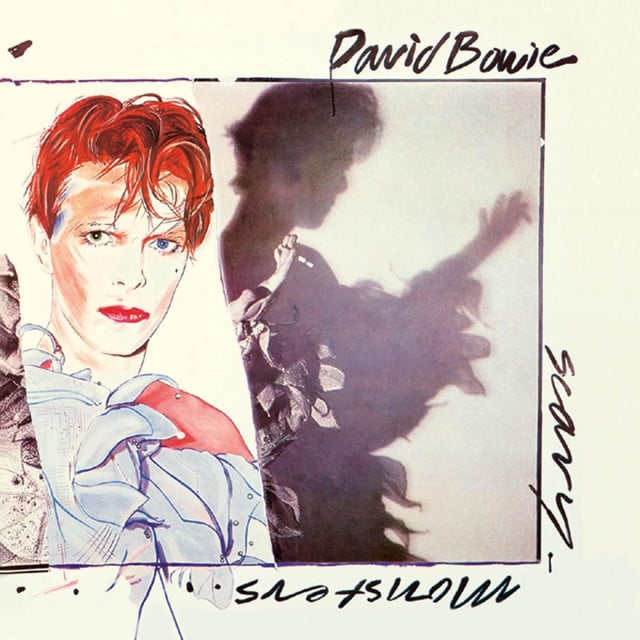
6) David Bowie, Ashes To Ashes (1980)
Bowie is such an important artist – to me, to so many millions of others, and to culture generally.
This song in particular, and the album it’s from [Scary Monsters (and Super Creeps)], capped this decade of incredible artistic transformation. It’s actually a little more than a decade, starting with that astronaut/space alien persona in Space Oddity (1969), and then Ashes To Ashes is obviously a bookend to that.
It’s such a brilliant song. To me it still sounds like it’s coming from the future. Like, we’re still all catching up to Bowie, because he was so far ahead of his time.
And then you take the video that he co-directed. They were using digital video tools that were incredibly cutting edge, and it’s a singular artistic achievement. The whole package is like genius squared.
Later in life I had a career highlight when I got the opportunity to work with Bowie on the definitive version of The Man Who Fell To Earth. It had been butchered in its commercial release in the seventies.
I was running the Criterion Collection when David reached out to me and basically said, ‘This film’s never been done right. If you can find the materials, I’ll get involved with the project and connect you with Nicolas Roeg [the director] so you can put it out as it was originally imagined.’ Eventually, I sat with him in the studio, while we recorded his commentary track.
Because of my upbringing, I’ve always connected to that alien/outsider persona. From ages two to six I lived in Japan, and for a lot of that time not on a military base, but in Haijima, on the outskirts of Tokyo. I guess I have always been attracted to this stranger in a strange land theme. There’s something about how Bowie used that conceit of the alien that has always felt personal and special to me.
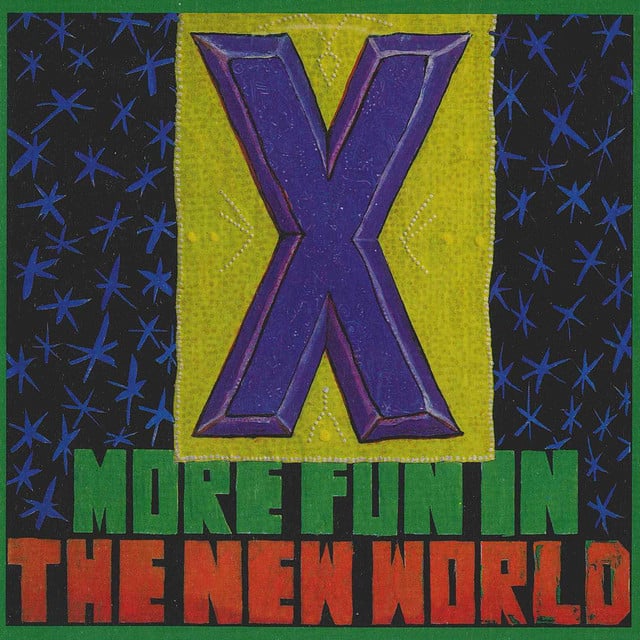
7) X, I Must Not Think Bad Thoughts (1983)
D. Boon of the Minutemen said, ‘Punk rock changed our lives.’ Well, punk rock definitely changed my life, along with millions of others.
And because of my more Western-US kind of orientation, where I went to high school and college, I gravitated more toward the LA punk scene. I obviously knew about London and New York punk, but I just really connected with X and some of those other LA bands.
Bad Thoughts is such a great song because it combines all these concerns about geopolitics with cultural politics. There is a verse where they’re basically reciting a list of all their contemporaries, and they’re begging for attention, and connection, and an audience, for all this great music. It makes it kind of an interesting commentary on that era.
Again, in terms of a personal connection, there was a great documentary called The Unheard Music that was made with X. It captured a lot of things that were happening in real time and then packaged it all up in the mid-eighties.
I wound up programming that documentary in various film/video festivals, and that gave me an even better sense of their cultural importance.
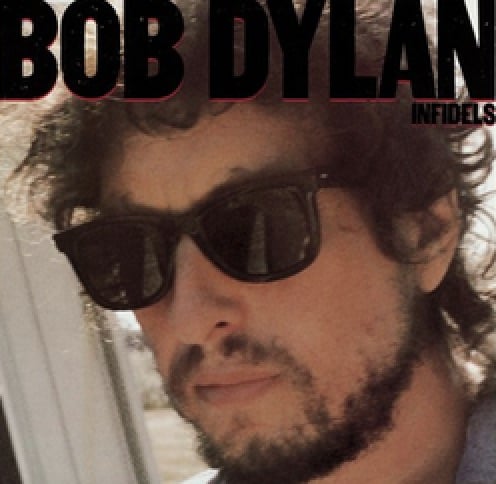
8) Bob Dylan, Jokerman (1983)
Dylan is a must. This is a kind of semi-autobiographical project, and so I thought I should include a semi-autobiographical song. And this may be one of the greatest purportedly semi-autobiographical songs ever written.
It’s this expansive mural, narrating a life lived, and kind of a vision of life. It’s about the artist’s recognition of their role in the world, as part of our cultural life too. It’s a reflection on how artists navigate the modern world, with all these sorts of parables and invocations of things like Deuteronomy and Leviticus and references to so much else.
It’s just such an incredible song, and it has that thing about propulsion, being constantly in the process of transformation, ‘shedding off one more layer of skin, keeping one step ahead of the persecutor within.’ I also love ‘Freedom just around the corner for you, but with truth so far off, what good will it do?’
It has that idea of being constantly driven, and I feel that in Dylan’s most recent work, in his last album. There’s still that relentlessness, that curiosity, and that sense of infinite transformation. The journey continues.
Bonus Track: U2, Pride (In The Name Of Love) (1984)
A hallmark of a really great song is that the 100th time you listen to it, you have the same emotional rush as the first time you listened to it.
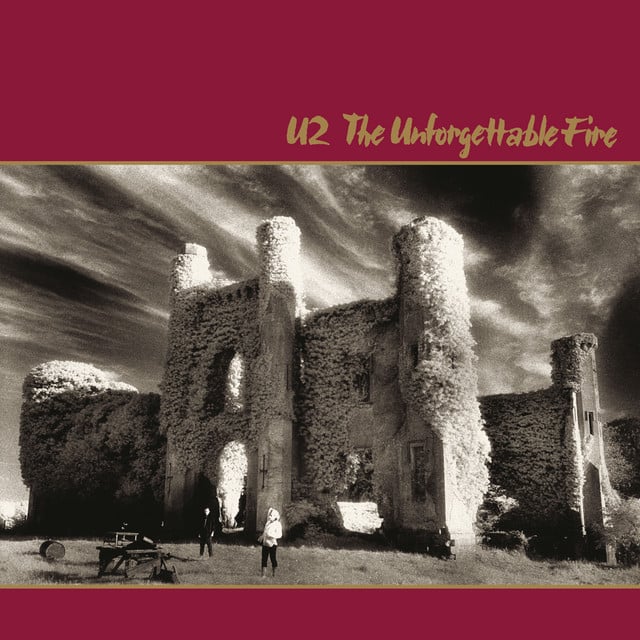
I honestly don’t know how many times I’ve listened to Pride. There was a time in my life, right after it came out, where I listened to The Unforgettable Fire pretty much every single day.
I had a cassette tape, with War on one side, and Unforgettable Fire on the other side, and that soundtracked my experiences at a certain time in my life.
There’s a frisson to this song and this era of U2 for me. Even now, there’s a swell of emotion, like the hair on your arms stands up. I listened to this song just this weekend, and I felt exactly that way.
I could certainly argue that this is the greatest rock anthem ever recorded. There’s a passion inside this song, and there is a connection to some of the biggest themes – ‘the meaning of life’, yes, but with a sense of mission and purpose, about what heroism and greatness mean.
Partner message: At Sony Music Publishing (SMP), we believe every voice matters. We are the #1 global music publisher, advancing the artistry of the world’s greatest songwriters and composers for over 25 years. We keep songwriters at the forefront of everything we do, and design our suite of services to amplify opportunities, build connections, and defend their rights. Our roster benefits from an international team committed to providing support at every career stage. From classic catalogues to contemporary hitmakers, history is always being written. We are a part of the Sony family of global companies. Learn more about SMP here.