

In 1974, on Court and Spark, Joni Mitchell sketched a portrait of a music executive daydreaming about walking out the door. Free Man in Paris – long understood to be about a young David Geffen – has become a kind of shorthand for the strange exhaustion of the job, right down to its narrator’s weary confession that he deals ‘in dreamers and telephone screamers.’
Julie Swidler reached for that line earlier this year, accepting a 2026 Music Visionary of the Year honor from the UJA-Federation of New York alongside Universal‘s Jeff Harleston and Warner‘s Paul Robinson. It was a characteristically dry piece of self-assessment from one of the most quietly influential lawyers the modern record business has produced – and one whose 18-year run as Sony Music‘s EVP of Business Affairs and General Counsel came to a close at the end of June.
Across nearly two decades she has been a defining presence in the industry’s most consequential shifts – from the artist-first economics of Sony‘s Spotify-equity payouts and its Artists Forward program, to co-signing the 2018 letter, with five of the business’s most senior women, that forced the Recording Academy to confront its treatment of female talent. Her own mantelpiece includes the Grammy Foundation’s Entertainment Law Initiative Service Award – she was the first woman, and the first label executive, to receive it – and the better part of two decades on Billboard‘s Women in Music list.
Now she is leaving to build an advisory practice of her own.
Here, in one of her final interviews as a Sony Music executive, MBW speaks with Swidler about her education under the late Clive Davis, how she handles the screamers and the dreamers, the fight to drag the Grammys into the present – and why, after all of it, she is still chasing the next big idea…
You came up through Arista, J Records, RCA, BMG – all before Sony. What’s the Julie Swidler origin story? How does a kid from Long Island end up as one of the most powerful lawyers in the music business?
How I got here is still curious to me. What I can say is, music was always a singular passion of mine.
As a kid, my father brought home the British version of Rubber Soul from London, knowing that was the only souvenir for me, even at such a young age. Some know I was a DJ in college and also ran the college coffee house, hiring performers, drafting their contracts, and performing myself. With my guitar accompaniment, I sang all genres.
I suppose I would have wanted to be a music label lawyer if I had known they existed, but I did know more broadly I wanted to be an entertainment lawyer.
While I was in law school, someone put me in touch with a former lawyer who became the President of Orion pictures, because I had asked around for connections. He told me that there were a lot of lawyers in the entertainment business, but very few good ones. “Go learn how to be a good lawyer first!”, he said. When I graduated from law school, I started as a litigator in what people refer to as “big law”. Over the next several years I joined a couple of firms of all sizes, trying to get the experience I wanted.
I thought that I had made it when I was hired into the in-house legal department at J Walter Thompson, then the world’s largest ad agency. Unfortunately for me, less than a year later, JWT was taken over by the WPP Group in the first hostile takeover in advertising history. All but one of the lawyers in our department were let go, and I found myself on unemployment with only one month’s severance and not much saved. I thought my life was over. I met with everyone I could think of, trying to network, and I received lots of support, but it took a while to land a job.
Finally, in March 1988, I was hired as a senior attorney at PolyGram Records. My dream job! Those years at PolyGram I learned a tremendous amount and had my first taste of learning how to support artists while ensuring the company was protected. I started by drafting and negotiating hundreds of recording agreements and publishing agreements, and when PolyGram launched a merch company and got into video distribution, I was exposed to even more of the music business. That work earned me several “thank you’s” on the Rock Video Girls series, which I’ll leave to your imagination.
I remember I lost sleep over our pay-per-view business which produced Guns N Roses live in Paris. I thought Axl Rose might pull something given it was live. And I was right. He waited to go on stage for seven minutes… seven minutes of dead air all over Europe. During a live Billy Ray Cyrus show, in his Achy Breaky Heart period, women threw their bras at him on stage. All of that experience prepared me for the wild experience of producing the 25th anniversary of the Woodstock Festival.
I had to negotiate everything from statewide permits, to porta-potties, to artist agreements that included recorded music, film and video rights. I was on-site a week early making sure that everything was going smoothly from a legal perspective (while pregnant with my third kid, which was a secret at the time).
“Clive didn’t pigeonhole people. I never heard ‘stay in your lane’ from him.”
When it was all over, Ed Eckstine, who was head of Mercury Records at the time, asked that I become his head of business affairs. Mercury did not have its own department, and Ed felt that it was needed. Within a few years, I had Danny Goldberg as my boss and Universal was buying PolyGram.
During the flummox that was the Universal/PolyGram merger, I got a call to interview with Clive Davis at Arista. When I left a few months later to join Clive, I was head of BLA at Island Def Jam.
Working for Clive was a game changer. During my very first marketing meeting, Clive played Smooth with Carlos Santana and Rob Thomas, and all I thought was that this music was on another level. It was odd, but when I started in April of 1999, Clive and I discovered that we had the same birthday. He always told me that somehow that solidified our connection.
The first artist deal I worked on was the Alicia Keys recording agreement. She was leaving Columbia records, so we needed to do a deal with Columbia for her existing recordings as well. Then, it was all hands on-deck for the 25th anniversary of Arista Records.
Having worked on the Woodstock anniversary only a few years earlier, it was not as scary as it could have been. We needed to do deals with all the artists, NBC for a live broadcast, international TV distribution, Dick Clark Productions, and a webcast. All to ensure that not only did we have enough money to pay for the production of the show, but Clive wanted to have enough money left over to give substantial contributions to his three favorite charities: TJ Martell, City of Hope and Amfar. I ended up going a week early to work out of Dick Clark’s offices.
You helped Clive Davis launch J Records. What was it like working with Clive in that era – and what did you learn from him?
There are so many things I learned from Clive. He didn’t pigeonhole people. I never heard “stay in your lane” from him. Perhaps it was because he had started out as a lawyer, but had pivoted in dramatic ways. He held the bar so high for all of us in terms of what he expected. The interesting thing is that we often delivered, surprising ourselves. When that happened, I often told myself, “Crap, he is going to expect me to live up to that level again”.
The music was always paramount, and the A&R team was clearly the most important group in the company. He knew everything that was going on at the company and was savvy about teaching his teams to have the hard conversations so that his relationships with the artists could remain pure.
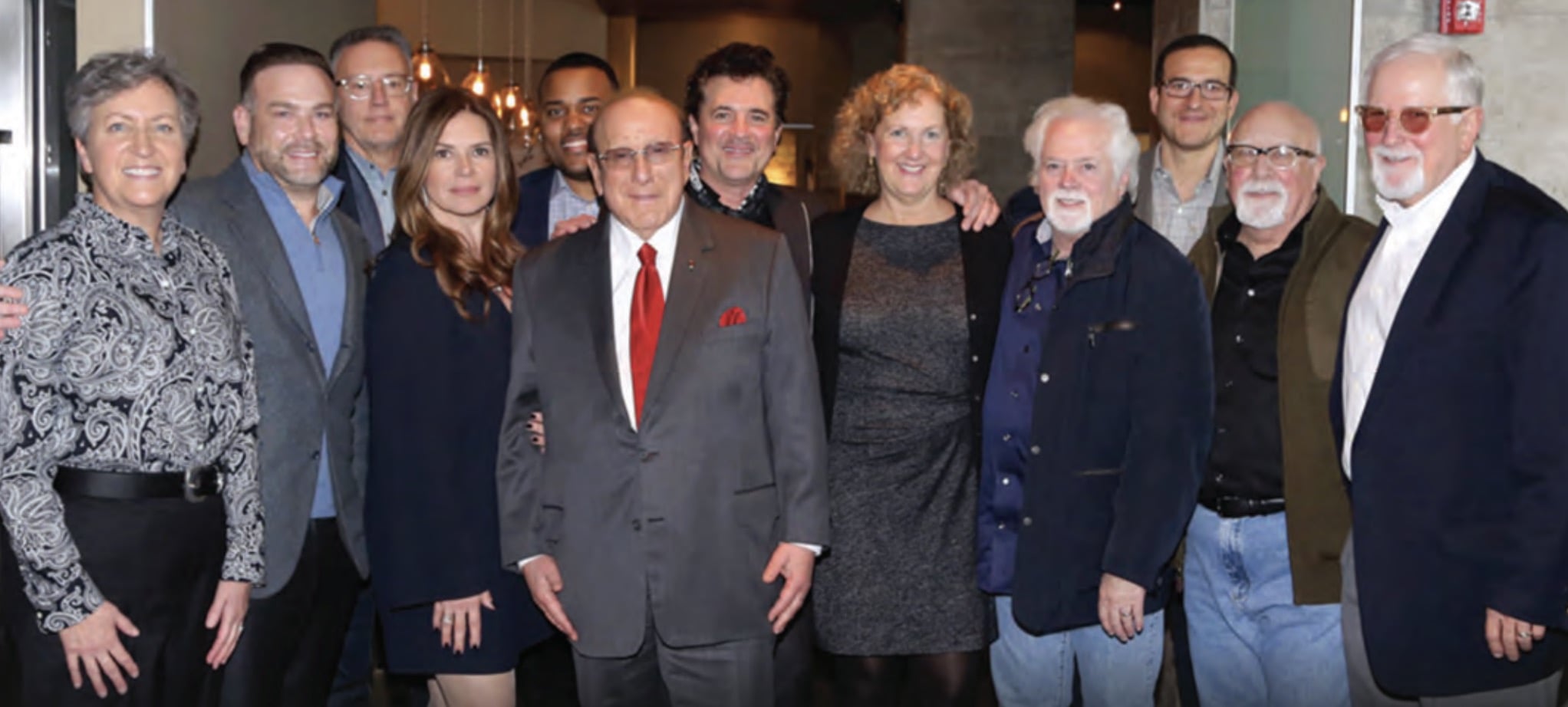
An example of this approach was when Luther Vandross was recording Dance with My Father. Luther had virtually every studio in the Hit Factory working at once. He was also ordering the most expensive Chinese food in Manhattan for everyone in the studio. You can imagine how expensive that was.
Rani Hancock, our Head of A&R Admin at the time, called to tell me that she was worried there wouldn’t be enough money in the budget to record the album. I told Rani to shut recording down and let Charles Goldstuck know what we were doing. Luther called Clive quite furious, and Clive was able to say, “I don’t know what you are talking about. I will need to speak to Charles and Julie.” I had the call with an irate Luther and his manager to work out rising costs, and Clive’s relationship stayed pure.
Clive also understood that the A&R process can take time. However, as he described it, we still had a report card to live up to each year. So Clive would try to come up with various ideas that would bring in revenue while allowing the newer artists to “percolate”.
That was a notoriously tough time for the industry, before downloads and then streaming rode in to the rescue. What sort of atmosphere did that generate – and how did Sony and the industry ultimately progress beyond it?
I wish I could say that the music industry was ahead of its time during those difficult days, but it was really a partnership with the tech companies that eventually brought solutions that consumers liked as much as they liked illegal downloading.
Winning the Grokster case in the US Supreme Court helped as well. Even with that win, it still took us years to shut down others. The business that I started in had six major music companies. In a relatively short time, we were down to three majors, with thousands of people losing their jobs.
When I was still at the label we always focused on the job at hand, understanding that, somehow, we had to be better than everyone else because the pie was shrinking. When I went from a label to corporate, we were more focused on how to improve the overall situation of the business.
You quoted Joni Mitchell at the UJA lunch – “I deal in dreamers and telephone screamers.” After 18 years at Sony, who are the dreamers you’re proudest of having dealt with?
I have worked with so many dreamers in my career. During my tenure at Sony Music, I would say my top dreamers are Rob Stringer, Peter Edge, Todd Moscowitz, Salaam Remi, Adam Alpert, Doug Morris, Dennis Kooker and others.
When I say Dreamers, it is those individuals that look to create “new” and open to change that only makes things better, not just tear down the old. It is moving past the old to see what is new in art, technology, and new ways to work with artists. It can also be working with existing art in ways to attract new audiences. Moving with our fans to get the music to them in the ways that they want to interact with music that they love.
How have you learned to deal with the ‘screamers’ and their tantrums down the years?
I wish I could say I am an expert, but I have utilized many techniques over the years. 1. Put a screamer on speaker phone. Boy do they stop yelling when they can hear themselves. 2. Ask them who they could possibly be yelling at, because it couldn’t possibly be me. Unfortunately, there were times that I lost my temper. I have been told that because it was so rare, people were shocked into silence.
You played a key role in challenging the Recording Academy for being (among other things) out of touch in 2018. How do you look back on that – and how far have things progressed?
Initially, it was a completely bizarre experience. After Julie Greenwald, Jody Gerson, Michele Anthony, Sylvia Rhone, Desiree Perez and I wrote our initial note to John Poppo who was head of the Board at the Recording Academy, as well as the full board, we didn’t hear back from them.
When Rob Stringer asked me if we had heard back, I told him no, then he sent his own annoyed note to Poppo. Unfortunately, it took Rob’s note to prompt a response. Then, we heard back from John and they offered to set up a meeting. The meeting was among the six of us and John, Neil Portnow, and Chuck Ortner, who was advising the Board. They let us know during that meeting that they would be setting up a task force that would be led by Tina Tchen. Tina was really amazing. She made sure that we did all of the research necessary, including many town halls with academy members in LA, Nashville, and New York. We met with the head of each committee of the Recording Academy.
At the end of a few months, we actually delivered a full report to the academy with constructive ways to change things and started programs where we went out to many of the producers we knew who agreed to mentor female producers.
About a year or so ago, Harvey Mason, who took the report very seriously when he took over the Academy, sent me a “report card” on how the Academy had been doing against the changes we asked to be made. While still not perfect, we have come a long way since the comment about “women need to step up”.
What are you proudest of during your time at Sony?
There isn’t one accomplishment that stands out. Most of the achievements that make me proud center around supporting our artists. From how we shared with artists and songwriters Sony Music’s profits from its Spotify equity sale, to launching Artists Forward, I take pride that we have been able to come up with answers that provide no negative consequences for artists.
Our lean team has created massive impact by allowing for frameworks that protect the industry from threats that could come at any time and in any part of the world. Even changing our agreements with our artists to bring our business relationships into the current music world has been a source of pride.
You’ve kept up a ‘squad’-like relationship with Paul and Jeff for 17 years – across three companies that don’t always see eye-to-eye. What’s been the secret to maintaining that friendship?
For Paul, Jeff and me, it all starts with respect. We have tremendous respect for each other and have very similar views on the value of music and the importance of artists and songwriters. When you start with similar values, you are able to bridge your differences. We are also the only people we know, that understand the kind of challenges we have to deal with on a daily basis. Importantly, we can make each other laugh.
What sort of impact and difference has Rob made since he took over at Sony Music/Sony Music Group, and what kind of boss has he been?
Rob is extremely strategic in terms of how he views the global business, where he thought we needed to go, and what was most important… the art of course!
He made sure that we built up our A&R capabilities around the world and pushed for more creative people running the labels. The way we have structured the company in terms of front-line labels, distribution and artist services is to meet the artist wherever they may be. He also has managed to stay close to the music, which is not always easy in his job.
Finally, how much can you tell us about what’s next?!
When I thought about what I wanted to do next, I realized that what I loved most about my job over the years was working with those dreamers who often had some “interesting” ideas, but were not quite sure what to do next. I could put the scaffolding around them to succeed – working with people on the execution of their big ideas.
What I will be doing next is just that. Taking everything I have learned and working with the various people that I know to help people get launched, whether initially or launched to the next level. I also have a couple of my own ideas that I would like to incubate. There was a book I read last year that I loved called Theo of Golden.
In the book, there is a character named Mr. Ponder. When Mr. Ponder was asked to describe his job, he answered: “I am a dispenser of advice, keeper of secrets, agent of calm and incubator of ideas.” I read that and thought, yup, that is exactly how to describe what I want to do next.
Virgin Music Group is the global independent music division of Universal Music Group, which brings together UMG’s label and artist service businesses including Virgin and Ingrooves.

All MBW+ subscribers get digital access to our Music Business Worldwide magazine, with six issues released each year. Music Business Worldwide