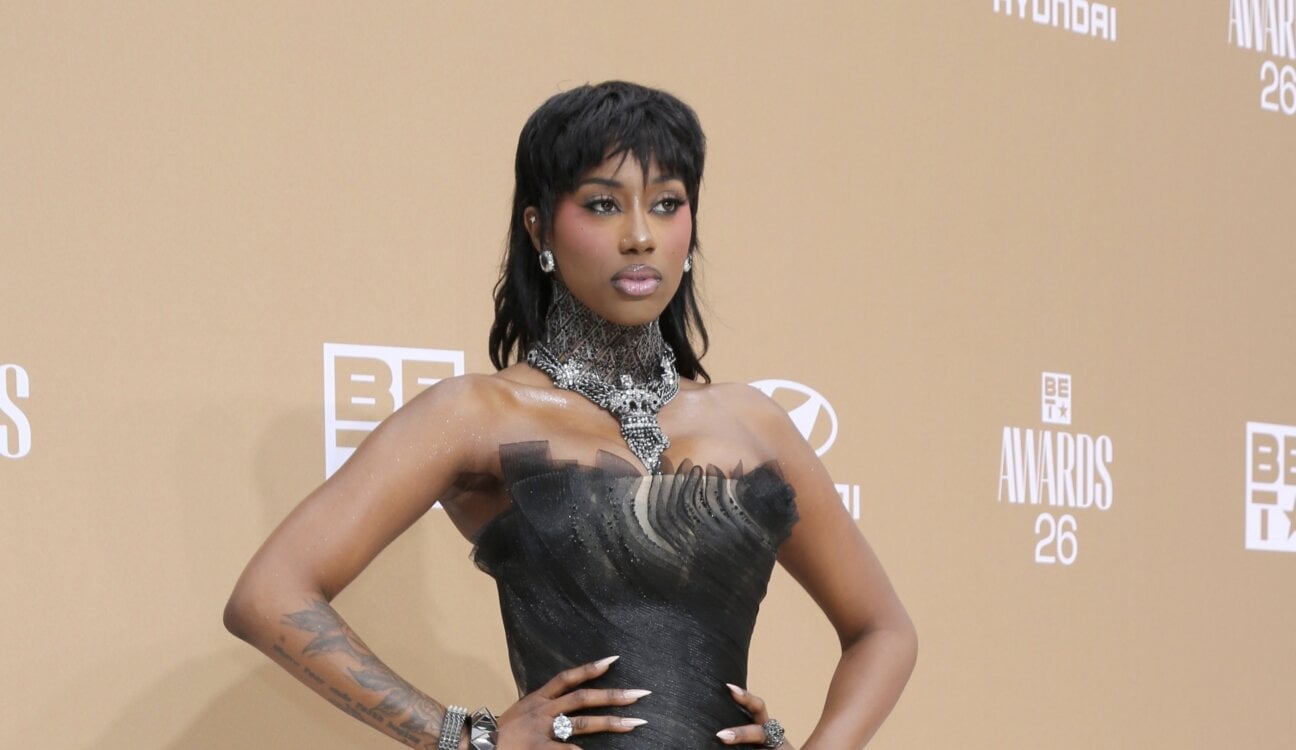
A federal judge in California has thrown out a copyright lawsuit over Flo Milli‘s 2023 hit Never Lose Me.
Baltimore-based artist Shamar Deal claimed a USD $200 purchase on the online marketplace Traktrain in 2019 gave him a 10-year exclusive license to a beat used in the song.
Last Friday (November 6), Judge André Birotte Jr. ruled that Deal had no right to sue because the license was never signed by the producer who made the beat, or by anyone shown to be acting for him.
The judge dismissed Deal‘s copyright claims with prejudice, without giving him another chance to amend them.
The 10-page order, obtained by MBW, can be read in full here.
Deal sued in the US District Court for the Central District of California in June 2025 over the beat’s sound recording. In December 2025, he filed a second, related suit over the beat’s underlying composition. The court later consolidated the two cases.
The defendants were Flo Milli, Babyface Ray, 42 Dugg, producer Gerreaux (also known as Gerreaux Katana), Sony Music Entertainment, and EMPIRE.
Deal claimed that Gerreaux, whose real name is Gerald Henry, licensed the same beat, titled Youu, to Babyface Ray and 42 Dugg in 2023.
The two rappers used it on their track Ron Artest, distributed by EMPIRE, according to Deal‘s original complaint.
Flo Milli then sampled Ron Artest on Never Lose Me, which was released via Sony Music‘s RCA Records.
“As Plaintiff currently holds the exclusive right to the Composition, the incorporation of the Composition in ‘Ron Artest’ and ‘Never Lose Me’ constitutes copyright infringement,” Deal‘s complaint stated, using “the Composition” to refer to the beat itself.
It said Ron Artest had earned more than 96 million Spotify streams, while six versions of Never Lose Me – including a remix featuring SZA and Cardi B – had together generated around 650 million.
“Defendants are believed to have collectively received well over $1 million dollars to date from their exploitation of ‘Ron Artest’ and ‘Never Lose Me,'” the complaint claimed.
It sought damages of no less than USD $1 million and an order barring the defendants from distributing or selling any track that incorporates his music.
Judge Birotte did not decide whether either song infringed anything – the ruling turned on the license paperwork.
To sue, Deal needed to show he held a valid exclusive license, which under US copyright law must be in writing and signed by the rights owner or someone authorized to act for them.
The judge quoted a 1990 ruling from the Ninth Circuit Court of Appeals, whose decisions bind federal courts in California: “The rule is really quite simple: If the copyright holder agrees to transfer ownership to another party, that party must get the copyright holder to sign a piece of paper saying so.”
According to the order, Deal admitted that Gerreaux never physically signed an agreement handing him rights to the beat.
He argued instead that Gerreaux had signed electronically, relying on a federal law that gives electronic signatures legal force.
Deal says he emailed Gerreaux in September 2019 to ask about buying an exclusive license, and that Gerreaux replied he would set the price at USD $200.
He says he then paid through Stripe, and that Traktrain sent him a confirmation that read: “you have purchased the exclusive rights.”
Days later, when Deal reminded him to mark the beat as sold, Gerreaux allegedly replied: “didn’t see the notification because the payment was through Stripe, but yes! I just changed the status to sold!”
Traktrain also generated a written license naming Gerreaux as licensor and Deal as licensee, according to Deal.
But that document was signed by Nick George, described in Deal’s latest complaint as Traktrain’s owner and operator.
Sony, which brought the motion to dismiss, argued that Deal had not claimed George was authorized to sign on Gerreaux’s behalf.
In June this year, Judge Birotte threw out an earlier version of the complaint over the unsigned license but allowed Deal to try again.
The judge accepted that an electronic agreement can meet the signature requirement but said nothing in Deal’s revised complaint showed Gerreaux had signed or adopted that particular document.
“While the emails exchanged may support Plaintiff’s allegation that Gerreaux intended to sell the Beat exclusively to Plaintiff, they do not resolve the defect identified by the Court in the previous Order,” Judge Birotte wrote. “At most, the exchange reflects Gerreaux’s acknowledgment that Plaintiff had purchased the Beat and that its status on TrakTrain should be updated.
“That acknowledgment, however, is distinct from manifesting assent to the specific written instrument on which Plaintiff’s standing depends.”
Without a valid exclusive license, Deal had no right to sue for infringement at all.
The judge said Deal’s allegations about Gerreaux’s activity on Traktrain – uploading the beat, listing it for exclusive license, setting the price, and accepting payment – described at most “conduct consistent with using the TrakTrain platform.”
“Because Plaintiff concedes that there is no written license agreement with Gerreaux‘ signature, and because Plaintiff failed to establish that Gerreaux plausibly adopted and executed the Agreement through his conduct, further amendment of the copyright infringement claims would be futile,” the order states.
The order gives the defendants 10 days to file a proposed judgment, and Deal five days after that to object.
Unless it is overturned on appeal, the decision ends Deal‘s copyright claims over both Ron Artest and Never Lose Me.
Deal’s lawyer, Larry Zerner, told Billboard that Deal disagrees with the decision and plans to appeal to the Ninth Circuit.
Zerner said independent artists who buy beats online “deserve to know that the licenses they pay for will hold up.”
David Given, a lawyer for Babyface Ray and EMPIRE, told Billboard that his clients welcomed the ruling.
BeatStars, the marketplace where the beat for Lil Nas X’s Old Town Road originated, said in January that it had paid out more than USD $450 million to creators, as MBW reported.
The company said in November 2025 that 1.5 million tracks were downloaded each month from its marketplace of more than 11 million beats.
BeatStars CEO Abe Batshon told MBW at the time that its model lets producers earn from the same beat several times by selling non-exclusive licenses.
In September, a different judge in the same court threw out the copyright claims in Wixen Music Publishing‘s USD $102 million lawsuit against Meta, ruling that Wixen had not shown it held the rights that would let it sue, as MBW reported.
Wixen was given until September 18 to amend, and filed a second amended complaint that day. Courts in the same district had twice before dismissed Wixen’s copyright complaints on the same grounds, in cases against Pandora in 2020 and Triller in 2021.
Flo Milli, whose real name is Tamia Monique Carter, signed an exclusive global co-publishing deal with PULSE Music Group in 2020, as MBW reported at the time.Music Business Worldwide