
MBW Views is a series of op-eds from eminent music industry people… with something to say. The following MBW op/ed comes from Sammy Andrews, founder of Deviate Digital.

Below, as Grand Theft Auto VI nears launch and AI tools like GPT-6 Astra turn prompts into playable games, she warns that music could be about to miss another platform shift…
Back in 2014, I tried to take over a radio station.
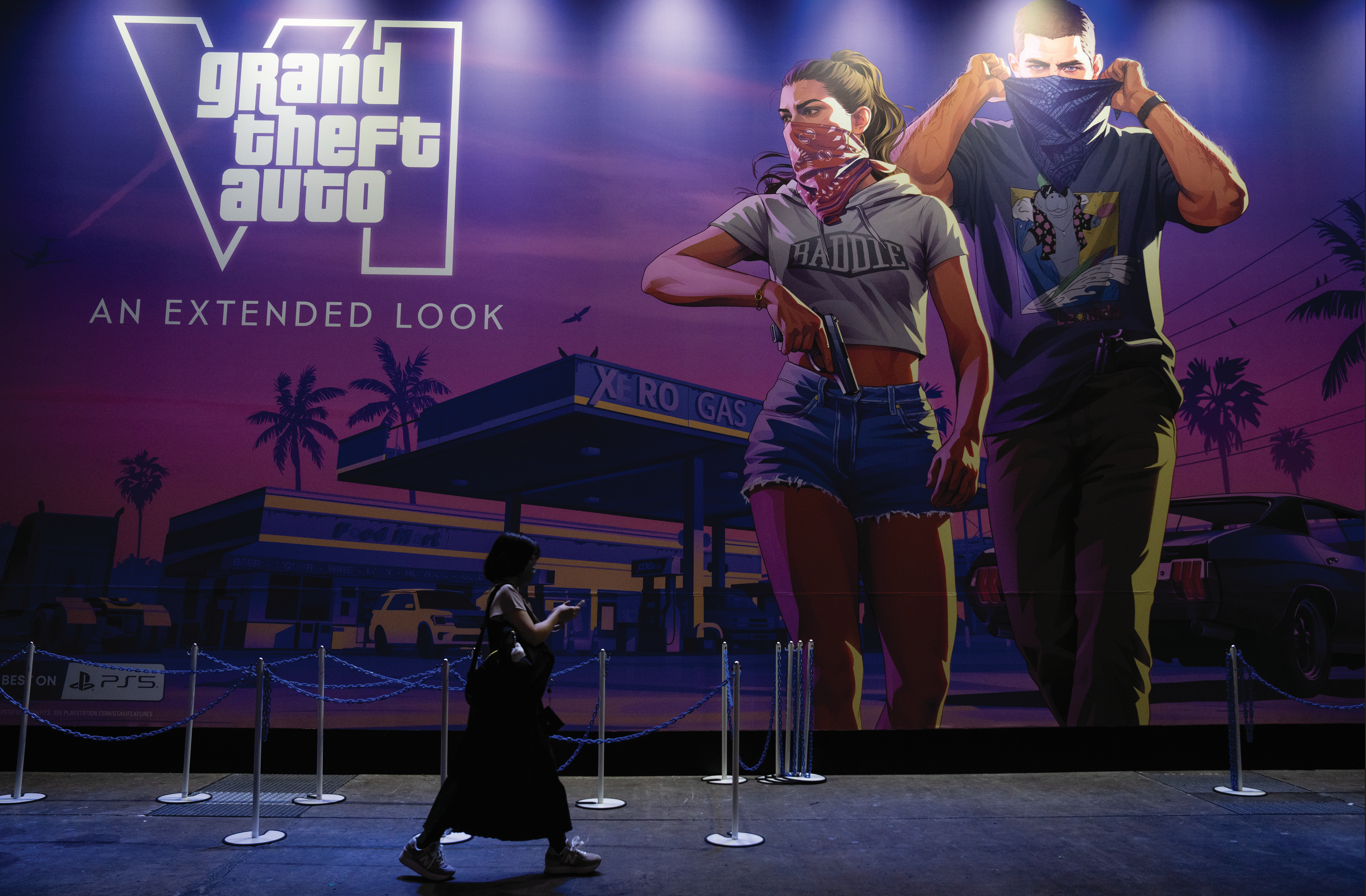
Not a real one. A fictional one, inside Grand Theft Auto V. I was running marketing on The Prodigy’s The Day Is My Enemy and I wanted an in-game station to premiere the record, plus every billboard in the fictional city. I wanted that band in front of that audience more than almost anything I worked on that year. I was told, very politely, that the tech wasn’t there yet.
So we improvised. With Cooking Vinyl’s blessing I licensed a track to Twitch, which at the time was getting hammered with takedowns for unlicensed music. They took it and built a format off the back of it called the “Artist Couch.” We did a worldwide album preview and a live-streamed interview with Keith [Flint] and Liam [Howlett] on the Twitch homepage, and the track was cleared and added to the library right after. Big lift on the DSPs, loads of Twitch usage.7
“The barrier I hit in 2014 is gone. Not lowered – gone.”
It did the job. But I never stopped thinking about that radio station. I’ve thought about it more than usual this month, watching the massively delayed GTA VI finally edge toward its November release and marveling at how far the tech has traveled since the last one. Because the barrier I hit in 2014 is gone.
Not lowered – gone.
The Arrival of Astra: A New Dawn?
OpenAI’s GPT-6 Astra shipped in the first days of September, and people immediately started using it to build playable games from prompts. At the same time, specialist tools are pushing in the same direction: Summer Engine turns natural-language instructions into editable games; Rosebud generates playable games in the browser; and Roblox’s new Build tool can generate gameplay, characters, environments, and sound from a description.
This all points toward a computing environment in which asking for an experience and creating one begin to collapse into the same action. Which, in turn, means the things you once needed to make a game (a Rockstar-sized budget, a legal department, and a year of meetings) are now a free browser tab and a teenager’s imagination away.
The interesting question isn’t what these tools might add to or remove from an existing DSP; it’s what happens to music when there’s no longer a fixed place you go to hear it. Because these engines don’t just build the world – they can score it. Ask for a game and they can generate the soundtrack in the same prompt, or, alternatively, you can generate it in a third-party app and import it – royalty-free, frictionless, and completely indifferent to whether a human musician ever gets paid. The default is already synthetic. Real music isn’t losing this fight; it hasn’t been invited to it.
And I’d take the industry’s anger about AI-generated music more seriously if it were matched by any urgency about the gaps we’ve left open ourselves.
Everyone is furious about synthetic tracks flooding DSPs, and rightly so. But we’ve spent a decade litigating what gets made, while ignoring where it gets used.
Take Twitch as the proof. The 2014 takedown problem I mentioned still isn’t properly solved, on a platform with an estimated 240 million monthly users and roughly 7 million people streaming to them.
Every one of them worked out years ago that real music is the thing that gets you muted and royalty-free music is the thing that works. We taught them that. AI didn’t take that territory from us. We left it empty and something else moved in.
That is how these things always go, and it is exactly what is happening again now.
Last issue I argued that we don’t need three landmark AI deals, we need a million small ones; that capability isn’t scarce, permission is; and that we keep building licensing routes you need a legal department to walk down.
I was mainly referring to covers and remixes. That is one version of the argument; this is a bigger one.
In GTA, the licensee is Rockstar. One company, deep pockets, a legal team, a phone number you can call. In a world where 10 million people conjure a game on a Tuesday night, the licensee is a kid with a browser. You are never doing B2B deals with 10 million kids. You will never send them a rate card. There is no lawsuit to wait for, no defendant big enough to force the question, nobody to blame afterward for setting the terms.
“The model we’ve quietly relied on for 20 years, outsourcing product development to whoever can afford to be sued, is no longer fit for purpose.”
The model we’ve quietly relied on for 20 years, outsourcing product development to whoever can afford to be sued, is no longer fit for purpose.
So, the license can’t sit with the creator. It has to sit at the engine layer, carried by the platform as infrastructure, the way blanket rights sit under radio. Which means the deals we should be doing right now are with the engine makers, before the defaults harden.
What Needs Building
The unspoken AI battle in music is between distribution and desire. In other words, who gets to decide what people want in the first place.
We must start with a license that fits the medium. Putting a known song in a game today means clearing two separate copyrights, often across multiple splits and territories, negotiated once for a fixed scene in a shipped title. Generative games have no fixed scene and no ship date. A track gets triggered by a player’s action, looped, stemmed, adapted, and dropped into a monetized space nobody storyboarded. You cannot clear that with a PDF and a one-time fee. It needs to be machine readable and clear itself at the point of play. Until that exists, catalog is locked out by physics rather than price.
Then provenance: the song, the recording, and the participating creators have to remain identifiable wherever the audio ends up, so that payment can route automatically.
In a generated world all of that is happening at runtime. If provenance doesn’t survive the journey, nothing downstream works, and every session musician on those recordings watches their credit dissolve into a game engine.
Then measurement, because none of it pays without it. You cannot pay a million micro-licenses you can’t count, and interactive triggers are invisible to the cue sheet system this industry still runs on.
We need a usage ledger built into the playback layer itself. What played, for how long, in what context, to how many players – deeply unglamorous plumbing, and the entire ballgame. Good news: someone is already building it. Reactional Music won a EUR €2.5 million European Innovation Council grant this summer to expand exactly this kind of rights and royalty infrastructure for games. Whoever owns the counting owns the tollbooth. It would be nice if we owned a piece of that rather than renting it back later.
And then the deliverable itself. Games need adaptive, stemmed, mood- and tempo-tagged music that responds to what a player does, not a flat stereo master. Far too many catalogs don’t exist in that form.
“Games need adaptive, stemmed, mood- and tempo-tagged music that responds to what a player does, not a flat stereo master.”
We have spent a decade shipping our music as a finished painting when what these worlds need is a set of paints. The rightsholders who make their catalog machine legible and pre-cleared win the placements by default. Everyone else loses, quietly, to the generate button.
Sort those and you have a business. But the real prize is bigger, and it’s the thing I was actually reaching for in 2014: a portable, persistent, monetizable artist presence that drops into any generated world carrying its rights, its commerce, and its identity with it; an in-game station as a live discovery channel; a Prodigy venue that exists across a thousand games none of us made; dynamic billboard inventory; the superfan ladder made spatial.
Tellingly, when Sony Music did its Roblox deal in 2021, it reportedly withheld developer access to its artists’ actual recordings. We are still thinking in walled placements when we should be thinking in portable presence.
I’ve watched us fumble three of these shifts now. We let the DSPs take ownership of the fan relationship. We let the social platforms set the terms of promotion, then spent a decade renting our own audiences back. And we let user-generated video build an entire economy on our catalog before we worked out how to charge for it. Each time we solved supply – more tracks, more deals, more content – while refusing to build rails at the edge where value actually forms. Each time, a platform we don’t own set the defaults, kept the audience, and sent us a royalty statement.
We have one shot to be in front of this one. The music business can be the infrastructure of the generative game era: the cleared catalog, the provenance, the counting layer, the artist presence that ships as standard inside every engine. Or it can be a licensor knocking on the door three years after the party started, asking to be let in.
A million small deals, at machine speed, inside worlds we didn’t build. A system capable of saying yes at volume. Same argument as last issue. Considerably higher stakes.
I know which future I’d rather build. And for the first time since I stood outside that fictional radio station, the tech is finally ready for us to build it. The only thing missing is us.
All MBW+ subscribers get digital access to our Music Business Worldwide magazine, with six issues released each year. Music Business Worldwide