MBW’s World’s Greatest Managers series profiles some of the best artist managers working in today's global business. World’s Greatest Managers is supported by Hipgnosis Artist Partnerships.
Rod Smallwood has managed Iron Maiden for 47 years.
Not “managed and then renegotiated.” Not, “managed, departed, and returned in an advisory capacity.”
Managed continuously since he first shook hands with the band’s founder, bassist Steve Harris, in 1979.
It is, by any reasonable measure, the longest-running artist-manager partnership in heavy metal and one of the longest-running in music history.
Smallwood’s path to Iron Maiden was characteristically unconventional. Raised in the UK’s Huddersfield, he dropped out of Cambridge, later became a booking agent at MAM, then managed Steve Harley & Cockney Rebel.
A friend at Rosslyn Park Rugby Club gave him a demo tape from a young draftsman named Steve Harris. Smallwood listened, made contact, booked two pub gigs in West London, and the rest is metal history.
With his business partner Andy Taylor, Smallwood built Sanctuary into “the largest independent 360° music company” of its era.
He left in late 2006 to form Phantom Music Management, dedicated solely to Iron Maiden; Sanctuary itself was sold to Universal Music Group the following year.
Under Smallwood and Taylor’s guidance, Maiden have sold over 100 million records, played approximately 2,500 shows across 64 countries, and released 17 studio albums. Five of those have reached No. 1 in the UK. Their most recent, 2021’s Senjutsu (Parlophone/BMG in the USA), reached No. 3 in the United States.
More recently, the band were named among the Rock and Roll Hall of Fame’s 2026 inductees, while Smallwood was awarded an OBE in the June 2026 King’s Birthday Honours for services to music and charity.
Meanwhile, Iron Maiden are celebrating their 50th anniversary in 2026 with a scale of activity that would exhaust acts half their age. The Run For Your Lives world tour is playing across Europe, Latin America, and Australasia, with a North American leg promoted by Live Nation.
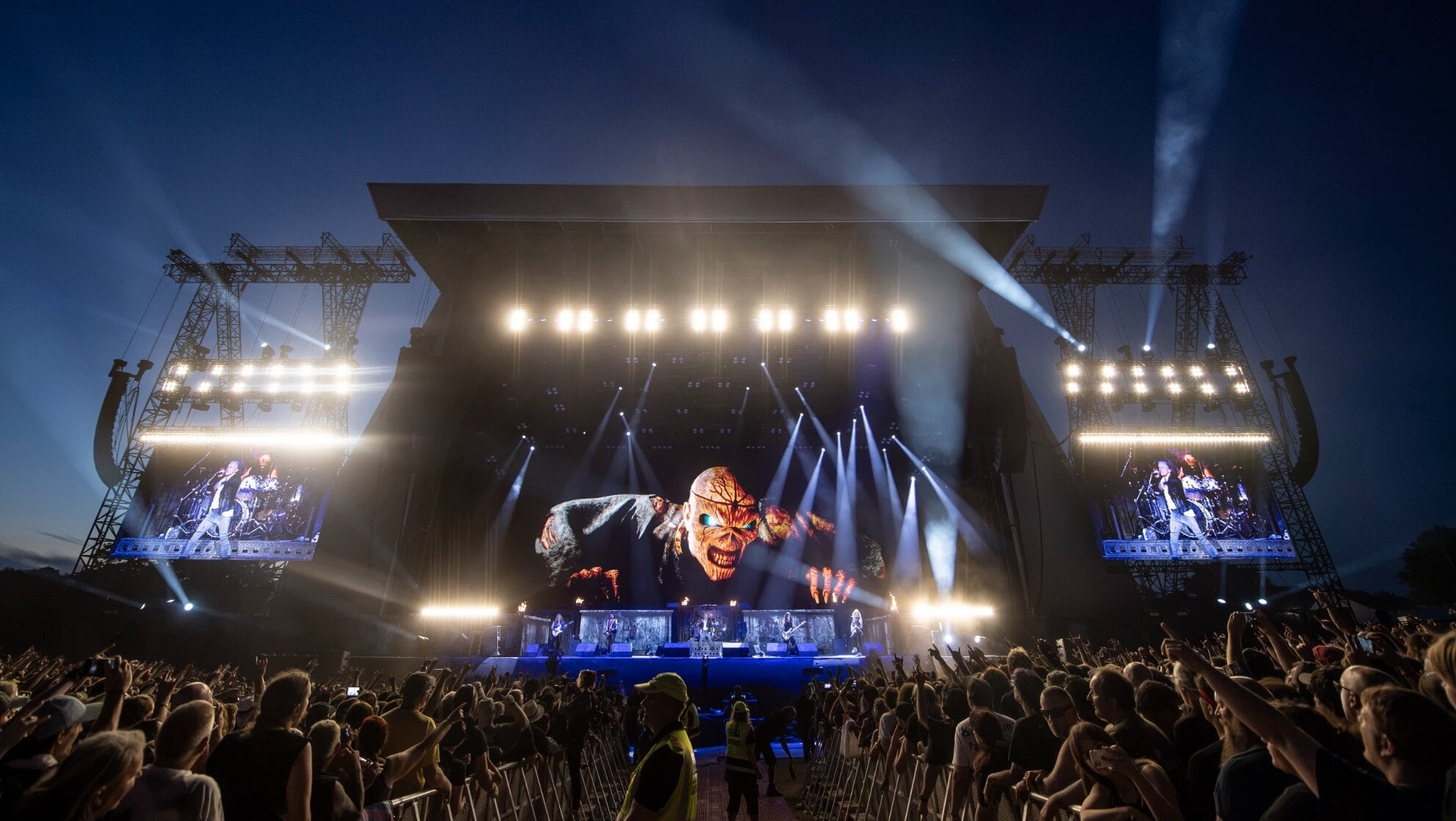
Credit: John McMurtrie.Iron Maiden perform at EDDFEST, Knebworth in the UK on July 11, 2026
In July 2026, the band staged EDDFEST, a bespoke two-day festival at the UK’s Knebworth Park, complete with a museum of band memorabilia, themed fairground rides, and a lineup of guest artists on the Friday, curated by Harris himself.
EddFest’s Infinite Dreams Museum Experience, built around the band’s 50th-anniversary book, was Maiden’s first collaboration with Pophouse Entertainment, which on July 14 confirmed a wider partnership, including a stake in the band’s publishing, masters and NIL rights.
Working with UK-based promoter Stuart Galbraith, Smallwood says that EDDFEST stands as a unique, one-off testament to Maiden’s 50th anniversary, featuring a funfair and an upscaled version of the band’s Eddie’s Dive Bar, all within a themed arena Smallwood and his team dubbed ‘Maidenville’.
“This gave us the perfect opportunity to create a bespoke festival with a name to do it justice, dedicated to all things Iron Maiden, and invite guest artists who we have a connection with to join us,” he says.
But before all that, Smallwood carved time out of the band’s tour schedule ahead of EDDFEST to discuss the Iron Maiden Fan Club, anti-touting, and the secret to a near-50-year management partnership…
Iron Maiden have one of the most diehard fan bases in popular music. What do you make of the industry’s obsession with the idea of ‘superfans,’ and what can it learn from Maiden’s approach?
The term “superfans” can mean a million different things to both fans and artists. And of course, to merchandisers, broadcasters, corporations, and any other interested party, dependent on their relationships and intentions.
Maiden has always been about our fans. We wouldn’t exist without the passion and loyalty they’ve shown us; we have some of the most dedicated fans in the world.
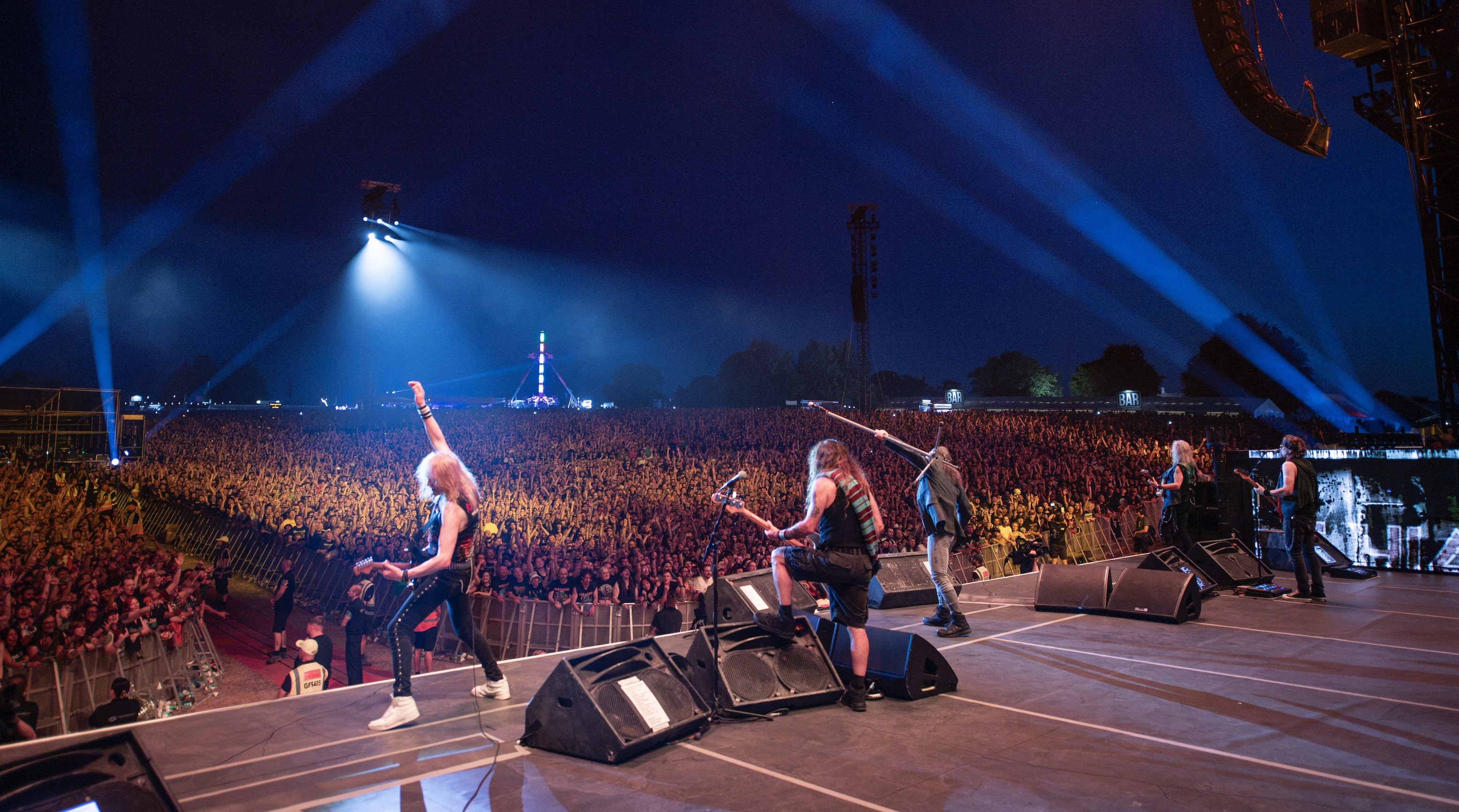
Credit: John McMurtrie.Iron Maiden at EDDFEST
Our Fan Club, the IMFC, has been an important part of everything we do across generations of fans now. While the core offering may evolve from time to time, it will always be about communicating with fans and making them feel as valued as possible, with pre-sales on tours, for example, our First-To-The-Barrier setup, and unique merchandise offerings.
We’re very aware that some of our most loyal fans aren’t necessarily the ones with the most disposable income, and we don’t want to take advantage of them or make them feel excluded. It’s why Maiden will never “sell” meet-and-greets at our shows. It’s why our VIP packages are focused on a Trooper Beer experience, which is about comfort and convenience for people who want or need that at a show. Likewise, it’s why we have fought for years, largely against the tide, to control ticket prices and fight touting.
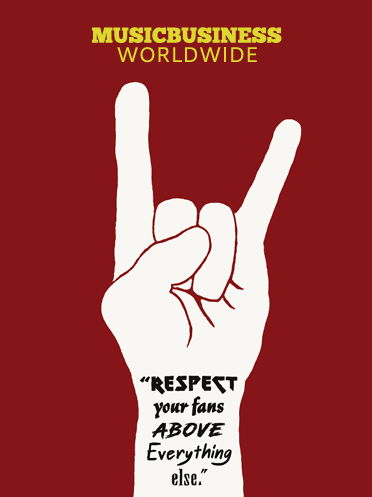
So the most important thing the industry can learn from Iron Maiden’s approach: Respect your fans above everything else. Listen to them, engage with them, protect them from secondary touts, and create a family of fans that you nurture over many years. They will stick with you for life.
Despite your historic lack of airplay, especially in North America, you’re playing some of the biggest shows of Maiden’s career on this tour – including the Alamodome in San Antonio, and playing stadiums for the first time ever in Melbourne and Sydney in Australia. How do you explain a band that’s still growing in scale, 50 years in?
The main reason is that this is just a great live band, something that was pretty clear from the start. People see them and come back for more; always have, tour by tour. Maiden are consummate players with a great frontman [Bruce Dickinson] who knows no fear, a vast amount of great songs between them, with many by Steve [Harris], who is also quite a remarkable bass player, three fantastic guitarists with no egos interrupting the flow, and powerhouse drummers [Nicko McBrain and now Simon Dawson].
Of course, we always put on the best show we can with the best art we can do. And as a bonus, you get [the band’s mascot] Eddie.
The band are also in very good shape and have a ton of on-stage energy. They care about the fans. I guarantee that every one of the band gives everything every night with incredible consistency. That is what brings people back. But it’s also rooted in what I said about our relationship with our fans.
“We have effectively created our own universe with Eddie at the forefront.”
We’ve never wavered in our commitment to them, and equally importantly, in our commitment to what we do. We have effectively created our own universe with Eddie at the forefront, and stayed true to the vision Steve Harris has always had for the band.
We never sought to follow fashion, and radio play worldwide has always been very scarce. To mainstream media, metal always seemed to be unfashionable for much of our career. We have always focused on putting on the best live show we could afford at the time, and going out to play to our fans, everywhere.
I think that sense of integrity and authenticity has become more and more valued across the globe. It’s also seen us develop a cross-generational fanbase, with many parents bringing young kids to our shows. Every tour since we reformed with Bruce [Dickinson] and Adrian [Smith] in 1999 has seen large increases in attendance as new young fans join us. And, compared to the ’80s, when our fans were pretty much all male, we now have a very welcome attendance of a high proportion of female fans, who are largely younger in age.
As you say, Maiden have been fierce on ticket scalping over the years. How much of that is philosophical and how much is hard commercial logic about keeping fan loyalty long-term?
In a sense, it is both. In 2010, a person I knew came to our office to tell me about secondary ticketing and the coming of Viagogo, which he was representing. He said that, effectively, if I gave them, say, 1,000 tickets per show at the on-sale of our next UK tour, they would resell [them] on their sites and give us a share of the profits. I think it was 30%. This could go to the band, charity, or “anywhere” I wished, confidentially. It sounded rather sinister. What does “anywhere” mean? It was obvious who was going to get hit: the fans.
Their main backup argument was that this gave anyone who had bought a ticket for an event they couldn’t go to an ability to resell to Viagogo and get their money back. Then someone else would buy that ticket online, at an inflated price, of course, subject to “demand.”
Roll on to late November that year, and we went on sale for The Final Frontier tour with the UK shows for the following July. Within a day or so of on-sale there were literally thousands of tickets on Viagogo, Seatwave, and GetMeIn for our shows. That is a lot of tickets for [real fans] to buy, and then, a day or so later, realize [they] can’t actually go to that show eight months later, which stretched the credibility a bit.
As the tour was soon a sellout, all these [secondary tickets] would have been bought at big markups, the money going to the resellers. This was obviously appalling, and I felt it was something we should fight.
Credit: John McMurtrieIron Maiden
This was an industry-wide problem, not just a Maiden one. I soon found a number of people well situated in the industry who felt the same way I did. A key one was Ian McAndrew, manager of Arctic Monkeys. We had various meetings, often with 20 or more in attendance, trying to raise some momentum. This led to [UK anti-scalping pressure group] FanFair Alliance, which is still keeping up the good fight some 15 years later, thanks to the formidable Adam Webb.
Also a good friend was the [UK Conservative politician] Mike Weatherley, a huge Maiden and metal fan who always wore his Maiden T-shirt under his shirt in the House of Commons. Mike fixed me meetings with Sir John Whittingdale, the [then chairman of the Culture, Media and Sport Select Committee], as secondary ticketing would be in their domain.
The meeting went nowhere, and the Conservative government seemed to think that this was “fair free enterprise”. I was amazed. John is a Maiden fan with the art for our album The Number of the Beast on his wall in his office at the House. Very disappointing.
Later, there was a big meeting [between] many music business luminaries; agents, key promoters, and managers – all of whom were totally against secondary – with [UK politician] Jeremy Hunt, whose answer was that “technology would solve it”. Personally, I thought, ‘solve what?’ A total waste of time, and I think an insult to the quality and experience of many in that room. I could go on, but we seemed not to be getting very far, and secondary ticketing sites and touts were coining it in. Very sad, and still ongoing, I have to say, despite [UK MP] Sharon Hodgson fighting for years until she was moved over to Public Health earlier this year. A sad loss to the cause.
So the government had no appetite for it. How did you take the fight on yourself?
We focused on Maiden’s own battle with [touts] to see if we could show what could be done and encourage others to do the same. So the next time we had a run of dates in the UK, 2017’s Book Of Souls tour, we set out to ensure fans were able to buy tickets at the face value we set, not an artificially inflated resale price.
We pushed to use paperless ticketing as much as possible, and “names on tickets” where they were still physical. We were able to get the tour delisted from GetMeIn, Seatwave and StubHub, which took out a huge chunk of that secondary market and left Viagogo as the only big player.
“Banishing secondary ticketing would be the biggest thing I would want to change.”
With a lot of messaging and warnings ahead of the on-sale, we hoped to deter touts from buying in the first place, making it clear that these tickets would be a massive pain to try and resell.
We worked, and continue to do so, with a fantastic chap called Reg Walker who literally made it his mission to fight the touts by scanning lists to spot their pseudonyms and canceling their inventory.
He started telling these “bad actors” that Maiden were not going to let this fight go, as many bands sadly did, and that it really wasn’t in their interest to try and gouge our tickets. His consultancy now focuses on the major ticket harvesters who use bots and fake IDs to steal tickets from fans on an industrial scale.
All the activities combined to be really successful. When we checked the numbers the week after public sale [for the Book Of Souls tour], there were only 207 tickets listed on Viagogo. Back in 2010, there had been over 4,000 across the secondary sites after the same amount of time.
How do you give an honest fan a way out without leaving a door open for scalpers?
There are legitimate reasons why a fan might need to resell a ticket they bought months in advance, and since we had set the tight restrictions, we felt it was also our responsibility to help them. So we worked with Ticketmaster and the other companies involved in the tour to authorize transfers or refunds where it was appropriate. We even sent someone from our office out on the road to be in the box office every night – someone with the authority to say yes or no to those last-minute cases where a fan turns up with an issue.
It was a lot of work, but to put some perspective here: we sold 156,000 Maiden tickets at face value on that UK tour, and the team authorized 110 refunds. That’s it. It’s a tiny fraction of fans that actually need to get rid of their ticket; everything else is just people trying to profit.
It got easier on subsequent tours as the process got smoother and the technology improved. Now we can tell Ticketmaster to cap the resale profit on their platform, which also verifies tickets are genuine. We restrict the resale and transfer of mobile tickets until much closer to the show, to try and prevent touts from acting at the on-sale. It’s not perfect by any means, but there’s a lot an artist can do to try and keep things under control.
Can you replicate that internationally, or is this a UK-specific operation?
With respect to the UK, I believe we’ve made a real impact over the past 10 years by protecting our fans as much as we can from secondary pricing. Internationally, however, it is far more complex.
The reality is that the level of operational effort, coordination, and enforcement required to effectively combat industrial-scale ticket touting is enormous. What we’ve built in the UK has required significant investment, dedicated manpower, deep market knowledge, and months of planning in partnership with promoters, venues, and platforms. Replicating that same infrastructure internationally is not a simple switch we can flip overnight.
If we had the scale of a multinational corporation with large regional teams, unlimited operational resources, and the ability to embed locally for extended periods, we would absolutely be deploying these same anti-touting measures across every territory we operate in. The challenge is not a lack of intent; it is the sheer complexity and resource intensity required to do it properly and effectively, globally.
You’ve managed Maiden for nearly five decades. What’s the secret to such a long artist-manager partnership in this business?
Honesty. Simple as that. I will never, ever, lie to the band and never have. Nor will they to me. For almost 50 years, since I first looked Steve in the eyes and agreed to manage the band, we have always been open, frank, and honest with each other about what was right, wrong, possible, and unacceptable.
We have enough mutual respect to argue, and I really mean argue, but only because that shows both parties have the strength of commitment to something, an idea or a principle, and that way you both know you are striving for the right thing or the best outcome.
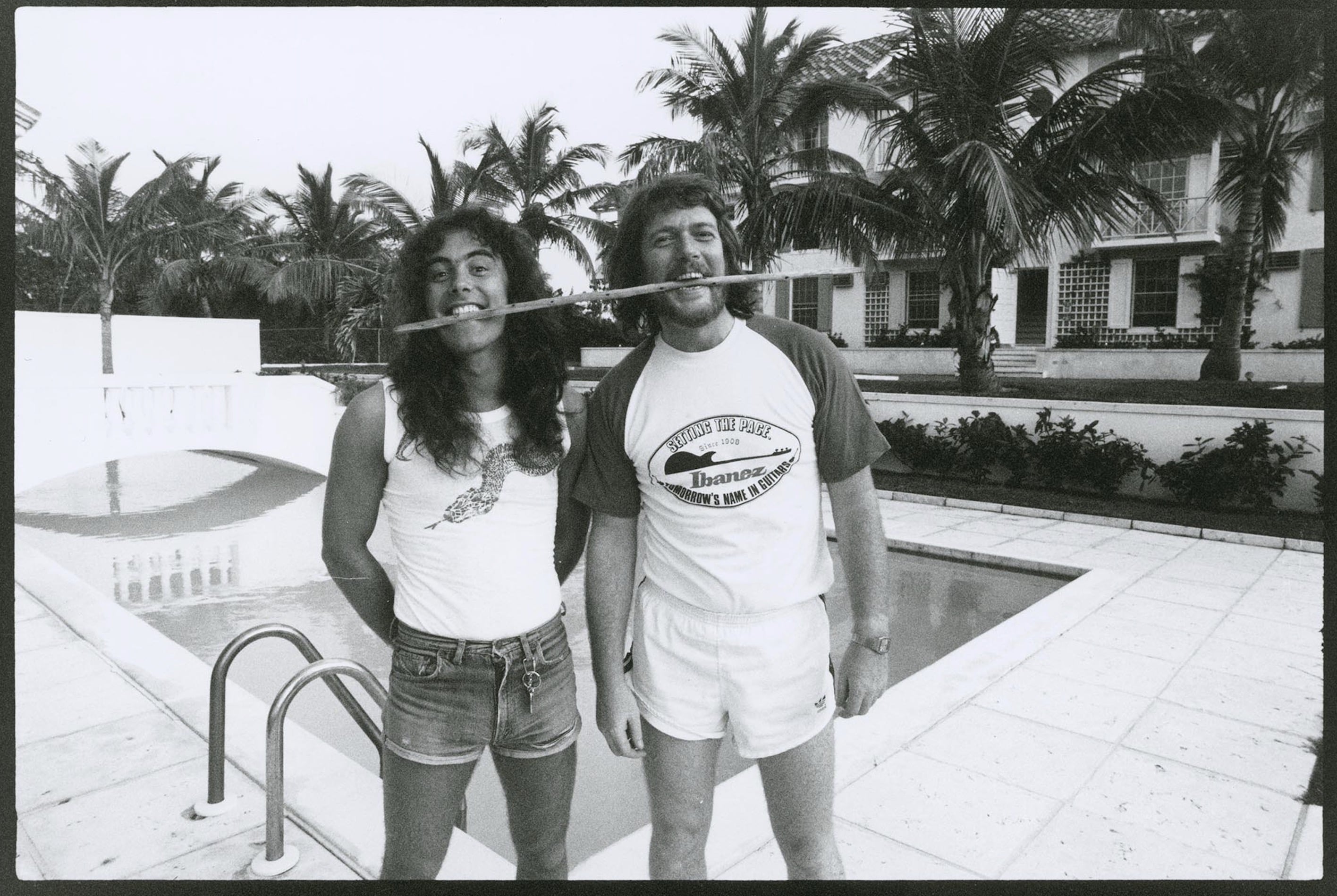
Credit: Ross HalfinOn tour in the US in the ’80s.
The band have also always known that there is a clear set of boundaries: what they do and what I do. Sure, they meet at certain points, but ultimately, I don’t go in the studio, for example, or question the music, unless they ask me to, which they haven’t since the first album. And they don’t get in the way of my planning, tour scheduling, marketing, and the vision for Eddie and the band, though of course, I keep them informed.
It’s a fantastic relationship. But in a way, they don’t know any other style of management, and neither do I. It certainly makes business far less complicated when it’s like this.
The power dynamics have shifted massively in the music business since you started working with Maiden. How do you see the role of the artist manager in 2026 compared to when you began?
I actually don’t see the role of a manager shifting much. Much the same applies, though with different emphases. But I agree the industry has changed almost beyond recognition for rock bands.
I know for a fact that Andy [Taylor] and I could not have broken this band without the help, and more specifically the money – and by that I mean tour support – that EMI gave us back in the ’80s.
We lived hand to mouth for the first three albums, as our priority was the extensive touring and the show for the fans, which was all very expensive even back then.
Without tour support, we had no chance to execute these huge touring plans. Andy even had to take out a significant personal loan to allow me to put together the expensive [live run] in North America for the Number of the Beast tour. We stayed out there for a long time, taking the show with us. We actually went through Chicago three times, once each with Rainbow, Judas Priest, and The Scorpions. Thankfully, it paid off.
With that level of label backing gone, where does a new band find the money to tour like that today?
In the age of streaming and drastically reduced record sales, tour support has vanished. I see how hard my team at Phantom works on the band’s solo projects to get albums and tours set up, and all the rest that involves. I then see how they have to create something worthy of attracting social media support, for example, to try and move the dial.
I know we never had radio support per se, but how do new bands get the attention of media partners when there is no one to talk to at a digital aggregator, for example? How do you cut through at a retailer like Amazon?
I know Maiden had their challenges back in the early years, but I always felt there were relationships to be made that would provide a solution; I’m not so sure it’s that easy anymore. Critical mass is so hard to achieve when there is so much fragmentation.
I take my hat off to anyone who, as a manager, believes enough in a band to devote everything to trying to achieve that in the face of today’s challenges. Also, [emerging] bands need places to play. Those places are expensive to run nowadays with all the taxes going on, so the number of venues is gradually declining, which is tragic.
And that’s not just in the UK. How does a band refine its chops when they don’t – or can’t – play much? That’s a problem largely for bands, as solo artists, pop acts, and producers focus primarily on their online presence. So in the future, there is likely to be a preponderance of solo artists and pop in its wider sense. In fact, isn’t that what’s happening already?
If there was one thing you could change about the music business today, what would it be?
If I had the talent, I would go into politics and find a way to get rid of secondary ticketing and the whole malaise around it. It only serves to make these guys, and some dodgy artists and managers, rich – while the fans get substantially poorer.
If you look around now, at the ever-increasing price of tickets and particularly at the shenanigans of FIFA, the rich get richer and sod the rest. How could we have allowed that to happen? Is [scalping] of any real value other than taking advantage of the fans?
And of course, a knock-on effect of secondary ticketing is that all the extra cash spent [by fans] to see a big act leaves less finance to go and see that new band in a club. A very vicious circle.
Banishing secondary ticketing would be the biggest thing I would want to change. My team and I are doing whatever we can to bring about that change, at least in our own world.