Trailblazers is an MBW interview series that spotlights independent music entrepreneurs making waves – and building meaningful companies. Trailblazers is supported by TuneCore.
Jacquelle Amankonah Horton spent seven years at Google, nearly five of them at YouTube, where she ran operations for its creator programs before moving into product. She left in 2021 to build Fave, a company for the other side of that equation: the fans.
Six years on from Fave’s founding, the superfan business has become an industry priority, but Horton argues that it’s being built almost entirely around how much more fans can be persuaded to spend.
“Where I think we get it wrong is defining the superfan opportunity by how much more money we can get fans to spend on the same things,” she tells Music Business Worldwide. “Spend matters, but influence, creation, organization and action are more lasting indicators.”
Her benchmark is what a fan does rather than what they buy: organizing 300 people before a concert, or making something other fans want and not knowing whether it’s allowed.
Fave went into beta in April 2021, starting with Taylor Swift’s fanbase before adding BTS ARMY and Bruno Mars’ Hooligans. When Horton first spoke to MBW later that year, her argument was that 100 die-hard fans were as powerful as 100 million Instagram followers.
Fave raised a USD $2.2 million seed round in 2021 backed by HYBE, Warner Music Group, Sony Music, and Concord Music, among others, then added $2 million in strategic funding in 2023 from investors including Warner, Sony, and Lyor Cohen.
Fave puts the beta app’s user base just under 200,000, and says fan creators working with it have reached more than 2 million people. Its next phase, Horton says, turns Fave from an app fans join into infrastructure they build on: tools for the events fans are already hosting and the things they’re already making.
Here, Horton explains how she defines a superfan, why fans should be served rather than sold to, where the limits of what DSPs should own lie, and why the fan shouldn’t be the end of the value chain…
Everyone in the business now uses the term “superfan,” but few define it the same way. How do you define one, and where do most people get it wrong?
A superfan is someone whose fandom becomes a meaningful part of how they define themselves and the values they carry. They’re the person who went down the rabbit hole, now knows all the moments and the history, and then sees their story through the artist.
“We learned what fans want to create for each other, and what stood in their way.”
Where I think we get it wrong is defining the superfan opportunity by how much more money we can get fans to spend on the same things. Some of the most valuable people in a fandom are the ones bringing other fans together and organizing trips to see you across multiple cities on tour (behavior an artist team may never see in its CRM), or the person who can articulate what everybody wants before the team even knows it’s a thing.
At Fave we’re much more interested in the role someone naturally plays within the fandom and the value that creates across the community.
You and your team have been quietly building Fave’s next phase. What is it, and what did you learn from the first phase that shaped it?
Fave’s next phase is moving from being an app for fandom to becoming the infrastructure fans use to actually do things together – create, sell, host, and participate – while giving artist teams a clear way to easily see that activity, support it, and benefit from it.
We grew the beta app to just under 200,000 users through word of mouth, then focused on what fans and artist teams needed next before scaling. We learned exactly what fans want to create for each other, and what stood in their way.
Fans were saying: “I’m organizing 300 fans before a concert, can Fave help?” Or: “I made something other fans want, but I don’t know if it’s allowed, can Fave help?” Artist teams had the other side of the problem: all this activity is happening around me, but I can’t see it or act on it in the right way.
So we built around that real behavior: tools for fan-hosted events, commerce, verification, rights and approvals, and an intelligence layer that brings those signals back to artist teams clearly. We’re letting fans create more authentic value around the artist, while giving the artist more back, more revenue, more intelligence and control over their IP, without having to operate the process themselves.
The fan creators working with Fave have engaged more than 2 million fans through fan-led campaigns. In several, more than 36% of people who viewed a fan creator’s idea went on to actively participate, a high rate that shows how much fans want tangible ways to be involved. Average order value has grown 76% since last year, from $25 to $44, as the fan-led experiences grew.
At a recent pop-up, more than 1,100 fans attended; four vendors reported over $19,700 in sales. In one digital campaign, nine fan partners remixed artist-supplied performance footage and generated more than 800,000 additional views on their posts within six hours.
How do you see Fave positioned in a market that now includes Weverse (a HYBE company), Stationhead, EVEN, and a promised Spotify superfan tier?
Fans aren’t wanting to experience their fandom on only one platform. They’re on Weverse engaging, Stationhead vibing, EVEN getting early drops, Spotify listening, and then they’re creating, buying, and meeting in real life with Fave. The platforms coexist because they’re solving different parts of the fan journey.
Across Fave’s fan-led activity, we repeatedly see fan creators individually making five figures in one day from their own original creations, deep gratitude from communities they’re growing through this, and a deep desire to see ways for this to continue. I see fans as the next set of creative entrepreneurs, and want to make a real path for fan-driven entrepreneurship in alignment with the entertainment teams.
Fave is enabling more fans to create value for their communities more often, and that means more net-new revenue for the industry, and real insight into what fans actually do. Our tech lets the industry participate earlier in the direction of the wave alongside fans, and learn from their demand.
Lean-in listening and interactive fan events are becoming central to album rollouts. How well are the DSPs serving that, given so much of it currently happens on social?
It’s been amazing to see more fan events happening as a default and becoming a clear value-add. But driving listening and deep attention are different behaviors, and produce different outcomes. Streaming is where somebody consumes and discovers the music, maybe at best one of the ways they get lost in the world for hours. Fandom is what they do afterward given how that music made them feel. I don’t necessarily think the answer is that DSPs should carry all of that behavior.
The bigger opportunity for DSPs is making the deeper signals around how fans respond to music more visible and useful, rather than leaving them fragmented and hidden. And while you can learn from a stream, you learn something completely different when a fan themselves throws an event, hundreds to 1,000+ other fans show up in real life, and spend hours talking to each other, in person, about the artist.
“The bigger opportunity for DSPs is making the deeper signals around how fans respond to music more visible and useful, rather than leaving them fragmented and hidden.”
What we’re excited about is connecting those signals back to artist teams: who did it well, why did it work, who responded, where are they, what do they actually do, and what should happen next? That’s how fan data becomes actual intelligence through Fave that can meaningfully change decisions within artist teams, backed by actual evidence rather than a general plan around fan engagement.
The industry has become very focused on monetizing fandom. How do you make sure fans feel served rather than sold to?
Exactly that. Serve them, don’t sell to them. To serve them, you have to understand and ask what is this person already trying to do simply because it means that much to them, and what can we do to help make that happen better?
Fans spend a lot of money, both unnecessarily and happily. What they don’t want is irrelevant commerce. The strongest proof is in what they already choose when nobody has been pushing it to them. We’re seeing fan creators achieve their highest-grossing days at one Fave event, only to surpass it at their next one. And the community doesn’t leave feeling sold to; they leave feeling more connected and seen in a way they usually haven’t before, wanting to show up for each other again, and bring other fans with them.
The commerce works because the culture is being served first. Fans immediately recognize themselves in what is being created. Fans often know what matters in a different way from the artist team because they’re living inside the details of the culture every single day. I want to see “monetizing fandom” become the result of serving the fan well, not a set of transparent tricks to extract more from them. Fans are staring at that with a blank face.
What do artists and their teams ask you for most often, and what do they most often overlook?
Teams usually come to us asking some version of: “We know fans are important, what do we actually do with that?” They want to know who their meaningful fans are, what they respond to and why, where demand is emerging, and how to turn that into repeatable value for their business beyond one campaign. Usually there’s a moment – an upcoming tour, album release, or anniversary – or a question the team has been circling internally and hasn’t been able to crack. We map what’s already happening, turn it into a clearer opportunity, and help validate and drive it directly with the fans.
What gets overlooked is how much unexpected, valuable capacity already exists inside the fandom. The fans are often directly answering the questions artist teams have been spinning on for years. Nobody, neither the fans nor the artist teams, has been set up to exchange with each other effectively. They’re telling you what they want through what they’re making themselves.
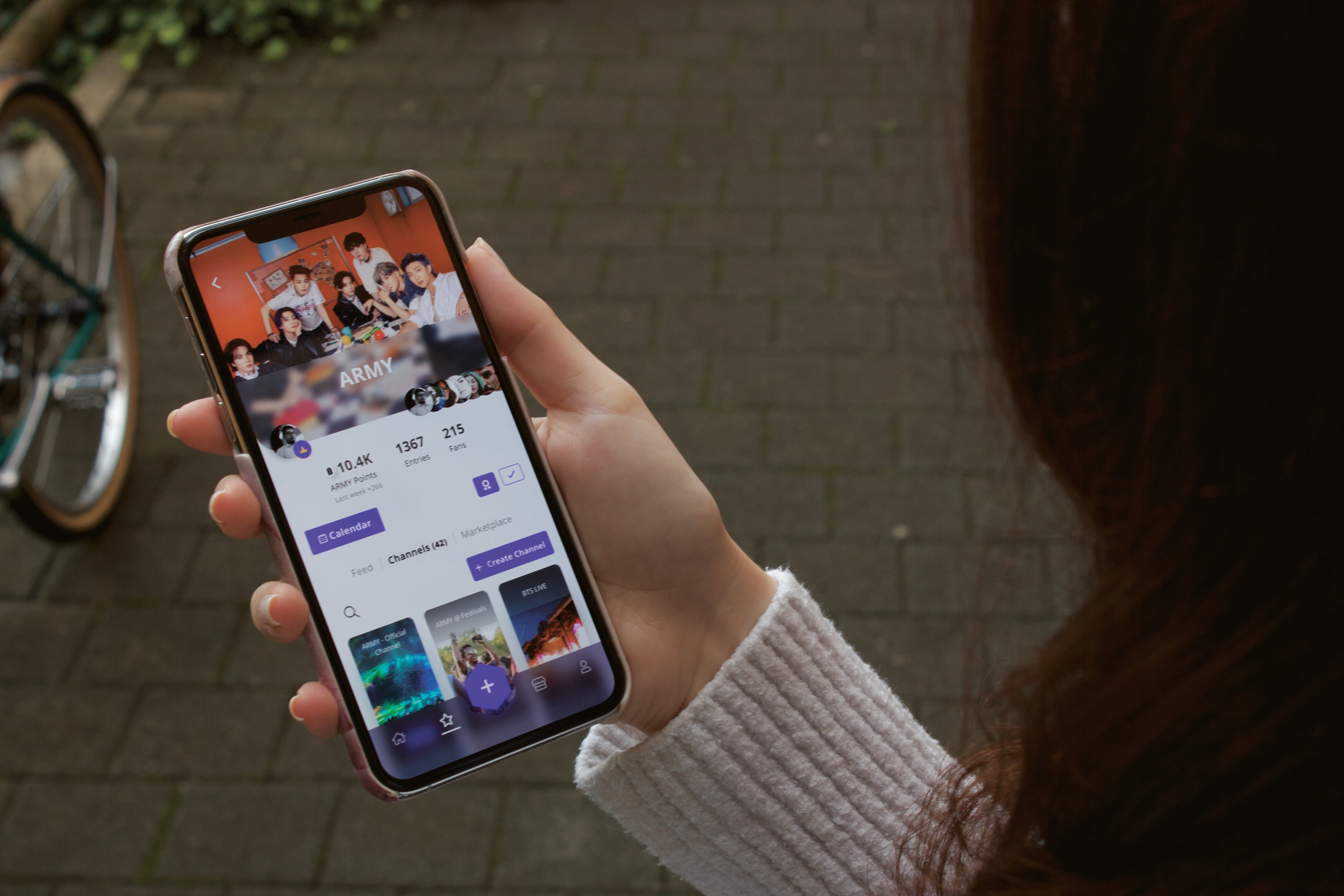
They’re telling you where demand exists through the pop-ups they’re running on their own, and it becomes indisputable when fans show up in droves, many traveling hundreds of miles to be with each other, without any expectation that the artist is going to be there.
That’s been the winning formula for me in building products for well over a decade at any scale: listen to what people are actually showing you. Fave is making that data easier to understand and act on, turning what fans are already doing into better decisions and repeatable value for artist teams.
What are your predictions for the superfan business over the next 12 to 24 months?
The conversation will move past identifying superfans to enabling them. Right now everybody has finally asked: OK, who are our superfans? Great. Step one. Now it’s: what’s creating real value where? What matters to me? How can I grow that efficiently through the community that’s been eager to support me? We’ll absolutely see more premium access experiences for superfans over the next year.
The shift I’m interested in is letting fans build experiences in ways that the official offerings cannot themselves authentically replicate.
The ability to create and engage with other fans is what often keeps people in fandom, not the music file alone. It’s the values repeatedly showing up in a world, with people who get you. That task should not sit entirely on the internal teams. Fan-created products, experiences, and businesses will become a much more legitimate part of the entertainment economy.
“The ability to create and engage with other fans is what often keeps people in fandom, not the music file alone.”
Let’s also be clear that fans should not dictate every creative decision an artist makes, and that’s exactly the point. Let the artist focus on their unique calling, creating the art. Let fans immerse more deeply in what the artist has already released. Let the fans who love it help extend that world, with the right permissions and economics, so the artist can earn, the fan can earn, the community gets much more of what it actually wants, and the team reliably learns from all of it.
What would you change about the global music business right now, and why?
I would stop thinking the fan is the end of the value chain. The traditional model is still operating very linearly: the artist creates, the industry distributes, the fan consumes. The music is made, the campaign is decided, the product is decided, fans buy here. But fan culture hasn’t worked that way. Your best fans have extraordinary information, creativity, and distribution power long before the moment teams have a clue about it. They take the artist’s work and interpret it, introduce other people to it, build memories around it, create things inspired by it, and want experiences around it.
The music business has spent decades building great infrastructure to distribute music. The opportunity now is to rally the power of the audience to multiply and extend the impact of that work. That requires thinking about the music business with fans as an active part of creating additional value all the way through it.
All MBW+ subscribers get digital access to our Music Business Worldwide magazine, with six issues released each year. Music Business Worldwide