Twice Sasha Alex Sloan has tried to formally study music; twice she has got bored, given up, and done something else. Yet both times, these experiences (once indirectly, once directly) have pushed her along the path to becoming a successful songwriter.
The first time, she was only 10. She remembers: “My dad is from Siberia, and he hired me a very Russian piano teacher, because he wanted me to learn classical music. So, I started taking piano lessons. But then I was like, wait, this is boring; I just want to make my own music.”
Thankfully, Mom stepped in and bought Sloan a guitar, a Beatles chord book, a Queen chord book, and a Phantom Of The Opera chord book. “That was my holy trinity. She also bought me a Carpenters CD and a Kate Bush CD, both of which I became obsessed with. And without realizing, I started learning about song structure. And from there I started writing my own songs.
“The first one I remember was called Pitter Patter, it was about stubbing my toe and crying. I was due to play in a school talent show, and I was gonna sing Somewhere Over The Rainbow, but my mom said I should do my own song.
“So I sang Pitter Patter, and everyone said how amazing it was. Looking back now, of course they did, I was 10! What else were they going to say? But at the time I thought, this is fun! – and I just carried on writing and haven’t stopped.”
Back in class, it was a different story: “I was a really bad student, and I really hated school. I was also very cynical as a teenager. I mean, that hasn’t really gone away.
“So when my mom said I should go to a music college – damn, I owe a lot of this to my mom, don’t I? – I basically said, ‘No mom, I suck. Plus the industry’s rigged, I’m this random kid from Boston, I’m just gonna get a normal job.’
“But she kept insisting. So I applied to Berklee, and then I applied to Belmont in Nashville. It turned out my grades were so bad that I would have been on automatic academic probation at Belmont. So I ended up at Berklee.”
Is there a clue in the phrasing? ‘Ended up’? It’s somewhere below ‘went to,’ and a million miles from ‘mercifully won a place at.’
“It felt like school again and I was like, this sucks. I hate having homework, and now the homework is about something I love, and ruining my hobby, which used to be fun.”
Boredom had struck again. And would, again, lead to an exciting new direction – via some playful graffiti: “I was on Reddit one night, and my parents were painting the outside of our house themselves, because they’re the cheapest people alive, and they painted the word DORK with a big arrow pointing to my room.
“I decided to post it, and the next morning it had gone viral. I thought, maybe this is my one big opportunity, so I posted my SoundCloud link in the comments.
“The son of a music publisher found it, passed it on, and two weeks later, I got a call from this guy Steve Lindsey, who had a JV with Warner Chappell. He said, ‘I think you’re really talented, you should move to LA; I want to give you a publishing deal because you should be a songwriter.’
“Up until then I thought everyone wrote their own songs, so I wasn’t exactly sure what he meant. But I quit school and moved to LA to become a ‘songwriter’ when I was 19.”
Boredom might have been out of the picture, but slog, panic, self-doubt, and intermittent gloom all still had parts to play.
Success was far from instant, and even when it came, says Sloan, it came gradually. A couple of early cuts, one with DJ and remixer Kaskade, and This Town on Kygo’s debut EP, might not have pointed to her future output as a songwriter, but were enough to convince her she might have a future.
“Up until then I thought everyone wrote their own songs, so I wasn’t exactly sure what he meant.”
At the same time, she embarked on a career as an artist in her own right, and has released three albums, most recently Me Again in 2024.
Writing is her first love and main priority, though, and it’s through writing for and with other artists that Sloan has become a bona fide hitmaker.
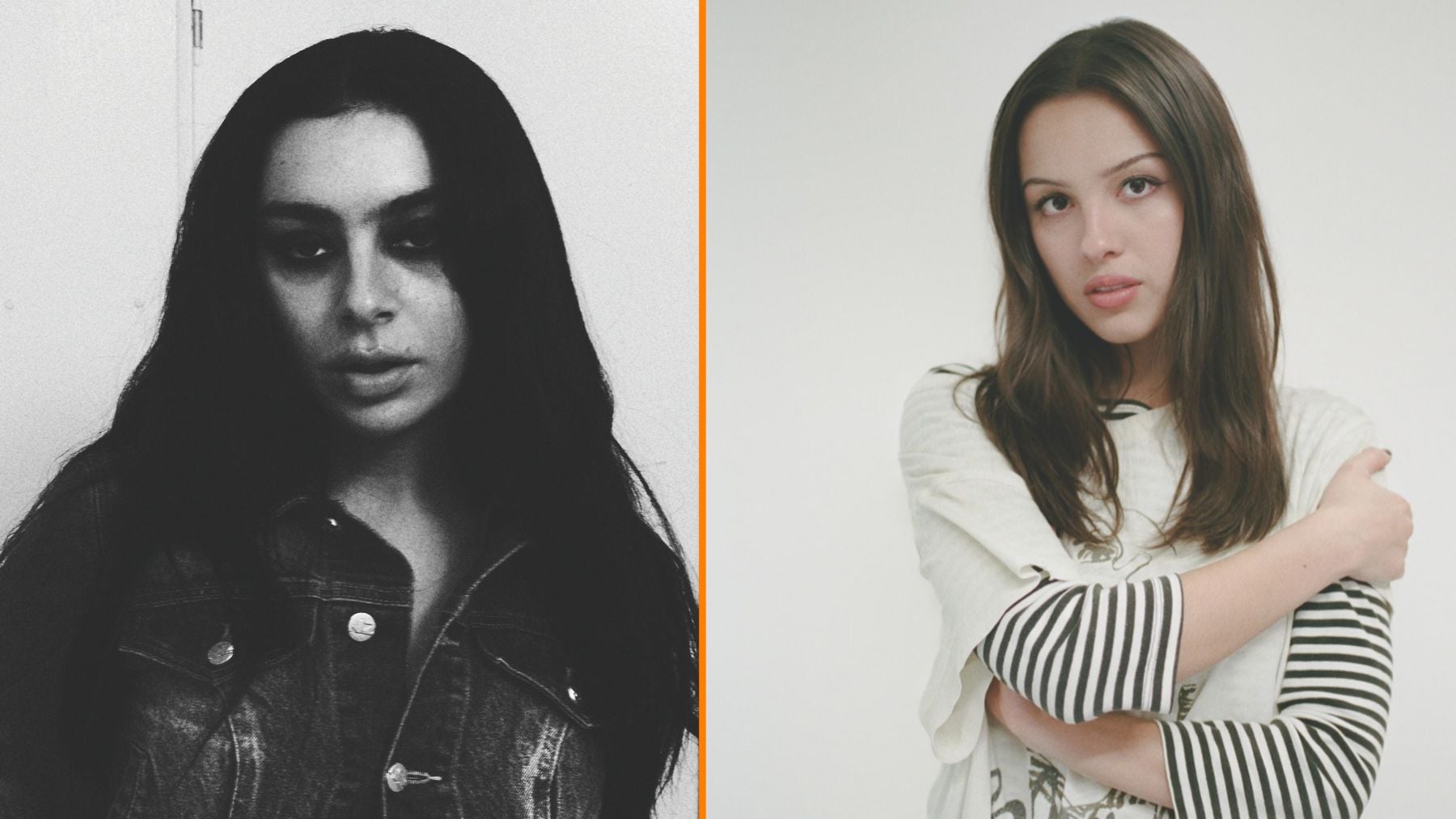
Her first big breakthrough came with Camila Cabello’s 2018 hit Never Be the Same (Top 10 in the UK and US). Since then she’s written with Charli XCX, John Legend, and, most notably, Olivia Rodrigo – on the Robert Smith-featuring What’s Wrong With Me. Most recently, she co-wrote Karol G’s Bruno Mars duet Still.
Sloan now has a schedule filled with sessions. Boredom won’t be an option for quite a while.
When you dropped out of Berklee and moved to LA on your own, what was that like and what did you learn in that time?
It was a crash course in songwriting, which was nothing like I thought it would be. It was also a crash course in being an adult. I didn’t know anything.
I was very lonely. I remember that being very hard, because I couldn’t even go to a bar.
A session would finish and everyone would be like, ‘Let’s go get a drink.’ And I’d have to say, ‘Sorry, I actually can’t.’
Also, I’d never written with other people before. And of course, being 19, you think you know everything; I was a total snob. I was like, ‘I hate pop music; this is stupid.’
Co-writing was a huge shell shock to me, and I just wasn’t a good collaborator at first. I also wasn’t really a great songwriter. But I had good gut instincts, I think.
Also, previously I was doing that thing you do when you write alone, which is you wait for inspiration to strike. In LA I’d wake up every morning at 5am, work at a coffee shop till noon, and then go to a session at one. I was doing that for four or five years straight. I got some cuts, but nothing meaningful. I started to think, I don’t know if this is for me; this is really hard.
But looking back now, I think that’s the best way to become a songwriter, just to be constantly thrown in rooms where you don’t really belong, and you’re surrounded by people who are more experienced than you. You learn and you absorb.
What were the key things you learned?
That collaboration is key. The other day I sat down and challenged myself to write a song alone for the first time in a long time. It was scary!
I also learned that songwriting to me is like a muscle, and you have to exercise it. Especially if you want to do it professionally, you can’t just sit around and wait for lightning to strike.
Did you flirt with the idea of giving up and going home?
So many times. One night I called my mom and said, ‘This is just too hard.’ I actually decided, if I don’t have anything going on by the time I’m 25, I’ll go back to school.
“I decided, if I don’t have anything going on by the time I’m 25, I’ll go back to school.”
And then one night, I was in a low place, nothing was happening, I was so broke and so tired, but I read an interview with Big Jon [Platt], who ran Warner Chappell at the time, and he said, ‘The people who make it are the people who don’t give up, that’s what makes the difference.’ I still think about that today. I think that’s what kept me going. Because I figured, I’ll be pretty bummed if I look back when I’m older and realize I only gave up because it was hard.
At the same time as being a songwriter, you’re forging a parallel career as a recording artist. Was it always part of the plan to do the two things in tandem?
I’m very introverted, and what I thought being an artist was turned out to be very different than the reality.
The truth is, what first sparked me to put music out was my songwriting career. Because I started having cuts, but I thought, well, if I were an artist and I was looking at this writer’s cuts, I’m not sure I would want to work with them – because sometimes as a writer, your favorite songs don’t come out.
So why don’t I just put some music out myself? I thought about it as more of a calling card than as wanting to be an artist.
But then it kind of scaled, and I had a lot of anxiety. I was really bad at touring and all that came with it.
I enjoyed parts of it though, and I do think it really helped me as a songwriter in a room with an artist.
Where does the balance lie now?
My songwriting career kind of got interrupted, once the artist thing became a little more real, because it’s so hard to do both well. And then I woke up a year and a half or so ago, and I was like, I really just love being a songwriter, and I want to give this a go in a real way.
I think for a long time it was artist first, songwriter second. Now it’s songwriter first, artist second.
Continuing on the songwriting journey, what were the tracks and projects that moved you into the big leagues?
It’s hard to say one moment, or one song. It’s kind of just chipping away, chipping away.
You’re in with someone who thinks you’re cool. You’re maybe not the best songwriter they’ve ever worked with, but at least you’re not annoying [laughs].
“A huge part of being a songwriter is you need to be a good listener and a good hang.”
You know, I think a huge part of being a songwriter is you need to be a good listener and a good hang; that’s half the job.
I built a network, slowly but surely, and then it’s just people being familiar with you – A&Rs, managers and other writers being willing to take a bet on you.
What do you remember about working with Camila Cabello?
I love Camila. She’s the sweetest, best person on earth – and an incredible songwriter.
When we wrote Never Be the Same [2017] we were pretty much the same age; we were both babies, but we had written so many songs, and we were just having fun. Like, I didn’t really understand what was happening, even when that song came out; I didn’t realize the impact it was having.
But I’m not a hype guy anyway. I don’t write a song and go, ‘This is the best song I’ve written.’
I remember listening back and thinking, this is kind of good, right? There’s always a question mark with me. ‘This is pretty good – question mark.’ That’s as hyped up as I get!
You also worked with a pre-Brat Charli. What was that like?
That was also just such a fun time, because Charli and I also worked with Camila, and we would all just hang.
Unfortunately, whenever I went into a room, I always used to put this insane pressure on myself to deliver. But you can’t do it every time.
I don’t know if it’s because I’m older, and not everything’s as intense as it is when you’re in your 20s, but I have a new outlook now: it’s supposed to be fun; it’s not supposed to be scary.
Charli’s just the best. She is what you see. She loves to party, she’s funny, she’s smart. She’s that girl. I learned a lot from her too, just seeing her navigate the industry.
With Track 10, we wrote something, and everyone in the room was like, ‘Well, this is OK…’ So I said, ‘We have a little bit of time, what if we just try another idea?’ It was that type of song where we were just kind of messing around, like we’d stopped doing the serious work.
Charli got in the booth and started singing something, and when she came back in the room, we were all chanting that chorus.
Jumping forward, how did What’s Wrong With Me come about?
I got a call to work with Olivia last winter, and of course I was freaking out. First of all, how did this happen? Second of all, of course I’ll be there!
I remember being so nervous. Then she walked into the studio, and I mean, talk about being that girl. She’s probably the best songwriter I’ve ever met. She’s incredibly intelligent, incredibly kind, incredibly funny… But also totally normal, so I was immediately at ease.
Like I say, I never know which songs are going to be the ones. So, Olivia, Dan [Nigro], and I wrote What’s Wrong With Me during my two days there. Then I told her what an honor it had been, what a fan I was, etc., and I left.
And then at some point I heard that Robert Smith was jumping on it. My first thought was, Oh my God, I have to keep this a secret?! How can I?! I was nervous every day for four or five months straight.
“I don’t think I’ll ever get over that. I was telling my friend, I think I should just quit now.”
I remember watching when they debuted it, and getting full-body chills. I was like, ‘This is not real life.’ I don’t think I’ll ever get over that. I was telling my friend, I think I should just quit now.
Also, I loved being an artist, but when I saw that, I really realized in that moment specifically, wow, this is what I want to do.
Seeing two people that I idolize and respect so much singing a song that I’m part of. That is the feeling. That’s what I want as a songwriter.
How do you cope with writer’s block? Do you have any techniques for getting through it?
When you’re a songwriter, you don’t really have time for writer’s block. You have sessions in your calendar that you’ve agreed to, and you’ve gotta walk in that room with something.
Books are really helpful. TV shows, or just conversations; anytime someone says something cool, I write it down. Inspiration’s everywhere, you just have to always be aware and always be listening.
I’m a big concept person. My favorite way to write a song is to have an idea of what we’re gonna say, and then the rest will come next.
But then sometimes the coolest songs are created off vibes, so it’s always different. I used to think it always had to be my idea, but sometimes you have to walk in and trust the magic of the room on that day.
Would you use AI? Either as a prompt or just generally?
The industry is very divided right now, and I would say I land somewhere in the middle. I’m always someone who’s pushed back on anything new. Like TikTok, I was sooo late, and now I’m like, damn, that was a great tool that I was missing out on.
I think AI in general is very scary, and horrible for the planet. But it’s here, and I want to be aware enough where I’m not falling behind.
I don’t think AI should be coming out as a full song. For a songwriter who writes alone, Suno can be a helpful tool. To be able to put a song in Suno and hear it produced in different ways, that’s useful – because I don’t know how to produce.
I mean, I can hear the potential in a voice note, but a lot of people can’t, so to be able to ‘produce’ something more complete is a great shorthand.
Who are your favorite songwriters, past or present?
My modern-day idol is Dan Wilson, just in terms of his approach. I’ve only worked with him a few times, but every time I have, when I leave, I feel so much better about the music industry.
Dan is someone who has always been himself, has always trusted his gut, never chased, and has had great success doing so.
He is a phenomenal songwriter, and a great listener. He’s really smart, and he’s a big picture guy.
Let me think [who else]… I mean, obviously Max Martin, how can you not? But if I had to pick one, it’d probably be Carole King. I started listening to her at such a young age, and the way she uses language in her songs… I think the hardest thing to me, as a songwriter, is to take a big idea and make it simple. And that’s something she’s done so effortlessly. And that catalog… she’s a north star for me.
Oh, also, please add Brandon Flowers to this list!
What single thing would you change in the industry if you could?
This is something that can’t be changed, because it’s just life, but as a songwriter there’s just this huge lack of control.
I always say, I would have done well at a corporation, because I love to be on time, I love to do my job, and when I go home I like to feel I’ve really contributed and that my boss is happy with me.
And in this industry, where I struggle is you have no control. That’s true of all songwriters, no matter if you’re just starting or if you’ve been at it for a while. You don’t know what’s gonna happen. You can wake up every day and do the best possible job and have nothing.
If it were up to me, I would love to wake up every day and know that if I go do a great job, this is gonna happen. As it is – trust the process and hope for the best.

All MBW+ subscribers get digital access to our Music Business Worldwide magazine, with six issues released each year. Music Business Worldwide