HYBE and its subsidiary ADOR have responded to a New York Times report on the exclusive contracts signed by the members of NewJeans in 2022.
The Times reported on Thursday (November 5) that it had obtained copies of the agreements.
The five members signed the contracts when they were aged between 14 and 17, according to the paper.
In a statement sent to MBW on Friday (November 6), HYBE and ADOR said the contracts “have been leaked to international media outlets and are being used as a means to attack the K-pop industry.”
According to the Times, the NewJeans contracts did not include protections in South Korea‘s government contract template covering minors’ rights to education, sleep, rest, and physical and mental health.
The paper reported that the contracts prohibited conduct including an “insincere attitude” and “inappropriate romantic relationships,” and barred the members from publicly stating “true or false facts” that could damage ADOR‘s reputation.
It also reported that the contracts allow ADOR to use and license the members’ names, likenesses, and voices after the agreements expire in 2029, including through AI-generated voice clones or chatbots.
The contracts also required members to cover a significant share of the label’s spending on cosmetic surgery and other beauty treatments during their time as trainees, according to the report. HYBE told the Times that it does not require cosmetic surgery or recommend procedures against an individual’s wishes.
“This contract is unusually aggressive,” Roh Jong-eon, a Seoul-based entertainment lawyer who reviewed the contracts for the Times, told the paper. “It restricts the artists’ freedom to a degree rarely seen, even in recent major-label contracts.”
In the statement, HYBE said: “All HYBE labels enter into the government-standard supplementary agreement for minors with their trainees. These agreements include provisions protecting personal rights, the right to sleep, the right to education, and the right to rest, among others. They remain in effect until the individuals reach adulthood.
“All HYBE labels enter into the government-standard supplementary agreement for minors with their trainees. These agreements include provisions protecting personal rights, the right to sleep, the right to education, and the right to rest, among others. They remain in effect until the individuals reach adulthood.”
HYBE
“…Furthermore, the exclusive contracts themselves contain provisions protecting fundamental rights, encompassing the protections guaranteed under the government-standard supplementary agreement for minors.”
The Times also reported that emails it obtained showed ADOR‘s contract terms were “essentially nonnegotiable.”
According to the paper, when the mother of one member requested several changes in January 2022, ADOR’s vice president responded: “If you do not agree to the current contract draft, including the points above, it may be best to reconsider the contract itself.”
HYBE‘s statement says the draft contract was first shared on January 7, 2022, with “extensive discussions” following before the contracts were signed in April that year.
“These discussions included written questions and answers, email correspondence, and negotiations over proposed revisions reviewed by the artists’ legal counsel,” the statement said. “The Seoul High Court also recognized that the contracts were executed following sufficient discussions between the parties (Case No. 2025라2421).”
HYBE said one of the provisions that the mother of a member “currently in dispute with ADOR” had sought to revise concerned “the obligation to promptly notify the company of any attempted tampering.”
The requested revisions were not accepted, according to HYBE, which quoted the mother as replying: “Thank you for your thoughtful response. I would like to confirm that I have no further comments on the information you provided.”
The statement added that, when one of the mothers asked whether the artist’s share of certain expenses could be reduced, HYBE‘s legal team “developed several possible approaches to accommodate her request and presented them to ADOR. However, ADOR’s vice president at the time rejected these proposals, and the contract was ultimately executed in its current form.”
The Times also reported that the NewJeans contracts calculate exit penalties using average monthly sales from the final two years before termination, counting only the months in which the group generated revenue, multiplied by the months left on the deal. Lawyers who reviewed the terms said this method could inflate the penalty.
HYBE said the provision “may appear to differ in wording from the government’s standard contract. However, the two provisions have the same economic effect.”
The company argued that the government’s standard contract also counts only the post-debut period for artists who debuted less than two years earlier, and that, because NewJeans generated revenue from its debut onward, the only months the group’s formula excludes are those before it debuted.
The company added that the Seoul High Court “thoroughly reviewed the provision and explicitly determined that there were no issues with it” during the NewJeans contract dispute.
HYBE also said the provision applies only where “the company has faithfully fulfilled its contractual obligations, but the artist unilaterally terminates the contract during its term or materially breaches the contract with the intention of terminating it.”
The clause is at issue in ADOR‘s lawsuit against former NewJeans member Danielle Marsh, whose contract the label terminated in December 2025.
ADOR is seeking roughly 33.1 billion won (around USD $25 million) from Danielle, a member of her family, and former ADOR CEO Min Hee-jin, having cut the claim from an initial 43.1 billion won. Most of the claim is exit fees, according to the Times.
HYBE said that in that case, “the penalty fee is calculated using a formula that is identical to the one prescribed in the government’s standard contract.”
Danielle’s lawyer, Jung Jong-chae, has filed a complaint with South Korea‘s Fair Trade Commission, which began investigating HYBE and ADOR on June 4, according to Jung.
On the members’ voices and likenesses, HYBE said: “The NewJeans exclusive contracts contain provisions protecting the artists’ personal rights. The use of AI-generated content naturally requires the individual consent of each artist.”
The company said that a former agency’s unauthorized use of an artist’s intellectual property, once that artist has signed with another agency, could breach South Korean law.
“The company is fully aware of these legal risks and has no reason or intention to use artists’ intellectual property without authorization, particularly in violation of applicable laws,” HYBE said.
On the “true or false facts” clause, HYBE said: “The prohibition of defamation is also stipulated under South Korea’s Criminal Act. The inclusion of this provision in the contract serves to prohibit conduct that would constitute the criminal offense of defamation.”
Under South Korea‘s Criminal Act, publicly stating facts that damage someone’s reputation can be a criminal offense even when those facts are true, unless the statement was made solely in the public interest.
On the restriction on romantic relationships, HYBE said: “Preventing inappropriate romantic relationships that could give rise to public controversy is also necessary to protect artists. These provisions were also included in the contracts with the consent of the artists’ parents.”
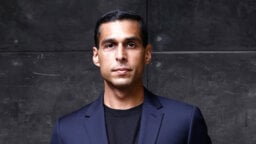
HYBE‘s statement also names Min Hee-jin, ADOR’s CEO at the time, as the person who led the contract process.
According to the statement, HYBE‘s legal team provided each label with “a model exclusive contract for reference,” after which the labels worked out key terms with their artists, including settlement arrangements.
HYBE said it provided the Times with evidence showing that the contracts “were negotiated, finalized, and signed by Min Hee-jin, then-CEO of ADOR; the vice president appointed by Min; the individual members and their parents; and legal representatives for certain members.”
“The company further requested that the article clearly identify Min Hee-jin as the person who led the contractual process at the time,” HYBE said. “However, this request was not reflected in the published article.”
Min‘s side has disputed HYBE’s account.
In a statement reported by The Korea Times, representatives for Min said HYBE’s legal team prepared the initial drafts of the NewJeans contracts and handled subsequent revisions.
They also said the contracts could not be finalized without approval from HYBE‘s legal team, chief financial officer, and CEO.
“It is time for HYBE to move beyond the absurd notion that Min Hee-jin is responsible for everything and demonstrate accountability and a willingness to improve for the future of K-pop,” Min‘s side said.
Min was replaced as ADOR’s CEO in August 2024.
In February this year, the Seoul Central District Court ordered HYBE to pay approximately 25.5 billion won (around USD $17.6 million) to Min under a put option in her shareholder agreement, plus a combined 3.1 billion won to two other former ADOR executives. The court also dismissed HYBE’s suit seeking to confirm that it had terminated the agreement.
HYBE has appealed. The Seoul High Court has set the first hearing on Min’s payment claim for December 9, and on HYBE’s termination suit for December 17.
The Korea Popmusic Industry Association (KPIA), a trade body whose members include HYBE, JYP Entertainment, SM Entertainment, and YG Entertainment, has also criticized the Times report.
In a statement issued on Monday (November 9), the association, led by Chairman Woo Seung-hyun, said the report “offers a one-sided and biased assessment that fails to adequately consider the legality and legitimacy of contracts entered into under South Korea’s legal and regulatory framework.”
It said the report also failed to consider “the distinctive characteristics and value of the artist training and development system that has contributed to K-pop’s growth into a global industry.”
The statement does not name NewJeans, instead referring to “the exclusive contract of a particular K-pop artist.”
“We regret that NYT has taken the controversy surrounding an individual contract and interpreted it as a structural problem affecting the K-pop industry as a whole, without sufficiently acknowledging regulatory progress and the industry’s efforts to improve its own practices,” the KPIA said.
“We regret that NYT has taken the controversy surrounding an individual contract and interpreted it as a structural problem affecting the K-pop industry as a whole, without sufficiently acknowledging regulatory progress and the industry’s efforts to improve its own practices.”
Korea Popmusic Industry Association
“The fairness and legality of exclusive contracts must be assessed comprehensively, taking into account not only individual provisions but also supplementary agreements, applicable laws, the circumstances surrounding how the contracts were entered into, and whether the contractual obligations have actually been fulfilled.
“Failing to do so risks spreading a distorted perception of the K-pop industry and unfairly undermining the achievements and trust it has built over many years.”
Echoing HYBE‘s statement, the association said: “Major K-pop companies, including HYBE, have entered into the government’s standard supplementary agreement for minors with all their trainees. These agreements include provisions protecting their personal rights and their rights to sleep, education, and rest.”
It added that major member companies have designated youth protection officers “in accordance with applicable laws.”
The KPIA said the relationship between companies and artists is underpinned by the government’s Standard Exclusive Contract for Popular Culture Artists and the Popular Culture and Arts Industry Development Act. It cited “the numerous artists who have renewed their contracts after their original agreements expired” as evidence that contract terms are mutually agreed.
“Protecting artists’ rights and respecting entertainment companies’ legitimate rights are not conflicting principles,” the statement said. “The rights of minor artists must be protected. At the same time, entertainment companies’ legitimate investments and contractual rights must also be safeguarded… Lawfully executed contracts and judicial decisions must be respected.”
The association also argued that the K-pop training system “should not be judged solely through a Western lens.”
“Major K-pop companies operate comprehensive artist care programs, in some cases employing in-house medical professionals, to carefully protect artists’ health, well-being, and personal rights,” it said. “This dedicated approach to artist management and upfront investment represents a distinctive Korean industry ecosystem that should not be belittled as ‘oppressive control.'”
Like HYBE, the KPIA took aim at the disclosure of the contracts. It expressed “deep concern that the contents of an exclusive contract at the center of an ongoing legal dispute have been disclosed through foreign media despite being subject to confidentiality obligations between the parties, and that one-sided claims and public opinion campaigns are spreading based on this disclosure.”
The association said it would “respond firmly to prevent distorted public opinion campaigns and inappropriate conduct driven by private interests from taking root and undermining the trust and standing of the industry as a whole.”
The KPIA, which operates South Korea’s Circle Chart, was known as the Korea Music Content Association (KMCA) until a rebrand earlier this year.
In December 2024, weeks after the NewJeans members announced they were terminating their ADOR contracts, the KMCA urged them to fulfill their contractual obligations. It also said the Circle Chart would consider excluding sales by agencies and artists suspected of tampering.
In February 2025, it was one of five industry groups that warned the K-pop business could “collapse” if the NewJeans dispute set a precedent.
In June 2025, the Seoul High Court rejected the NewJeans members’ appeal against an injunction barring them from independent activities without ADOR’s approval.
The Seoul Central District Court then ruled the contracts valid in October 2025.
Haerin, Hyein, and Hanni have since returned to ADOR, while Minji remains in discussions with the label.
NewJeans has not performed in more than a year, the Times reported, though ADOR said in April that members had begun pre-production on new music.Music Business Worldwide