MBW’s World’s Greatest Songwriters series celebrates the composers behind the globe’s biggest hits. Here we chat to Gabe Simon, the genre-hopping writer best known for his work with Noah Kahan. World’s Greatest Songwriters is supported by AMRA – the global digital music collection society which strives to maximize value for songwriters and publishers in the digital age.
Gabe Simon, the multi-platinum-selling songwriter and producer best known for his work on Noah Kahan’s phenomenally successful last two albums, counts his first big break as what, in an industry based on sales and stats, many might have considered a flop.
His first pop cut was a track called Begging on Dua Lipa’s self-titled debut album, and Simon expected it to be the thing that finally allowed him to quit Uber driving and work in music full time.
However, instead of offering a big pay check, the track was a harsh lesson on the reality of making a living as a songwriter. “That was what changed everything because it showed me how little money you can have on a big record,” he says. “It fundamentally restructured my brain. I thought for sure that if I get on an album like this, it’s going to change my life, and it didn’t.”
Simon did, of course, get a second big break, this time with no quibbling about the definition. It came from a surprising source, and taught him yet another important lesson. After writing songs, and Uber driving for around three years (despite the Dua Lipa track), he was about to throw the towel in. He remembers: “This was around the time my second daughter had been born and it just wasn’t working. Everything was really difficult. I looked at my wife and was like, ‘I just don’t know if I can make enough money for us to do this thing’.”
Simon poured his angst into music and came up with a song called Tambourine for his solo project, Mr. Gabriel. The track, which gives Beach Boys vibes, is about hating paying taxes, having no money and having to quit music. Simon emailed it around and went to the gym to try and empty out the last of his angst. He says: “I worked out so hard that I threw up that day, because I just needed to win at something. I felt like I was failing as a father, a partner, and at this thing that I love so much.”
He returned home to an email informing him that the song had been licensed for a Marshalls ad campaign. It went on to make a million dollars. This time he could quit Uber and finally become a full-time songwriter. “It showed me that if I do things I love, and I don’t put the pressure on them, and I just show up, that’s the key,” he says.
Since then, Simon has written and produced for Dermot Kennedy, Suki Waterhouse, Lana Del Rey, Koe Wetzel, Jessie Murph, James Bay and more.
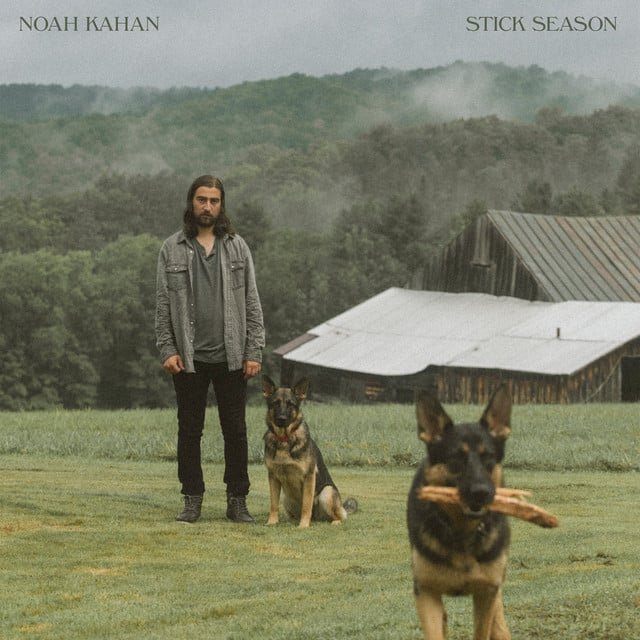
One of his biggest wins is Kahan’s 2022 album, Stick Season, which Simon co-produced with Kahan – as well as co-writing two tracks. The record eventually reached No. 2 in the US in 2024, has been certified 4x Platinum, and earned Kahan a Best New Artist Grammy nomination.
The follow-up, The Great Divide, with Simon co-producing the vast majority of tracks, and with writing credits on seven, hit No. 1 in May. It had the biggest first-week sales for a rock album since the Billboard 200 began measuring by units in 2014, and the biggest vinyl sales for a rock album since Luminate began tracking sales in 1991. All 21 songs from The Great Divide appeared on Billboard’s Hot 100.
Simon has started paying his success forward with the launch of his co-publishing venture Abide By The Vibe, which reps writer/producers Nikki Lane, Noah Levine and Sam Westhoff (signed via a JV with Pulse) and Carrie K (via a JV with Warner Chappell). The latter three all contributed to The Great Divide.
Born in Ohio and raised in South Carolina, Simon began his love of music-making by learning the rock songs he was into at the time on his brother’s acoustic guitar. He then started playing bass at church four days a week, which is where he witnessed the strong emotional experience that music can create.
He says: “I’m not as much of a religious person these days, but I still find music to be extremely spiritual, which is probably the most important thing to me. Being able to play in church allowed me to have a community where I could learn what made people feel things. You could watch people’s faces change, hear what songs made them want to lift their voices up higher, hear which melodies were the ones that really inspired them to tear up or run to the front of the church.”
Simon later moved to Nashville to study music business and tried to be in bands before realising, in his own words, that he’s not a very good band member (“when I am in the centre role, in that state of being the artist, I’m the worst version of myself. I wasn’t even a collaborator. I just wasn’t mature enough.”) That combined with shifting priorities after the birth of his first daughter, meant Simon gave up life on the road and instead started to enjoy writing songs and being in service to artists.
Recent projects Simon has been involved in include the debut album from British artist Myles Smith and the third set from Suki Waterhouse. In September, he’ll start a stint in London as the producer in residence at RAK Studios. Here, we chat to Simon about songwriting, Noah Kahan, his relationship with success, AI, and much more besides.
What is your biggest inspiration as a songwriter?
I feel like I’m trying to be 15 again all the time. For some people, it’s that pain and frustration of being a teenager and first experiencing those big emotions. For me, it’s the first time I picked up my brother’s acoustic guitar and learned how to play Californication by the Chili Peppers.
I love that naivety, that sense of childlike wonder that comes with creativity. Like when you’re walking through a forest, there are logs that have fallen, there’s mushrooms growing on them, there’s this certain light that glows through the trees and there’s birds singing. I’m always in awe of that, and that’s what I love about making music. When it doesn’t feel that way, it’s really hard, because then it’s a grind. I love that spirit of wonder, that magical moment.
Do you remember the first song you ever wrote?
I was playing in the garage with my best buddy growing up as a kid. He had this song called Black Widow and it was kind of like Foo Fighters’ Everlong meets something hardcore like The Burial. At that point, I started writing songs because my parents didn’t want me to be in a screamo band. They thought it was a sinful thing to do. So I started saying that all the lyrics were Bible verses, which they definitely weren’t, and my parents left me alone for a while, which was nice.
Was there music within your family? Where does your love of music come from?
My dad played the trombone. I started playing trombone as well when I was younger. I wanted to play saxophone, but my dad refused because Bill Clinton played sax.
Then my brother had a guitar, but they all abandoned music really early on. My parents didn’t get me any lessons because they assumed I would be just like them, but they always supported me, they never thought music was stupid or a waste of time.
I remember one time I went to the store and a bass amp that I really wanted wasn’t there. I was so sad. I got home and the next morning, my dad had bought it for me for my birthday. That support has emboldened me. It made me feel so confident, even if I didn’t honestly deserve to feel as confident as I did!
Do you get creative blocks, and if so, how do you deal with them?
I don’t really get blocks as much as I just don’t want to do it. I can probably write a song almost every day, I just don’t want to. I want to do it when it feels good.
I do feel like it’s a bit of a wellspring, I always get afraid it’s going to disappear so that’s usually when I go and write a song. I’m like, ‘Oh my God, do I know what I’m doing anymore? So I run up to my studio, pick up a guitar and just play for a little while. I like to play no matter what.
My kids are always listening to me, they’re learning how to play instruments, so I’m playing with them a lot. Music is happening, and when I’m ready to write, it’s always there. I give it enough space; I don’t smother it. When I haven’t put up enough boundaries or I’m working too much, the well is a little bit dry. That’s when I’ve exhausted that muscle and it needs to take a break.
How do you work in the studio and bring the best out of artists?
Everybody’s got a different skill set in the room. The guy yesterday who came in brings a great title and a great concept. I’m going to do a lot of listening, I have more of a therapy style. I ask a lot of questions and then write down how the artist talks because I want to learn their vocabulary, how they speak, how they think, how they word things.
Most of the songs I write are based on those things. I can point to probably 20 different titles that were all words that just came out of the artist’s mouth as I was writing down what they said.
That also takes the pressure off me having to deliver some outlandish concept and be like Burt Bacharach with something crazy. I can just show up, listen, and find the thing that inspires me. I can also work with an artist and be totally uninspired and that’s not something I am going to force to work. I know that one’s not for me.
You’ve spoken about having children being one of the reasons you shifted to a career as a songwriter, rather than playing in bands. How has family life influenced your career since then?
The first record I ever made was around the time of the birth of my second kid, in 2018. The artist took advantage of me, I felt like a slave to their creativity versus a collaborator.
That is something that’s really hard to learn as a creative, especially when you’re in the service of helping other people make records. You have to have boundaries, and by having two kids who I wanted to invest in so deeply — as much as I love music, I love these kids more — I’m comfortable saying, ‘I have to put up a wall here, I want to do this, but I can’t do it right now’.
“Most artists will meet your expectations of mutual respect but some of them won’t. You just have to know those are the ones you can’t work with.”
Most artists will meet your expectations of mutual respect but some of them won’t. You just have to know those are the ones you can’t work with. It eliminates a lot of the FOMO, because I only really want to work with the people who respect my choices and my family.
When we went to do the Dermot Kennedy record, I moved my whole family to Ireland. We spent six weeks living in this little village. I would do homeschool in the morning and then go at about two o’clock every day to work and write.
The same thing with Noah. If we’re working in Nashville, I’m like, ‘Hey, I gotta go home at five. I’ll come back at 7.30, but I have to put my kids to bed and I have to have dinner. This is the most important thing in the world to me.’
Because I started that so early, and made family so important and prevalent, a certain kind of people gravitate towards you. I look at my community of creatives and they’re all in the same spirit. They love working but they also love family, and they know how much more important it is than anything else.
Tell us about how you first met Noah Kahan.
We met around 2019, right before the pandemic. We share a manager, a guy named Drew Simmons.
Noah had just gotten back from tour. He was in San Francisco, this scrawny kid, partying hard. He told me this story about getting mono on tour and it was hilarious. He’s always had weird, bizarre things happen to him. He’s always been the guy that is self-deprecating. It’s a bit ridiculous that it all works out the way it has for him because I feel like he’s just so vulnerable and honest, but at the same time, such a character. The words that come out of his mouth sometimes don’t fit what you imagine he would be like, if that makes sense.
When I was making Stick Season, the dude would be in the back of the room, watching an NBA game, and I’d be like, ‘Okay, you want to go do this thing’. He’d grab an acoustic guitar, start writing Northern Attitude, and we’d write it in 25 minutes. He’s able to transition like that.
When they sent me two songs, New Perspective and Stick Season, he was more in tune with his lyricism, pain and frustration than ever before. It was so fucking clever. He’s saying things that we all wanted to say but didn’t know how. That’s Noah in a nutshell.
I didn’t anticipate making a record with him, nor being the right guy for him. I’d never made a folk record before. So we just got in and then made Stick Season in 14 days, the whole album.
Were you surprised at the level of success that it reached?
I’m still kind of stupefied by the whole thing. Not that I think we’re not worth it; it’s just that it’s so ridiculous. It comes back to that kid playing Chili Pepper songs on an acoustic guitar, or watching the documentary of Muse playing at Wembley Stadium.
“I’ve gone through two depressions with both Noah records. This one I handled better than the last one.”
Those guys were the biggest bands in the world to me. It’s a fantasy that someone I could possibly be a part of in some way could even remotely be of that capacity. To have it become that is laughable. It terrifies the fuck out of me. I’ve gone through two depressions with both Noah records. This one I handled better than the last one.
What does that process look like for you?
With Stick Season, I just felt like we peaked and I was like, ‘Oh my God, I’m too young to peak, this is the best thing I’ll ever do, everyone’s looking at me, now I’m this guy, this is what I do, and I’m fucked.’
With Noah, it was the same way. He was stressed. We were watching this success, this beautiful thing happen, but at the same time burdened by this idea that now we couldn’t make music the way we wanted to all the time. Suddenly, everything came at a cost. Even me making records. Before, everybody wanted the records I worked on to do well but no one expected them all to do well. The shift of energy from hopefulness to expectation is so big. You have to do a lot more legwork in order to help prepare people for what they’re getting so they can’t just expect you to shift 10x Platinum albums.
How did you deal with that pressure during the creation process for The Great Divide?
I talked to my wife about it a lot, because she had seen me go through that depression the last time with Stick Season.
She knew that it’s a phase and it’s something I have to mourn. It’s almost like a grief, a loss. It’s the end of a chapter. I don’t ever feel that way with other records. With this one, it helped a lot that I had my Abide By The Vibe crew. Sam Westhoff, Carrie K and Noah Levine were all writing on the record and they all felt the same way. They all felt that same: this is it, there is nothing bigger than this.
The whole album hit a billion streams a couple of weeks ago. You then ultimately feel like, ‘Well, what do you do now?’ But to feel that level of feeling with a creative family was the best part. That soothed it a lot for me. I got through it a lot faster because I needed to step up and kind of be a father-figure to these guys. I needed to help walk them through it and I couldn’t just focus on how I felt.
You had more solidarity.
Before, it was just Noah and I, these two dudes who have no business making a folk record everybody gives a shit about. Now, it’s a community.
One of the biggest faults of the music industry over the last two to three decades, as songwriting and production have become much more prevalent roles, is there’s been so much pressure to be the best that people alienate themselves from each other.
“It becomes a bunch of islands instead of a united community because everybody’s trying to get on the same records. No one can even celebrate each other because they just want what the other person has.”
It becomes a bunch of islands instead of a united community because everybody’s trying to get on the same records. No one can even celebrate each other because they just want what the other person has. To sit there in this moment and be able to look at my community and go, ‘We did this together, we built something that’s one of the biggest albums in the world together’… that is the biggest win I could possibly have in this life.
As I move into whatever continues to happen next, to know that community and family can be the most important thing to somebody, and you can take that all the way to the pound. You don’t have to do it alone.
How do you feel about the success now that the dust has settled a little?
What I love about the success of this record is that it’s not just about music, it’s about culture. Watching the internet, fans and adjacent things within the space… people are so invested in the creativity of it, the story and the lore.
It’s like a Comic-Con experience. When you think of people who are super fans of The Avengers or Star Wars, they show up to these events, dress up and they’re really into it. I’ve never imagined music could be like that. One of the coolest things is that people are talking about it.
There’s so much mental health emphasis on it too. As a dude who’s constantly trying to remove the toxic masculinity from his life and to help those around me do the same thing, and to find ways to enable more women in our creative process, this whole thing is so good for the heart and the brain. I can now see this as a huge win across the board for people like Carrie, who I believe will be the first female to win [Grammys] Producer of the Year.
I see careers shift and become more meaningful – for my engineer, my crew of people who have all dedicated so much time and effort into this. Do you know how badass it is to build that? Everybody’s ship has risen; that’s so sick.
It’s very purposeful.
Purposeful is a great word, because so much of this stuff feels like comparison, competition, eating each other alive. This is fruitful.
You’re going to spend some time in London later this year as the producer in residence at RAK Studios. Tell me more about your ambitions with that.
One of the things I want to do is once every two months, hold a meal or a mixer at RAK, invite up-and-coming songwriters, producers and engineers to come in and talk and feel like they’re not alone in the creative process.
I want to bring in people like Myles Smith, Suki Waterhouse, agents, managers and labels and talk about how we can support and lift each other up. We talk a lot about how important education is in general and how hard it is to retrain people once they hit their late teens and twenties.
How do you realign your brain to be more communal? It’s really hard. So you start younger. I want to build a next generation, especially in the UK, and come back and bring it to the US, of people who can be supportive, encouraging and try to find ways to be inclusive.
I know that competition is important but I just don’t think it needs to be endless. I see the benefits of it so much, see how good it makes my heart feel and how much better my life has been since this shift has happened, and I want to help other people do it too.
How do you feel about AI?
I have a very strong stance on it. I’m a very anti-AI person. I feel a huge amount of responsibility towards my community: engineers, mixers, mastering guys, songwriters, other co-producers, musicians, the restaurants we order food from, the studios that we work at.
I am an economy now, at this point, and I didn’t feel this way probably 10 years ago. Noah has around 130 people on staff. Dermot [Kennedy] is on the road with 65 people. Each of us supports a lot of people. If we eliminate people from the process, we eliminate jobs, security that people need for their families and the freedom that comes with having the opportunity.
“I like making music, it’s fun! I don’t want anything else to do it for me. That’s why I signed up for this thing.
I can’t see, at least in my mind, where me using AI to create music benefits anyone in my circle. I want to use all these people. Also, at the end of the day, I like making music, it’s fun! I don’t want anything else to do it for me. That’s why I signed up for this thing.
I’m not going to denigrate people who use it. Nikki, who is one of my writers, is not the best musician, she’s a phenomenal songwriter. AI will help her come up with chord structures and things like that because she doesn’t know how to do it but then she’ll come to me and go, ‘Can you put this together, can you make a song out of this idea?’ and we build something from there.
It’s unethical to me to watch successful producers build songs off of AI tracks, knowing that they are going to get paid the same amount of money and someone else is not going to get paid at all.
In the last year, with my publishing company, all my writers have bought a house. That is longevity, financial support for family, food, shelter and companionship. It’s another 10 years they can live without fear and stress. All I want is people to feel comfortable, alive, and to be able to create. If they have to worry about a computer taking their job, or someone who no longer needs to tap into the resources of other creatives, I’m not doing my job.
What advice would you give to a young songwriter starting their career in music today?
Being useful is the most important thing you can do in life, in general. We spend a lot of time worrying, being afraid and thus we become immobilized. We don’t do anything, or we spend too much time processing all the different options that we have, and then we don’t make a choice. One of the most important things in the creative process is to be present and useful, whether that is to listen, act, strum quietly in the background, sing loudly, fill that role, whatever it is, and know that it’s not about you, it’s about what we can make.
Around 2017 I was at a writing camp in Miami and a guy called me out. He goes, ‘You don’t enjoy anybody else’s music, you only like your songs.’ And I started crying at the table, because the guy had cut to the core of me to say that I only cared about my shit and I didn’t care about anybody else’s shit. Because that’s not being useful, that’s being selfish. The more that people can be useful and less selfish in the creative process, the more fulfillment we’re all going to have.