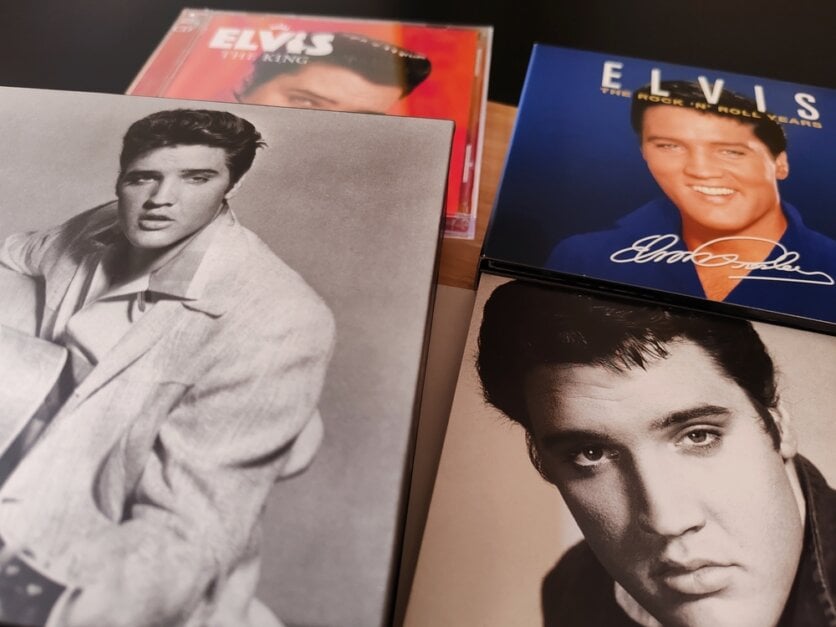
Elvis Presley’s rightsholders have amended their lawsuit against AI music generator Suno, one week after filing it.
The amended complaint was filed on Friday (November 13) in the US District Court for the Northern District of California.
It adds more than 100 Suno outputs that the plaintiffs say infringe songs or imitate Presley’s voice, and takes aim at a statement Suno gave the press about the original suit.
The Presley plaintiffs’ amended complaint can be read in full here.
The plaintiffs include Elvis Presley Enterprises and ABG EPE IP, both controlled by Authentic Brands Group, along with Raleigh Music Publishing, Abilene Music, several trusts, and individual rightsholders.
They allege that Suno trained its AI on Presley’s recordings without a license, and that it now generates tracks that reproduce songs he recorded or simulate his voice.
The amended filing keeps the original’s claim of USD $128.85 million in statutory damages for copyright infringement across 859 songs. Copyright infringement now heads its list of claims, ahead of the two Tennessee claims over Presley’s voice and likeness that came first in the original.
“In short, Suno has willfully violated every exclusive right under the United States Copyright Act with respect to all of the songs involved in this action…” the amended complaint states. “But that is not all, Suno also stole without care, Elvis’ likeness, including his voice…”
It also responds directly to what Suno told the press after the original complaint was filed on November 6.
“Yet Suno, in a post-filing statement to various press outlets, doubled down on its false claim that its service does not ‘trade on anyone’s name or likeness,’ and ‘do[es] not allow prompts for specific artists’ names and songs,'” the filing states. “Suno’s statement is a repurposed version of what it recently represented in a written motion filed in another lawsuit…
“These statements, as shown in the Exhibits attached to the original Complaint, are false, and Plaintiffs have now added a multitude of additional examples to this First Amended Complaint…”
The amended complaint says its examples reflect “the same prompts that Suno publicly and falsely stated to Billboard do not exist in a post-filing article covering this lawsuit.”
In Suno’s post-filing statement earlier this month, a spokesperson said: “Suno exists to help people create new, original music, not to trade on anyone’s name or likeness, and we prohibit any unauthorized use of an artist’s work.
“To protect against this, we do not allow prompts for specific artists’ names and songs and work with third-party providers to screen uploaded audio files and lyrics for potential misuse. We are always working to strengthen our guardrails and we will continue to add new safeguards that protect artists and our users.”
The “written motion” the complaint refers to is the one Suno filed on November 3, asking a Boston federal judge to throw out a proposed class action brought by Jason Isbell and three other musicians.
In that motion, Suno said its outputs do not “replicate the auditory characteristics of any real artist’s voice to the point that someone would confuse a Suno creation with one actually sung by a particular famous musician.”
Quoting an August blog post by co-founder and CEO Mikey Shulman, the motion added that the company has “never allowed prompts for specific artists or copyrighted songs.”
The Presley plaintiffs call those statements “unequivocally false.”
Two weeks before that motion, in its October 20 answer to the second lawsuit brought against it by Universal Music Group and Sony Music, Suno admitted that “as of January 2026, users may include artist names in their prompts.” It denied that those prompts generate outputs “without first converting the artist name to a style description.”
The amended complaint now cites at least 58 Suno outputs that the plaintiffs say reproduce songs they control, and at least 40 that use Presley’s voice or likeness. The original cited 17 and 38, respectively.
One newly added output, titled Recording session, allegedly infringes five of the songs in the suit in a single track: Can’t Help Falling in Love, All Shook Up, If I Can Dream, Love Me Tender, and A Little Less Conversation.
According to the complaint, the same output also infringes Blue Suede Shoes and Hound Dog, two other songs Presley recorded that are not part of the case.
Another new exhibit is described as a “complete reproduction” of the Presley hit Can’t Help Falling in Love “with full lyrics, save for slight difference in wording of first line, and simulation of Elvis’ voice.”
The filing adds at least 72 outputs tied to other songs Presley recorded, which the plaintiffs do not own. It says they “are included to show the breadth of the infringement Suno engages in, and to further demonstrate the willfulness of the infringement by Suno of all of the songs involved in this action.”
That matters for the money: under US copyright law, statutory damages are capped at USD $30,000 per song unless infringement is found to be willful, in which case they can reach USD $150,000.
The USD $128.85 million claim applies the willful maximum to every one of the 859 songs in the suit, including hundreds associated with other artists, such as Chubby Checker’s Let’s Twist Again. At the ordinary cap, the same songs would come to about USD $25.8 million.
The amended complaint goes further on outputs. The original said discovery would show that Suno had generated infringing outputs for all of the songs. The new version keeps that line, but also states that “Suno has created infringing output for each of the Works at issue in this action.”
Elvis Presley Enterprises, which the complaint says solely owns Presley’s likeness rights, is also seeking damages “believed to exceed $50 million” under Tennessee’s ELVIS Act, short for Ensuring Likeness, Voice, and Image Security.
It wants that amount tripled, arguing that Presley’s US Army service from 1958 to 1960 makes him a “member of the armed forces” under Tennessee law.
Tripled, the ELVIS Act claim alone would exceed USD $150 million.
The amended complaint keeps claims that Suno bypassed access controls on streaming and lyrics platforms and stripped songwriter and publisher credits from the songs.
Those claims carry a further USD $2,147,500 and USD $21.475 million, respectively, unchanged from the original.
Elvis Presley Enterprises has also asked for a court order barring Suno from using Presley’s voice or likeness. Separately, the plaintiffs want unauthorized copies of the songs handed over for impoundment or destruction, “including copies retained in training datasets, internal repositories, model weights, and server infrastructure.”
If granted, that would reach the AI models Suno has already trained, not just the music files it holds.
The ELVIS Act claim tests whether the law’s “primary purpose or function” clause, aimed at technology built to produce a particular person’s voice or likeness, applies to an AI music service like Suno’s, as MBW has explained.
A ruling that it does could let estates and artists protected by Tennessee law hold AI companies liable for the tools themselves, not just the people who use them, without needing to show that any song was copied.
Both versions were filed by Richard S. Busch of Adams & Reese, whose team has also sued Suno this year for Round Hill Music, Gerencia 360, and Reservoir.
On the same day as the original Presley complaint, he filed a separate suit against Suno for Eminem co-publisher Eight Mile Style.
Suno raised more than USD $400 million at a USD $5.4 billion valuation in June. The complaint cites both figures, sourcing them to MBW.
Warner Music Group settled with Suno and struck a licensing deal with it in November 2025, while Universal Music Group and Sony Music are still suing the company.
MBW has contacted Suno for comment on the amended complaint.
None of the allegations in either version of the Presley complaint has been tested in court.Music Business Worldwide