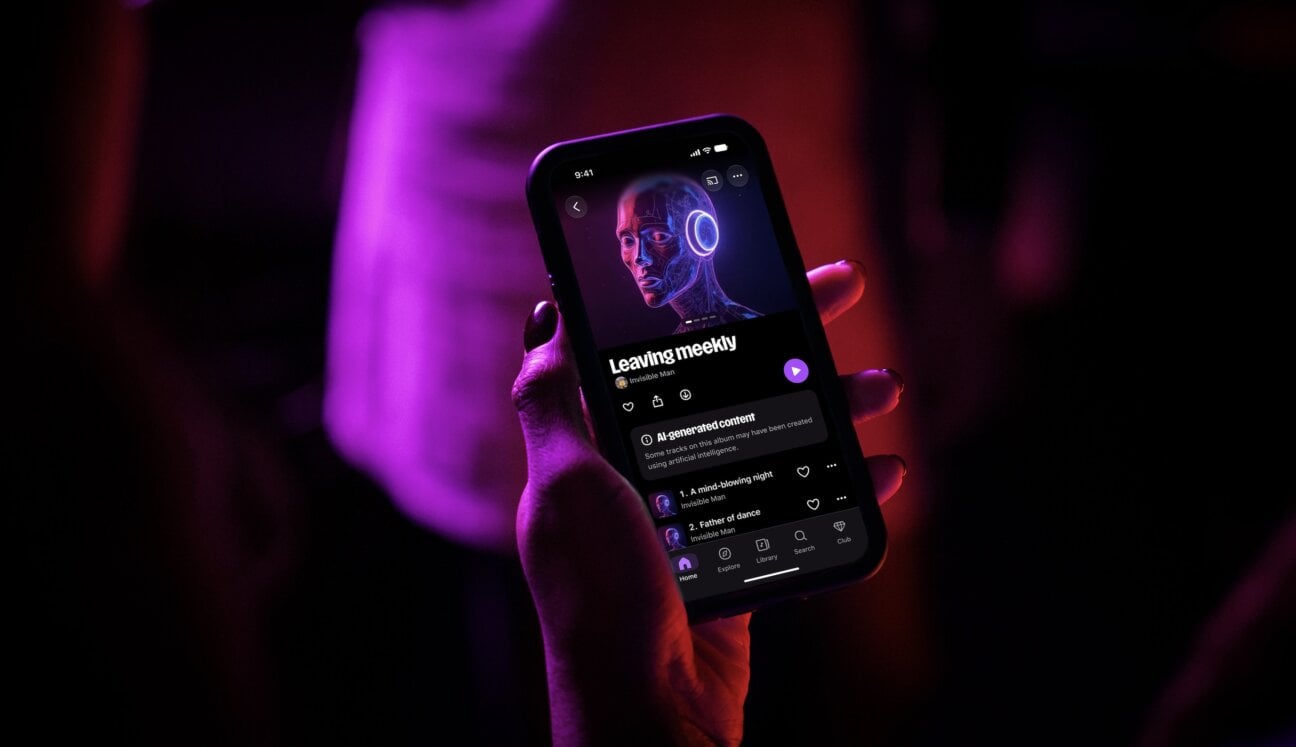
The French streaming service said on Tuesday (October 13) that the feature will roll out globally before the end of 2026.
Deezer already removes tracks it detects as fully AI-generated from algorithmic recommendations and keeps them out of editorial playlists.
With the toggle switched on, AI-generated tracks, albums, and their related artists will not appear when users search for music on Deezer.
Deezer says the toggle will let users “remove fully AI-generated music completely from their streaming experience.” Switching it off restores access to AI-generated tracks.
That compares with 10,000 AI-generated tracks a day when Deezer launched its detection tool in January 2025.
On peak days, fully AI-generated tracks account for more than 50% of all new music delivered to Deezer, though they generate only 1% to 3% of streams, according to the company.
However, Deezer says “it’s evident that the primary purpose of uploading these tracks to streaming platforms is fraudulent.”
The company says up to 85% of streams generated by fully AI-generated tracks in 2025 were fraudulent, and that it excludes manipulated streams from royalty payments.
“The explosion of AI-generated content continues to impact the whole music ecosystem, and we believe in shaping a future based on transparency and choice, with respect for artists, song writers and music fans,” said Alexis Lanternier, CEO of Deezer. “We remain committed to minimizing any negative effects, while empowering our users to control their music experience to the greatest extent.”
“The explosion of AI-generated content continues to impact the whole music ecosystem, and we believe in shaping a future based on transparency and choice, with respect for artists, song writers and music fans.”
Alexis Lanternier, Deezer
Added Lanternier: “We’ve seen a clear user demand for the ability to filter out AI-generated music, and we are now giving everyone the option to remove this content completely from their streaming experience on Deezer, and focus only on human creators and creations, if they wish.”
The survey found that 45% of music streaming users “would like to filter out 100% AI-generated music” from their streaming platform.
The same study of 9,000 people across eight countries found that 97% of respondents could not tell the difference between fully AI-generated and human-made music in a blind test.
Deezer also disclosed updated detection figures for the period since it launched its tool at the start of 2025.
The company says it detected more than 42 million AI-generated tracks between January 2025 and August 2026, and excluded them from algorithmic and editorial recommendations.
Deezersaid in July that it would begin taking down AI-generated tracks used for streaming fraud, along with those that had gone unstreamed for six months or more.
The company says its AI detection tool “sets an industry standard” and can identify music made with generative models including Suno, Udio, and Riffusion, the predecessor to Google-owned ProducerAI.
Deezer has been licensing the technology to the wider music industry since January, with French collecting society Sacem as its first partner.
Deezer‘s move follows policies on AI-generated music set out by other streaming services this year.
TIDALsaid in June that it would tag fully AI-generated music in its app and stop paying royalties on it.
Fellow French service Qobuz announced its own AI detection and tagging system in February.
Apple Music launched a tagging system in March that relies on labels and distributors to declare AI-generated content. It told industry partners on August 20 that the tags would appear to listeners as “Made With AI” labels later this year.
Spotify began testing AI tags in its song credits in April, but only where an artist has chosen to disclose AI use through their label or distributor. In August, it said it would label AI-generated artist profiles as “AI Personas” from mid-September, including in search, and keep their music out of its editorial and algorithmic recommendations by default.
Deezer also pointed to research by CISAC and PMP Strategy, in which it participated. The study found that 24% of music creators’ revenues are at risk by 2028.
That equates to a potential loss of €4 billion in 2028, according to the study.
Deezer described that as “a colossal, even critical, challenge for the music creation sector as a whole.”Music Business Worldwide