
Twenty years ago, as a new digital distribution company called TuneCore launched itself upon an unsuspecting world, the music industry was a rather different place.
Spotify had yet to launch, let alone transform the entire music landscape. Instagram and TikTok were still but twinkles in a tech guru’s eye. And AWAL, The Orchard and PIAS remained entirely independent operations.
Many companies have come and gone in the intervening two decades, but TuneCore remains. It’s been through plenty of ups and downs in that time, but its core mission has stayed the same: to help independent musicians release their music and reach new audiences, whatever stage of their career they may be at.
That mission has evolved significantly since TuneCore was acquired by Paris-based Believe in 2015, with a notable pivot towards artist development.
Many superstar artists – from Ed Sheeran and Jack Harlow to SZA and Lizzo – have started on TuneCore. Until recently, however, many of its most popular acts seemed destined to move on to pastures new.
That’s changed since TuneCore Accelerator arrived in 2023. Through the platform, artists can use TuneCore’s promotional programs, marketing and tech to help cut through the new-music noise, with TCA acts receiving over 20 billion streams in the last year alone. Plus, there’s the option of upstreaming to Believe’s Label & Artist Solutions/Artist Services tiers for standout artists seeking more holistic label services.

Consequently, TuneCore is enjoying a stellar run with artists such as Russ, SAULT, Jimmy Eat World and Los Campesinos! (who scored their first-ever Top 20 album with 2024’s TuneCore-released All Hell album) enjoying success across the 18 countries where TuneCore now has boots on the ground.
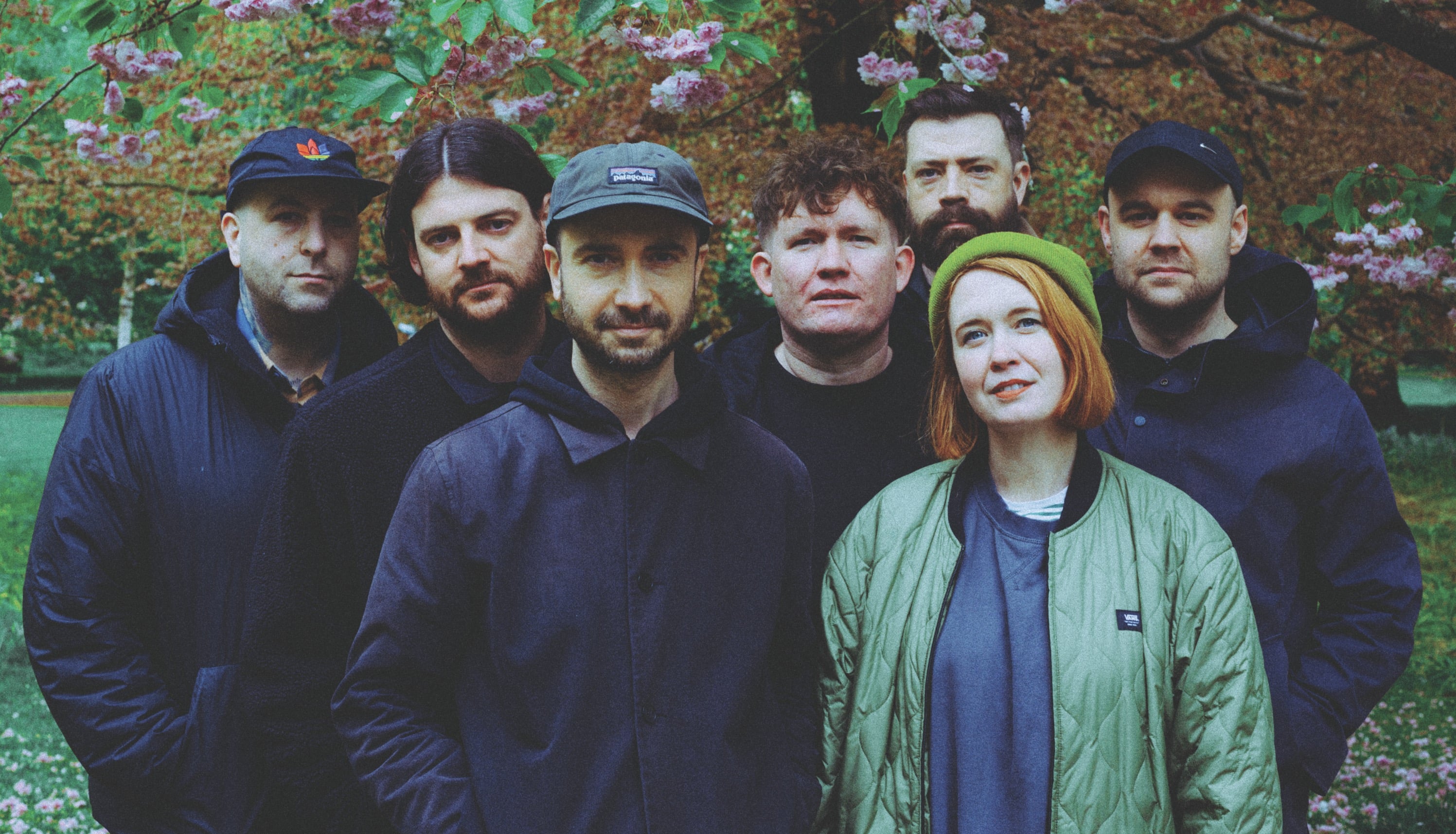
“For the first decade of our career, we operated within the industry’s traditional structure,” Los Campesinos! frontman/manager Gareth David tells MBW. “Since embracing independence 10 years ago, TuneCore has been our digital distribution partner, providing us with a service that is both professional and personal.
“They help ensure we are maximizing the impact of our digital discography, while minimizing the amount of income we’re paying to third parties. We are being heard by more people and receiving more streaming income than ever before – and that’s in no small part due to the relationship we have with TuneCore.”
“It’s not just about the size of the check — it’s about trust and long-term alignment.”
Brian Miller, TuneCore
Artists, of course, have no shortage of options for releasing their music these days, even if many of TuneCore’s contemporaries (AWAL, The Orchard, FUGA, CD Baby) have been snapped up by larger companies.
That’s despite criticism from the likes of Sir Lucian Grainge (“Merchants of garbage”) and Rob Stringer (“Flotsam and jetsam”) over the quality of some of the music flooding streaming services from DIY services, with over 100,000 new tracks a day now hitting the likes of Spotify and Apple Music.
Meanwhile, TuneCore started 2026 with some changes of its own: CEO Andreea Gleeson stepped down and will not be replaced, although she will stay on as a strategic advisor to Believe, as the two companies look to work ever more closely together.
There are, no doubt, challenges ahead – not least, dealing with the coming AI music tsunami. But the mood is celebratory as MBW gathers two key TuneCore execs to mark its anniversary and map its future.
We catch up with Head of TuneCore UK, Sarah Wilson (who joined in 2021 after stints at Beggars Group, Universal Music UK and The Orchard) in Believe/TuneCore’s buzzy new London office (complete with in-office dogs brought in by various staffers).
And, first, we meet New York-based Chief Business Officer Brian Miller (who joined in 2023 from a career mostly spent outside the music industry) on his flying visit to Believe/TuneCore’s Paris HQ…
BRIAN MILLER, CHIEF BUSINESS OFFICER
Why has TuneCore survived for 20 years when so many other companies haven’t?
The core thing we do hasn’t changed. We’re always focused on getting independent music out in the world and making it easier for all artists to find a way to get their music heard.
How we do it has changed tremendously. If we didn’t strategically change how we approach our mission, we wouldn’t be here, but adapting to how consumers listen to their favorite artists and how fans track down their favorite artists has been crucial.
Working with Believe for the last 10 years has given us more resources. If it was just TuneCore on its own, it would be more challenging, but working in tandem with Believe, which is the world’s leading independent music company, gives us access to more resources that let us serve artists globally.
And it’s paid out over $5 billion in revenue to artists…
Yes, we are very proud of that achievement, because the $5 billion figure represents money that TuneCore has delivered into artists’ bank accounts. Beyond getting the music released, it’s about getting heard and making sure artists get paid.
How does working more closely with Believe help TuneCore and your artists?
By aligning more closely with Believe, we’re creating a more seamless pathway for artist growth. When an artist reaches a stage where they need expanded services – marketing, global release strategy, funding, or hands-on label support – we can
now transition them within the broader Believe ecosystem. This helps with TuneCore’s ability to retain and develop high-potential artists over the long term, and ensures they have access to the right level of support at the right moment in their careers. It’s about building a continuum – from independence to global growth — without forcing artists to leave the family to get there.
How will you hang on to artists if the majors are offering big money?
At a certain point, it’s not just about the size of the check — it’s about trust and long-term alignment. Advances can be attractive, but artists are increasingly thinking about ownership, flexibility, and who will truly advocate for them over time. We offer continuity, transparency, and a model built around ownership and independence. For many artists, that stability and trust matter just as much as an advance.
How annoying is it when an artist leaves?
[Laughs] It depends how mega [successful] they become! I’d like us to keep more of them now; five, six or seven years ago, we weren’t in a place to do that. We weren’t as integrated with Believe, and didn’t have scalable technology to support those high-performing artists as their careers progressed. Now we have teams at TuneCore that can serve them at a higher level and, if they’re looking for additional services or a more traditional label partnership, the rest of Believe has that.
Why are you putting more resources into artist development at a time when many companies are doing less of it?
We’re always going to be open at TuneCore. If this is your first release, we want you to come to us.
Where we’ve really developed is, once you gain some traction, we can make it easier for you. We have to continue to look at what’s sustainable for the long term; it’s that constant reappraisal and adjustment that’s why we’ve been around for 20 years.
So, who’s your competition these days?
Earlier artists are looking at pure distributors to get their music out quickly. We’ve found that, when they start getting more serious, they come to us, because we can provide more resources, more visibility.
Artists have become more like entrepreneurs as the industry has been democratized. They have the ability to manage their careers on their own, outsource certain elements to experts –managers, booking agents, publicists, etc. – if they want to remain in control of their earnings, creative vision, and team members.
But as they grow, we have a lot of labels looking at who’s on TuneCore, everyone sees the same data, and they have a conversation. If you’re an up-and-coming artist and someone’s offering you a large check, we get that it’s tough to say no, even if that means compromising or giving up some of that control. Some really great artists have grown with us, they take that [label advance check elsewhere] and they’re like, ‘Oh, that was a mistake’. Then they come back, which is great, but sometimes they’ve had a painful learning journey.
Will UMG’s acquisition of Downtown create opportunities for TuneCore?
It is ultimately good for TuneCore, because when Downtown is fully owned by Universal, they will no longer be independent. Many artists do not want to be in the major label system and that’s part of the reason artists should turn to TuneCore and Believe for support. Part of the reason it works is, we offer what majors do, but with an indie mindset – we have all of the features: we have TuneCore Publishing Administration [via which] early-stage artists can earn 15-20% more royalties by having their songs registered.
We have that integrated with this system and no one else at our level does. As artists, it’s hard to keep track of your royalties, where your performances are, where your fans are – and our Advanced Trends and Analytics Dashboard is super-easy to understand and use. And we have TuneCore Accelerator, which produced over 20 billion additional streams for artists last year.
Those things allow us to feel confident that, as the majors snap up our peers, they’re no longer our peers, and they’re no longer for independent artists. We’ll keep investing in the services that allow us to serve artists who want to be independent and get their music out.
What will TuneCore look like in 20 years?
People are still going to be listening to music and will still want to hear independent musicians making it. How they make it and how we listen to it may change, but I feel pretty good about the mentality we’ve adopted to stay flexible, reactive, and data-driven, always with artists at the forefront, as we develop new ways to help musicians get heard.
SARAH WILSON, HEAD OF TUNECORE UK
It’s been a busy start to the year for TuneCore, with Andreea leaving…
I worked extensively with Andreea over the years I’ve been here, and she was a great captain of the ship. I’m glad she’s still advising us and it will be really interesting to see what this year and the next few years hold.
We’re working in such a different way now to when I joined. Then, we existed in our own orbit. We were part of the Believe group, but we didn’t really do much explicitly together. We are now really working as one company.
There’s been a huge sea-change in how all three parts of the business fit together and it brings the most value out of being part of the group, because we are all representing different parts of an artist’s journey, but also different methods of release and getting access to success at each level.
We have some phenomenal artists who come to us – the Forever Living Originals [label] for example, with SAULT, Cleo Sol and Chronixx – that I’m sure every major and every big indie has tried to tap on the shoulder and sign. But they’ve found a model that works for them.
They’ve built an infrastructure that works with them doing their thing and us doing our thing, and it’s perfectly synergized. Whereas some artists start on TuneCore, then want to stay within the group, like Adekunle Gold, who was upstreamed to Believe artist services. Now we’re doing things in lockstep and that’s maximized value across the three parts of the business, by making sure that people are at the right level.
How have you found the shift to focusing more on artist development?
I remember when I started, I used to do artist calls and a lot of managers would be like, ‘This is really nice, but why are you taking my call?’ Because at that point, it was pay-per-release and it made no difference whether they had contact with us or not, because we didn’t have anything extra to offer.
We have moved from just being a volume platform, which worked very well for everyone at the beginning, when democratized access to release was new.
But, at this point, you need to find intentional listeners. There are 106,000 tracks being released on Spotify every day. The issue isn’t access to release, it’s access to audience, so programs where you can help people find their listeners is where you bring the maximum value. And that goes back into the Believe conversation, because their long-standing relationships with the DSPs help us to have more in the game than we would on our own.
So, will TuneCore be taking on fewer artists in future?
It’s certainly not on the roadmap at the moment – if it’s a conversation that’s happening, I’m not party to it!
It’s still an open platform. If you decide to become a musician, you can still come to TuneCore, sign up and release your music. No one’s there going, ‘This is a bit shit, we’re not going to release this’. Whether or not the algorithm will serve you in a way that benefits you, that’s for the data scientists to tell you.
What did your label experience teach you that’s relevant to TuneCore?
I worked with some incredible, culture-defining artists, but I also worked with a lot of baby artists. I was at Beggars for 13 years and I saw artists who you would think would be hugely successful, not be successful, and artists where you didn’t think they would go anywhere, suddenly blow up. What it taught me is, there’s no magic bullet. XL Recordings wouldn’t work for every single artist, TuneCore wouldn’t, Universal wouldn’t. It goes back to, what is the model that makes most sense for you?
If the next Ed Sheeran is on TuneCore, will you be able to persuade him to stay?
I’d be incredibly annoyed [if they left] – as pissed off as I could be, because we’ve now got systems that they didn’t have then. The overall group offering now is so much stronger. So, if the Ed Sheeran of 2026 is on TuneCore, I’d like to think we’ve got the nous to find that.
Can TuneCore really break an artist to that level?
Yes, knowing the system we have in place and the access across the group.
If we find someone that we’re that confident in, we know the questions to ask now, in a way that we didn’t necessarily before, when it was solely a volume platform. And that’s the difference between being able to move from volume to artist development; knowing the point where we need to be having conversations with the DSPs, etc.
There’s been a lot of upheaval in the UK distribution and label landscape: is that an opportunity for TuneCore?
Last year was the year of the guillotine, wasn’t it? There are two ways of looking at it – one, there’s upheaval because people aren’t picking up options and artists are getting dropped as restructuring happens. But the other way is, sometimes artists look at the restructures and go, ‘This isn’t my home anymore. The person I worked with at this label isn’t here anymore, the team that I had isn’t here anymore’.
Major label bosses have been disparaging about some of the music being released on platforms like TuneCore…
‘Merchants of garbage’ – that was a good one! I think I saw Merchants Of Garbage opening at the Bull & Gate in 1992…
I’d love to remind [the majors] of the number of artists that they’ve signed off the back of the ‘flotsam and jetsam’ that comes through our doors. If you look through your roster and you’re entirely free of artists that have ever used a DIY service, I’ll eat my phone!
Has Spotify’s 1,000 stream monetization threshold affected TuneCore’s business?
Not massively, no. If anything, that puts the responsibility back on us to look at programs that actually help people to find their listeners so they’re not at zero streams, they’re at 1,000 streams and start to monetize.
How do you feel about the acquisition of Downtown/FUGA by Universal?
I don’t think it will directly affect us. I’m sad to lose players from the independent scene. I know a lot of people at FUGA and Downtown – if I was there, I would be sad that we were changing from independent to major, but let’s see.
Is TuneCore under-appreciated by some elements of the wider industry?
I think it is. But we’re growing in reputation where we should be growing: in the artist community. If the wider industry is taking a little more time to catch up to that, then they’re behind!
One of the things people don’t realize is, we exist in the world of BRITs and Mercury nominations, but it’s the artist telling the story, as it should be.
“We’re growing in reputation where we should be growing: in the artist community.”
Sarah Wilson
I’d love to see us having more presence at something like that, and who’s to say that won’t be the case with the artists that are getting success from TuneCore Accelerator, building them to the point where they are noticed by the BRITs committee, getting the Critics’ Choice or a Mercury nod.
How much bigger can TuneCore get?
I would like it to be in the same conversations as when people go, ‘Do you want to sign to an independent or a major?’ It should be, ‘Do you want to sign to an independent, a major or use TuneCore?’ That would be amazing.
All MBW+ subscribers get digital access to our new Music Business Worldwide magazine, with six issues released each year. Music Business Worldwide