I graduated in France and then I did one year at Duke University [North Carolina]; I passed the New York Bar in 1997.
From there, I went to work in New York [at Shearman & Sterling, now A&O Shearman]. I was renting a duplex in the West Village with three fellow graduates. They were with big firms like Goldman Sachs and McKinsey, but in the space of a few months in 1999, all of them resigned to join startups.
I was a corporate lawyer, doing something very different. I wasn’t sure what they were doing was the smartest thing, but it looked interesting.
In December 1999, a headhunter got in touch looking for someone to do deals for Vivendi. At the time, they owned book and magazine publishing assets and a telco in France, but they wanted to do more.
So in early 2000, I moved back to Paris and started at Vivendi.
They were investing in hundreds of new internet businesses and wanted to create a new division to hold them all. But 10 days after I started, the Nasdaq crashed and the dot-com bubble burst. My job then became dividing the portfolio into the companies we thought could and couldn’t survive. I was appointed to a whole range of boards and got a really intense education.
That same year, Vivendi acquired Universal, including Universal Music, which changed everything. Not long after that, they bought MP3.com – which at the time was one of the biggest entertainment sites on the web.
They put all their newly-acquired music assets – they’d also bought eMusic, GetMusic, and RollingStone.com – in the same US-based division, and asked me to go over and take on a senior role there. [Ladegaillerie served as Chief Financial and Strategy Officer for Vivendi Universal’s US digital activities.]
So I moved back to the US in 2001, this time to the West Coast. To give you an idea of the times, our division’s CEO was based in LA and MP3.com was in San Diego, and one of my first conversations was about whether to buy a helicopter for the commute!
People were spending millions of dollars on office refurbishments that included lavish concert halls. Our guys were swapping places on the waiting list for the new Ferrari with the Qualcomm guys across the street. These were crazy, crazy times.
In late 2001, [Jean-Marie] Messier [then Vivendi CEO] bought USA Networks’ entertainment arm, which changed the picture at Vivendi.
So from 2002, my job switched to repositioning and selling the businesses in our division as rapidly as possible. I actually ended up in a discussion with Eddy Cue at Apple about selling them MP3.com – but they were already working on something of their own, which turned out to be the iTunes Store! I was also talking to Rhapsody about a possible sale. That’s really how I went from being a lawyer to being ‘in’ the music industry.
Within two years, I’d sold all the assets. By this stage, I’d worked with a lot of small businesses, and I’d turned out to be a pretty good judge of what would work and what wouldn’t, particularly in digital. But most importantly, it had planted the seed of wanting to be master of my own destiny. Spending time with entrepreneurs completely changed my mindset. Until then, the only people I had worked with were at big law firms and big corporations; I had no clue businesses like this even existed. It also looked super fun! They were building things and taking risks.
In 2004 I left Vivendi and for a while I didn’t do anything. I lived in Santa Monica, on the beach. I liked to kitesurf there, and one day I fell and was badly injured – I almost broke my neck. I decided to go back to Paris for the summer to heal and work out what to do next.
I was actually frustrated, because I knew music and I knew digital businesses, and that intersection was where I wanted to be. Thankfully, back in Paris, I bumped into a friend who told me her husband was bored at Sony Music and wanted to quit and try something new. Would I like to meet him?
That was Arnaud [Chiaramonti]. We both wanted to leverage the power of the internet to develop and break artists differently. I knew about digital infrastructure and the internet’s potential; he knew about artist development. What the majors were doing wasn’t working and, to us, didn’t make sense. At this time [mid-2000s] they seemed more focused on ringtones than anything else. I’d also bought all the earliest pre-iPod MP3 players, and every one of them was awesome compared to the portable CD player I used to go jogging with. I knew CDs were going to be replaced.
“What the majors were doing wasn’t working and, to us, didn’t make sense.”
So we got a blank sheet of paper and started writing down all the things we could do with music and artists if we harnessed the internet properly – starting with distribution. That was in very late 2004, and in 2005 we incorporated Believe.
First, we needed a music business lawyer to draft a contract we could take to artists, managers, and labels, because I didn’t have a clue about all that. We went to see one of the best in the business; we explained everything, and told him we wanted a contract [template] to cover digital distribution. He never got back to us. I still see him regularly and we laugh about it. He just says, ‘I’m really sorry, I didn’t believe you guys!’
Thankfully, we went to someone else, who drafted the first Believe artist contract, and we started working out of my apartment in Paris, making calls. At this stage there were three of us: myself, Arnaud, and Nicolas [Laclias].
The apartment was quite small: all the equipment was in the living room and everyone worked at my dining table. After nine months, we had hired a few people, and there was someone at my place until at least 9pm every day. Eventually I got fed up with that, and we got our first office in Paris. At that point there were fewer than 20 of us; today we have more than 2,000 people in more than 50 countries.
My mindset then wasn’t ‘This is awesome, we’re going to make so much money’; it was ‘This is awesome, I’m learning tons.’ For the first three years, I honestly didn’t know if it was going to work. I wasn’t getting paid; I was living off my savings, which were also funding the business.
“I wasn’t getting paid; I was living off my savings, which were also funding the business.”
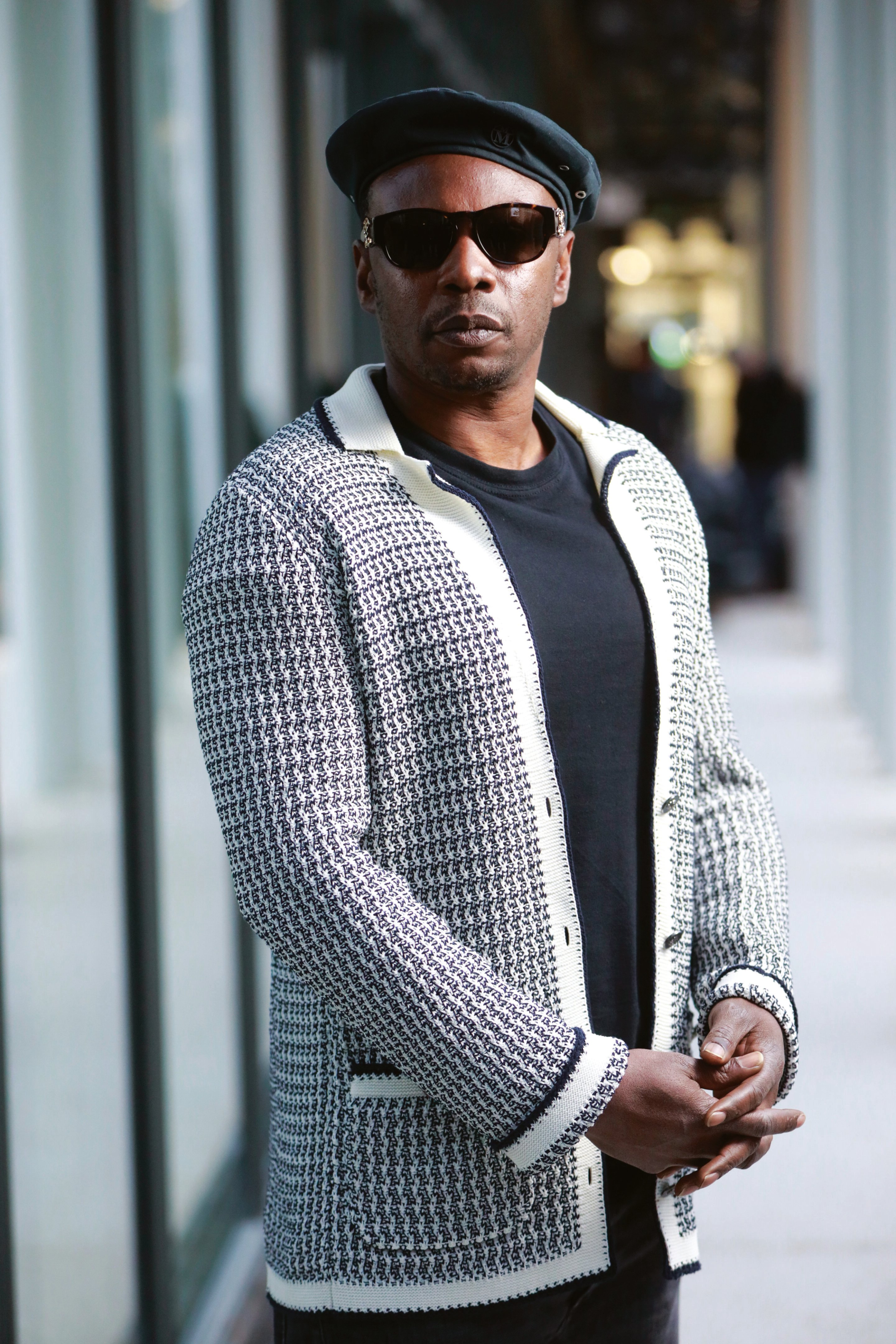
Denis Ladegaillerie
The biggest single goal from day one was to democratize market access for more and more artists. Our first really notable success came when we signed a young band called AaRON. They only had two tracks, one of which was U-Turn (Lili). It was featured in a film called Don’t Worry, I’m Fine, which became a big hit in France, and the track went from totally unknown to the Top 20. Artists like that would not have exploded pre-digital.
The first ‘name’ artist we signed was MC Solaar, who had been signed to Universal but ended up fighting them [in court]. His manager, Daniel Margules, a very smart and innovative guy, gave us a lot of advice in the early days.
When it came to signing deals, it helped that a lot of artists and managers didn’t think they had anything to lose. It’s wrong to say they didn’t care; they definitely didn’t want to give their music to someone who would do something stupid with it. But they weren’t risking an income stream, because their music wasn’t even digitized. It was such early days: my phone at the time was a Nokia N80.
Looking back, I had no real clue what I was doing, quite frankly. But I was single, with no wife or family; I’d made a little bit of money with Vivendi, and I was in my early thirties. In that sense, I was completely free to take some risks.
One thing I did know was that I wanted Believe to be an end-to-end digital business: marketing digitally and leveraging the data, as well as distributing. It also helped that, through selling all those businesses at Vivendi, I knew the Apple team, I knew Rhapsody, I knew eMusic; I knew the CEOs of the four or five companies leading the market. Plus, after we sold MP3.com, I had access to a portfolio of independent artists I could approach for distribution.
Back then, the ambition wasn’t to build a global business; it was to sign some deals and just get off the ground. You have to remember, the global digital music business was worth a few hundred million dollars, and music downloads in France were worth just a few million euros. To have huge ambitions would have been crazy; we just had to get going and see where we could take it.
It was always going to take time, and in the beginning, you just have to believe. Revenues do grow, but they grow slowly.
Perhaps the most important factor back then was personal: I really wanted to be an entrepreneur. I wanted to be able to look back when I’m 60 and be satisfied that at least I’d tried to do my own thing. I didn’t see myself working in a large corporation, even for good money; that was never going to satisfy me.
“It was always going to take time, and in the beginning, you just have to believe. Revenues do grow, but they grow slowly.”
Denis Ladegaillerie
We are celebrating our 20th anniversary this year, and I think what I’m proudest of in the way we’ve built the company is that we’ve always paid the artist, and we’ve always done right by the artist. That’s how we live and die: through the trust of artists. That trust is not something you have at the start; it’s something you have to earn.