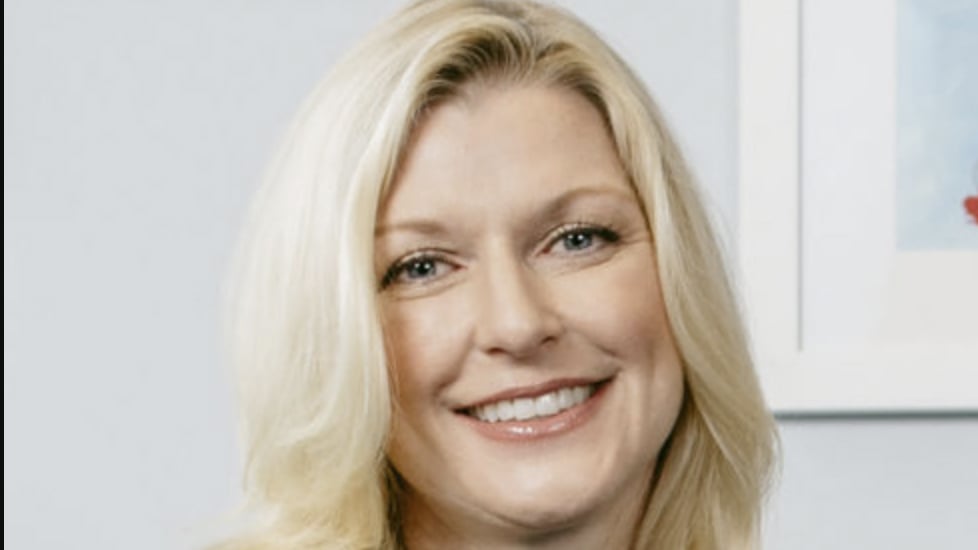
Photo Credit: Sophie JonesGrammy-winning British singer-songwriter Lola Young received the ASCAP Vanguard Award at the 2025 ASCAP London Music Awards on June 17, 2025.
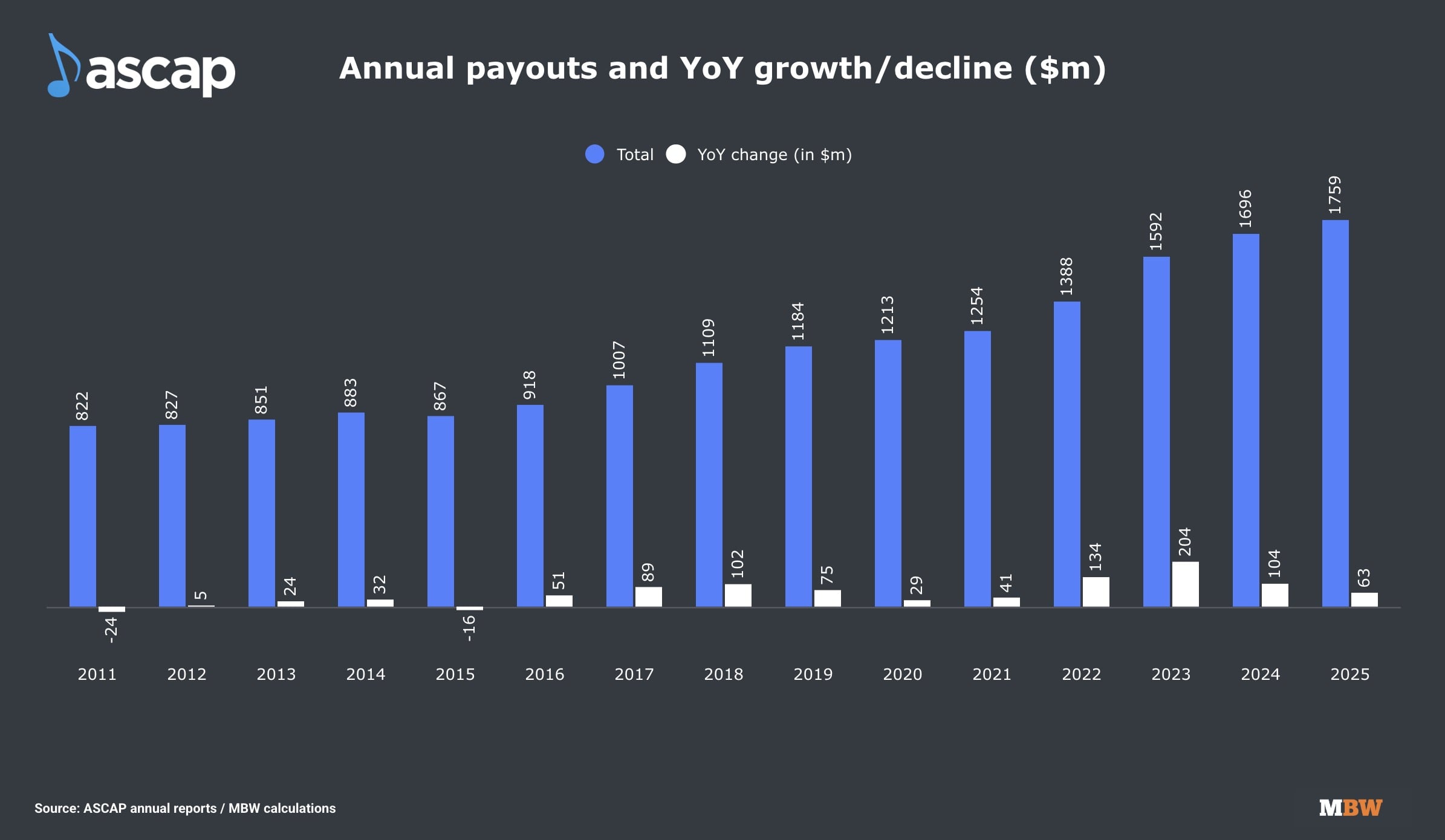
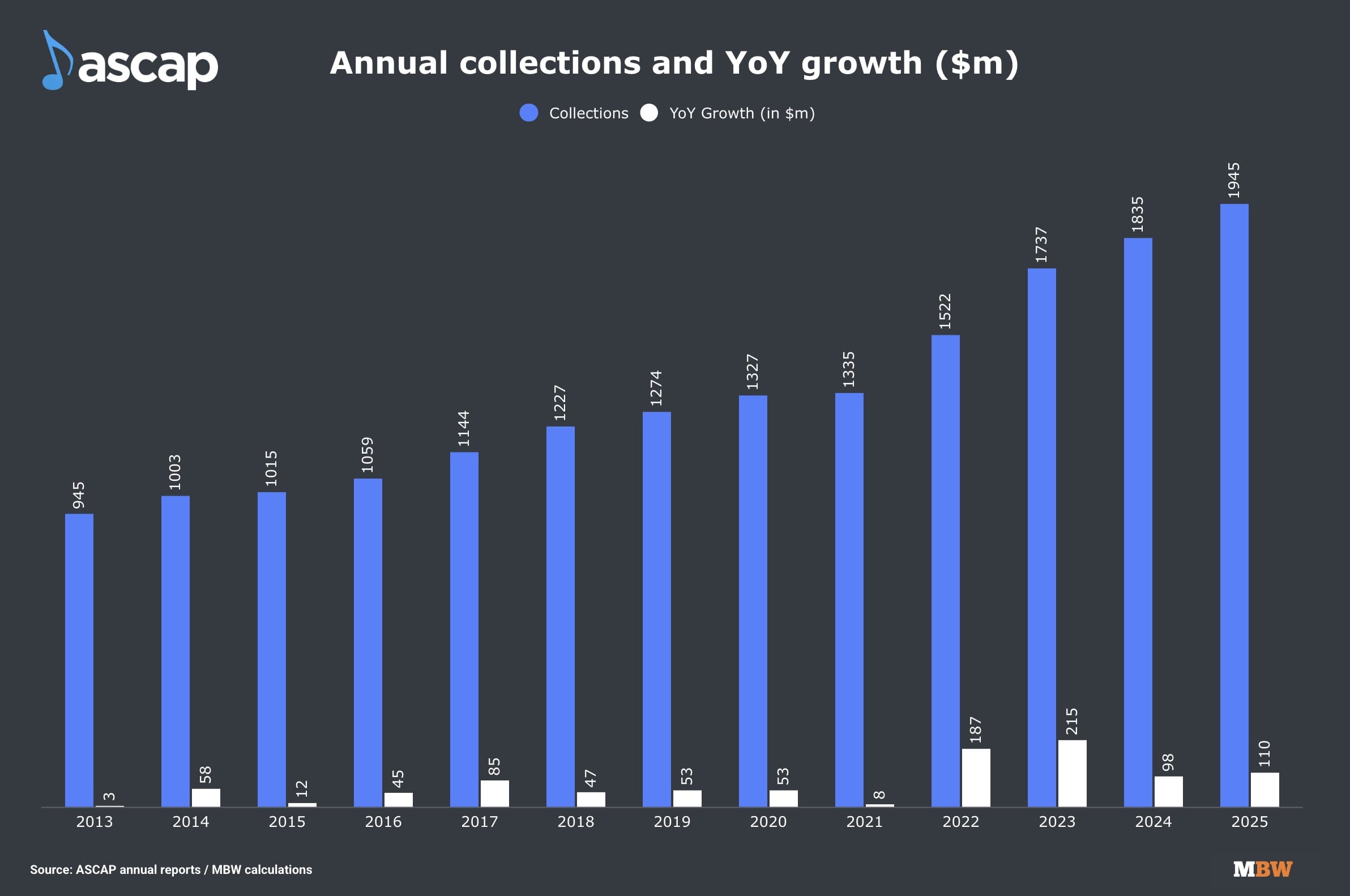
US performance rights organization ASCAP has reported its revenue and royalty payout numbers for 2025, with both figures hitting all-time highs.
Revenue came in at $1.945 billion for calendar 2025, up 6.0% year over year.
Of that, New York-based ASCAP distributed $1.759 billion to songwriters, composers, and music publishers, an increase of 3.7% YoY.
In a statement issued on Thursday (February 12), ASCAP said that the record high distributions included $1.304 billion from US-licensed and administered performances, with $37 million distributed through Songwize, its royalty administration service provided to members who directly license their works.
Distributions from public performances outside of the US grew to $455 million, a 10.6%increase over 2024.
Domestic revenue from US-licensed performances, meanwhile, totaled $1.471 billion (+5.3% YoY), driven by earnings from streaming audio, radio and general licensing, while foreign revenue collections also increased to $474 million, up 8.2% YoY.
According to ASCAP, in the last 10 years, it has generated a compound annual growth rate (CAGR) of 6.7% for total revenue and a CAGR of 7.3% for total distributions.
ASCAP also reported that over 80,000 new members joined the organization in 2025, bringing its total membership to 1.1 million.
Among the “top music creators” highlighted by ASCAP as having switched from other PROs in 2025 were EJAE, Rosé, The 1975, Lola Young, Myles Smith, Johnny Marr, Boy George, Michael Pollack, Tyler Johnson, Robin Carolan, and Daniel Blumberg, among many others.
ASCAP also licenses the work of music creators including Beyoncé, Billy Joel, Cardi B, Chappell Roan, Charli XCX, Chris Stapleton, Dua Lipa, Garth Brooks, Jay-Z, Jimi Hendrix, Joni Mitchell, Katy Perry, Lil Baby, Lin-Manuel Miranda, Marc Anthony, Mariah Carey, Neil Young, Olivia Rodrigo, Paul McCartney, Stevie Wonder, and Usher, among many others.
ASCAP noted in the press release announcing its latest figures that it “operates without debt and has the lowest overhead rate in the US at 10%”. ASCAP added that it is “the only US PRO not owned by private equity or outside investors”.
“ASCAP remains a powerful advocate for creators facing an increasingly uncertain economy and rapidly shifting music landscape.”
ASCAP CEO Elizabeth Matthews said: “ASCAP remains a powerful advocate for creators facing an increasingly uncertain economy and rapidly shifting music landscape. While creators are under attack globally by disruptive technologies and opportunistic private businesses, ASCAP’s sole focus is to serve our members. We deliver on that mission every single day.”
“ASCAP once again delivered historic record-breaking revenues and distributions.”
Paul Williams, ASCAP
ASCAP Chairman of the Board and President Paul Williams said: “ASCAP once again delivered historic record-breaking revenues and distributions. We showed the world that our fierce commitment to putting creators first is our number one imperative.
“Songwriters know they belong at ASCAP and that we always have their back.”
Elsewhere in its 2025 update, ASCAP highlighted a number of advocacy and relief initiatives undertaken last year.
Following the January 2025 Los Angeles fires, the organization created a $1 million emergency relief fund that was distributed to over 400 writer members who suffered loss or damage to their primary residence or studio, or who had been evacuated from their homes.
On the AI front, ASCAP said it submitted comments to the US Copyright Office on generative AI that were “heavily quoted” in the final USCO report in January 2025, and filed official comments on the White House’s AI Action Plan in March. In July, the org submitted comments to a Senate Judiciary subcommittee hearing on unauthorized AI training, arguing that “willfully using copyrighted works without permission to train AI models is not fair use, it is theft”.
ASCAP also said it spearheaded a campaign in response to the Copyright Office’s notice of inquiry on PROs, including a grassroots effort that generated “thousands” of public comments from its members. The Copyright Office ultimately reaffirmed that the performing rights marketplace is working and that additional government intervention would undermine songwriters’ livelihoods.
In addition, ASCAP announced “ASCAP Connections,” a new feature for its mobile app that enables members to network digitally with potential collaborators, mentors and other contacts based on their interests, skills and geography.
In other ASCAP news, along with fellow North American PROs BMI and Canada’s SOCAN, it was jointly announced last October that they had reached “alignment” in their AI registration policies, saying they will now accept registrations of “partially” AI-generated musical works.
In August, ASCAP reached a settlement with the Radio Music License Committee (RMLC) to secure higher royalty rates paid by almost 10,000 commercial terrestrial radio stations in the United States.
The deal covers the public performance of more than 20 million musical works in ASCAP’s repertoire across AM/FM radio stations nationwide.