In this exclusive Music Business Worldwide interview, Universal Music Greater China Chairman and CEO Timothy Xu lays out the company’s ‘Glocal’ strategy — as China overtakes Germany to become the world’s fourth-largest recorded music market.
He also explains why he’s convinced Chinese pop will be the next genre to go global.
The following interview originally appeared in the latest issue of MBW’s premium print publication, Music Business Worldwide Magazine, which is available now as part of an MBW+ subscription.
Timothy Xu doesn’t strike you as someone who gets easily emotionally overwhelmed.
But The Beatles will do that to a guy.
In 2023, Xu, newly installed as Chairman and CEO of Universal Music Greater China, was attending UMG’s management leadership conference in Palm Springs when the band’s final song, Now and Then, was played for the room.
Nearly three decades earlier, Xu had spent five years writing letters, “non-stop,” to secure approval to release The Beatles’ music in China for the first time. He made it happen in the year 2000, staging a tribute concert featuring the country’s biggest stars performing their favorite Beatles songs.
Now, sitting among Universal’s global leadership, hearing the last recording the iconic group would ever release, something close to a full circle had been completed. Not just for Xu personally, but for the market he’s spent his career building. “It was a very emotional moment,” he tells MBW.
Few music executives anywhere in the world can claim to have witnessed an entire national music industry constructed from scratch: from one of the very first international record company offices to its position as a global top-five market. Timothy Xu is one of them.
“We will continue to grow. Greater China will reach new levels.”
Timothy Xu
In 1994, Xu opened EMI Music‘s first-ever representative office in Shanghai, one of the first international music company offices in mainland China since 1949. Over the next three decades, he played a central role in shaping the Chinese music industry at virtually every stage of its development: fighting piracy, establishing copyright frameworks, launching live touring infrastructure, and building the first generation of professional artist management.
Now, as Chairman and CEO of Universal Music Greater China, Xu is tasked with steering the world’s largest music company through a market that has undergone a dramatic transformation.
China recently overtook Germany to become the world’s fourth-largest recorded music market, generating USD $1.9 billion in trade revenue in 2025, with growth of 20.1% YoY according to IFPI. That’s up from – in Xu’s words – “nowhere” on the global rankings when he first entered the business. And he believes the market’s upward trajectory is far from over.
China is also the world’s largest music streaming market by volume of paying subscribers. Combined, the country’s two leading music streaming providers — Tencent Music Entertainment and NetEase Cloud Music — counted an estimated 171 million paying subscribers at the end of 2024, according to MBW analysis. That figure has since grown further, with Tencent Music alone reaching 127.4 million paying users by the end of 2025.
UMG appears well-positioned to capitalize on this growth.
In April 2025, the company confirmed “double-digit” revenue growth in China. While UMG has deep strategic ties with Tencent Music and its streaming services – QQ Music, Kugou Music, Kuwo Music, and WeSing (with parent Tencent Holdings owning an 11%+ stake in UMG) – the major also works with partners across the market, including ByteDance and its Qishui Yinyue (Soda Music) service. UMG also recently announced a new strategic partnership with NetEase Cloud Music.
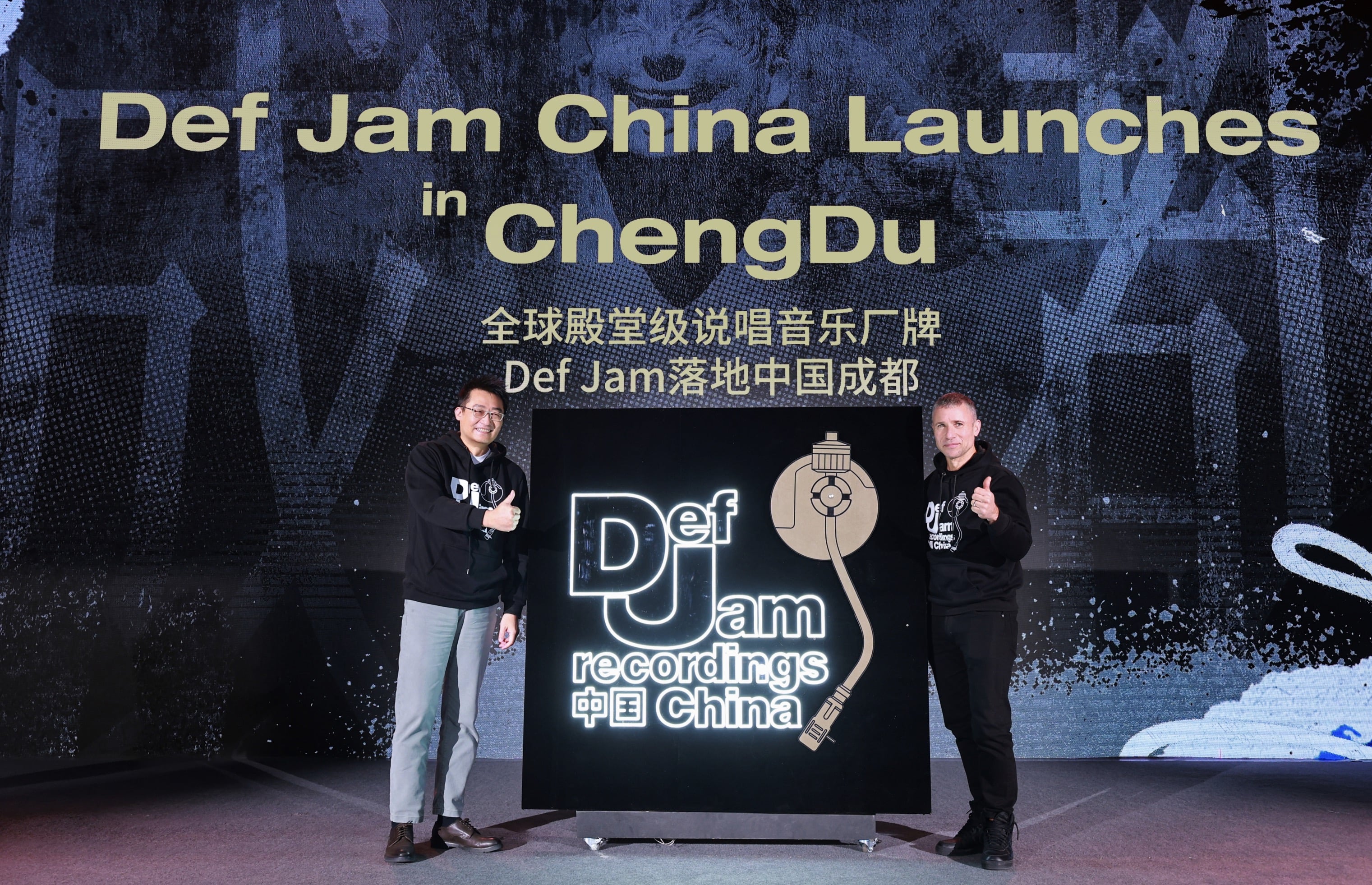
Timothy Xu with Adam Granite at the launch of Def Jam Recordings China
Before joining Universal, Xu served as CEO of Sony Music Greater China, the first person from mainland China to hold a major label Greater China CEO role, and spent five years at top independent Chinese music company Taihe Music Group. He also co-founded the Chinese Music Awards (CMA), the country’s first industry-led music awards ceremony, and played a key role in lobbying for China’s amended Copyright Law.
Xu has moved quickly since arriving at UMG. His headline strategy: reposition Universal Music Greater China as a “domestic company with international resources,” or, as he puts it, “Glocal.”
That strategy has driven a series of moves, including a landmark partnership with Mandopop superstar Jay Chou and his label JVR Music, the launch of Deutsche Grammophon China and Blue Note China, and the launch of Def Jam Recordings China in Chengdu, widely regarded as the capital of Chinese hip-hop.
Xu has also struck partnerships with Mandopop artist David Tao, known as the “godfather of Mandarin R&B,” and his company GREAT Entertainment, and secured an exclusive global agreement with Liu Huan, a legendary figure in Chinese pop music often referred to domestically as the “King of Chinese Pop.”
Photo credit: Universal Music Greater ChinaDavid Tao
Other highlights under Xu’s leadership include UMG becoming the first major music company to establish a label division in China’s Greater Bay Area. Headquartered in Shenzhen and led by Gary Chan, Managing Director of Universal Music Hong Kong and SVP of UMGC, the new division means that Universal Music Greater China now has offices across Beijing, Chengdu, Hong Kong, Shanghai, Shenzhen, and Taiwan.
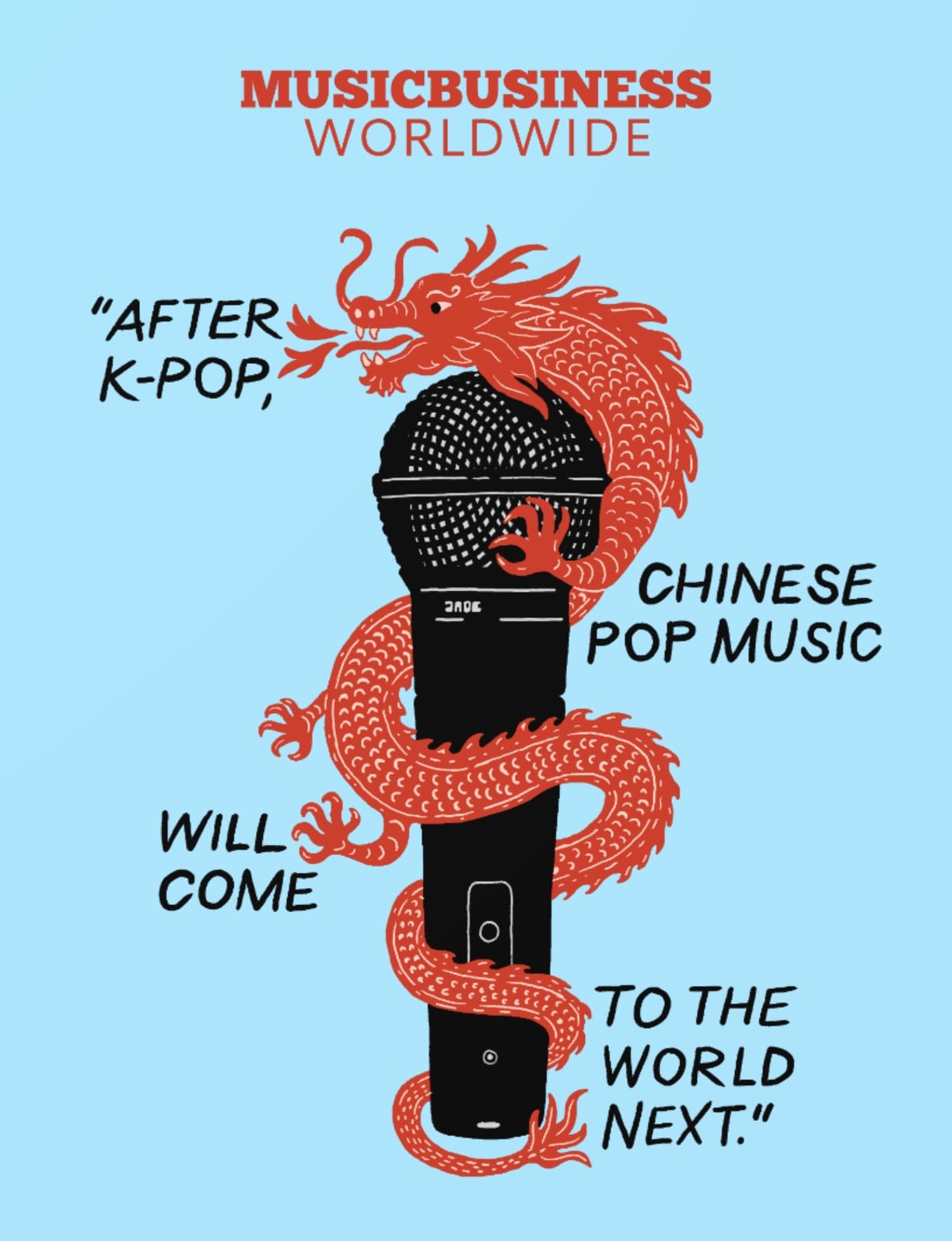
Right now, Xu is working with UMG’s labels in the US and UK to develop a pipeline for Chinese artists to break internationally, a project he says will begin producing visible results this year. “After K-pop [broke globally], Chinese pop music will come to the world next,” he says.
To help him with this task, he recently appointed veteran music executive Sam Hu as Managing Director of Universal Music China & SVP, Universal Music Greater China, to “create more opportunities for Chinese artists and music to connect with audiences around the world”.
First, Xu carves out a couple of hours to talk with Music Business Worldwide about his career, UMG’s China strategy, the Jay Chou partnership, AI, superfans, and more…
What was at the top of your to-do list when you arrived at UMG in 2023?
Universal Music has very, very deep roots in the Chinese music market; Polygram Hong Kong, Polygram Taiwan. When I was a teenager, the music we listened to was almost all from Taiwan or Hong Kong – Jacky Cheung, Alan Tam, and many other superstars.
So when I joined the company, I wanted to continue that legacy. I needed to understand the system, restructure some business divisions, and point everything in the right direction.
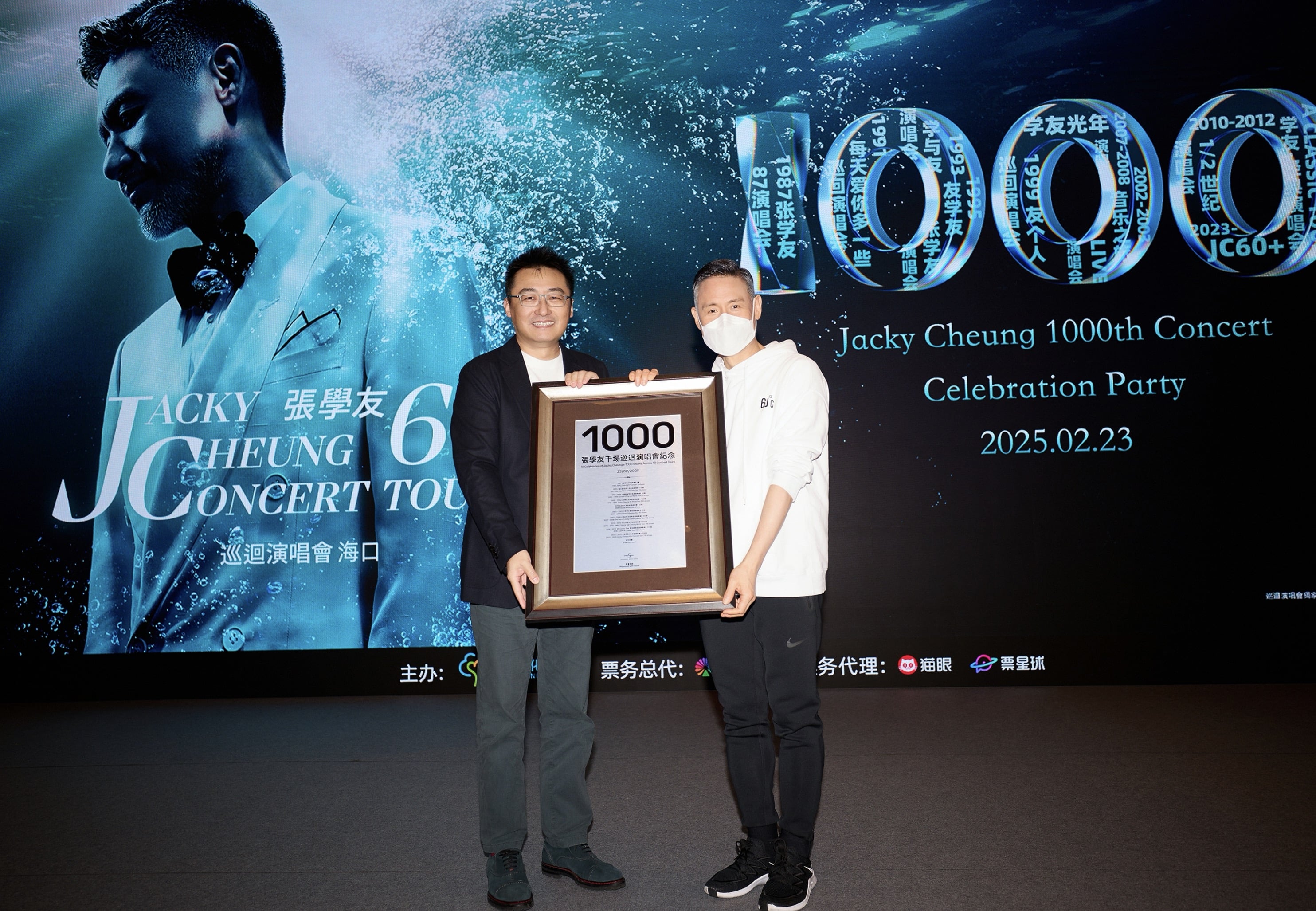
Timothy Xu presents plaque to Jacky Cheung celebrating 1,000 shows
The clearest signal I gave the company, my boss, and the market was: “Glocal.” A domestic company that is also an international company. We cannot pretend to be something we are not.
We also restructured. We changed our international marketing division into a full international division. The difference? It’s now an import and export operation, not just marketing. That was the past.
So we launched a program called “Go East,” [bringing international artists] to China. John Legend joined the Chinese New Year TV Gala, a broadcast that has previously reached an estimated 1.5 billion viewers. John was so happy, and he immediately got an invitation to appear on another big TV show in China.
The Jay Chou and JVR Music partnership is one of the most significant artist deals UMG has struck in the region. How did it come together?
Jay Chou, his manager, and I have a very good relationship. We trust each other. When they heard the rumors that I would be coming to Universal, they called me, and in less than 10 minutes, they made their decision. That is trust. Sometimes you don’t need much conversation.
I was at Jay Chou’s concert a week ago in Hangzhou, the very first show of his new tour. It was a 60,000-capacity stadium, and two or three times that number were outside, singing along.
When Jay Chou released his new album, Sir Lucian Grainge sent him a personal video message. Sir Lucian really looks after artists like Jay Chou; he understands them and takes real care of artists at that level, and Jay Chou appreciates that.
The music video for the album’s title track, Children of the Sun, was a $2.8 million production with Wētā Workshop. That was Jay Chou’s own idea, his own vision. You can see how much he invested in this production, which shows his ambition and pursuit of artistry.
Our goal is to help Jay Chou achieve a much greater international impact with the help of Universal Music’s global network. We’re trying to find the best approach, the right methodology, to make a real impact.
We want to start with Jay Chou as the example for all the Chinese artists who want to go global.
China recently overtook Germany to become the world’s fourth-largest recorded music market. Where do you see Greater China on the global stage in the next three to five years?
I believe we will continue to grow, and Greater China will reach new levels, not just in terms of streaming subscription growth, but across all sectors of our business. We have a strong music ecosystem, with many great platform partners, and a rich and diverse music culture across the country.
But what I want to say is this: we won’t just be a big music market. I can see a new trend: Chinese pop music is going to reach the world after K-pop. But in a different way, in a different style, because, [from] the background [to] the culture, there are so many things that make it distinct.
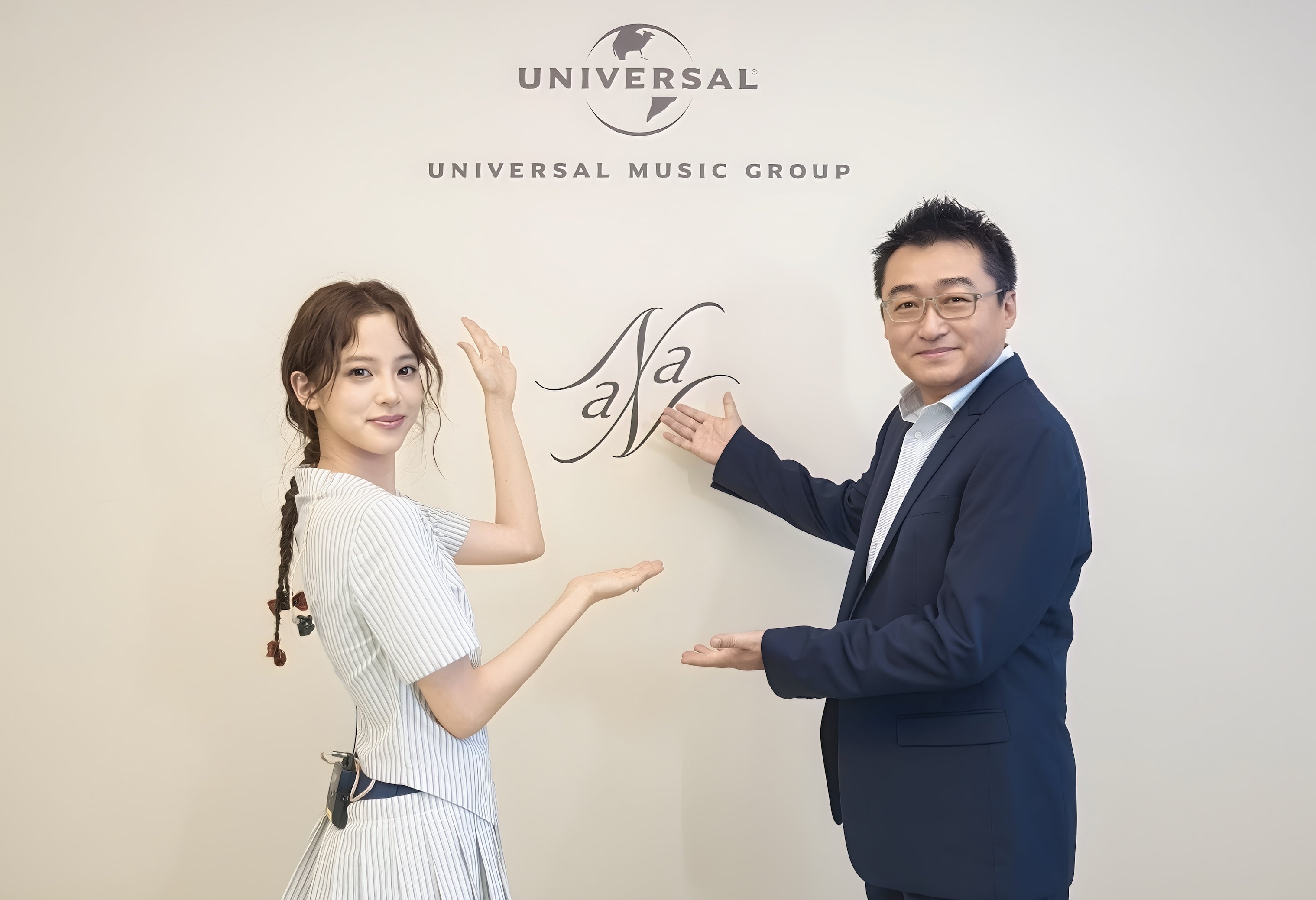
Nana Ouyang and Timothy Xu
Take Bruce Lee as an example. He showcased Chinese culture — kung fu — and it was hugely successful. But he used the Western way to show it, through movies. He wasn’t playing a James Bond-type character. [His style] was very Chinese.
My international friends told me, “We like to see the difference.” I don’t really think someone from the UK speaking very good Chinese and singing very good Chinese songs is unique.
That’s interesting, but not unique. I like to see The Beatles. I like to see international music stars expressing their own culture. That’s the approach we’re working on.
How is that informing your A&R decisions?
We’re now working with our labels in the UK and the US. Not just to take Chinese artists to the international market, but in both directions.
More and more international artists are coming to China. Katy Perry has been already. Imagine Dragons have toured. They’re looking for friends here. They want to collaborate, to get more connected with this market. And once they connect, things can happen very naturally: a new song, a collaboration.
How do record companies in China navigate the competitive dynamic with DSPs like Tencent Music, which also sign and develop artists directly?
That’s a great question, and it’s one that’s been asked for 10 years already. I’m always very confident: if you can sign a good artist, that never changes. If your A&R is very strong, if your vision is long-term, and if your services can really help the artist, then you should focus on those things.
For any music company still operating like an old-fashioned record company in China — that’s going to be a big problem. We have evolved and are now positioned to deliver our own unique service in this new era.
I’ve paid a lot of attention to rebuilding and restructuring our local team, from A&R to artist management to brand services. The most important thing is A&R and artist management. Everything else is about finding your unique value to artists.
How do you see AI-generated music impacting the music business in China?
Just like UMG globally, we are focused on ensuring that AI technology is responsible, ethical, and artist-centric, and that it benefits our artists, our rights holders, and the entire creative ecosystem.
In China, we are also at the forefront of the emerging AI licensing market and have worked with our platform partners to ensure that we have AI protections in our agreements.
At the policy level, we’re working to lobby the Chinese government to better protect artists’ and rights holders’ rights. We’ve been putting a lot of effort into this — to protect human artistry. That’s one of our core missions, and we saw how impactful that was in stopping piracy in the market.
“In the era of AI, the value of human artistry is even more precious.”
We also see that AI could be a business opportunity, an opportunity for innovation, to help the industry grow. But we have been very diligent and active to prevent unlicensed generative technology from impacting the music industry, like [piracy did], which is why this has been a focus for us in recent years.
For platforms, too, they won’t want their subscription services flooded with faceless AI music that will dilute the premium experience. AI can be used as a tool to significantly improve productivity. New artists, for example, can use AI to polish their demos.
But in the era of AI, the value of human artistry is even more precious. If you go to a live show, if you feel the atmosphere — that’s something AI can never replace.
How important is the ‘superfan’ strategy for UMG in China, and what can the rest of the world learn from Tencent Music’s Super VIP subscription model?
The superfan concept has become an essential element of the music market here, and we’re taking it very seriously. We see a lot of significant opportunities ahead, including merch, deeper fan engagement, and even retail.
One of our core strategies, which is aligned with UMG’s global superfan strategy, is to explore more experiential, more immersive music experiences that are more embedded in consumers’ lives.
Our superfan strategy is structured around artists — providing them with more opportunities. And we take a long-term strategic perspective. We don’t just look at the short-term outcomes.
On the Super VIP tier, I believe all of the DSPs and platforms are trying to improve the experience for users and consumers. Different platforms can learn from each other. And for us, our job is to provide premium content — music that is truly valuable to fans.
How strategically important is live music for UMG in Greater China?
We have a great team and the resources ready. We’ll launch our own festival and concerts, perhaps this year. I have the connections and experience, but I’m not in a hurry.
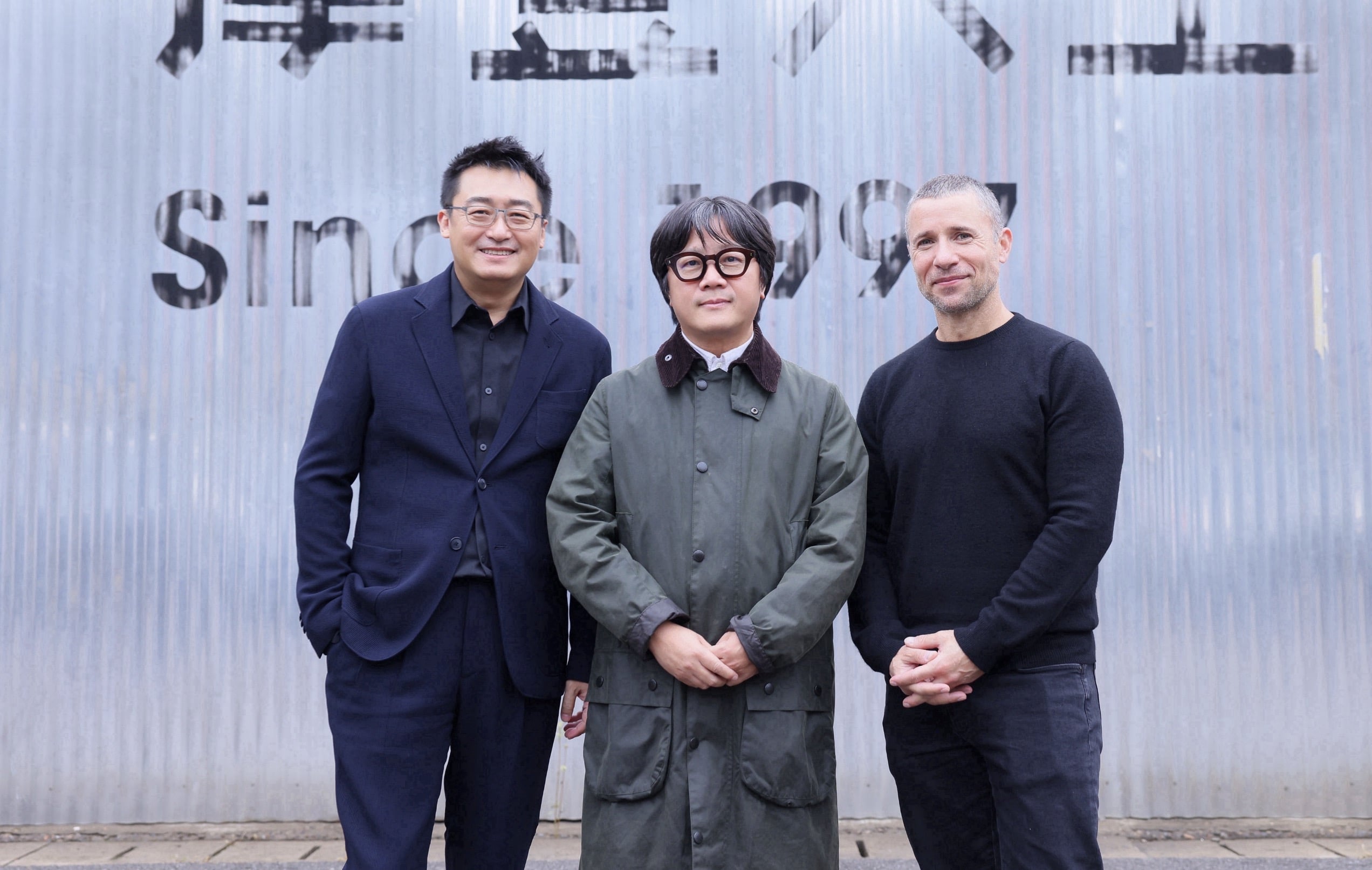
[L-R] Timothy Xu, Modern Sky’s Founder and CEO Lihui Shen, Adam Granite
Live is really important for artists, both domestic and international. We already work with local business partners like Modern Sky.
Our artists perform at the Strawberry Music Festival and other major festivals. I think we’ll expand this kind of business with local partners.
Is M&A important to Universal’s growth strategy in China?
M&A is a very important strategy for Universal Music in China. We have very good relationships with industry people: the companies, the labels, and catalog rights holders.
“M&A is a very important strategy for Universal Music in China.”
We’re looking for the right opportunities that can further drive and reinforce our overall strategy for the market. I only joined the company around two and a half years ago, and I really haven’t stopped. I am excited and I believe a lot of great things will happen.
What does success look like for UMG Greater China over the next three to five years?
[Laughs] Sometimes the good question is also the answer. You already mentioned a lot of it.
As I said before, we are building an artist-centric music company in China — one that goes deeper into the local ecosystem, works seamlessly with UMG’s global network, and helps create new pathways both into China and out from China.
We’re also focused on long-term building. We’ve launched [Deutsche Grammophon] China, Blue Note China, Def Jam China, and we’ll keep going.
Timothy Xu with recently-signed guzheng player, Yang Yang
If you look at this market, if you go to a classical music concert in China, the audience is completely different [than in] Europe. It’s all young people. If you go to a Blue Note jazz club in China, they’re all in their twenties and thirties. They love jazz. They love many genres of music.
We just signed a very good traditional Chinese guzheng player called Yang Yang. It’s a typical Chinese traditional instrument, 3,000 years old. She doesn’t just follow the traditional standard. She’s so good at playing very traditional music with gaming soundtracks.
When we held the Go East event in Beijing two months ago, everyone who came from the UK and the US was amazed: “Why does this sound so beautiful and so contemporary? It’s not from 1,000 years ago, but the sound is so different.”
When we showcased her, artists from Republic and from the UK all asked, “Can I talk to her? Can I work with her?” It’s happened already.
If there was one thing you could change about the global music business, what would it be?
I’d love to start from my market. I love working with my musicians and my international colleagues. In the past, international artists would visit [other markets in Asia]. They wouldn’t visit China.
We were always waiting. No one really understood China. No one would really talk to you. But now I have real support from my colleagues, from my boss Adam [Granite], and from [Sir Lucian Grainge] as well. I can see the change already.