AEG’s ticketing subsidiary AXS sued a website called SecureMyPass.com, alleging that it helps ticket brokers “spoof” online tickets to create counterfeit tickets that have left concertgoers stranded at venue doors.
The complaint, filed in Los Angeles federal court last week (January 13), accuses the New Jersey-based website of trademark counterfeiting and infringement, unfair competition and breach of contract.
AXS claims, in the lawsuit which you can read here, that SecureMyPass enables scalpers to generate fake tickets bearing the AXS trademarks and sells those tickets to unsuspecting consumers.
“Because these counterfeit tickets are not genuine AXS tickets, broker resellers may deliver multiple copies of the same ticket, defrauding customers who are turned away when their ticket has already been redeemed and causing venues to find alternate accommodations for counterfeit ticket holders,” according to the complaint.
The lawsuit describes how AXS uses rotating QR codes, unique identification numbers, and digital watermarks to prevent ticket fraud. SecureMyPass allegedly copies these visual elements while bypassing AXS’s security infrastructure, creating what AXS calls “counterfeit products” that look authentic.
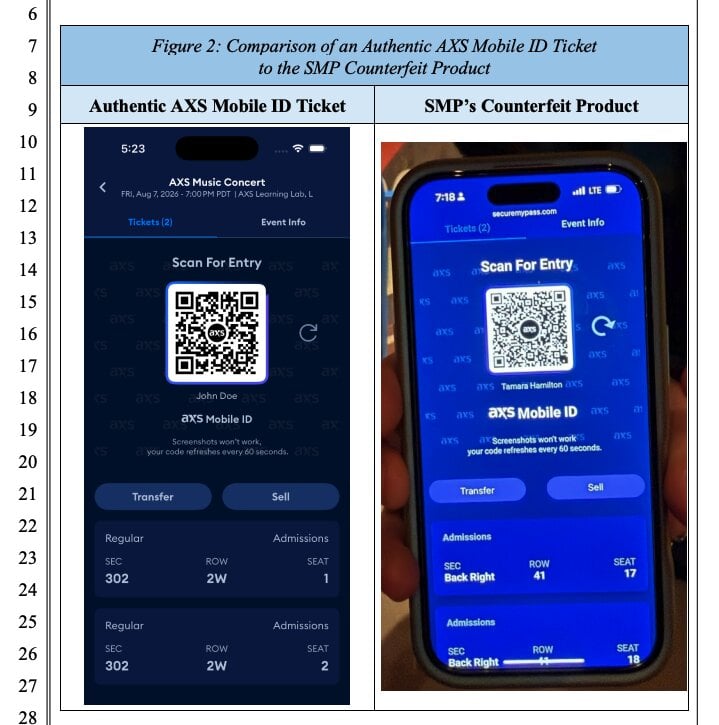
SecureMyPass allegedly offers a browser add-on that records interactions between ticket brokers and the AXS website, then generates replica tickets. These tickets show a rotating QR code similar to authentic AXS passes but remain linked to the broker’s account rather than the purchaser’s identity.
“For this reason, the broker could easily send the same link to multiple buyers, creating a race to the venue. Once the first buyer scans into the venue using the Counterfeit Product, all remaining latecomers would be denied access at the venue gate.”
AXS said the fake tickets have caused issues at venues across the US. At a Lorde concert on October 14, 2025, at Colorado’s Red Rocks Amphitheatre, at least seven customers were allegedly denied entry after trying to scan tickets purchased through SecureMyPass. On January 4, 2025, a customer at an LA Kings vs. Tampa Bay Lightning game discovered his ticket listed nonexistent seats, although the QR code initially scanned successfully at Crypto.com Arena.
“Because these counterfeit tickets are not genuine AXS tickets, broker resellers may deliver multiple copies of the same ticket, defrauding customers who are turned away when their ticket has already been redeemed.”
AXS’ complaint
A similar incident happened on October 23, 2024, when a customer was turned away at the Greek Theatre for unknowingly purchasing a counterfeit ticket, which was already redeemed prior to their arrival at the venue.
AXS noted that the fake tickets lack features that may come with authentic AXS tickets such as access to VIP locations and services, exclusive merch, meet-and-greet opportunities and venue parking passes.
AXS claims SecureMyPass has acknowledged some of these issues. The company’s website FAQs, included as an exhibit in the lawsuit, admits that venues including Crypto.com Arena have denied entry to customers with cloned AXS tickets and says it cannot guarantee entry at certain locations.
The lawsuit cited customer complaints sent to AXS by complaining customers. One customer wrote that she “got an email from AXS saying Urgent: Ticket Acceptance to get my tickets into my AXS account, however, the link in the email is to a website called securemypass – it does not allow me to save the tickets to my AXS account.”
AXS is seeking statutory damages of up to $2 million per trademark per type of counterfeit product and a permanent injunction blocking SecureMyPass from using AXS marks or assisting ticket fraud.
“SecureMyPass helps brokers deliver tickets they already own to customers who paid for them. Any customer harm cited by AXS stems from enforcement choices made at the venue level, not from ticket validity.”
SecureMyPass (via billboard)
In a statement to Billboard on Thursday (January 15), SecureMyPass said it “disputes many of the allegations in AXS’s complaint and believes the lawsuit fundamentally mischaracterizes both our business and the realities of the ticket resale market.”
“SecureMyPass helps brokers deliver tickets they already own to customers who paid for them. Any customer harm cited by AXS stems from enforcement choices made at the venue level, not from ticket validity.”
The lawsuit comes amid increasing government scrutiny over ticket scalpers in the US. In August, the US Federal Trade Commission filed a major lawsuit against Maryland-based ticket brokering operation Key Investment Group LLC, alleging the company used illegal tactics to circumvent ticket purchase limits and resell hundreds of thousands of tickets at inflated prices, including for Taylor Swift’s blockbuster Eras Tour.
Separately in September, the FTC sued Live Nation and its ticketing arm, Ticketmaster, accusing the company of profiting from scalpers operating on its platform.
The complaint said Ticketmaster’s practice allowed it to “triple dip” on ticketing fees by collecting fees from brokers on the initial purchase, collecting from brokers again when the tickets are relisted on Ticketmaster’s secondary ticketing platform, and finally from fans when they buy the resold tickets.
Live Nation denied the accusations. In October, Senators Marsha Blackburn and Ben Ray Luján had expressed grave concern over the FTC’s lawsuit in a letter to Live Nation, to which EVP for Corporate and Regulatory Affairs Dan Wall responded on October 17, defending the company’s practices.Music Business Worldwide