In 2026, what is a major ‘frontline’ US record label actually for?

1. Is it there to gobble up frontline chart market share at all costs – deploying every algorithm-gamed, technologically-jacked trick in the book to win the week?
Or:
2. Is it there to gradually coax, challenge, and, yes, occasionally cajole the best artists of a generation into making timeless copyrights that will still be played (and still be earning) in 20 years?
These are important questions. Some of us are starting to suspect they point to starkly different, even contrasting, skill sets.
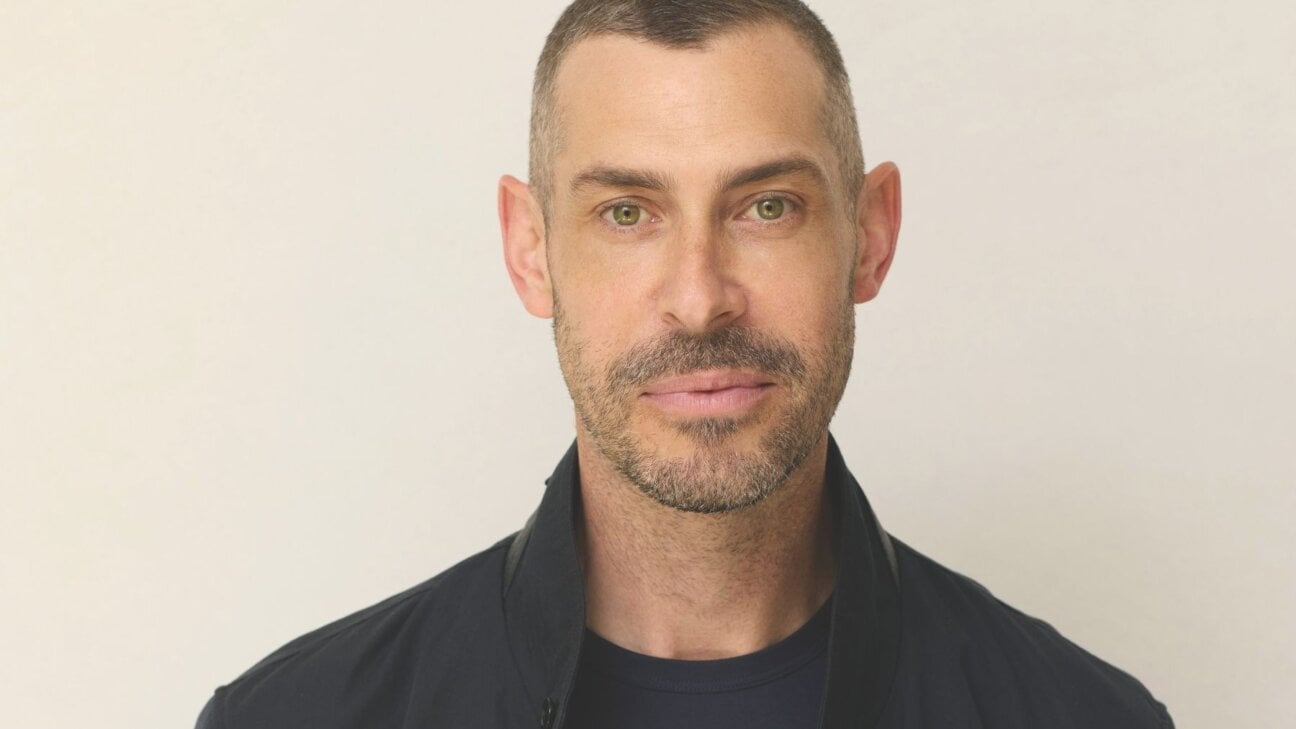
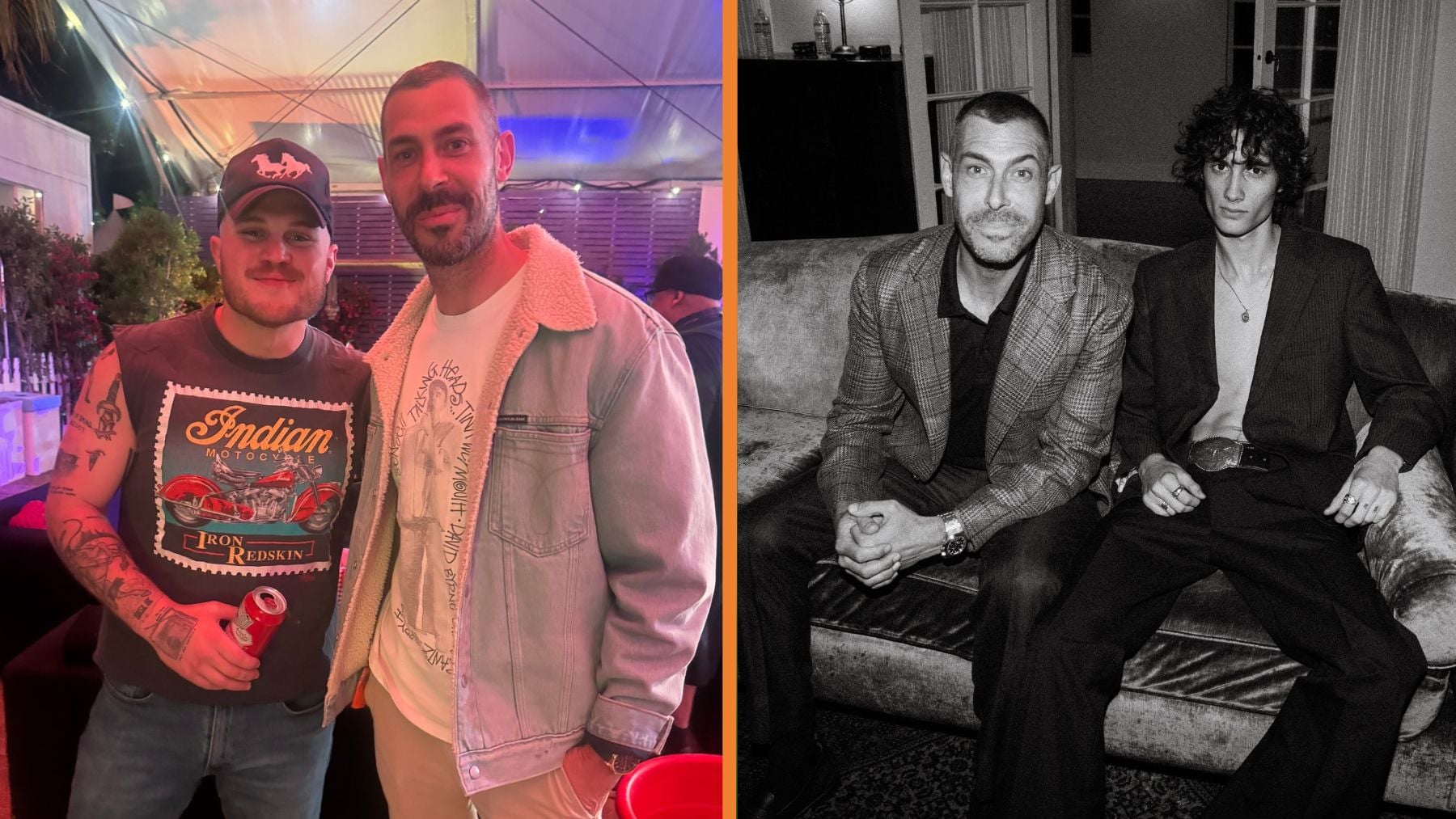
Aaron Bay-Schuck, CEO/Chairman of Warner Records Group, is a master of (2). He’s done it for the better part of two decades – from the day he discovered Bruno Mars, to the composed, stoical building of Zach Bryan, Teddy Swims, Sombr, Benson Boone, and more today.
But as a record company head – for what it’s worth – he’s also proven to be impressively adept at (1).
Warner Records’ frontline US market share has climbed sharply during his tenure, from a low of 4.34% in 2021 to a high of 6.54% in 2024. The label’s overall share has also jumped, reaching 6.98% in 2025 (source: Luminate).
At major label scale, a swing of more than two points in just a few years is enormous. In 2026, by Bay-Schuck’s own admission, that frontline share has since cooled a little from its peak. It doesn’t trouble him.
“We carry steep growth targets as a company, and I know better than anyone that those aren’t things you can achieve solely by signing and breaking acts,” he acknowledges. “You have to bolt on market share through acquisition and investment, and in the current culture of WMG, we’re being encouraged to do that more aggressively than ever before.”
At the same time, however, Bay-Schuck refuses to switch his internal dial to “market share for market share’s sake.”
“I have no interest in us turning into a label that signs everything under the sun.”
“I have no interest in us turning into a label that signs everything under the sun, does endless distribution-style deals, and doesn’t concern itself with long-term artist breakthroughs,” he says. “That might look good week to week, but back in reality, it’s a race to the bottom.”
Through this lens, one telling scoreboard for judging Bay-Schuck’s label can be found not in ephemeral industry rankings, but in a more glamorous setting.
That scoreboard starts in February 2019, at Bay-Schuck’s first Grammys alongside his Co-Chairman at the time, Tom Corson, now WMG’s COO. From that night on, Warner Records (including Nonesuch) has picked up no fewer than 11 Best New Artist (BNA) nominations.
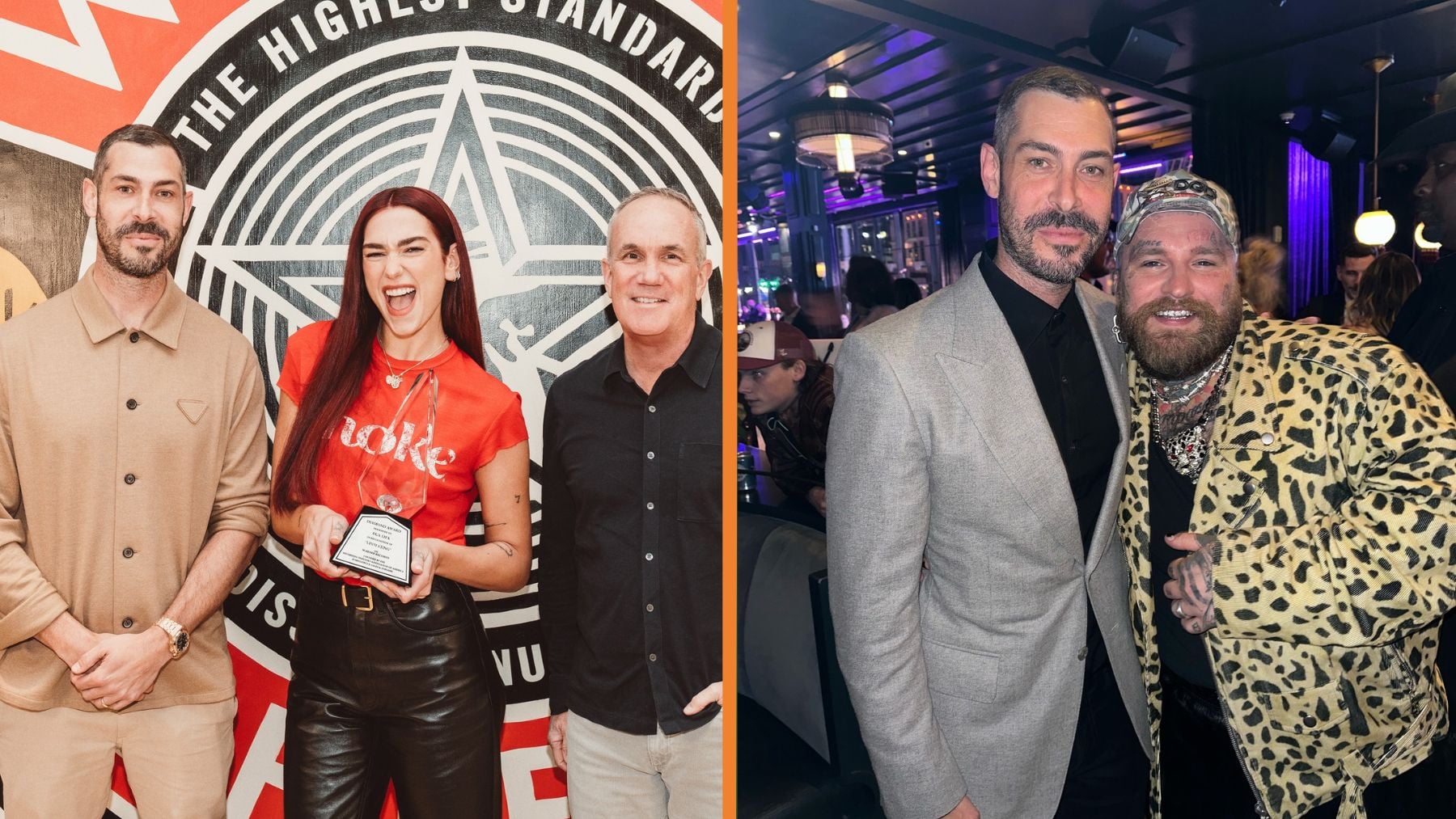
One of those nominees, Dua Lipa, won. Lipa was signed out of the UK, but Bay-Schuck’s Warner Records can take real responsibility for accelerating her global breakout. Among the label’s other BNA nominees: Benson Boone had no music in the marketplace when he joined; Teddy Swims was known as a covers artist. Sombr’s climb to a BNA nod, three years after signing, is one of the fastest of anyone on the roster.
“There isn’t a single one of those nominated artists who wasn’t signed years before they reached the prominence that put them on the Grammys’ radar,” Bay-Schuck tells MBW.
Bay-Schuck is widely recognized as one of the most talented A&R label minds of his era – the kind who hears a single salvageable line buried in a broken demo and simply knows.
“I feel very strongly that almost any other company would have struggled to reconcile the creative ambition with the financial P&L on artists like that several years in,” he says. “Most labels would have run. To stick with a new artist for five, six, seven years? That takes a level of belief that has to be on full display, and that’s what we’re about.”
Don’t be surprised to see Sombr – real name Shane Boose – bag another Grammy nomination in 2027.
In June, Taylor Swift handpicked him to perform at her Songwriters Hall of Fame induction. She said from the stage: “A lot of my late-night debates with my friends about the state of the music industry involve me saying very loudly: ‘Sombr’s the future. He does it all on his own, he doesn’t need AI – the kids are fine!’”
One of the traditional advantages of taking the long view on artist development is the risk-reward – you can take a bigger swing on an unproven artist than a ‘hot’ one, and typically benefit from more of the upside. Warner Records still plays this patient game.
“If we still get that feeling – the hair standing up on your arms – the fact that they don’t have fans yet, or haven’t put out music, doesn’t matter,” says Bay-Schuck.
What’s become tougher, in the modern era, is the economics.
“We’ve continued, sometimes to our own detriment when we’re chasing competitive artists, to really hold a line on structuring deals that actually reflect the strategy we want to deliver. We don’t like to say one thing, and do another,” says Bay-Schuck.
He adds: “If you’re an artist who truly means it when you say you want a career, then it’s unfair for me to approach you – both in the deal and in your relationship with the label – as something I only care about for instant gratification.”
“It usually takes a long time for artists to arrive at a place where they’re making art that will stand the test of time.”
Bay-Schuck’s argument for patient artist development is, at its core, about ageless copyrights – the songs that keep earning long after the release week is forgotten.
“The only way to properly create value in music is to make lasting copyrights. You do that by supporting the people who feel like real stars, have real vision, a real point of view and who want to stand for something,” he says. “I stick with things, because it usually takes a long time for artists to arrive at a place where they’re making art that will stand the test of time.”
He points to rising Warner Records talent, Dijon, as a prime example. “Dijon moves at his own speed, making music exactly the way he wants. He’s an artist at the very highest level, and the world is starting to catch up.
“You can’t tell me that a song like The Dress, which we put out a few years ago, isn’t at some point going to become one of the biggest songs in the world. And I don’t mean it suddenly lands on Top 40 – I mean it just consistently blows away expectations. That one day you look at the streams and think, ‘When did this get to a billion?’
“You don’t get that by putting marketing around something disposable that was only ever meant to create a moment in the here and now. You get it from true copyrights.”
On that topic, he also points to Omar Apollo – one of those Best New Artist nominees, back in 2023.
“When we put out Omar’s Ivory album, we went nine months with almost no fanfare outside the core audience. Then Evergreen found its moment on socials – now we’ve got a multi-platinum success.
“You can’t plan these things precisely when you’re mapping out a financial year. You have to stay in the game.”
The comeback of Madonna with Confessions II earlier this year – a No.1 album in the US, UK, and multiple other markets – was another lesson in artisan record-making.
“Working with Madonna is a masterclass,” says Bay-Schuck. “Her instincts, her curiosity, and her command of music culture are unparalleled – she knows the producers, songwriters, DJs, and artists shaping what’s happening now, and she continues to push herself creatively at the highest level.
“Tom Corson really led the charge on this global marketing campaign alongside Guy Oseary, Sara Zambreno and the team, and the response to Confessions II has been phenomenal.
“It’s a fearless, brilliant body of work that deserves every bit of recognition it’s getting.”
Making momentous A&R calls – decisively, but sparingly – goes right back to the start of Bay-Schuck’s career.
When he was a young A&R at Atlantic, he played a demo that mostly left him unmoved, with the exception of one killer line and melody: “You’re amazing, just the way you are.”
Bay-Schuck took it to Bruno Mars, and it became Just the Way You Are.
“When I look back on my career, I could probably sum up the highlights in 10 important conversations with great artists,” he says. “Influencing one or two decisions in an artist’s creative or marketing – that can make all the difference to their success, for years afterward.”
He adds: “Today the role [of A&R] is too often defined as reading the data, making contact, constructing a deal – and then it’s up to the gods.
“Young A&R people are significantly better at discovery than I ever was. But without providing value on the other end, you’re a scout.
“Scouts are important, but the journey of an artist involves so much more.”
Since 2020, Warner Music Group has traded on the Nasdaq, bringing with it the quarterly rhythm – and the shareholder travails – of a public company.
We all know public investors can look quizzically at the outlay required to develop new talent; we also know they love it when that talent hardens into a steady, high-margin catalog.
Which probably triggers an inevitable question from the perspective of expense-snipping investors: does Warner Music Group really need two frontline label groups – Warner Records and Atlantic Music Group – competing under one roof, bidding against each other, handing leverage to artists?
For Bay-Schuck, the answer is unequivocal. “We have two label groups because it’s important to give artists options,” he says.
“Any label can take something that’s showing signs of virality and accelerate it. Breaking generational artists is something very different.”
“Our core focus is identifying talent we believe will be career artists – multi-decade careers – and taking them from their hometown venue to arenas and stadiums around the world.
“Honestly, there are only a small handful of artists who’d have a successful career wherever they went; I really believe most artists need to choose the right label, align with the right people, and pick a philosophy that matches how they see the world and their art.
“If you consolidated it all, artists couldn’t be serviced the right way. It diminishes their unique qualities, and it communicates a one-size-fits-all option; I don’t believe in that.”
The internal differences between WMG’s two premier label groups, in Bay-Schuck’s telling, are fundamental.
“Warner Records is an A&R-led company, led by a creative Chairman who came up through the ranks of A&R. To me, that’s the big distinction,” he says.
“In Atlantic you’ve got a very data-driven, digitally-savvy company that operates with an eye on faster wins and more quantity.”
He’s careful – pointedly so – not to let that observation curdle into caricature: “None of that means we don’t do brilliant marketing and digital, and use data to guide decisions, or that Atlantic doesn’t do artist development.”
But Bay-Schuck plants his flag on what his label is finally for: “I would not think we’d done our job properly if we had hits but didn’t break any artists.
“Labels are defined by the artists they break. Any label can take something that’s showing signs of virality and accelerate it. Breaking generational artists is something very different. I want our label to resist short-term approaches to dealmaking.”
“I want our label to resist short-term approaches to dealmaking.”
How does Bay-Schuck handle the fact that there’s a big personality with a big profile, Elliot Grainge, now competing with him within his own corporate home?
“Elliot’s brought an entirely new level of aggressiveness and competitiveness, and that’s forced all of us to raise our game; I welcome that challenge,” he says. “Before Elliot arrived, Atlantic and Warner Records often competed for the same acts.
“In today’s Warner Music Group landscape, I actually don’t feel that Warner Records and Atlantic go after the same things as frequently anymore.”
Time for the question hanging over everything these days – the one Taylor Swift reached for when she called Sombr “the future,” the kid who “does it all on his own” and “doesn’t need AI.”
As the marketplace floods with machine-made music, what is a high-touch, expensive, human label actually worth?
More, Bay-Schuck thinks – not less.
“Take an artist like Zach Bryan, or Sombr. When they walk out on stage, I know exactly who I’m dealing with. It’s ten times more exciting than anything I could ever listen to that was artificially made,” he says.
“I actually believe the infinite amount of music being made every minute is going to quiet down, culturally speaking, into the background. And that’s exactly where high-touch frontline record companies will come into their own again.”
“I actually believe the infinite amount of music being made every minute is going to quiet down, culturally speaking, into the background.”
Bay-Schuck is no AI refusenik. Warner Music Group, under CEO Robert Kyncl, has been conspicuously first through the door on platforms like Suno. Bay-Schuck is comfortable with that, on one condition: “That every effort we make is done through the lens of getting our artists paid and their rights protected.”
He adds of WMG’s CEO: “Robert’s a real thought leader. He likes to take risks, be bold. Given that he came to WMG from outside of the core music ecosystem, some outsiders may disagree with that approach. But you can’t say he doesn’t have guts. I respect that he wants to shake things up.”
Bay-Schuck already oversees a broader remit than most of his US peers – Warner Records Nashville reports to him, as has the label’s UK operation since 2025. So, corporately speaking, how high does he want to climb?
“Every version of my answer to that question comes back to one condition: staying close to the music,” he says. “I wouldn’t ever be able to give up on staying artist-connected.”
When the org charts are stripped away, the thing he keeps coming back to is disarmingly plain.
“I love artists. At the end of the day, I am professionally worthless without meaningful relationships and connections with the talent we’ve signed.
“I think of them as my partners and my friends – not as clients, employees, or numbers on a dashboard.”
All MBW+ subscribers get digital access to our Music Business Worldwide magazine, with six issues released each year. Music Business Worldwide