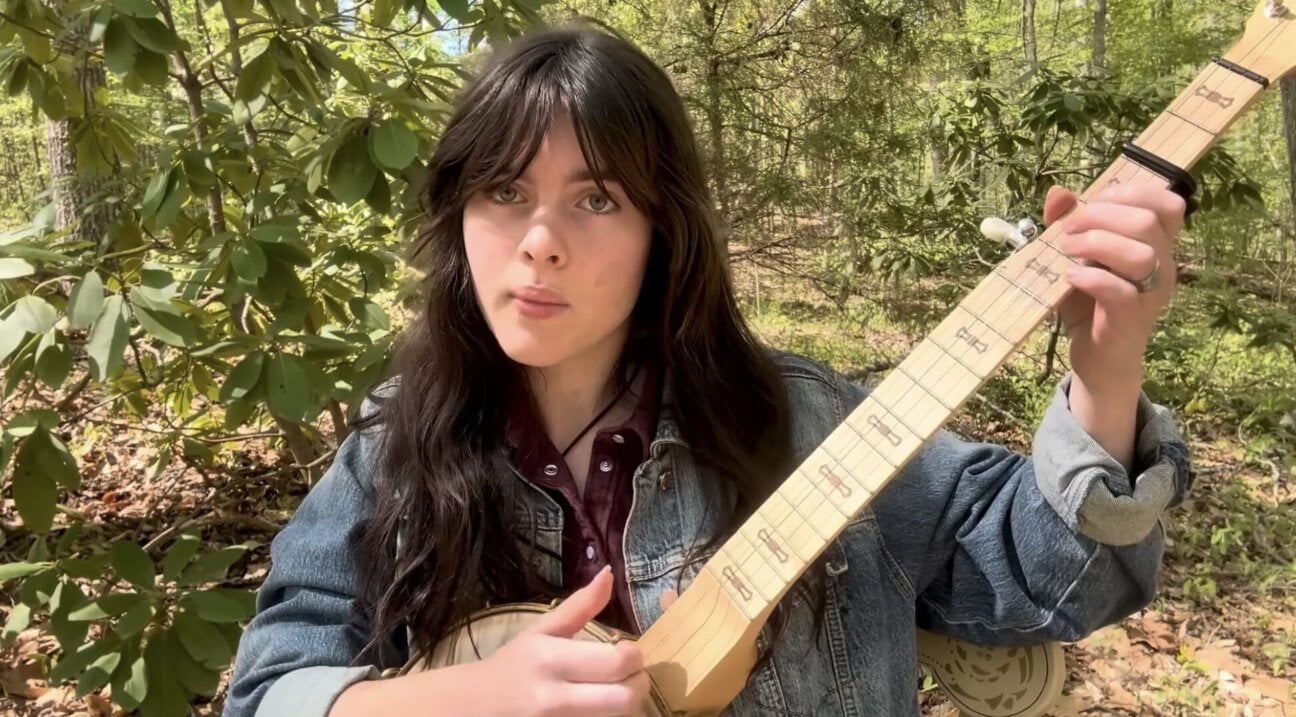
The music industry’s latest collision with AI technology has arrived — and this time it involves voice cloning, copyright claims on songs that have been in the public domain for over a century, and an independent folk musician from North Carolina caught in the middle.

The Verge reported on Saturday (April 4) that Murphy Campbell, a folk singer-songwriter from North Carolina, discovered in January that AI-generated covers of her songs had been uploaded to her Spotify profile without her consent.
Then, in a separate incident, a user filed copyright claims against Campbell‘s YouTube videos, via the Content ID access of gamma-owned distributor Vydia.
Roy LaManna, Vydia’s founder and now Chief Product and Technology Officer at gamma, told The Verge that the claims had now been released and the user responsible had been banned by the distributor.
LaManna has since taken to LinkedIn to mount a more detailed public explanation of Vydia’s role in the affair, arguing that AI played no part in the copyright claims filed through the platform.
“No part of the claim is AI. You cannot copyright AI and the reference files for YouTube claims require an exact match,” LaManna wrote on Friday (April 3).
“An AI interpolation won’t create a claim. It’s like saying an AI fingerprint implicated you in a crime. The digital fingerprint requires an exact match to make a claim.”
“Likely people noticed she was not in the ACR database which would fingerprint her songs and exploited the system to file the song first.”
Roy Lamanna, Vydia, theorizing how copyright trolls managed to claim as Murphy Campbell
LaManna suggested that the individual behind the claims had exploited a gap in content recognition protections, noting that Campbell‘s recordings had not been uploaded to audio content recognition (ACR) databases — the systems that distributors use to fingerprint and identify previously registered songs.
“Likely people noticed she was not in the ACR database which would fingerprint her songs and exploited the system to file the song first,” LaManna wrote. “Ironically as of this moment her content is still not uploaded to content recognition software.”
ACR-themed talk is in the news right now: On Thursday (April 2), TikTok’s distribution service SoundOn announced a partnership with ACRCloud to deploy audio fingerprinting technology designed to intercept unauthorized uploads before they reach streaming platforms.
According to The Verge‘s report, Campbell — a singer-songwriter who performs traditional Appalachian folk songs — first discovered the AI-generated tracks on her Spotify profile in January 2026.
She surmised that someone had scraped her YouTube performances, run them through AI voice-cloning tools, and uploaded the results to streaming platforms under her name.
“I was kind of under the impression that we had a little bit more checks in place before someone could just do that,” Campbell told The Verge.
Then, on March 25 – the same day that a Rolling Stone article was published detailing Campbell‘s encounter with AI impersonators – a series of videos were uploaded to YouTube through Vydia by an individual using the name “Murphy Rider”.
Those videos — which were never made publicly available — were then used to file ownership claims against several of Campbell‘s legitimate YouTube videos via the platform’s Content ID system.
Campbell received a notification from YouTube stating that she was “now sharing revenues with the copyright owners of the music detected in your video, Darling Corey.”
The underlying compositions at the center of the claims are all in the public domain, including In the Pines, which dates back to at least the 1870s. No one owns the song copyrights. But Campbell‘s specific performances and recordings of those songs are separately copyrightable as sound recordings — meaning a third party used Vydia‘s Content ID access to assert ownership over recordings of material that, if they matched Campbell‘s, would be her copyright, not theirs.
Vydia’s response
LaManna told The Verge that of the more than 6 million claims filed by Vydia through YouTube‘s Content ID system, 0.02% were found to be invalid — a rate that, he said, “by industry standards is like amazing.” He added: “We pride ourselves on doing this the right way.”
LaManna also told The Verge that Vydia had no connection to the entity “Timeless IR” or the AI-generated covers uploaded to streaming platforms under Campbell‘s name, and that the two incidents were separate.
On LinkedIn, LaManna went further, challenging the suggestion that AI had been used to generate the copyright claims themselves. “For her claim to be true, someone would have had to use AI to make an exact replica of an existing song. Just doesn’t make sense,” he wrote.
Vydia has received significant backlash over the incident, including what LaManna described to The Verge as “literal death threats” that had led to the company’s offices being evacuated.
Campbell told The Verge that she was not prepared to let Vydia off the hook, but acknowledged that the platform was not solely to blame. “I think it goes way deeper than we think it does,” she said.
Vydia was founded by LaManna in 2013 and was acquired by gamma in December 2022. gamma was founded by former Apple Music Global Creative Director Larry Jackson and Ike Youssef, and has been backed by investors including Todd Boehly‘s Eldridge Industries and Apple. The company has struck partnerships with artists including Snoop Dogg, Usher, and Rick Ross.
The case comes amid growing industry concern about AI-generated content being used to defraud artists and exploit platform systems. Sony Music recently disclosed that it has targeted more than 135,000 deepfakes of its artists’ music for removal from streaming platforms, while the IFPI has warned that AI has “supercharged” streaming fraud.
In September 2025, Spotify said it had removed more than 75 million tracks in a crackdown on AI-generated content and streaming manipulation, and the platform is now piloting a new opt-in feature that would allow artists to manually approve releases before they appear on their profiles.
Meanwhile, Michael Smith, a North Carolina man who used AI to generate hundreds of thousands of songs and stream them billions of times via bots pleaded guilty last month to conspiracy to commit wire fraud, in what has been described as the first criminal prosecution for AI-assisted streaming fraud in the United States.Music Business Worldwide